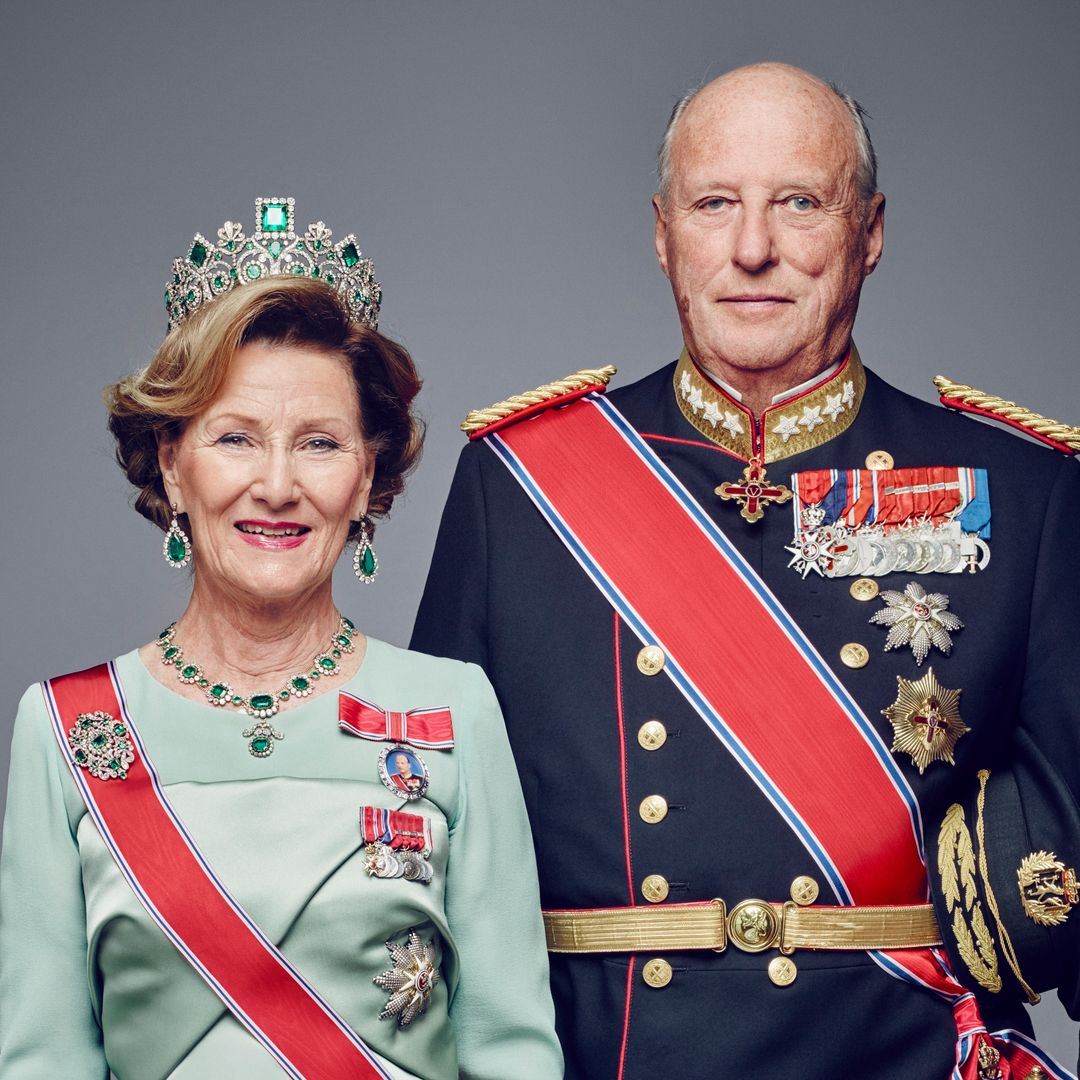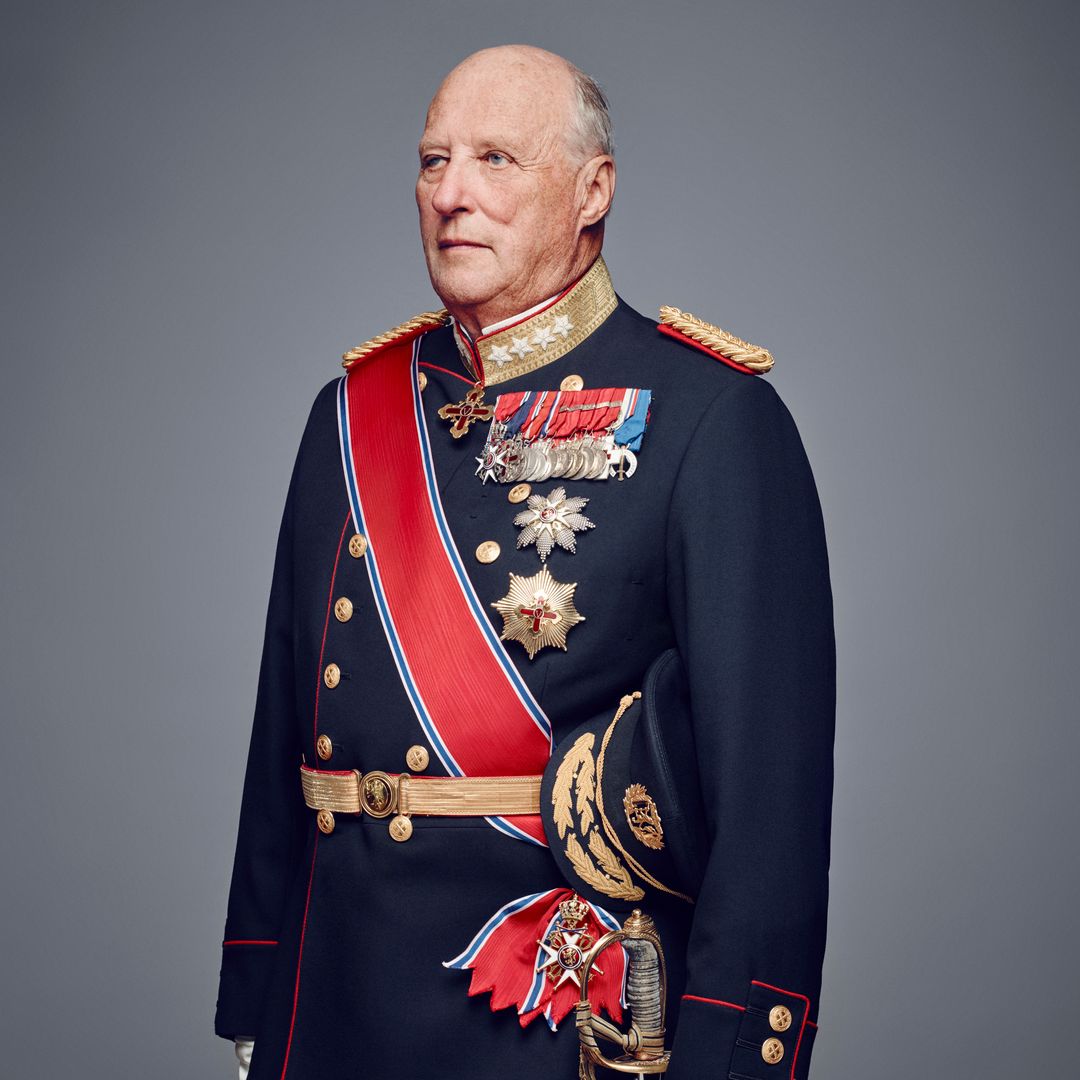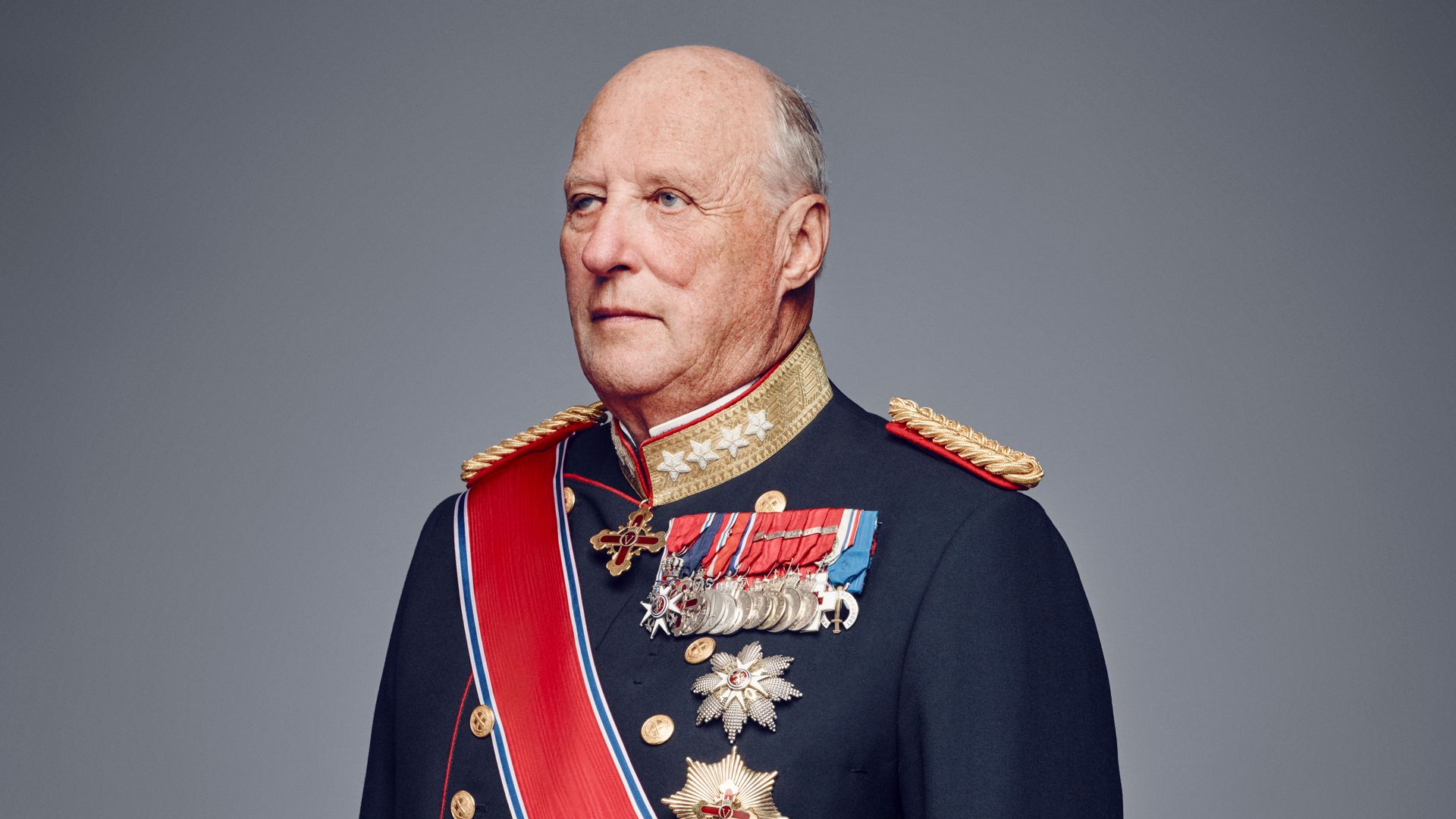
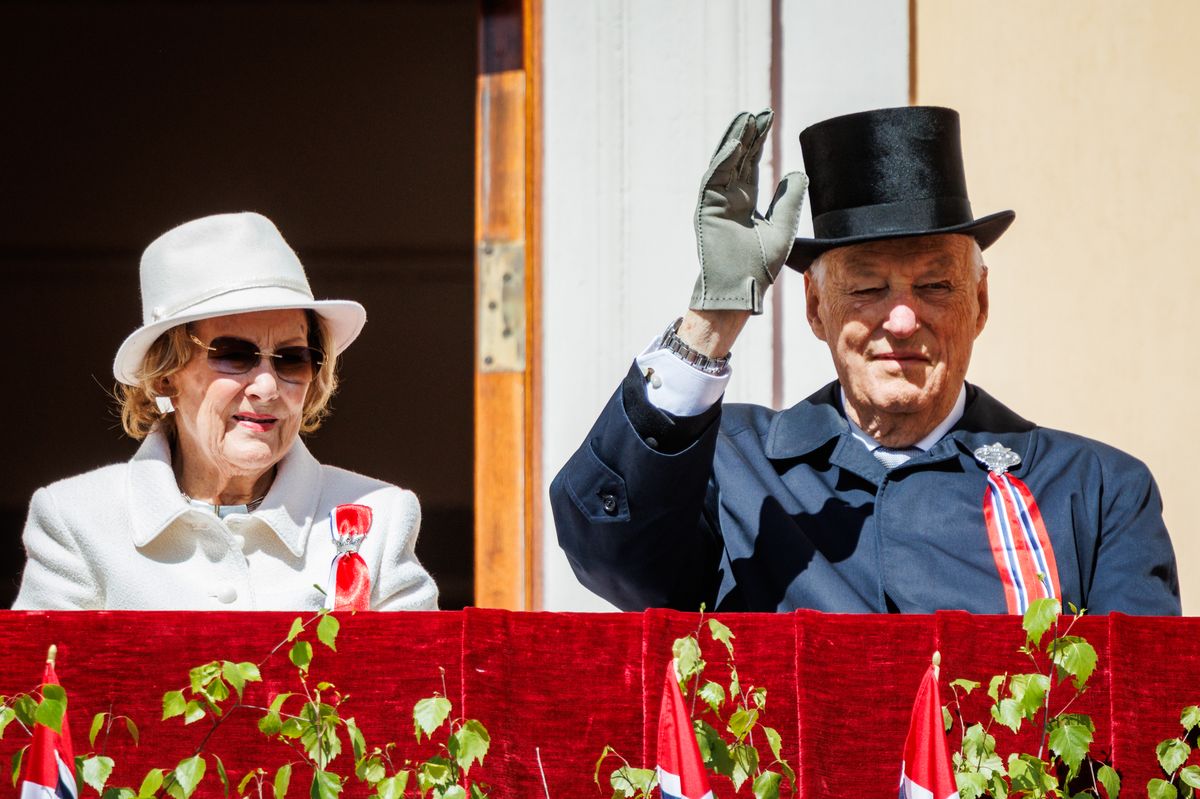
King Harald V of Norway, who had been on the throne since January 17, 1991, died Friday at 6:35 a.m. at the age of 89. The monarch had faced a number of health problems in recent years, most recently a series of infections that led to frequent hospital stays. His last hospitalization came on August 17, when he was admitted with hemolytic anemia. His condition continued to deteriorate and eventually became critical, forcing him to step away from public duties as Crown Prince Haakon, now King Haakon VIII, assumed the regency.
Despite his recurring health issues, Harald repeatedly managed to recover and return to his royal duties, earning him the nickname "the invincible Viking." His connection to the Vikings, however, was largely in name. Harald Hårfagre, or Harald Fairhair, is considered the first king of Norway, ruling around the year 890. Harald V belonged to the House of Glücksburg, which has occupied the Norwegian throne since 1905.
 © Getty Images
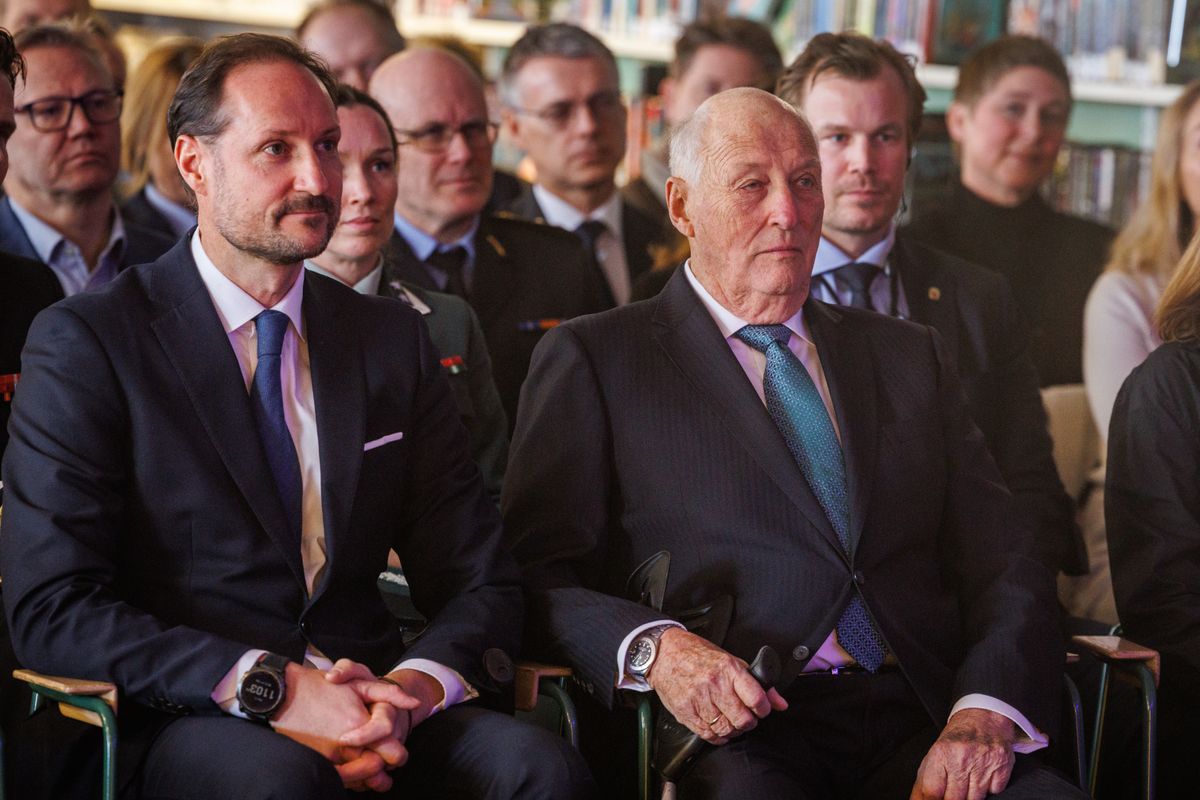
The king's final weeks tracked the pattern that had defined much of his old age: a body that kept failing and a will that refused to yield to it. Repeated infections had sent him in and out of the hospital in recent years, and on this week again, forcing him out of public life and prompting Crown Prince Haakon to step in as regent. This hospitalization proved to be his last. With his father's death, Haakon now ascends the throne as King Haakon VIII.
King Harald never considered stepping down. Even as monarchs across Europe abdicated as they grew older, Harald held to the same vow his father and grandfather had kept before him: the crown, once taken, was not something that could be set down. He loved sailing. He loved Westerns. He was among the first Norwegian monarchs to acquire a university degree. And at the center of his seven decades in public life sat a love story — his marriage to Queen Sonja — that quietly modernized the monarchy from the inside. Norway, and the family he built, now mourn a man who embodied an older Europe: a 20th-century king, and its last living link to the Second World War.
 © Per Ole Hagen
A prince born into history
Harald made history the moment he was born, on February 21, 1937 — the first Norwegian prince born on home soil in 567 years. His parents, Crown Prince Olav and Crown Princess Märtha (herself Swedish-born royalty), already had two daughters, Princess Ragnhild, who died in 2012, and Princess Astrid, but Norway's succession laws at the time barred them from the throne entirely. Harald's early childhood unfolded quietly at the family's official residence, Skaugum — until the predawn hours of April 9, 1940, when Nazi Germany invaded Norway.
His grandfather, King Haakon VII, had reigned since 1905 and understood how outmatched Norway was against the Wehrmacht. He resisted anyway. After refusing to appoint a prime minister handpicked by Adolf Hitler, the royal family and government fled Oslo by train. Haakon VII and his son, Crown Prince Olav, took to the mountains with part of the Norwegian cabinet, leading the armed resistance while they waited for help from the Allies. Three-year-old Harald, meanwhile, crossed into Sweden with his mother and sisters, then boarded a ship bound for the United States, where the family settled in Washington, D.C., under the protection of President Franklin D. Roosevelt.
As the German advance made it clear that the king's life itself was at risk, Haakon VII and Olav relocated to Britain and ran a Norwegian government-in-exile there until the war ended in 1945. The royal family sailed home aboard the British warship HMS Norfolk on June 7, 1945, greeted by a relieved country. By then, young Harald had spent more of his life in America than in Norway — he later admitted that everything about his homeland felt foreign to him, down to not fully understanding his own grandfather, who, Danish-born, never mastered fluent Norwegian and spoke it imperfectly for the rest of his life. Harald was enrolled at Oslo's Smestad public school and given an upbringing that looked much like that of any of his classmates.
"She died too soon, for her and for me"
At 17, Harald lived through the loss that would mark him for the rest of his life. His mother, Crown Princess Märtha — daughter of Sweden's Prince Carl and Princess Ingeborg of Denmark, and sister of Astrid of Sweden — died of cancer in April 1954 at Oslo's Rikshospitalet. It took him decades to speak openly about it. When he finally did, in an interview with Norway's public broadcaster NRK, he said: "She died too soon, for her and for me. In those days, there was no such thing as grief therapy. My father felt very alone after my mother's death, and he was a widower for almost 40 years."
From cathedral school to crown prince
Harald went on to Oslo Cathedral School, graduating in sciences while developing his proficiency in English, French and German. At 20, before launching a military career that would earn him the rank of general in the army and air force and admiral in the navy, he was proclaimed crown prince.
As the king's only son, Harald steadily took on a more central role in the reign that followed, making his first major state visit abroad in 1960 — fittingly, to the United States to celebrate the 50th anniversary of the American-Scandinavian Foundation.
The heir who married for love
 © Bettmann
By his early twenties, it was time for Harald to start a family of his own — and that's when he went head-to-head with his father, his government and his entire country. He and Sonja Haraldsen had been together since he was 22, first quietly and then very publicly, for nearly nine years by the time photographs of the couple hit the Norwegian press.
Harald never wavered: he intended to marry for love. That his choice didn't come from noble blood was, for an only son and heir, treated as nothing short of a national crisis. "I had mixed feelings, because I was in love with Sonja, but I felt guilty toward my father and toward Norway," he told NRK decades later.
His answer to the pressure he faced became a piece of Norwegian royal legend: "If Norway needs me, I am here — but with Sonja at my side." It was as close to an ultimatum as a crown prince could deliver, and it put both his father and the monarchy's future on the line.
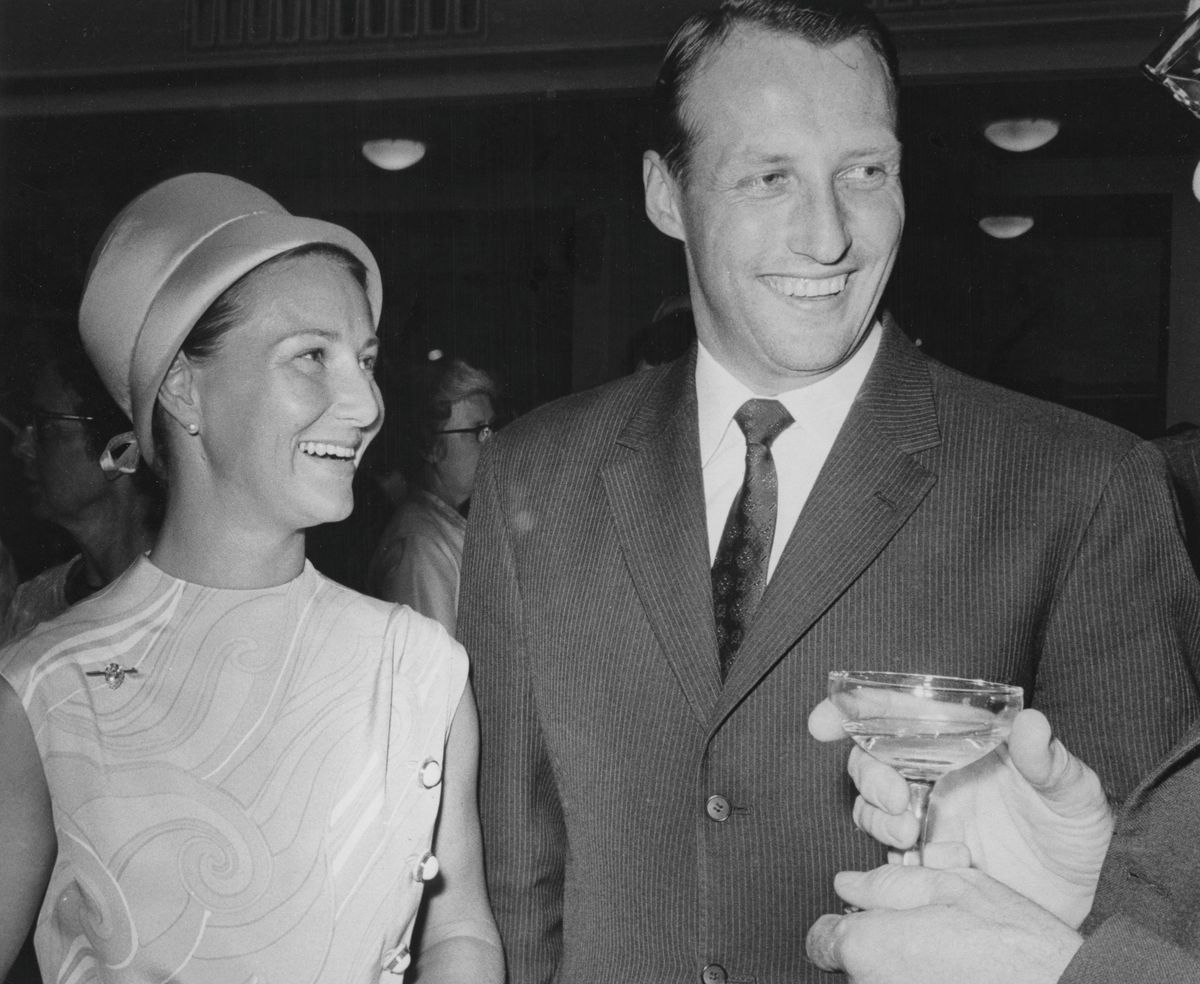
King Olav consulted the president of parliament, political leaders, and the government before ultimately giving his blessing. Crown Prince Harald and Sonja Haraldsen married at Oslo Cathedral on August 29, 1968.
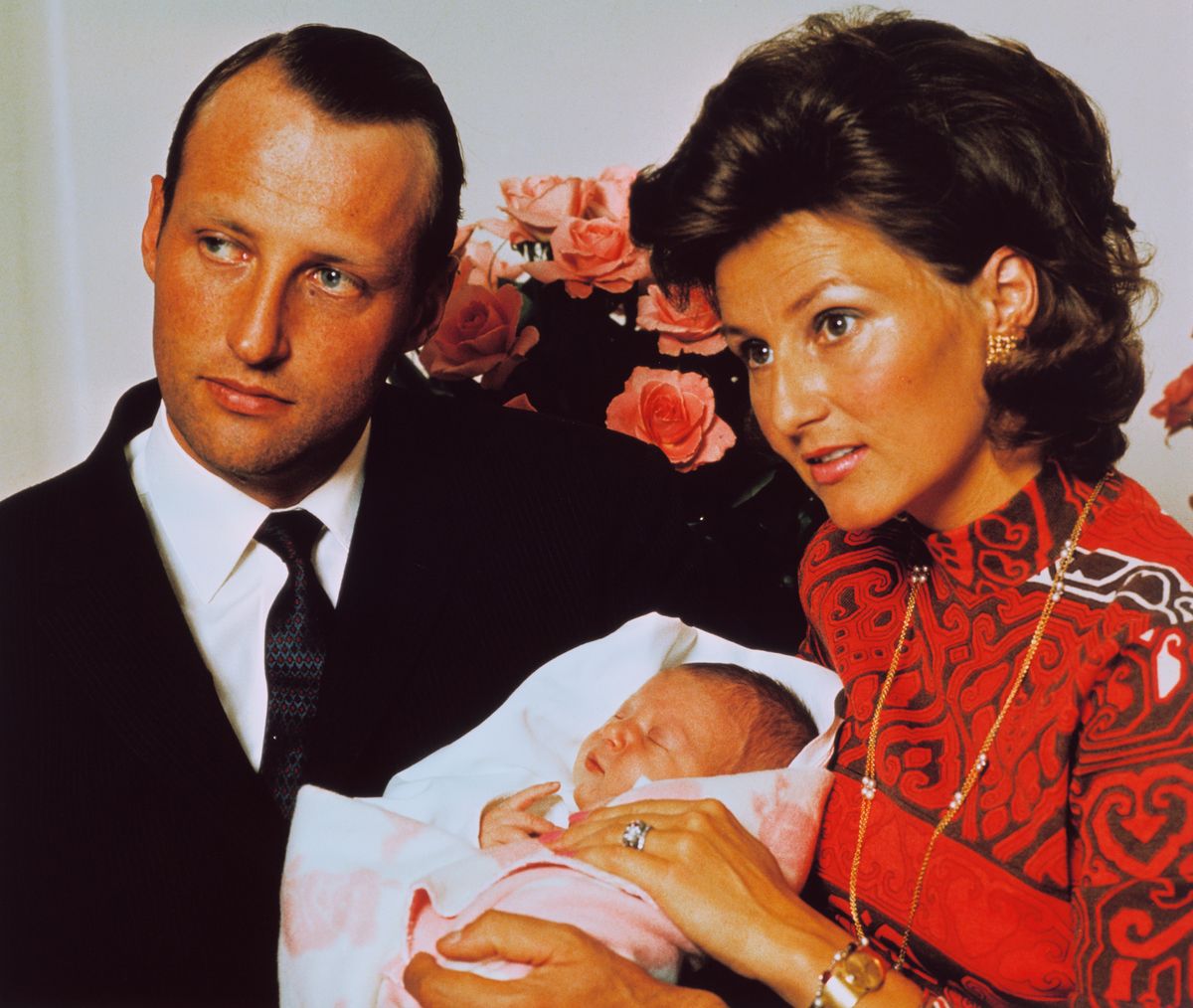
Harald became the first heir to a European throne to marry a woman who wasn't herself a princess, and King Olav's own popularity only reinforced the moment. From there, Harald and Sonja became one of the most visible and beloved royal couples in Europe, rarely seen apart in official or private life. Their first daughter, Princess Märtha Louise, was born September 22, 1971 — years before Norway adopted absolute primogeniture, the 1990 reform that made the eldest child heir regardless of gender. Their son, Haakon, was born July 20, 1973.
Having weathered their own fight to marry, Harald and Sonja made a quiet promise to give their children more freedom than they themselves had been granted, and raised them accordingly.
More than three decades on the throne
 © Sjöberg BildbyrÃ¥
By the summer of 1990, King Olav's health was failing, and Harald stepped in as regent. Olav died that winter, and on January 17, 1991, Harald was proclaimed king. Months later, following Norwegian tradition, he and Queen Sonja were blessed in a ceremony at Nidaros Cathedral in Trondheim, their crowns placed on either side of the high altar.
Watching from the front pew sat Prince Haakon and Princess Märtha Louise. The new king and queen brought a visibly different tone to a monarchy that had, in earlier generations, carried a heavier military bearing, shaped in part by the family's own history of wartime resistance.
A father to the nation
No single event tested Harald's reign like the July 2011 terrorist attacks on Utøya island and in Oslo, which killed 77 people — most of them teenagers — and wounded around a hundred more. The country was shattered, and the king's public response became a defining moment for how Norwegians processed their grief, much as his father and grandfather had once steadied the nation through darker days.
"Not only as king, but as a father, a grandfather and a husband, I feel your pain — I feel for each and every one of you," he said at the memorial services.
An athlete at heart
 © Getty Images
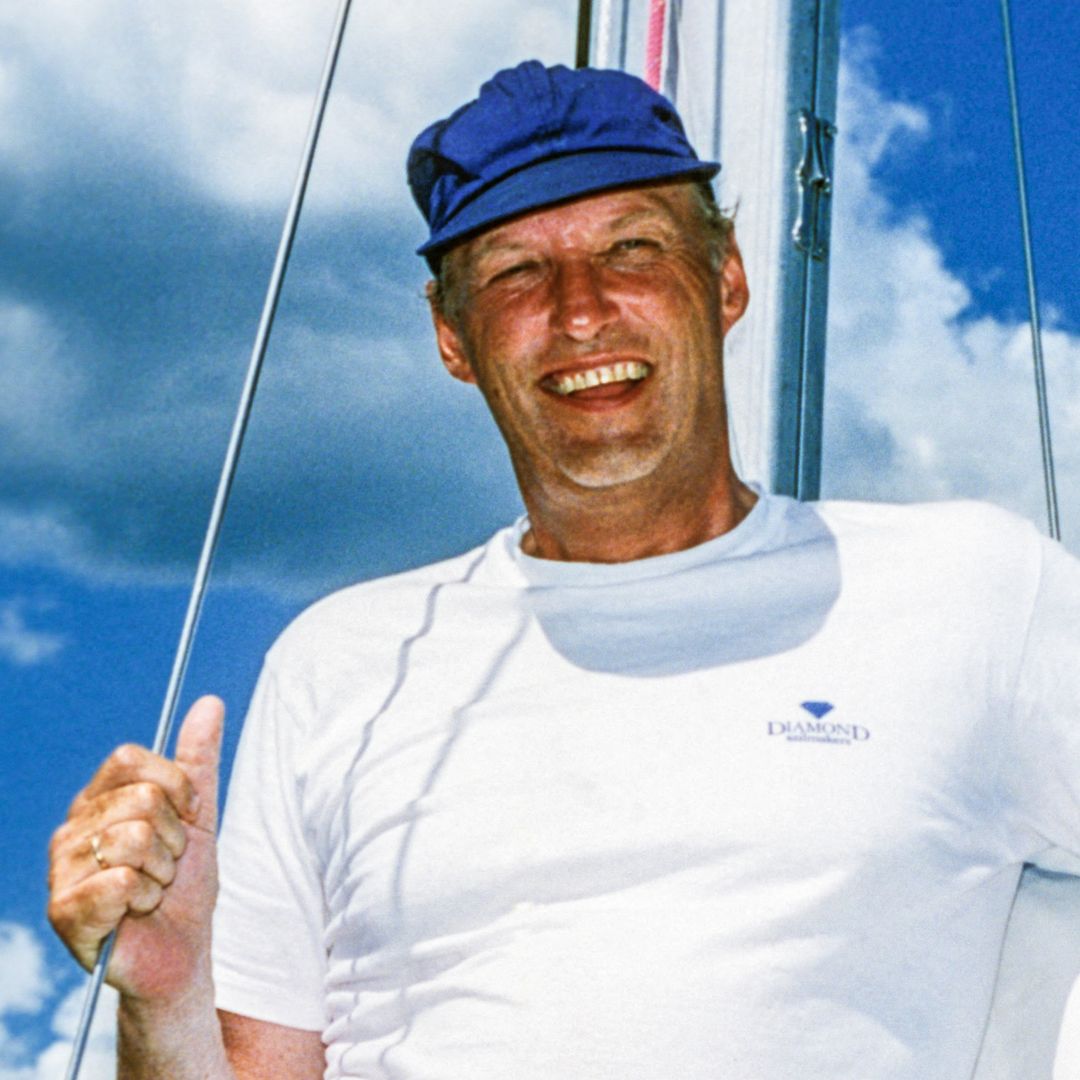
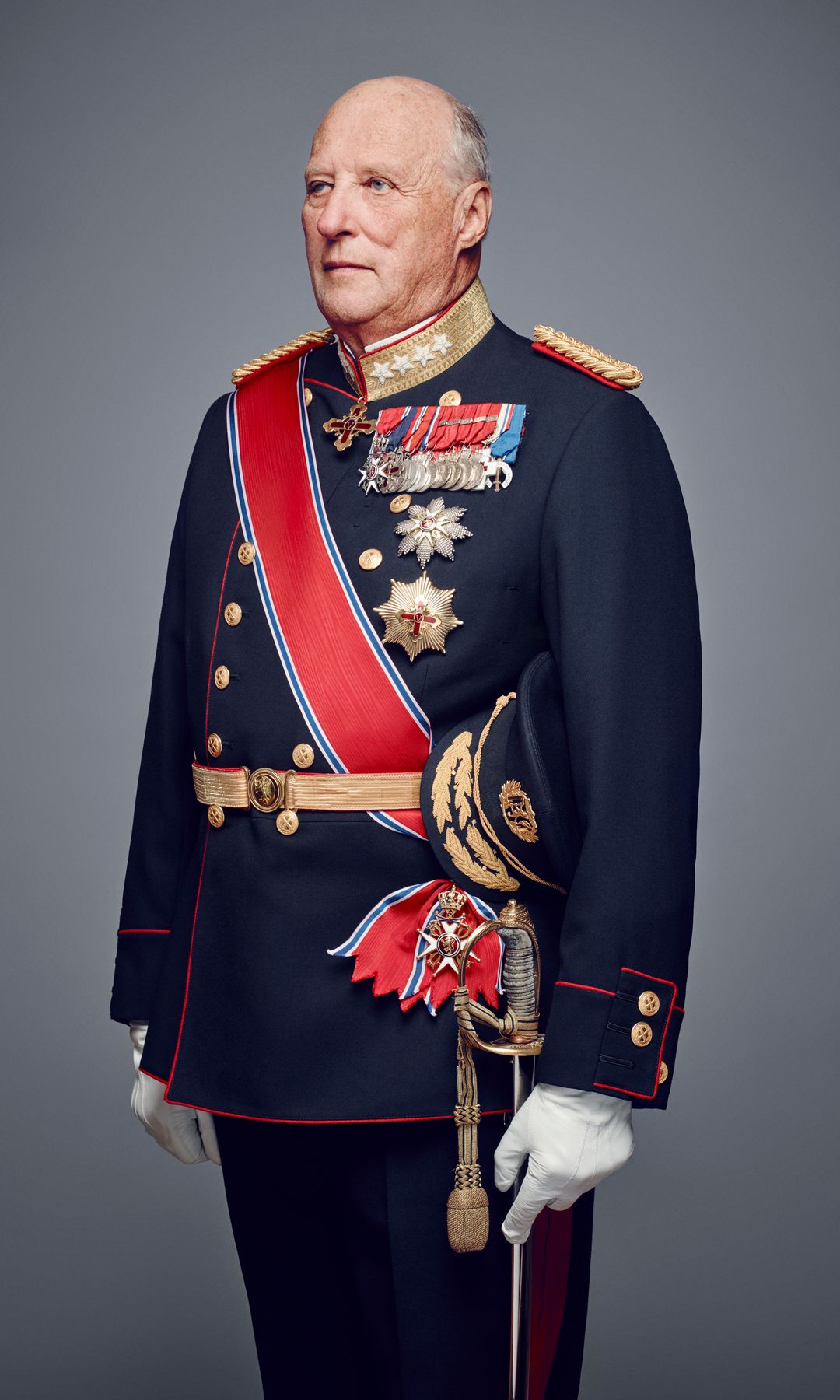
Away from the throne, Harald was a genuine competitor. He represented Norway in sailing at the 1964, 1968 and 1972 Olympic Games and remained an avid hunter, angler and outdoorsman throughout his life, collecting honors along the way. Sailing was the passion he held onto longest, giving it up only once he began relying on two canes to walk.
Harald's later reign brought its own share of institutional strain, even after the arrival of Princess Ingrid Alexandra — Haakon and Mette-Marit's eldest child and next in line to continue the monarchy — ushered in a period of relative calm.
The family was shaken by the 2019 death of Ari Behn, the first husband of Princess Märtha Louise and father of her three daughters, by suicide. Harald became an anchor for the family in the aftermath, determined that his granddaughters wouldn't carry that loss in silence, and used his traditional New Year's address to put mental health on the national agenda.
It wasn't the family's last hard chapter. Harald later found himself in the position of having to formally step his only daughter back from royal duties — a move made so Princess Märtha Louise could pursue her life and business ventures freely alongside her partner, Durek Verrett.
More gravely, Marius Borg Høiby, Crown Princess Mette-Marit's son from a relationship before her marriage to Haakon, was convicted in 2026 on dozens of criminal counts, including rape. He was sentenced to four years in prison. In that same period, his daughter-in-law Mette-Marit underwent a lung transplant after her pulmonary fibrosis worsened — a health crisis playing out inside the family up until the king's own final illness.