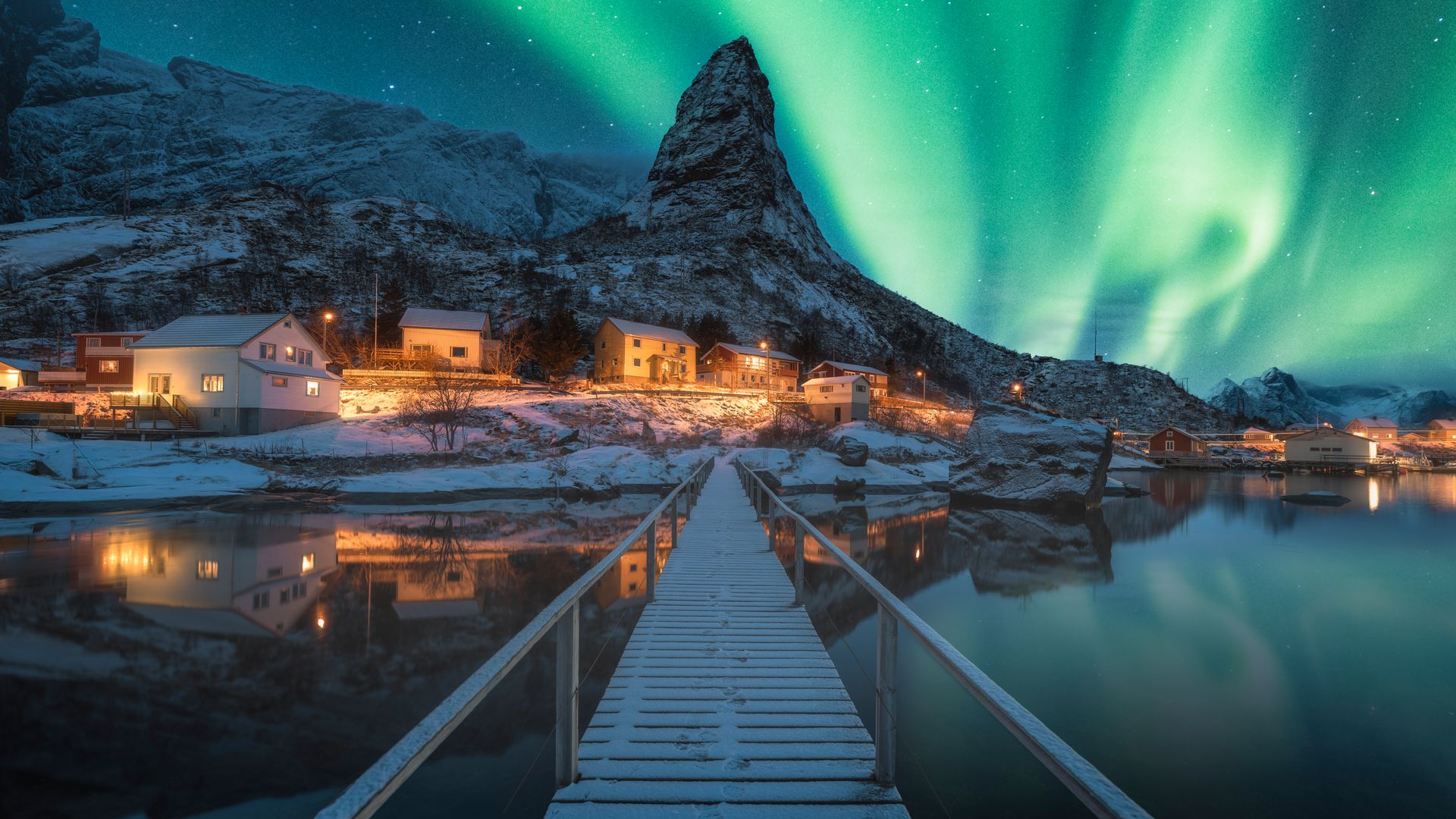
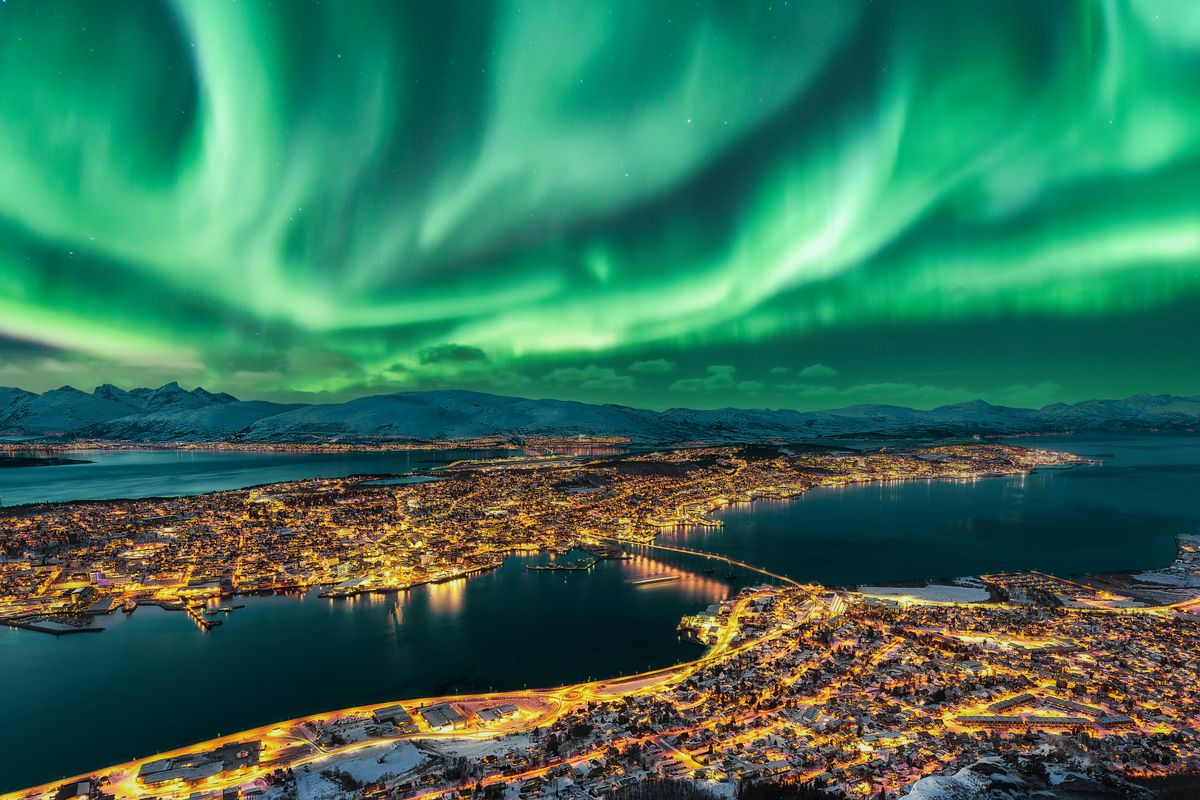
The northern lights may be putting on an encore tonight, and millions of Americans could have a chance to catch the colorful display without traveling to Iceland or Alaska.
A new geomagnetic storm forecast suggests that the aurora borealis could be visible across as many as 22 U.S. states overnight Thursday, October 8, into Friday, October 9, 2026.
 © Getty Images
According to the National Oceanic and Atmospheric Administration (NOAA), a burst of solar material heading toward Earth could trigger minor to moderate geomagnetic storm conditions, potentially bringing the northern lights farther south than usual.
The agency has issued a G2 geomagnetic storm watch for Friday, October 9, raising the possibility of aurora sightings in states including New York, Pennsylvania, Michigan, Colorado and Oregon.
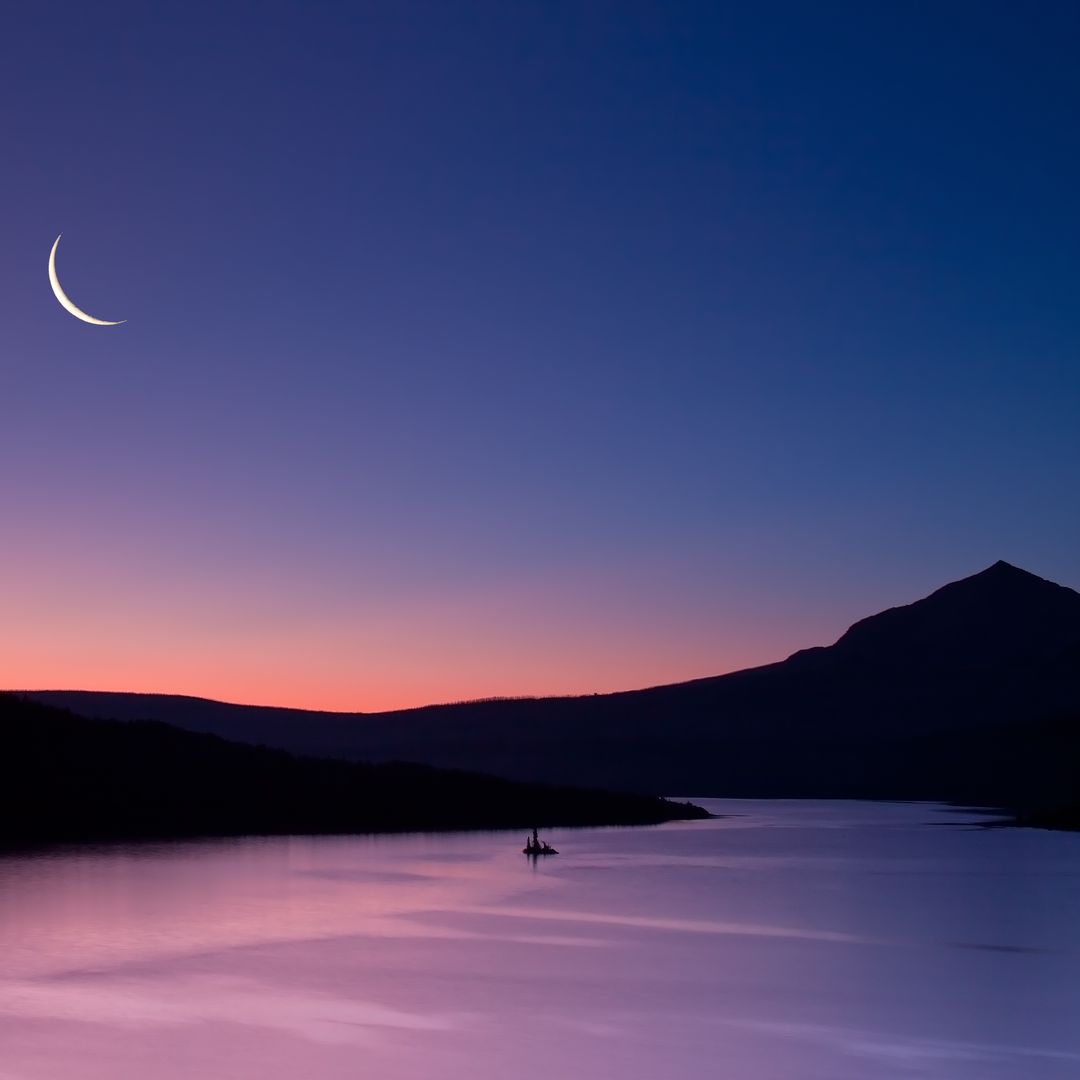
And there's another reason to look up: The approaching new moon means darker skies, which could make faint auroras easier to spot.
 © Getty Images
What Time Will the Northern Lights Be Visible Tonight?
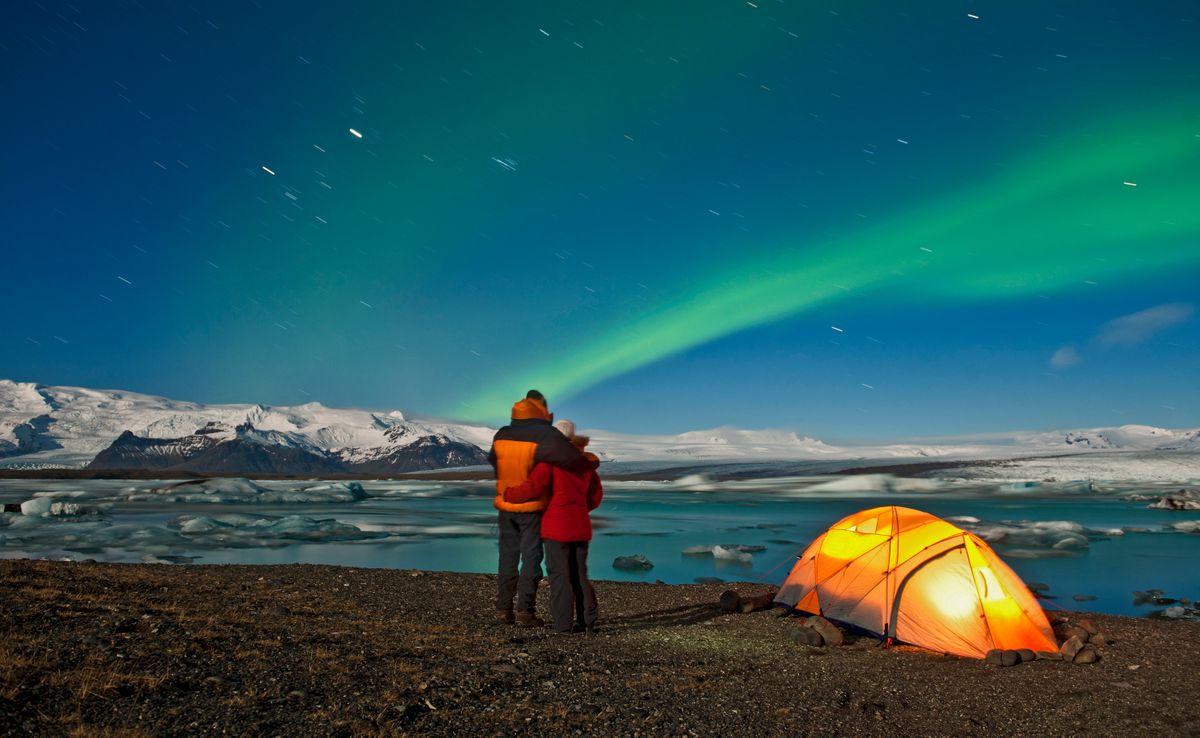
If you're planning to watch the northern lights tonight, timing could make all the difference.
Current forecasts suggest auroral activity could begin increasing around 11 p.m. Eastern Time on Thursday, October 8, with stronger geomagnetic activity possible during the early morning hours of Friday, October 9.
NOAA's forecast indicates the most intense period could occur around 5 a.m. Eastern Time on Friday, although the actual timing will depend on when the solar material reaches Earth.
 © Getty Images/Cavan Images RF
Here's a quick guide to the potential viewing windows across U.S. time zones.
Time zone
Potential viewing window
Eastern: 11 p.m. Thursday to 6 a.m. Friday
Central: 10 p.m. Thursday to 5 a.m. Friday
Mountain: 9 p.m. Thursday to 4 a.m. Friday
Pacific: 8 p.m. Thursday to 3 a.m. Friday
These are broad windows for watching, not guaranteed periods of aurora visibility. The strongest forecast activity may occur closer to dawn in the Eastern time zone, when daylight could already be approaching in some locations.
Which 22 States Could See the Northern Lights Tonight?
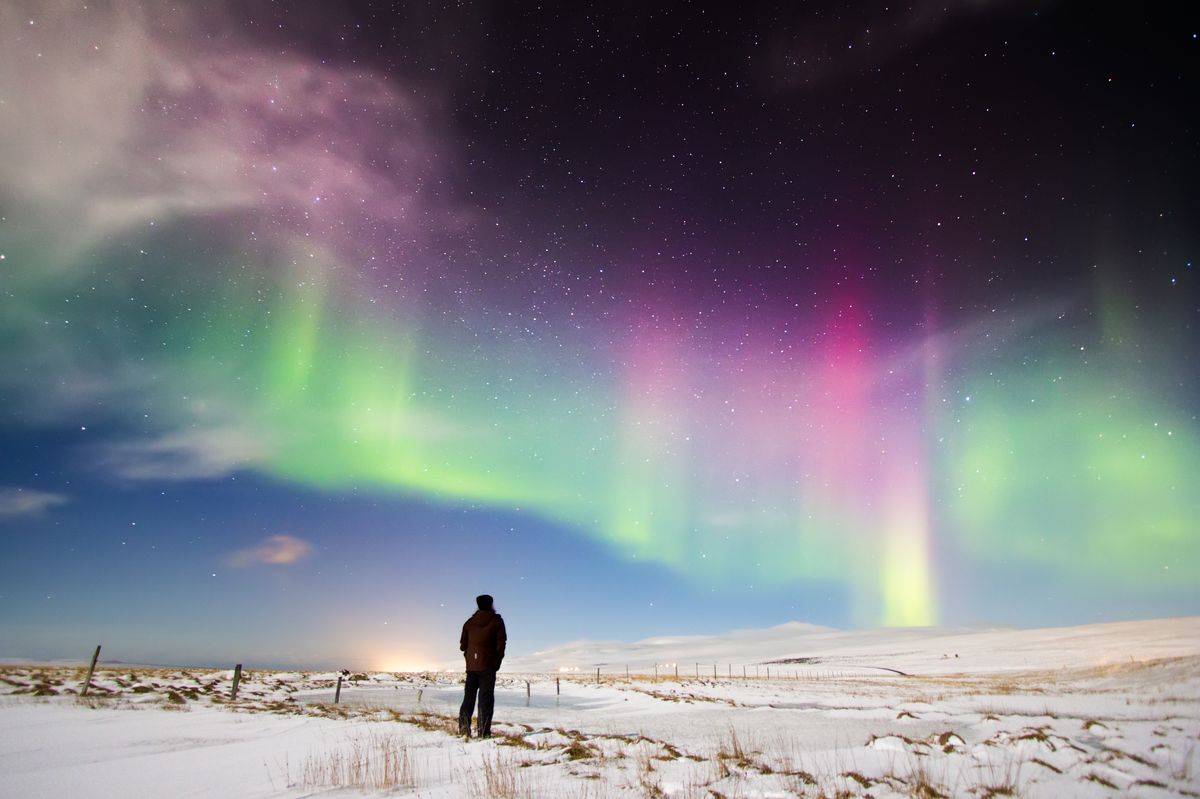
The northern lights are usually associated with destinations such as Alaska, Norway and Iceland. However, stronger geomagnetic storms can expand the auroral oval, allowing the lights to become visible across more of the continental United States.
 © Getty Images
Based on the current G1 to G2 storm outlook, the following 22 states have potential viewing opportunities.
States with better chances of seeing the northern lights
These 12 states are among the more favorable locations, particularly in northern areas with clear skies and minimal light pollution.
- Alaska
- Washington
- Idaho
- Montana
- North Dakota
- South Dakota
- Minnesota
- Wisconsin
- Michigan
- Maine
- Vermont
- New Hampshire
States where northern lights could appear if the storm strengthens
A moderate G2 geomagnetic storm could make the aurora visible or photographable farther south, particularly near the northern horizon.
- Oregon
- Wyoming
- Nebraska
- Iowa
- Illinois
- Indiana
- Ohio
- Colorado
- Pennsylvania
- New York
Being on this list does not guarantee a visible display. In southern portions of these states, the northern lights may be extremely faint or detectable primarily through long-exposure photography.
NOAA's storm watch indicates that auroras could potentially reach as far south as a line stretching from New York through Wisconsin to Washington state.
How to See the Northern Lights Tonight Without Special Equipment
You don't need a telescope or expensive equipment to enjoy the aurora borealis. In fact, the most important preparation is choosing the right viewing location.
Find a dark area away from city lights. Rural roads, open fields, lakeshores and designated dark-sky locations can provide better viewing conditions than brightly illuminated neighborhoods.
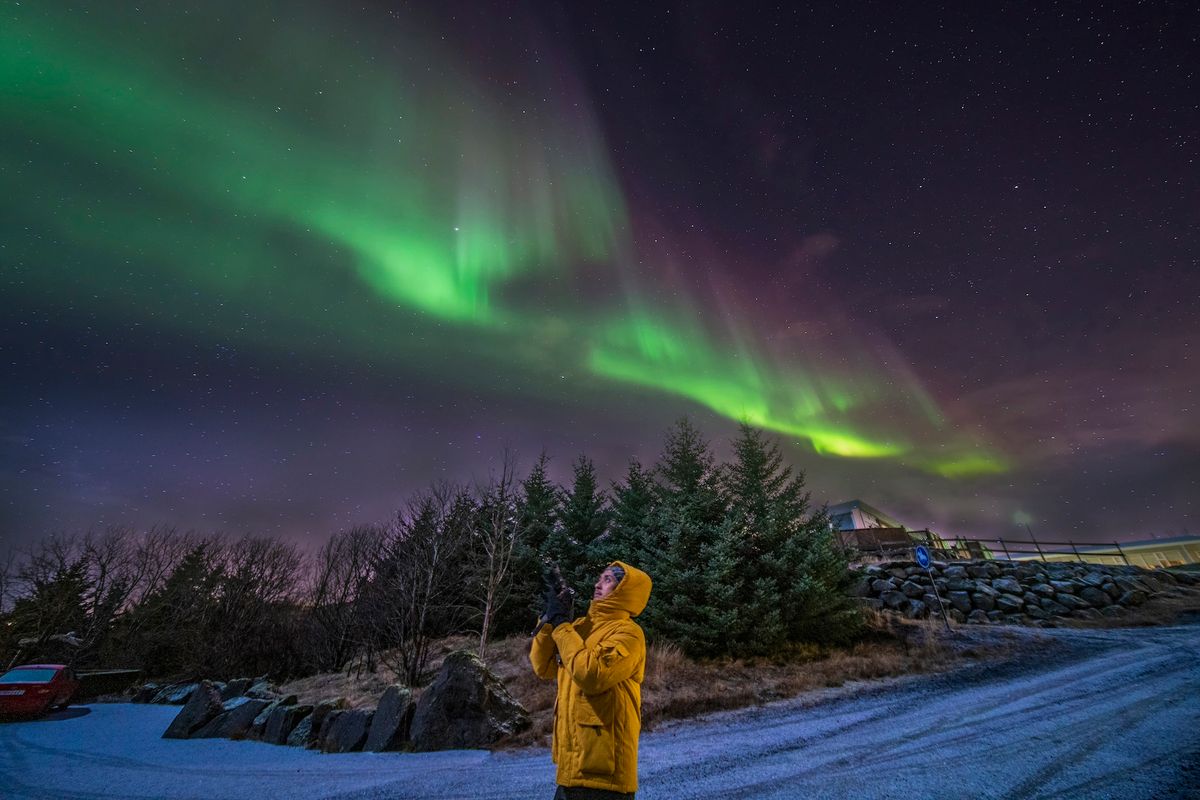
Face north. In states farther from the Arctic, the aurora is more likely to appear low along the northern horizon rather than directly overhead.
 © Getty Images
Check the weather forecast. Clouds can completely block an aurora display, even during strong geomagnetic activity.
Give your eyes time to adjust. Spend approximately 20 to 30 minutes away from bright lights to improve your ability to detect faint details.
Stay patient. Aurora activity can fluctuate, sometimes producing brief bursts of brightness followed by quieter periods.
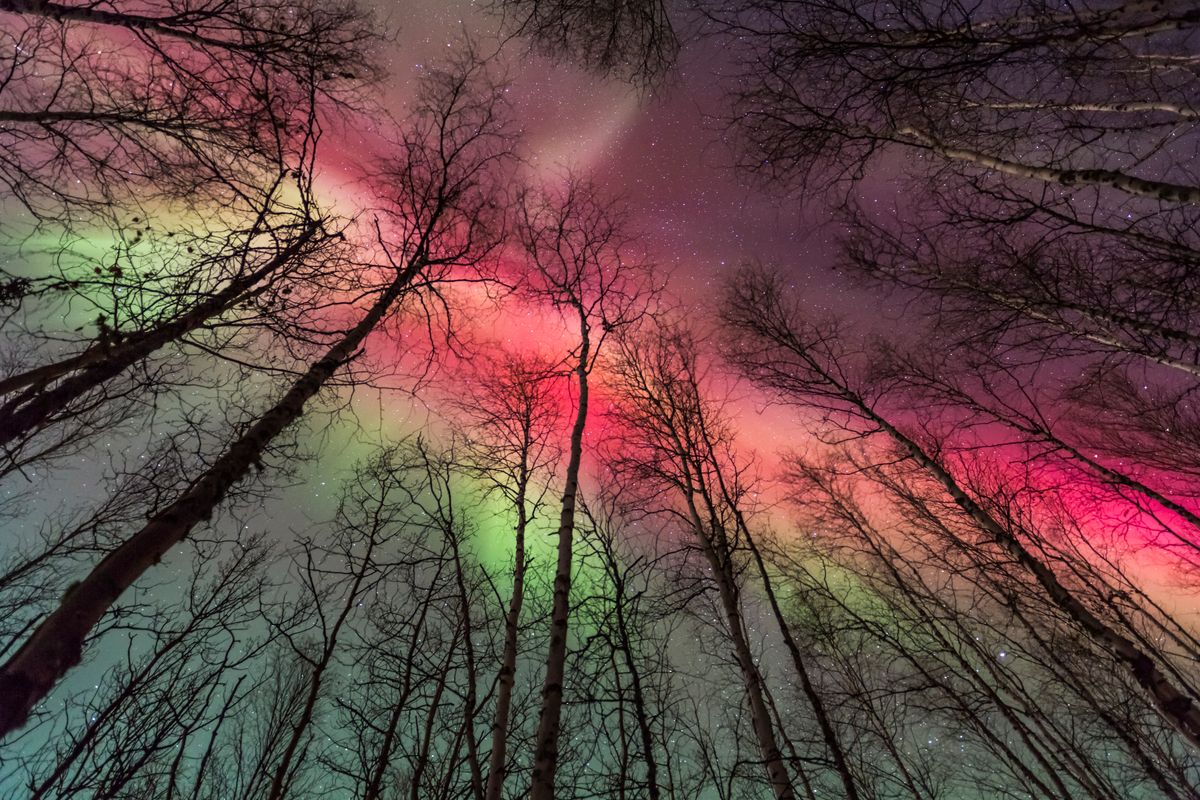
The northern lights don't always look as dramatic in person as they do in photographs. A faint aurora may resemble a pale gray or greenish glow. Your smartphone camera might reveal pink or purple colors that aren't immediately noticeable to the naked eye.
How to Photograph the Northern Lights With an iPhone or Android
If you're hoping to capture the northern lights for Instagram or simply want a memorable photo, your smartphone may be enough.
Modern iPhones and Android devices often include night photography features designed to capture more light in dark environments.
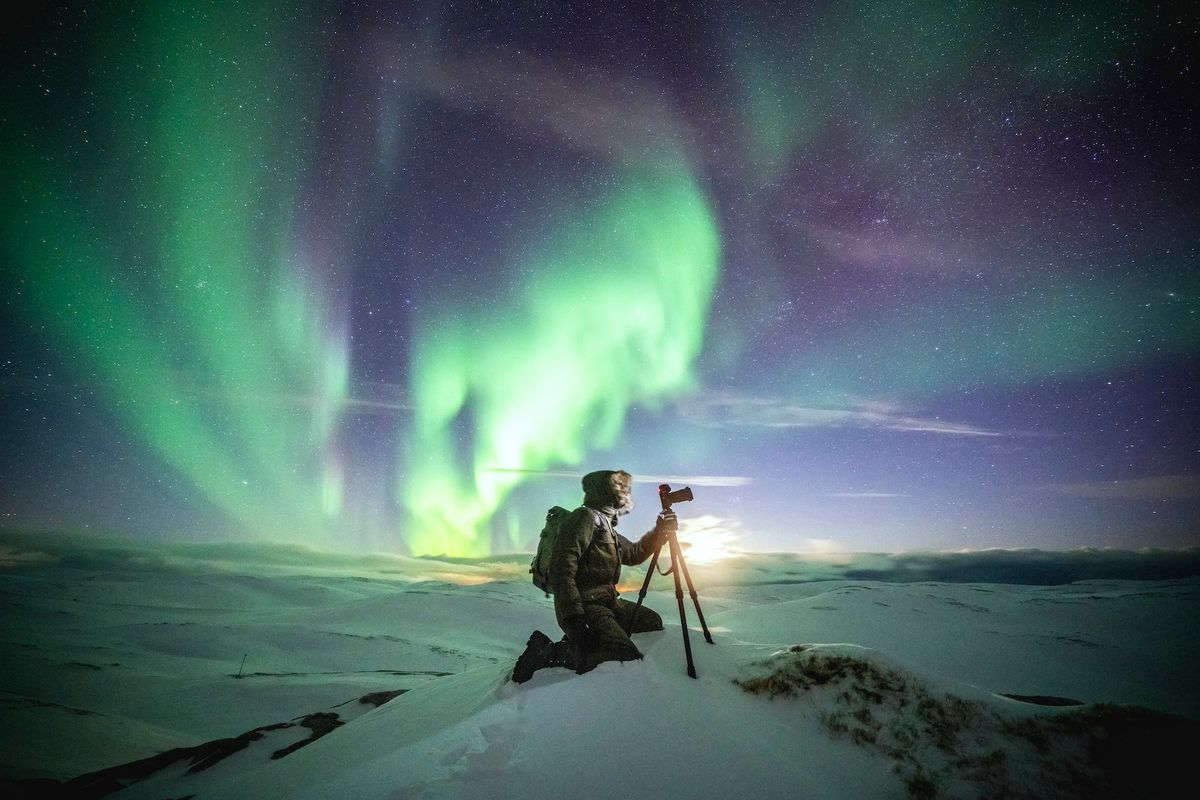
For better aurora photos, activate Night Mode or your phone's equivalent long-exposure setting. Place your device on a tripod or stable surface, turn off the flash, and use a timer to reduce movement when taking the picture.
 © Getty Images
If your camera allows manual controls, experiment with exposure times of several seconds. Shorter exposures may work better when the aurora is moving quickly, while longer exposures can help capture faint colors.
Avoid excessive digital zoom, which can reduce image quality.
And remember, a camera can sometimes detect the northern lights even when they appear barely visible to your eyes.