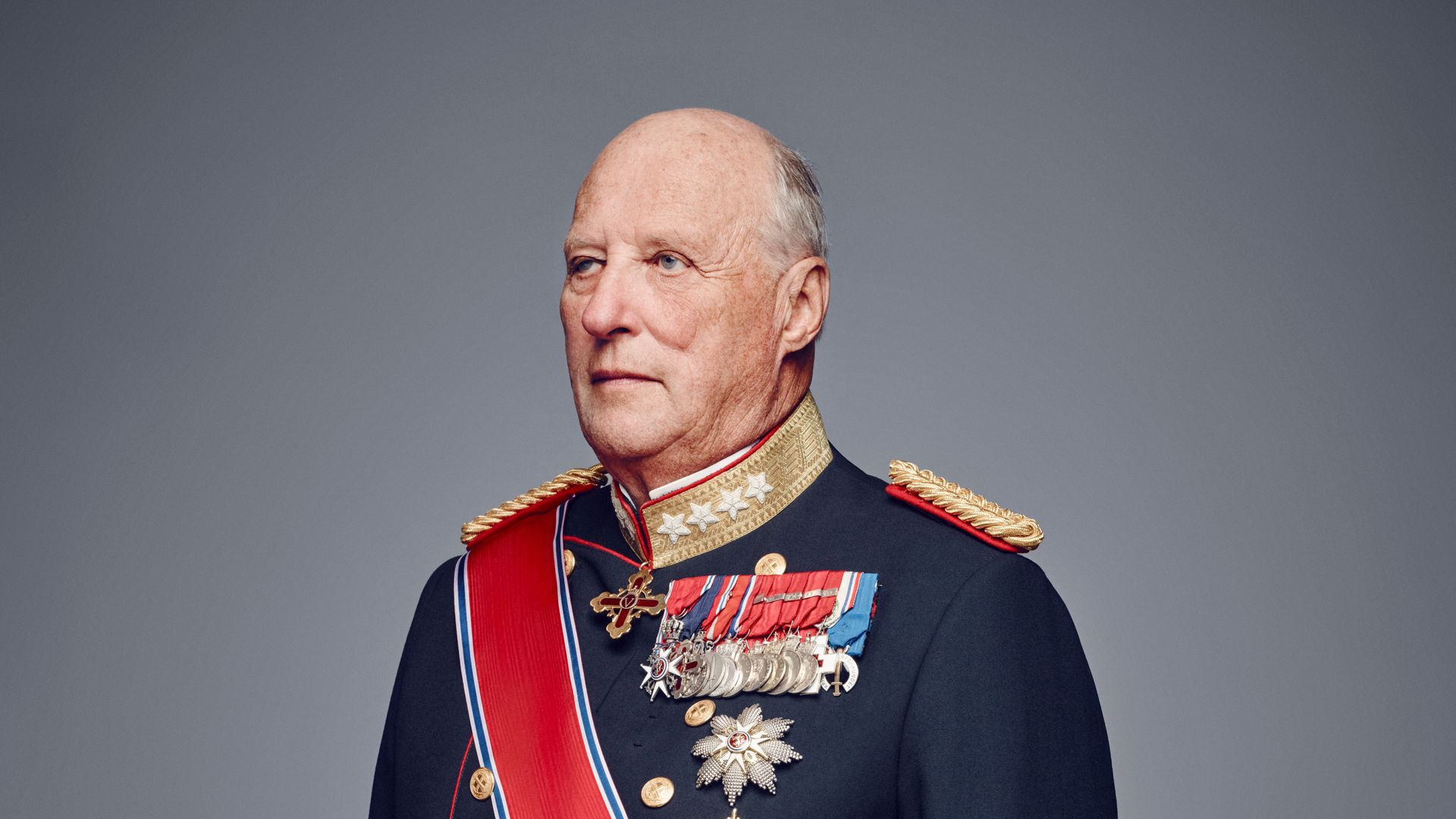
Three weeks after King Harald V's death on August 28, Norway's royal house has shown the world where he now rests. The tomb is a study in green, made of a stone that formed deep inside the Earth some 400 million years ago and was later pushed to the surface by the same tectonic forces that shaped Norway itself. That stone is olivine, and it gives the sarcophagus its cool, mossy color and its veining.
 © Ola Vatn/The Royal Court
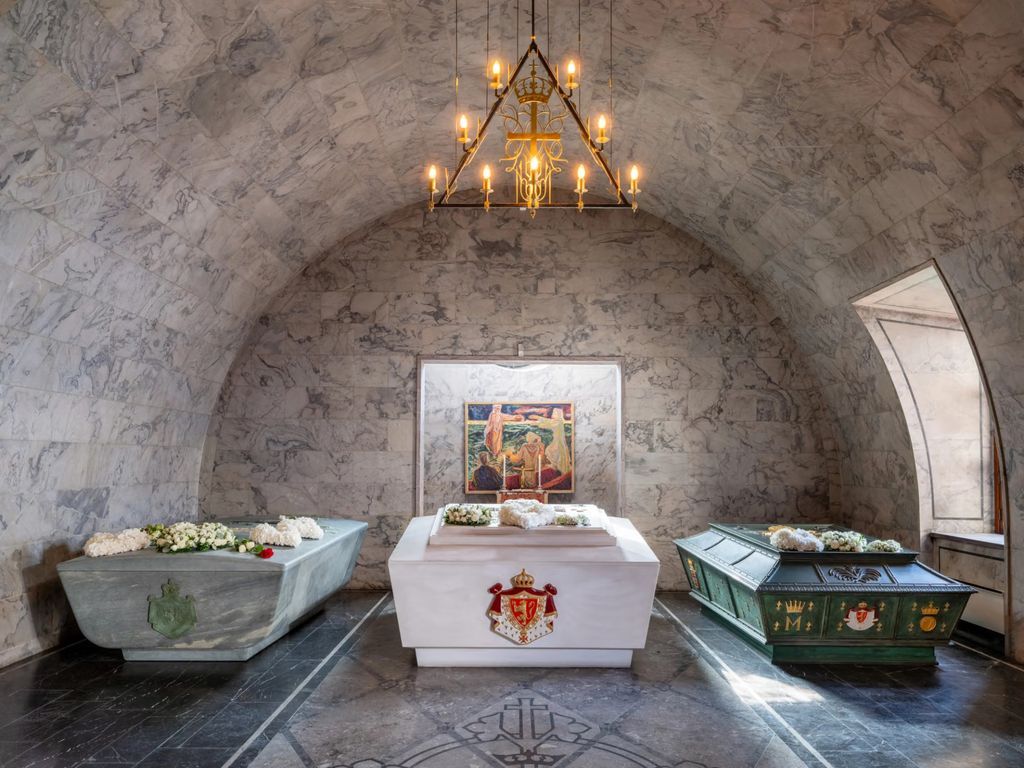
The design is a vessel with a rounded hull. The royal house says the shape reflects the king's lifelong bond with the sea: the hull shields whatever is aboard and carries it safely onward. It also echoes the Viking ship burials, in which a boat bore the dead on a final voyage to another realm.
Queen Sonja's love of the Norwegian landscape shaped the choice of material just as much. She and Harald spent decades crossing the countryside on foot and on skis, so a Norwegian stone felt natural. The stone comes from Sunnmore, a region the queen has walked often and knows well, and was quarried at Steinsvik Olivine in Volda. Olivine can also absorb and bind carbon dioxide, a quality the designers highlighted as a symbol of the couple's devotion to nature and their concern for future generations.
 © Ola Vatn/The Royal Court
A closer look at the details
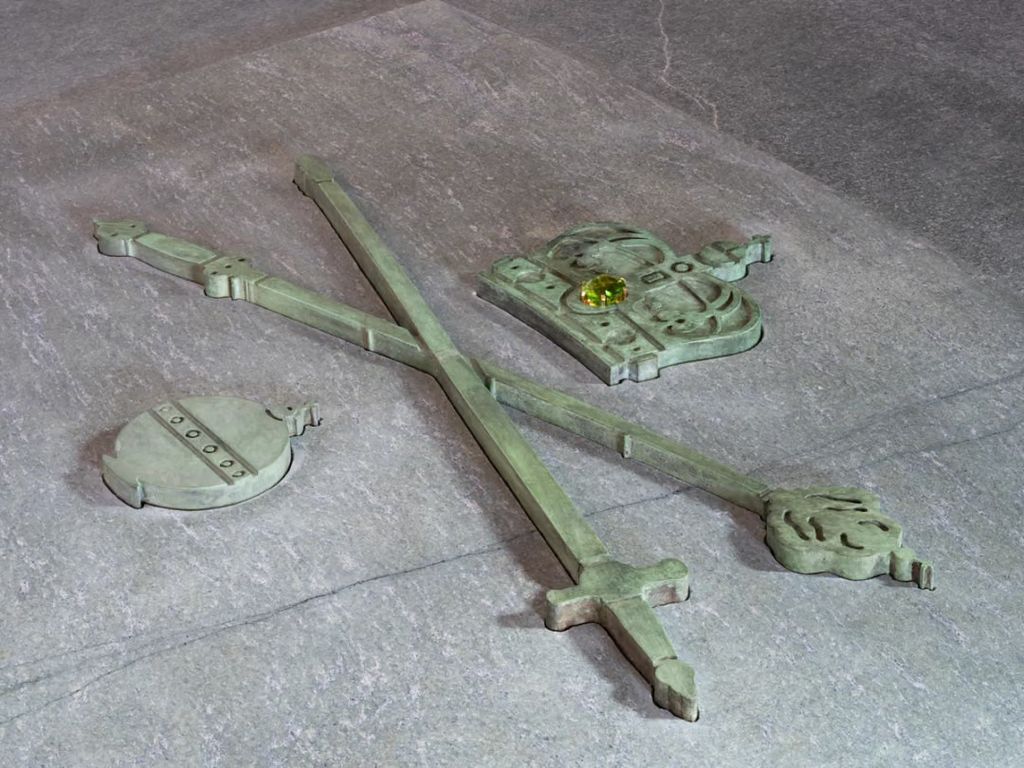
The lid carries the royal regalia in bronze: the crown, orb, scepter and sword. The royal coat of arms sits at the foot. Two crowns on the lid are set with peridot, the clear green gemstone that is the gem-quality form of olivine. It was cut from the same stone, and it also appears on the arches of the actual royal crown.
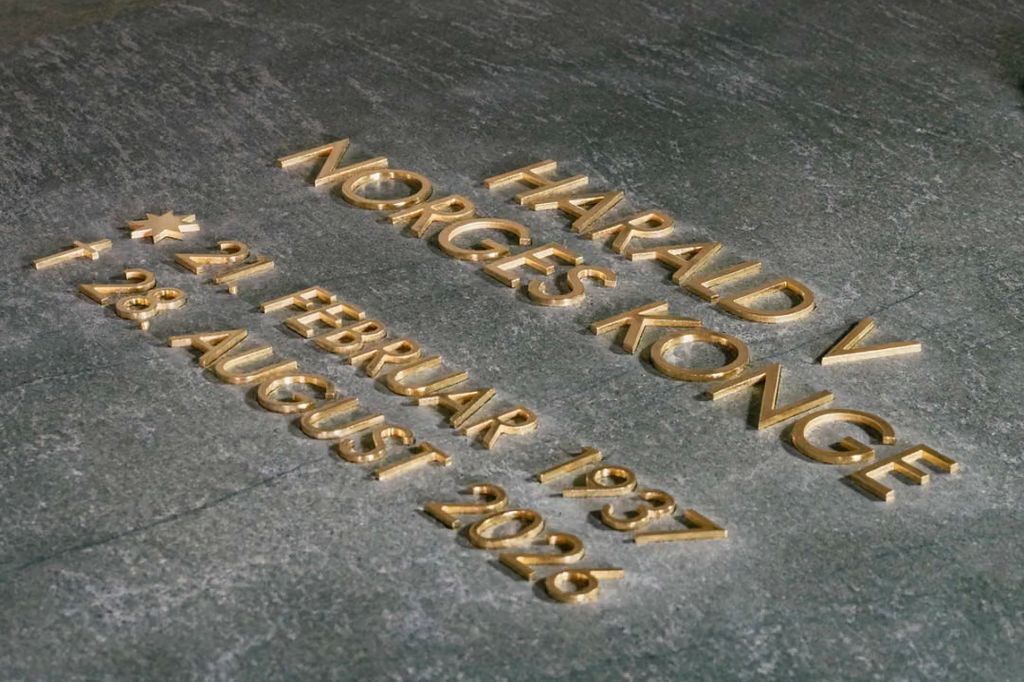
Every ornament is handmade, cast in bronze by the traditional lost-wax method and set partly sunk into the surface. The inscription is cut in brass, gilded and partly inlaid, in the Futura typeface designed by Paul Renner in the 1920s.
The sarcophagus was designed by the Norwegian architecture firm Snøhetta, led by architect Kjetil Trædal Thorsen, and it is built entirely from Norwegian materials by Norwegian craftspeople. It consists of ten large stone sections, assembled at a stonemasonry workshop in Skjeberg.
 © Ola Vatn/The Royal Court
The peridots were cut and polished in Averøy, the bronze symbols cast at Kristiania Kunst- & Metalstøberi, and the brass lettering water-cut in Sande. The government set aside 20 million kroner for the project in 2024.
The sarcophagus stands in the royal mausoleum beneath the Akershus Fortress chapel in Oslo, beside those of Harald's parents, King Olav and Crown Princess Märtha, and his grandparents, King Haakon VII and Queen Maud. Harald was laid to rest there on September 9 after a private ceremony, and Queen Sonja will one day join him. T
he mausoleum is not open to the public, and the images released Friday are the first look at the tomb. Now led by his son, King Haakon VIII, the monarchy is still in mourning for a king who was deeply loved by his family, his people and fellow monarchies around the world.
 © Avalon