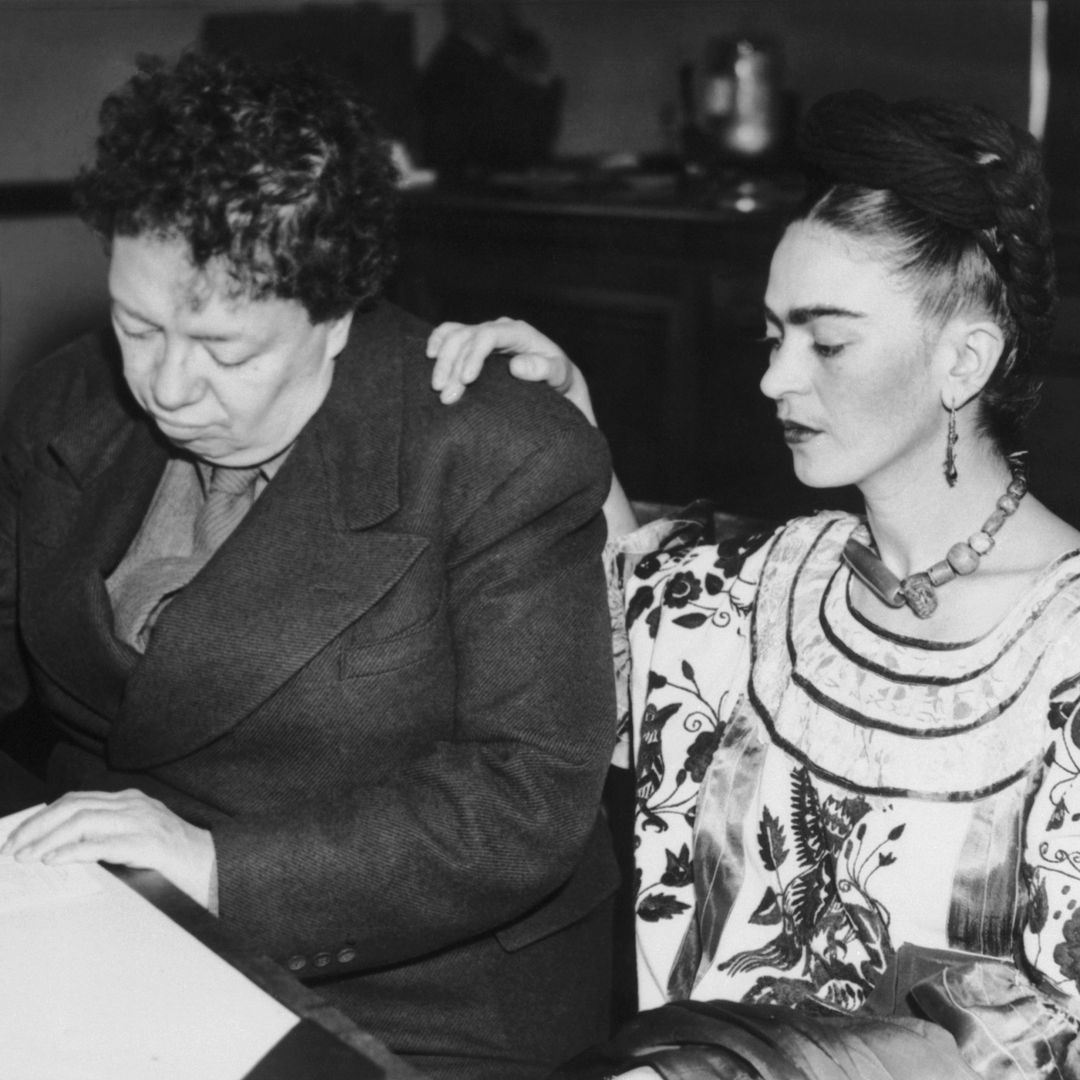
Few figures in Latin American culture blur the line between woman and myth quite like Frida Kahlo. For many generations, the Mexican painter has become larger than life. Her image, the flowers, the brows, the Tehuana dresses, all have been reproduced endlessly across fashion campaigns, beauty collections, tote bags, and social media feeds, often flattening one of the most interesting and emotionally complex artists of our time into an aesthetic shorthand.
But at the Metropolitan Opera, Isabel Leonard is trying to portray something far more intimate.
 © Michael Thomas
“I’m not here to do a caricature of her,” the mezzo-soprano says of stepping into the role of Kahlo in Gabriela Lena Frank’s El Último Sueño de Frida y Diego. “I would rather portray a human, her emotional journey, because that’s something we can all share.”
The opera, which imagines Frida and Diego Rivera navigating memory, grief, love, and the afterlife through Mexican folklore, has become one of the NY Met’s most culturally resonant productions in recent years. Not simply because of its visual grandeur, but because of the emotional authenticity at its core.
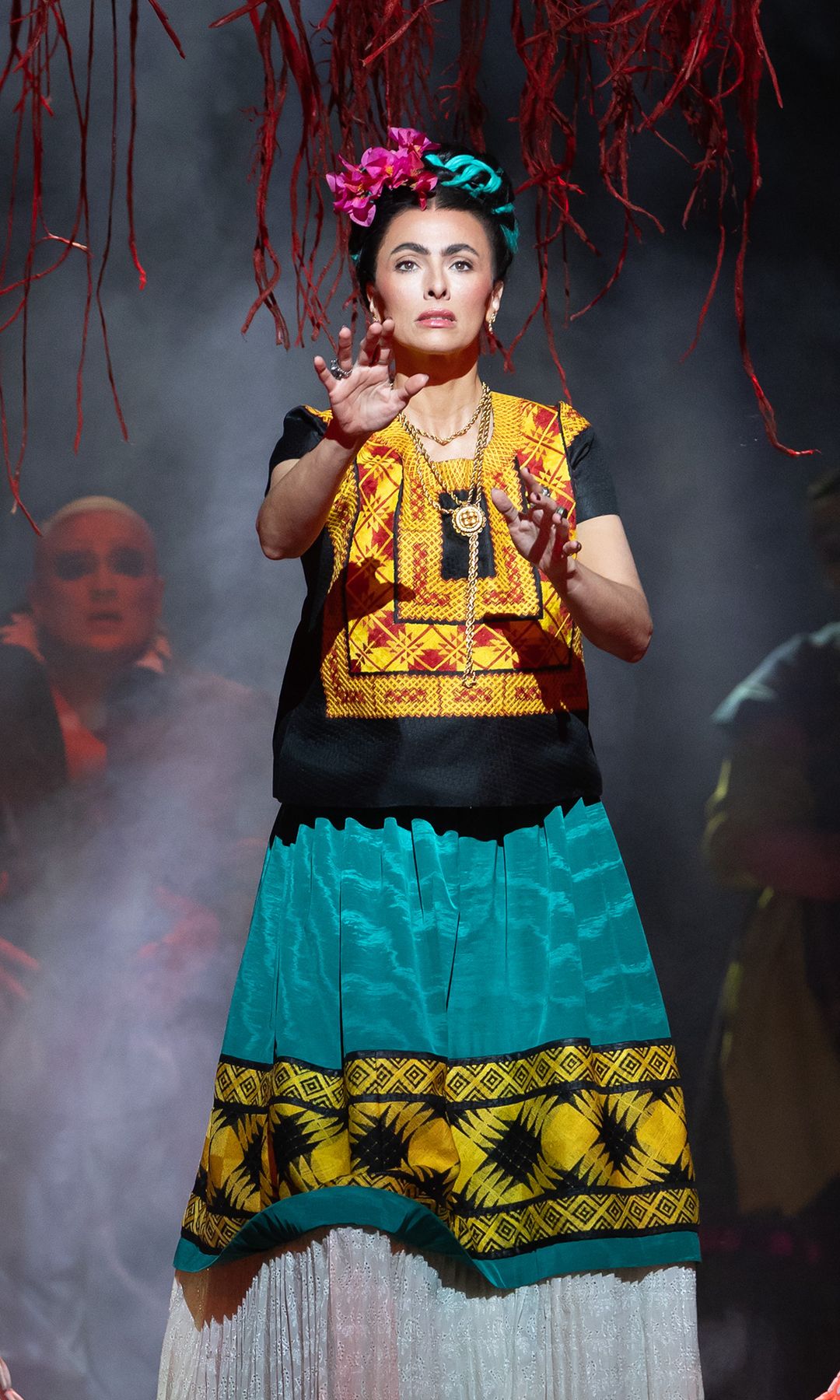 © Marty Sohl / Met Opera
For Leonard and soprano Gabriella Reyes, who portrays the commanding yet compassionate La Catrina, the production represents something even larger: a chance to bring a distinctly Latin American emotional language to one of the world’s most prestigious stages.
“I don’t even remember learning about Frida because she was always there culturally,” Reyes says. “Exactly,” Leonard adds. “There are certain iconic women you simply grow up knowing.”
When asked how they felt when asked to join the production, Leonard said, “Even without listening to the music or knowing the story, it would have been a yes.”
Reyes adding that for her, “It’s was another chance to champion a Latin American story. It's such a beautiful thing of representing our culture so authentically."
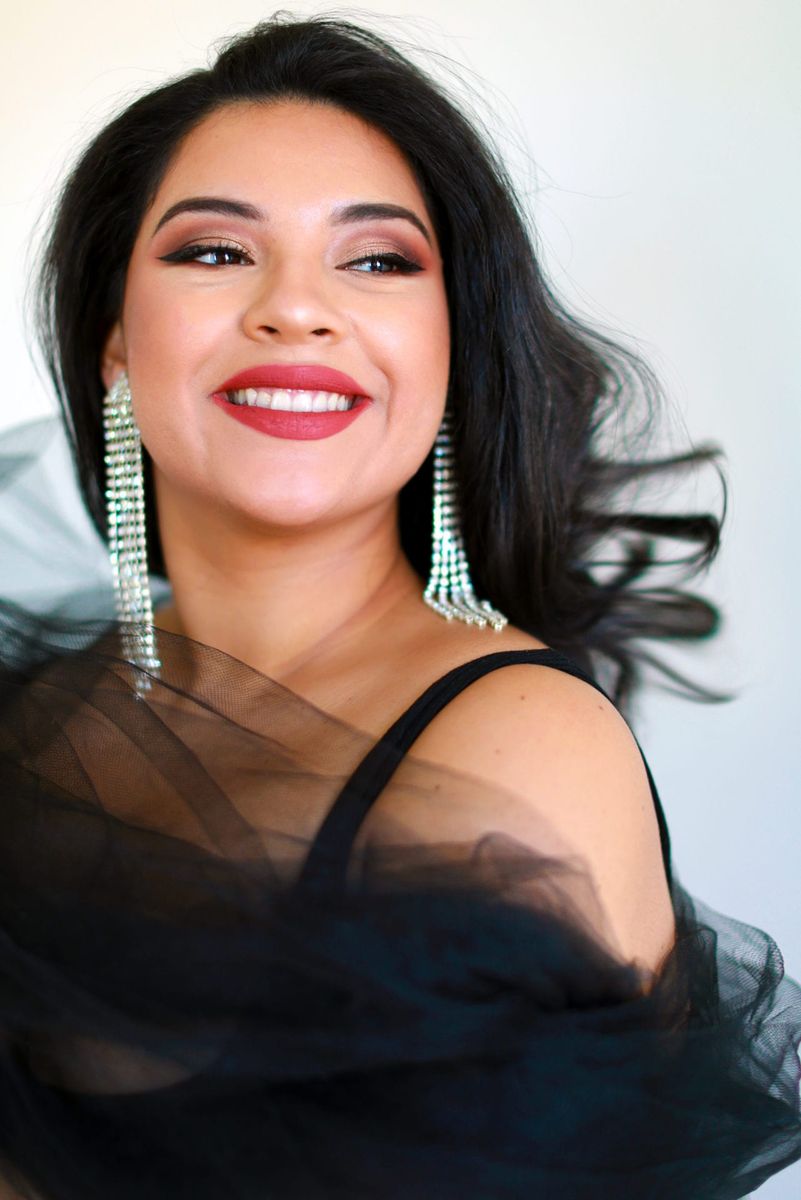 © Dario Acosta
For both women, Frida was never simply an artist they later discovered. She was always there.
Growing up in New York, Leonard says her father regularly took her to museums like MoMA and the Met, where she encountered Kahlo’s work early on. For Reyes, Frida existed almost as an inherited cultural memory, a figure woven naturally into Latina identity long before this production. That emotional connection shaped the way Leonard approached the role itself. “I can only speak from what I’ve learned about her history, her life, her challenges, her literal and emotional pain,” Leonard says.
“Rather than worrying about portraying Frida Kahlo perfectly, because I don’t think anyone ever truly can. I wasn’t interested in doing a caricature of her. I wanted to portray her humanity and her emotional journey, which is something we can all relate to."
 © Marty Sohl / Met Opera
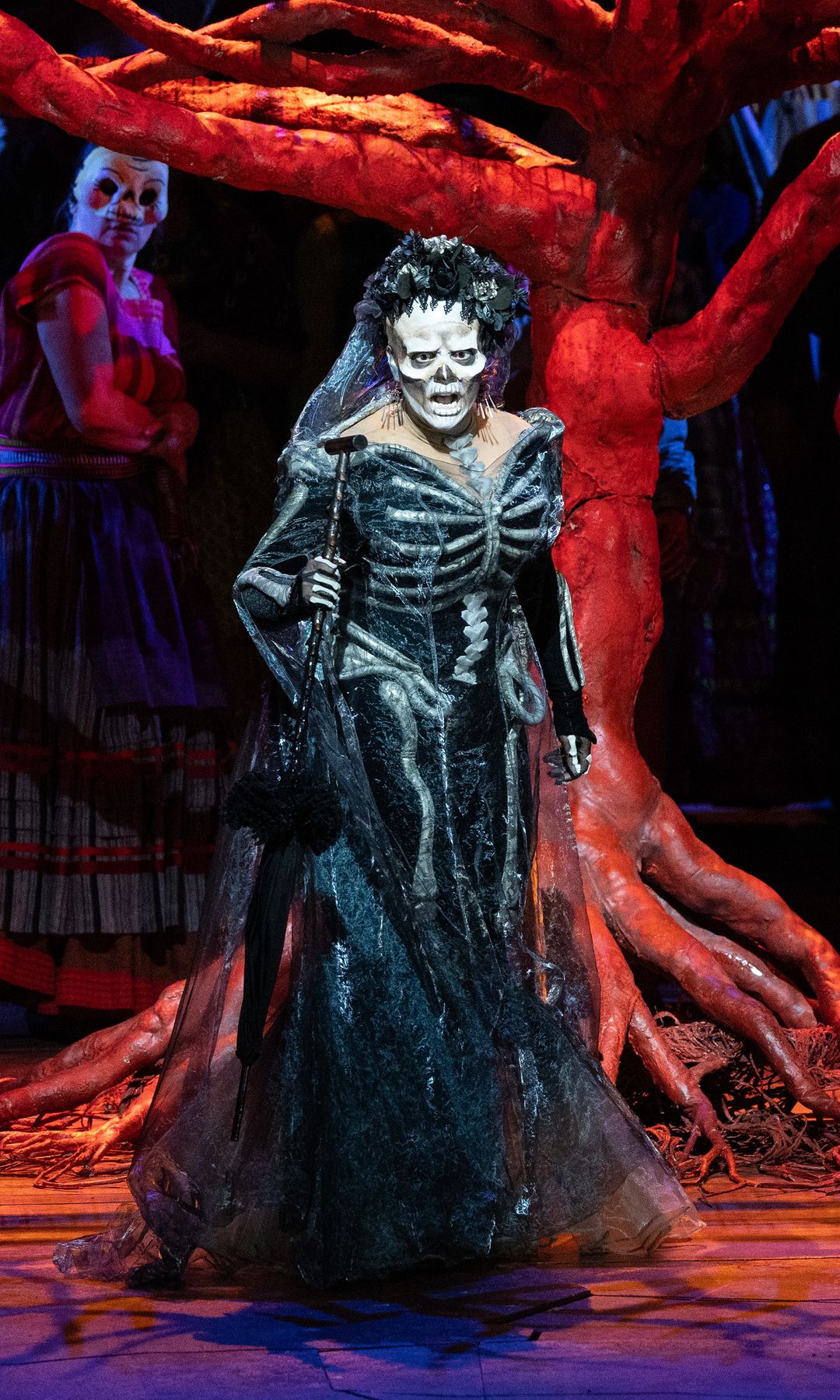
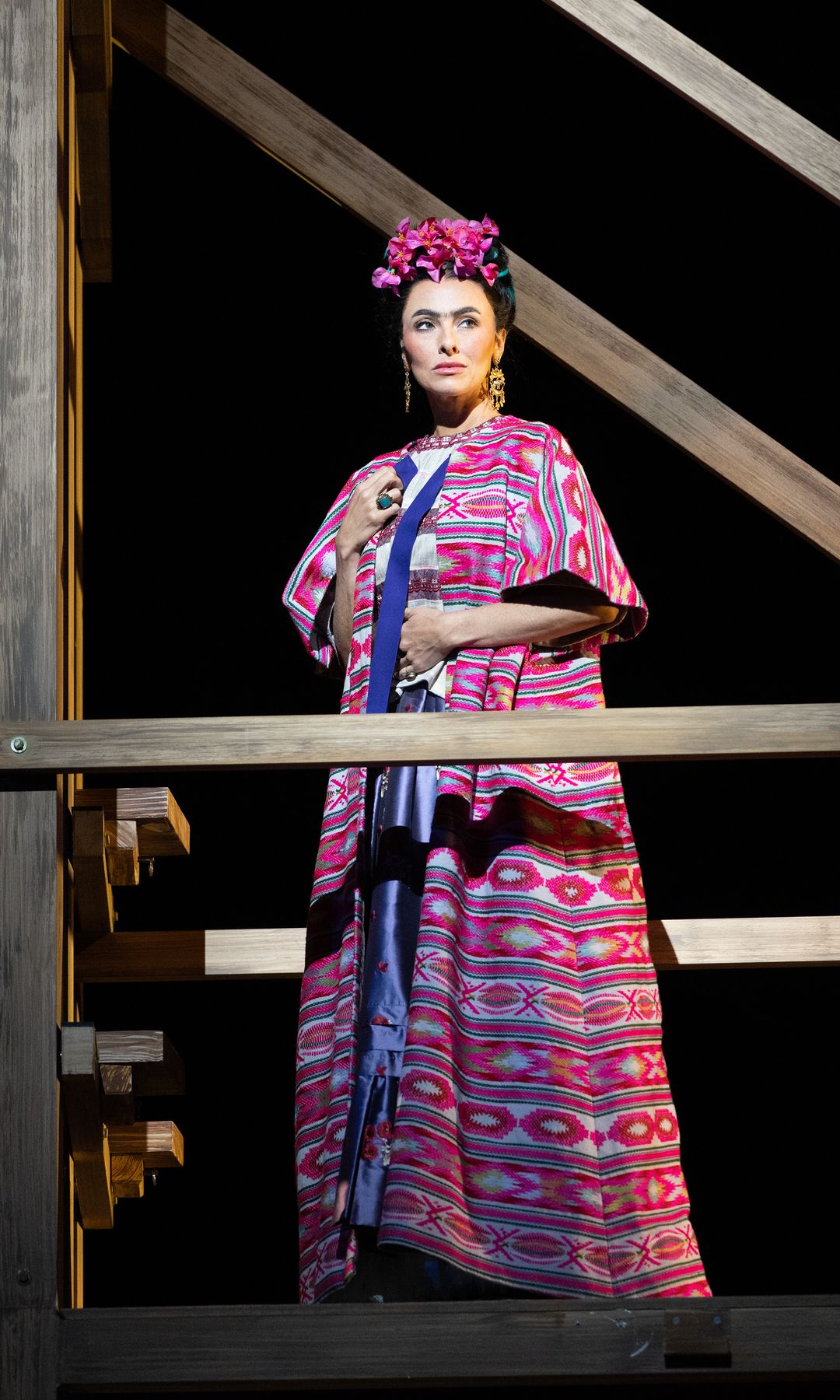
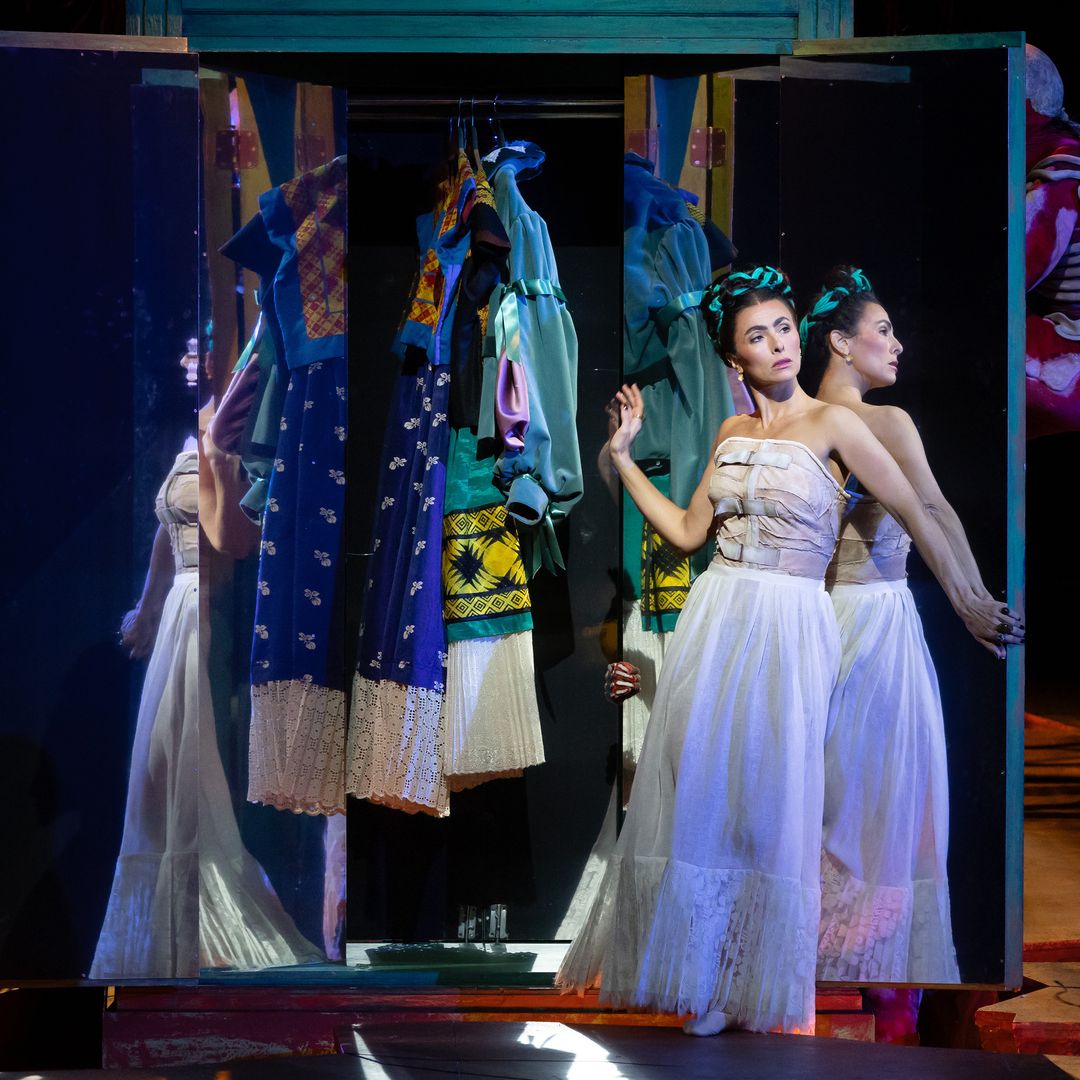
Portraying an icon as beloved and mythologized as Kahlo can easily become restrictive, she admits. “When you’re portraying a historical figure, you can feel very straightjacketed by that,” Leonard says. “So I tried not to think about it too much. I tried to focus on the music in front of me, the words in front of me, rather than worrying about portraying Frida Kahlo perfectly.”
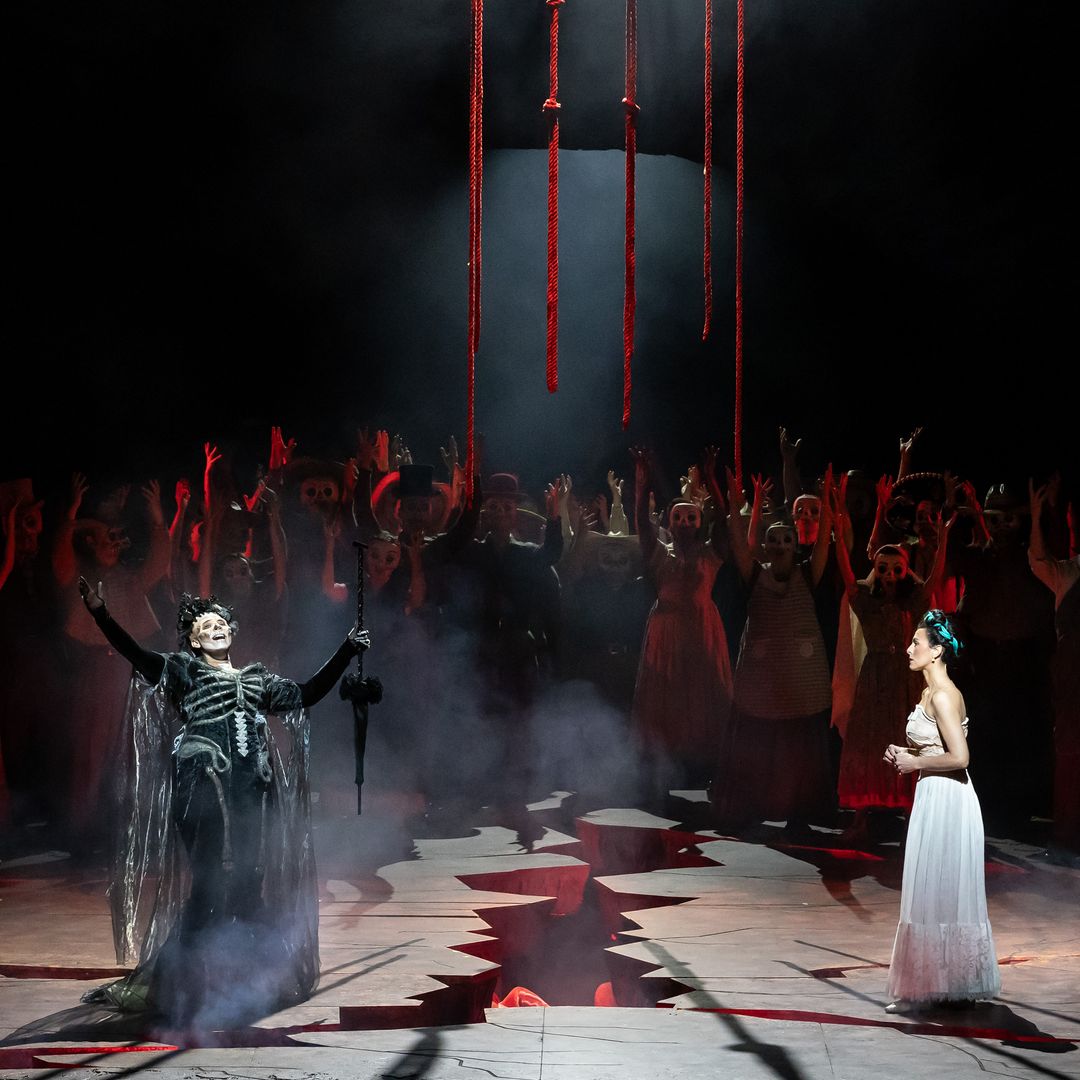
That perspective arrives at a cultural moment where Frida’s image has often been detached from the emotional and political complexity that made her revolutionary in the first place. At the Met, however, El Último Sueño de Frida y Diego embraces Frida’s world with striking intentionality. Mariachi-inspired passages weave through the orchestra while costumes and scenic elements crafted by Mexican artisans evoke the textures and colors of her homeland.
 © Marty Sohl / Met Opera
Backstage, meanwhile, Reyes undergoes a transformation of her own.
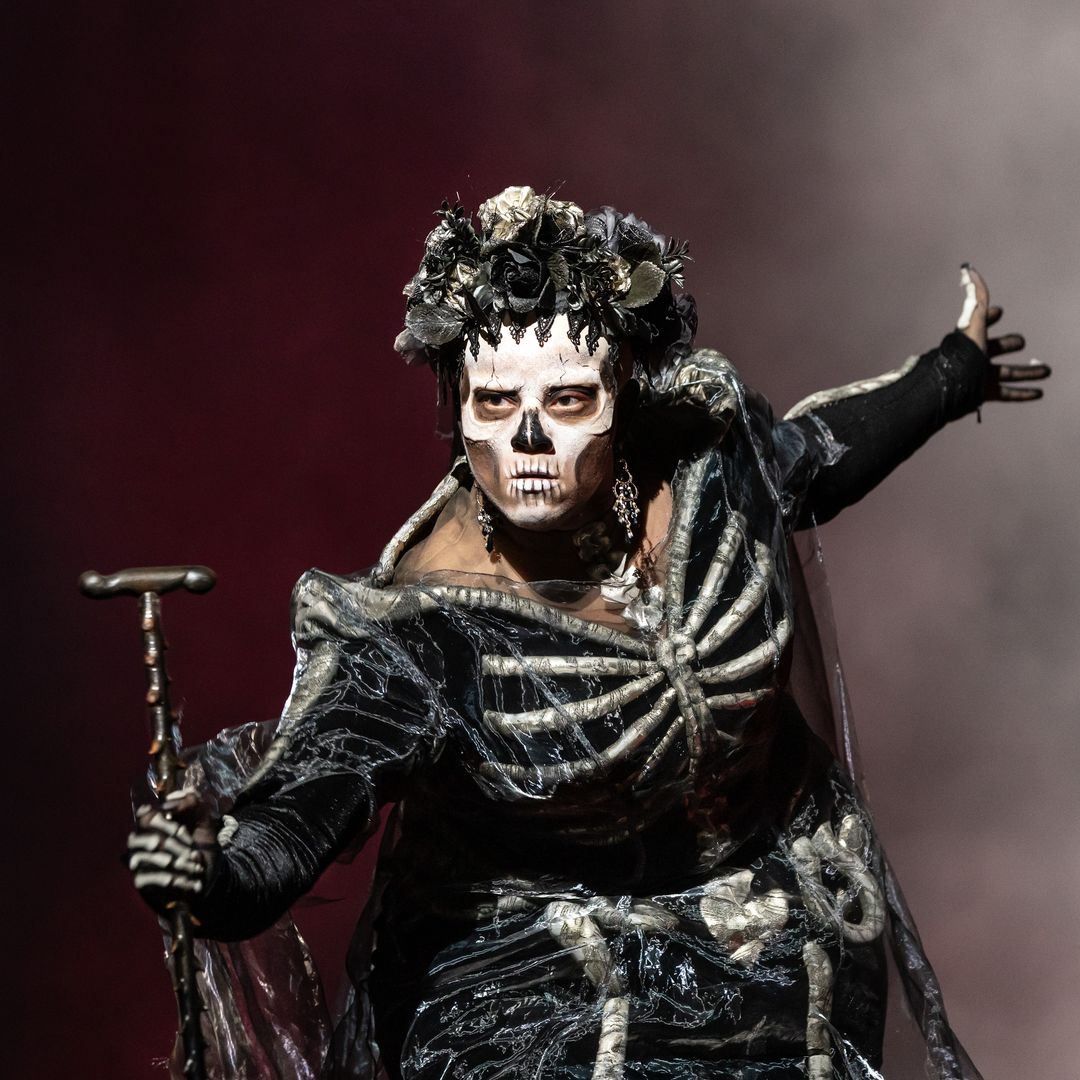
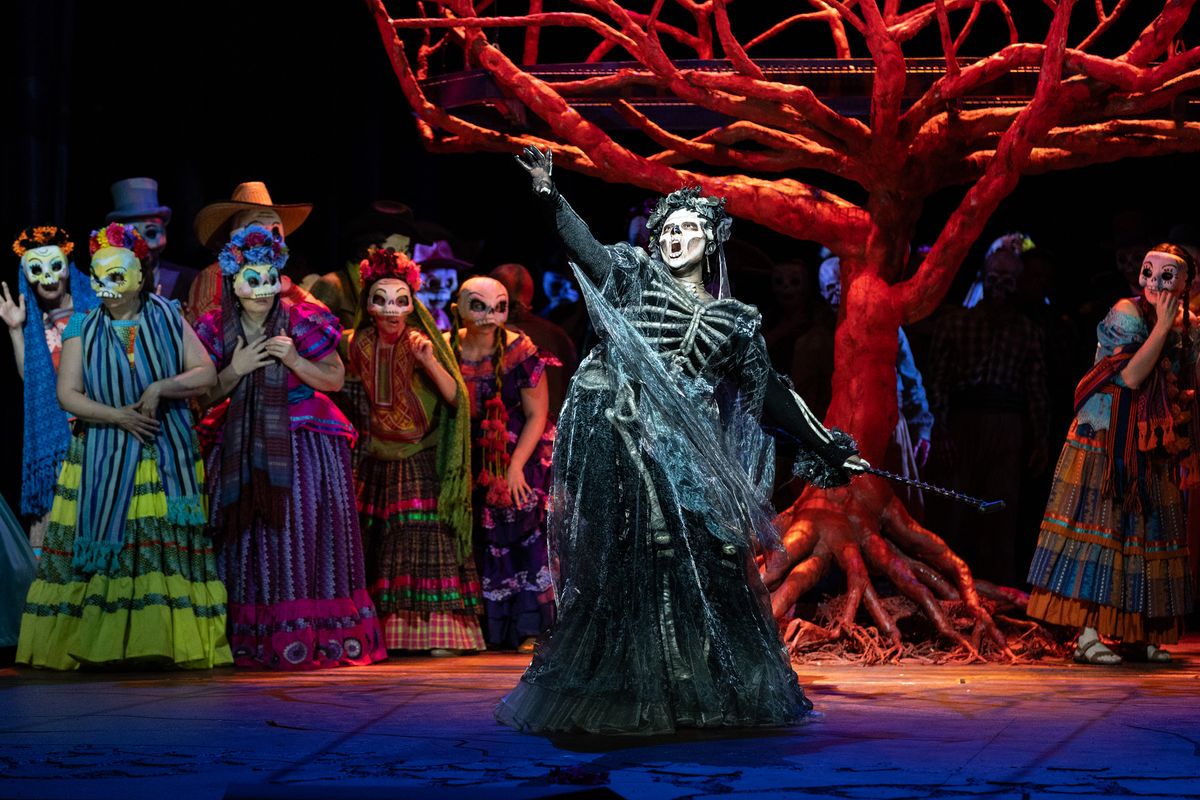
The soprano spends nearly two and a half hours becoming La Catrina through prosthetics, makeup, and a bald cap that completely erases the artist audiences might recognize outside Lincoln Center.
“When I look in the mirror, Gabriella goes into the background, and Catrina comes into the forefront,” Reyes says. “It allows me to tell the story from a completely different place.”
 © Marty Sohl / Met Opera
"When Latinos come see it, they will recognize musical passages in the orchestra that sound like mariachi, which are woven in in such a way that it mixes so well with opera. Also, the costumes, the scenic design, 'todo hecho en Mexico.' It represents our culture well."
For Reyes, the transformation is not simply physical. It is emotional, spiritual, and unexpectedly liberating. “I become more daring,” she says with a laugh. “There’s a moment where I’m even scaring Isabel.” Across from her during our conversation, Leonard immediately nods in agreement. “She is,” Leonard says. “She’s both comforting and terrifying.”
That duality sits at the heart of Reyes’ interpretation of La Catrina and, in many ways, the opera itself.
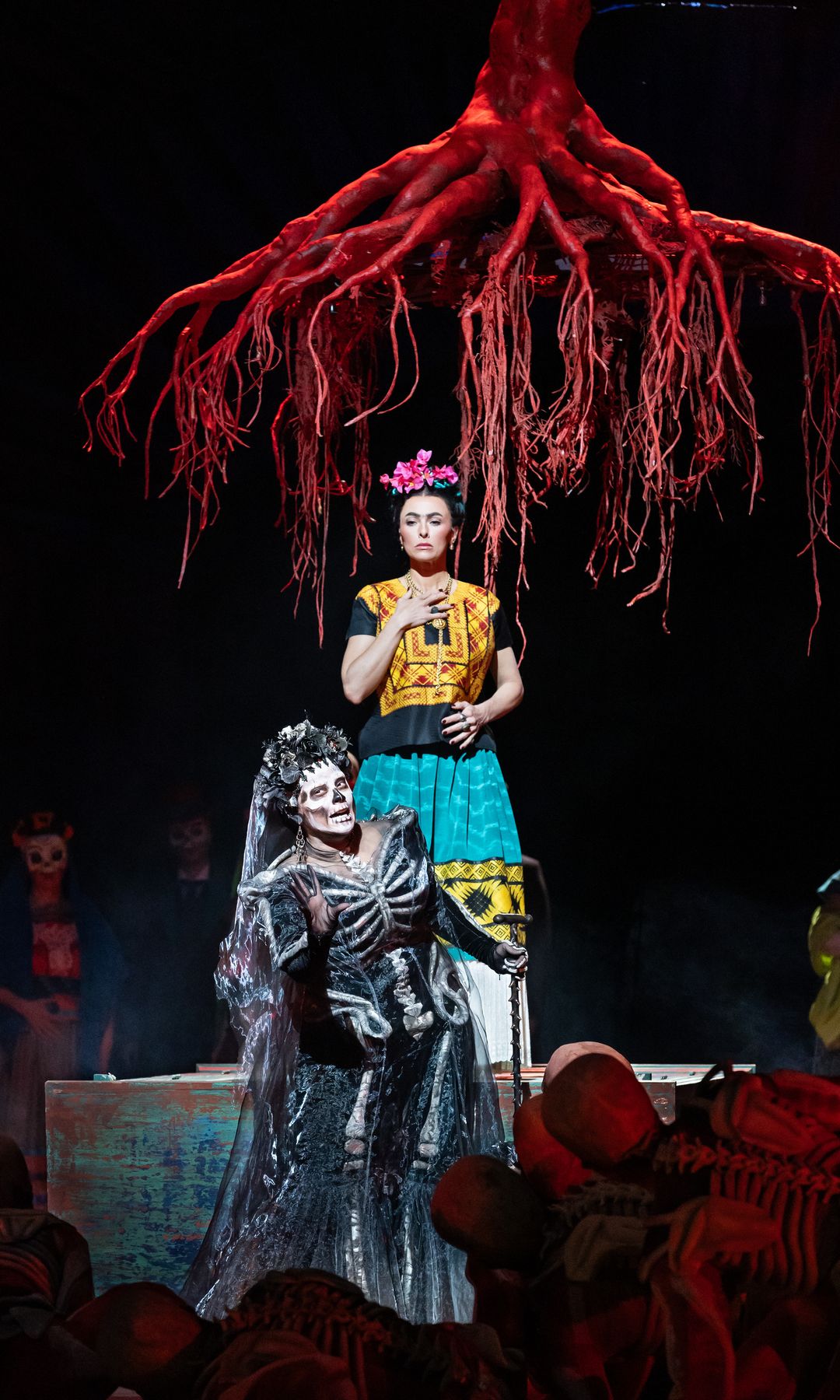
“Catrina is commanding and powerful, but she also has this loving, nurturing side,” Reyes explains. “She’s guiding Frida and helping Diego through his passage into the afterlife.” “She almost feels like a mother or a tía.”
“A crazy tía,” Leonard jokes.
 © Marty Sohl / Met Opera
“Exactly,” Reyes laughs. But even in the production’s final moments, Reyes says, La Catrina’s power softens into compassion.
“She’s praying for Diego. Her aria is asking for mercy. There’s real love there.” As Reyes reflects on the women she portrays onstage, she arrives at a thought that quietly becomes the production's emotional thesis.
“We are terrifying. We are nurturing,” she says. “We contain all of these facets.”
That complexity also shaped the chemistry between the two performers, who say they formed an immediate connection while working together.
“Gabby and I knew each other a little bit before, but we hadn’t worked together yet,” Leonard says. “But I feel like we went from zero to sixty immediately. There was no hesitation or worry. Maybe it’s the Latina thing. Suddenly it’s like, ‘family.’ We just dove in.”
 © Michael Thomas
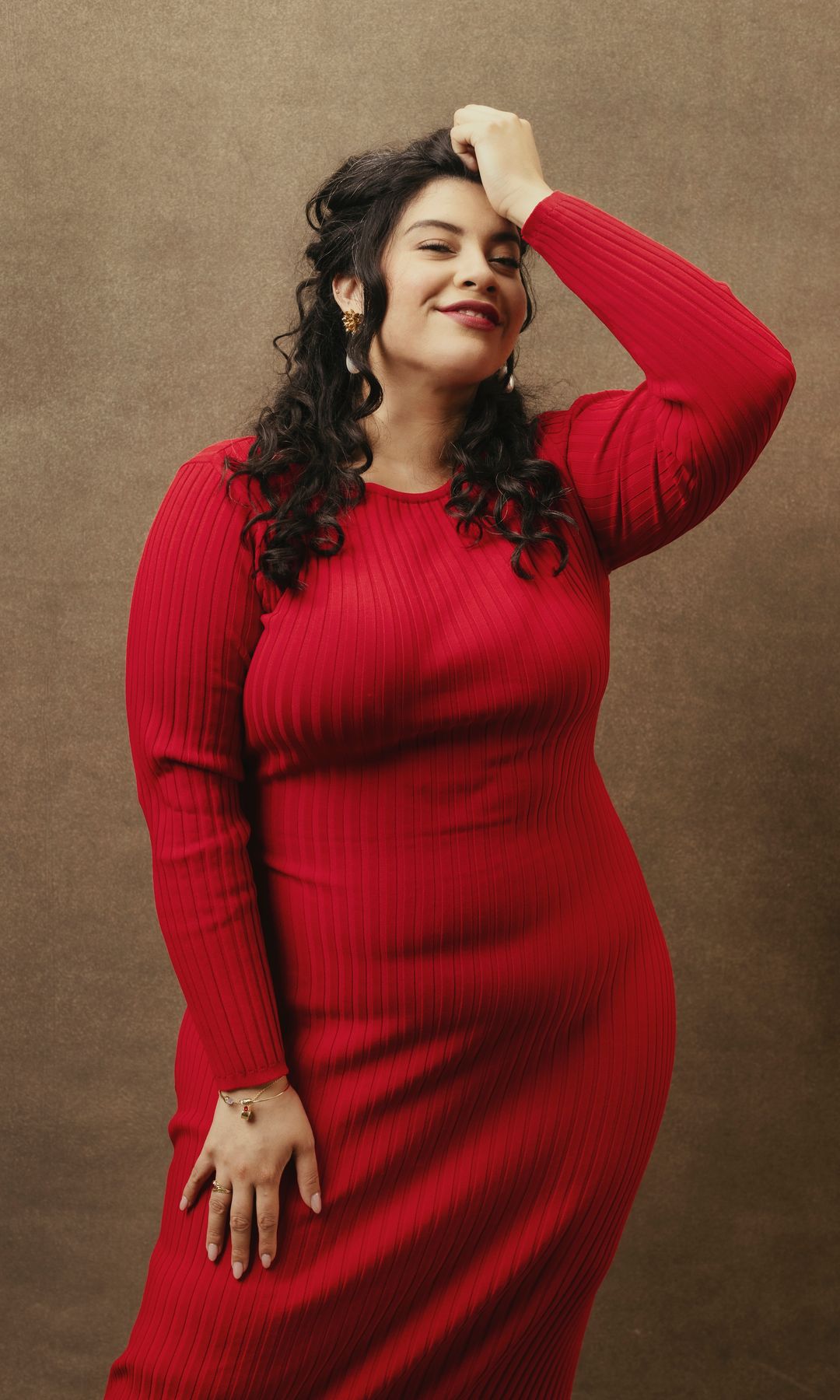 © Jesus Cornejo
That closeness became essential while navigating some of the production’s emotionally charged scenes. Offstage, their chemistry feels effortless. They finish each other’s thoughts, dissolve into laughter mid-answer, and reminisce about rehearsal moments with the warmth of longtime friends rather than recent collaborators.
But beneath the humor lies the demanding reality of performing a contemporary opera. “Working on a modern piece especially creates closeness within the cast because there’s always a level of difficulty and challenge,” Leonard explains. “We all bond through that rehearsal process.”
“As Latinas, the way we understood it was: we can be strong with one another, but we know it’s all in love,” Reyes says. “We found that through repeating the scene over and over again.”
Every night before stepping onto one of the world’s grandest stages, both performers ground themselves not in pressure, but in presence.
 © Marty Sohl / Met Opera
“I don’t necessarily sit there trying to force myself into a specific mindset,” Leonard says of her pre-show ritual. “I know the story, I know my role, and then I allow the performance to evolve each night.”
She continues, “It’s a little like Groundhog Day,” she adds with a smile. “You relive the same story every performance, but there are always little moments that feel different.”
Before going onstage, Reyes keeps her own ritual even simpler. “I usually just express gratitude,” she says. “I say, ‘Thank you for this opportunity. Let me be a vessel.’”
 © Marty Sohl / Met Opera
For Leonard, the ultimate hope is not to dictate how audiences should experience the opera, but to offer them a temporary escape into something emotionally honest.
“I never really try to impose what I want audiences to feel,” she says. “Whatever they feel is what they should feel. What I hope is that they have an evening where they’re swept away by something, where they can put down everything else happening in their lives for a moment and get lost in a story, in a dream. Maybe it becomes cathartic. Maybe it allows for emotional release. That’s what live theater should do.”
“As an actor, you find your way into a character through the things you identify with, and the rest you learn along the way.”
 © Marty Sohl / Met Opera
And perhaps that is what makes this production feel so significant at the Metropolitan Opera, it does not treat Frida Kahlo as mythology frozen in time. Through Leonard and Reyes’ performances, she becomes something far more intimate and human: a woman shaped by pain, love, memory, humor, culture, and resilience.
A woman who, as Reyes puts it, can be both terrifying and nurturing at once, someone with a deeply loving side, but also the unmistakable strength shared by so many Latina women.
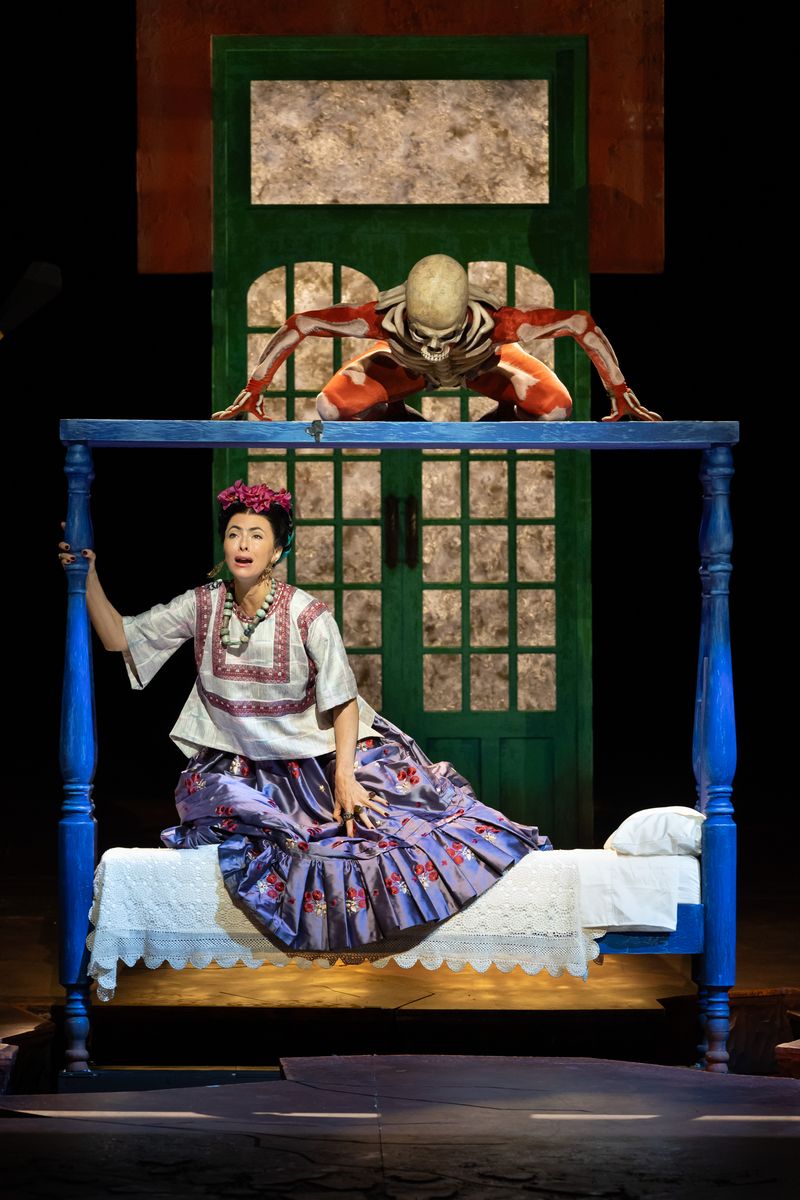 © Marty Sohl / Met Opera
Don’t miss powerhouse performances from Isabel Leonard and Gabriella Reyes, alongside baritone Carlos Álvarez as Diego Rivera, in El Último Sueño de Frida y Diego, featuring a libretto by Pulitzer Prize-winning playwright Nilo Cruz. Conducted by Yannick Nézet-Séguin and directed by Deborah Colker, the production runs at the Met through June 5th, with a Live in HD cinema broadcast on May 30 at 1 p.m. ET.
Credits:
Interview: Fernanda Garcia
Text: Andrea Perez
Video: Manuel Ortiz