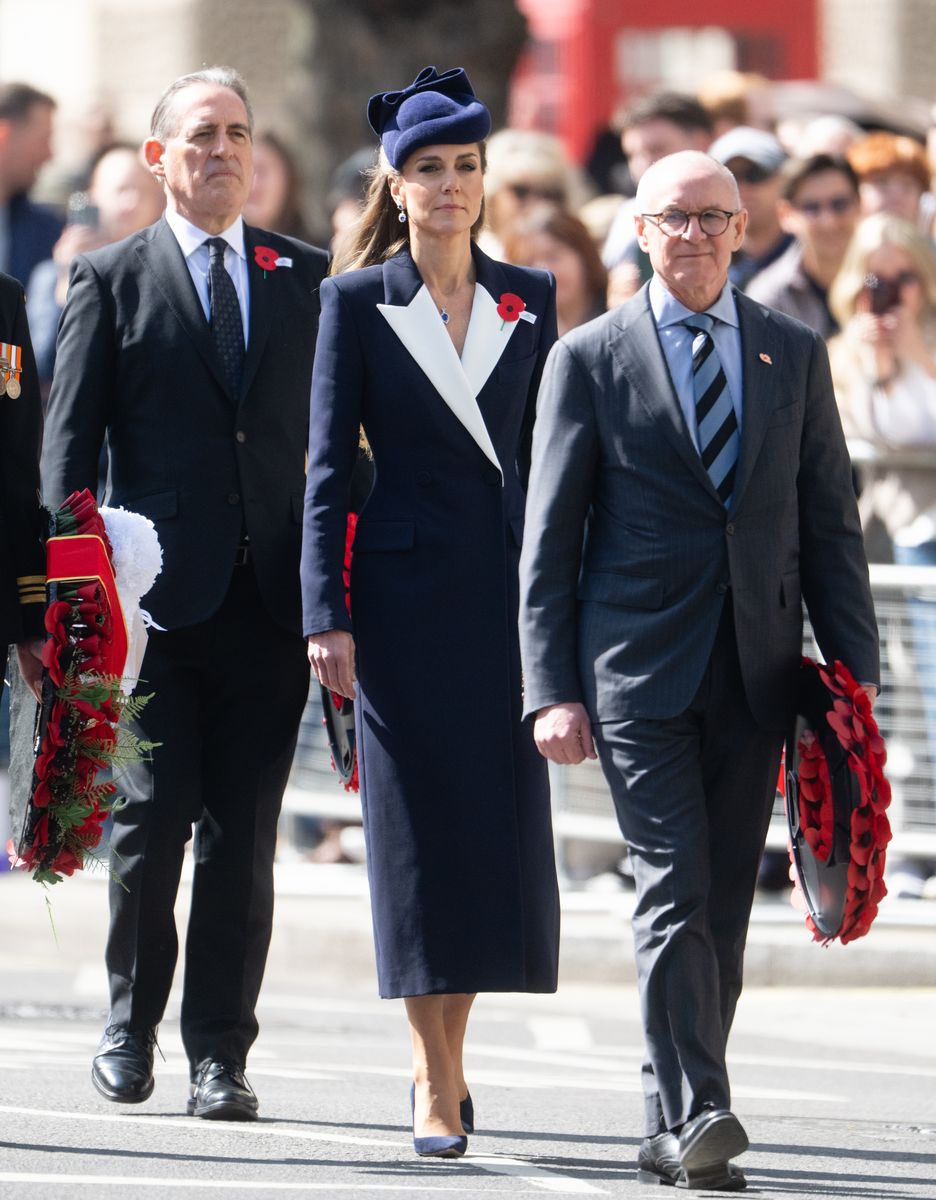
The Princess of Wales, Kate Middleton, stepped out solo at one of the most solemn fixtures on the British ceremonial calendar: Anzac Day, observed in the heart of London. It was a moment steeped in symbolism, with the future queen attending to honor the Australian and New Zealand soldiers who lost their lives in combat. She took part in the traditional wreath-laying at the Cenotaph, followed by a service at Westminster Abbey.
 © WireImage
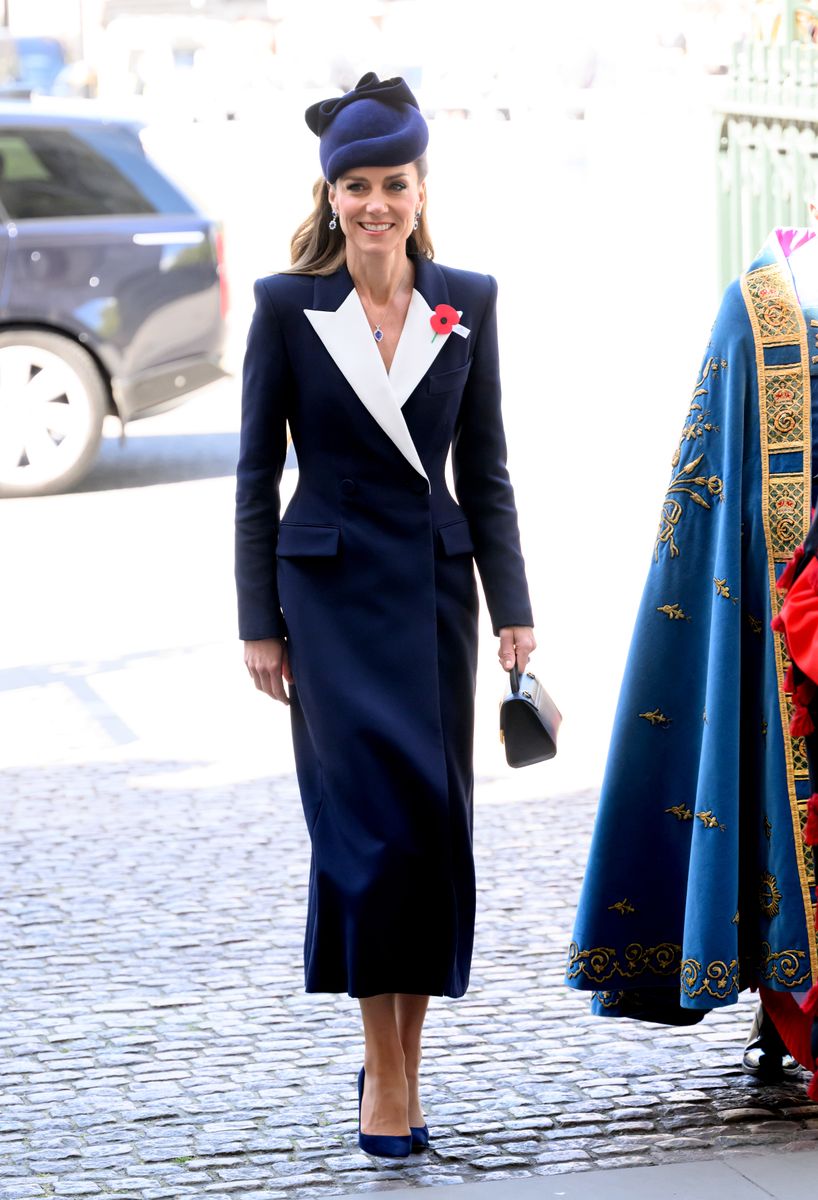
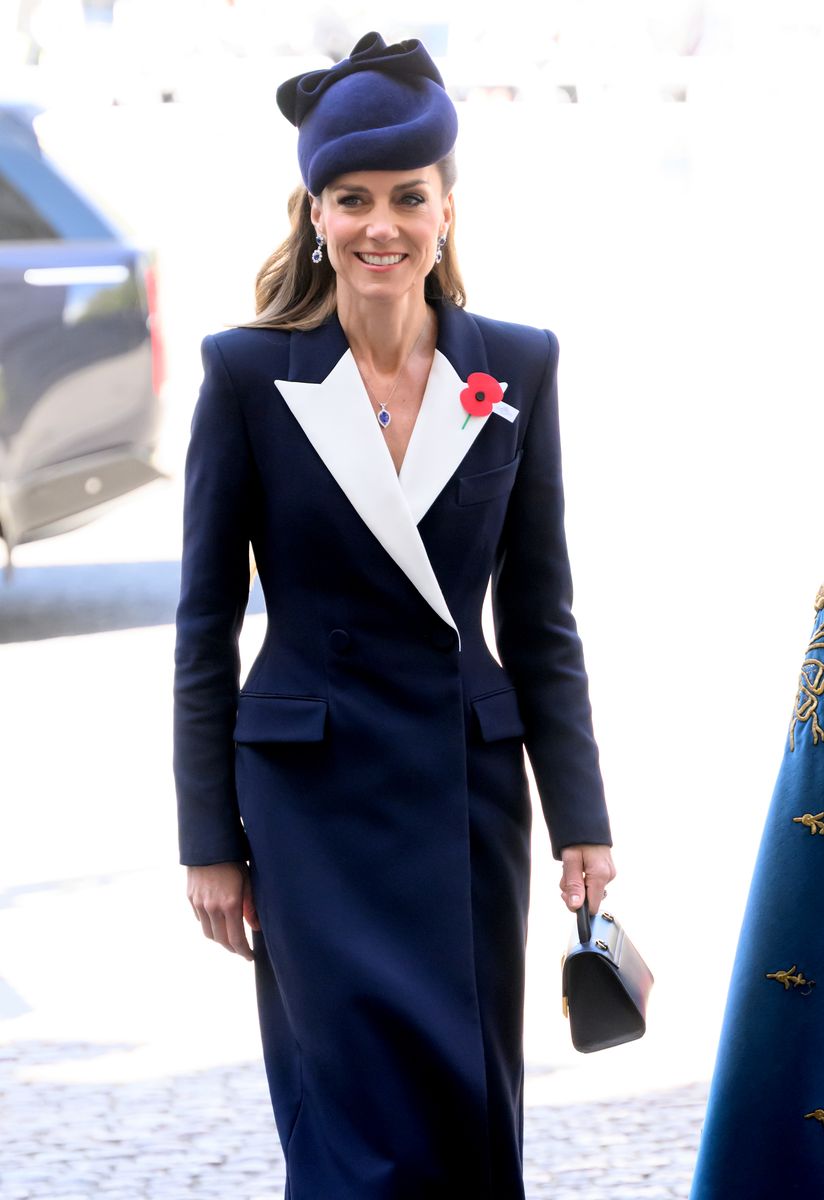
On a day characterized by reflection and quiet emotion, her sartorial choice was far from incidental. The Princess wore an impeccably tailored navy coatdress with crisp white lapels, an unmistakable nod to one of the most iconic tuxedos in fashion history, paired with a restrained headpiece. Most notably, she chose a pair of earrings imbued with deep personal significance, once belonging to Diana, Princess of Wales. The look conveyed a message of elegance, remembrance, and enduring legacy.
 © WireImage
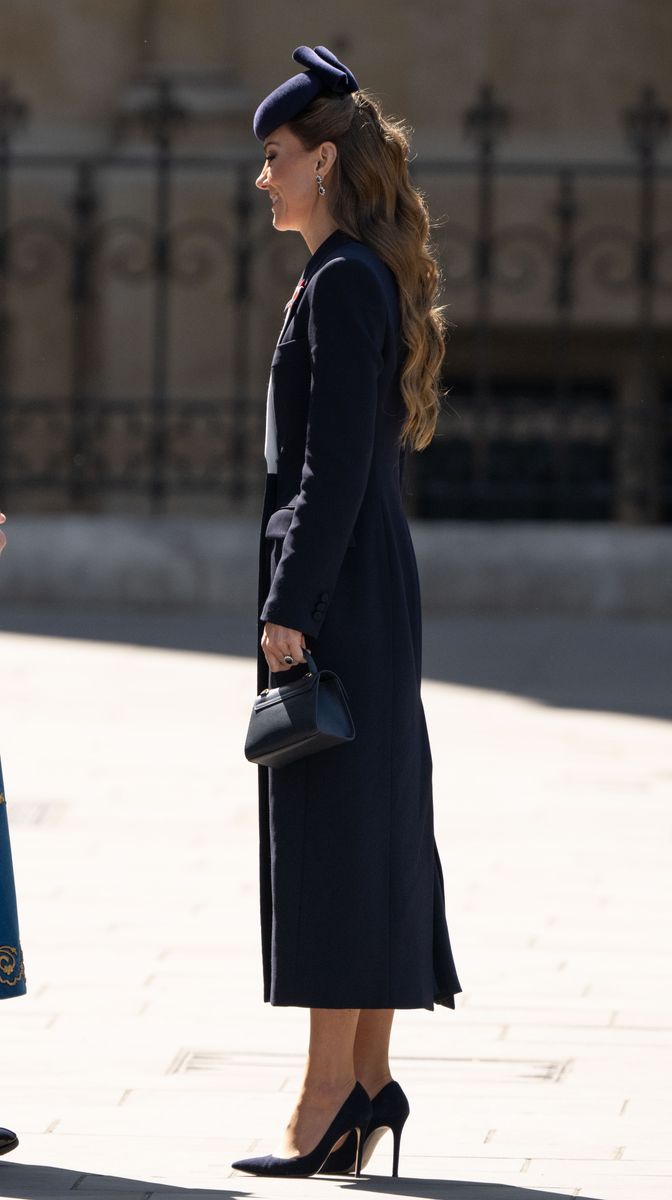
Kate Middleton's almost perfect ability to reinterpret classic codes defines her style. This time, she leaned into impeccably tailored suiting, a sartorial language King Felipe VI himself has mastered. The result: a deep navy, double-breasted coatdress with a sharply structured silhouette that cinches at the waist, while subtle shoulder pads lend it strength and presence.
 © Anadolu via Getty Images
The defining detail lies in the white lapels, a direct nod to the traditional tuxedo, a garment long rooted in the male wardrobe that designers like Yves Saint Laurent famously reimagined for women with his iconic Le Smoking. Kate channels that legacy and refines it for a modern, institutional stage, striking a seamless balance between authority and femininity.
 © Samir Hussein/WireImage
Jewelry that tells a story: Diana’s legacy
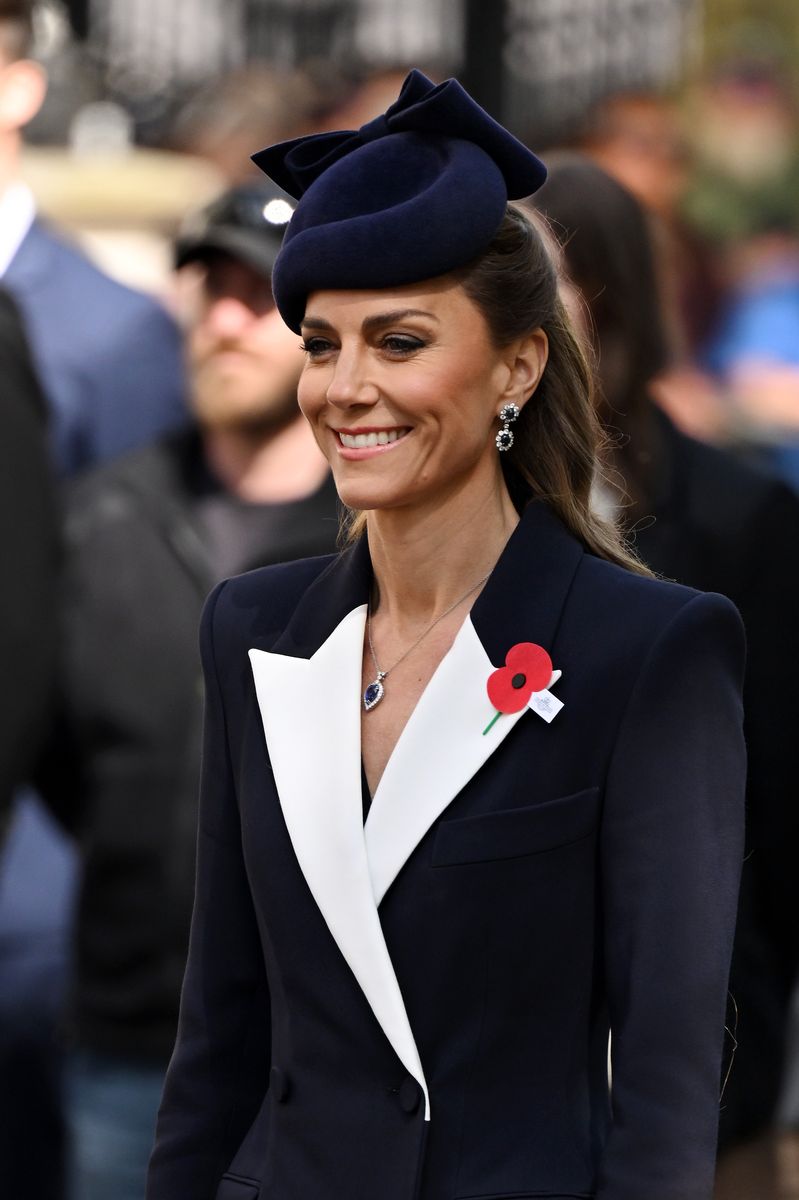
Beyond the impeccable tailoring, the true emotional heart of the look lies in the jewelry. Kate chose a pair of sapphire and diamond earrings that once belonged to Diana, Princess of Wales, a piece rich in history and symbolism.
 © Getty Images
The earrings, inspired by the shape of a daisy, feature two layered floral motifs. At the center of each sits a cabochon sapphire, encircled by diamonds cut to resemble delicate petals. It is believed the sapphires were taken from a watch Diana received as a wedding gift, adding yet another layer of sentiment to an already deeply meaningful piece.
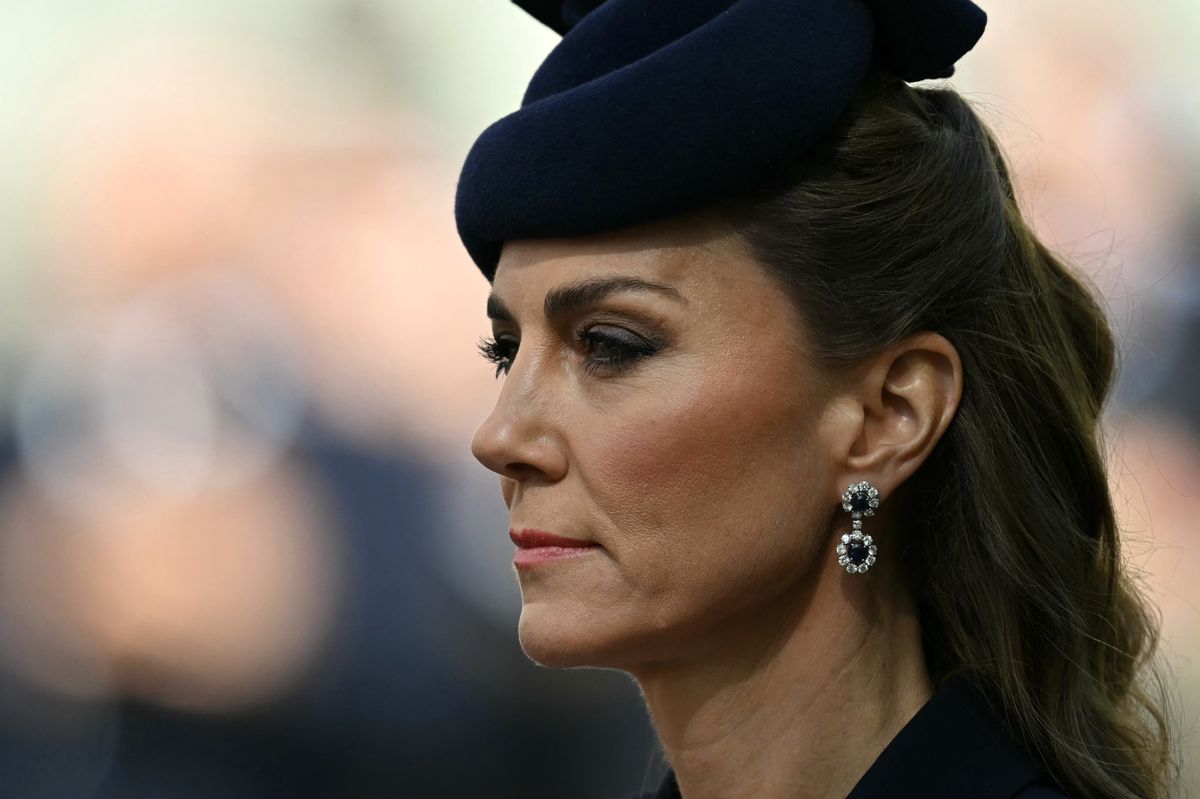 © AFP via Getty Images
Diana, Princess of Wales, wore them on several significant occasions, from official tours, including her 1991 visit to Canada, to high-profile moments like a magazine cover in 1994 and the 1996 Met Gala. After her death in 1997, the earrings disappeared from public view for more than two decades, until Kate brought them back into the spotlight, giving them a renewed sense of story and purpose.
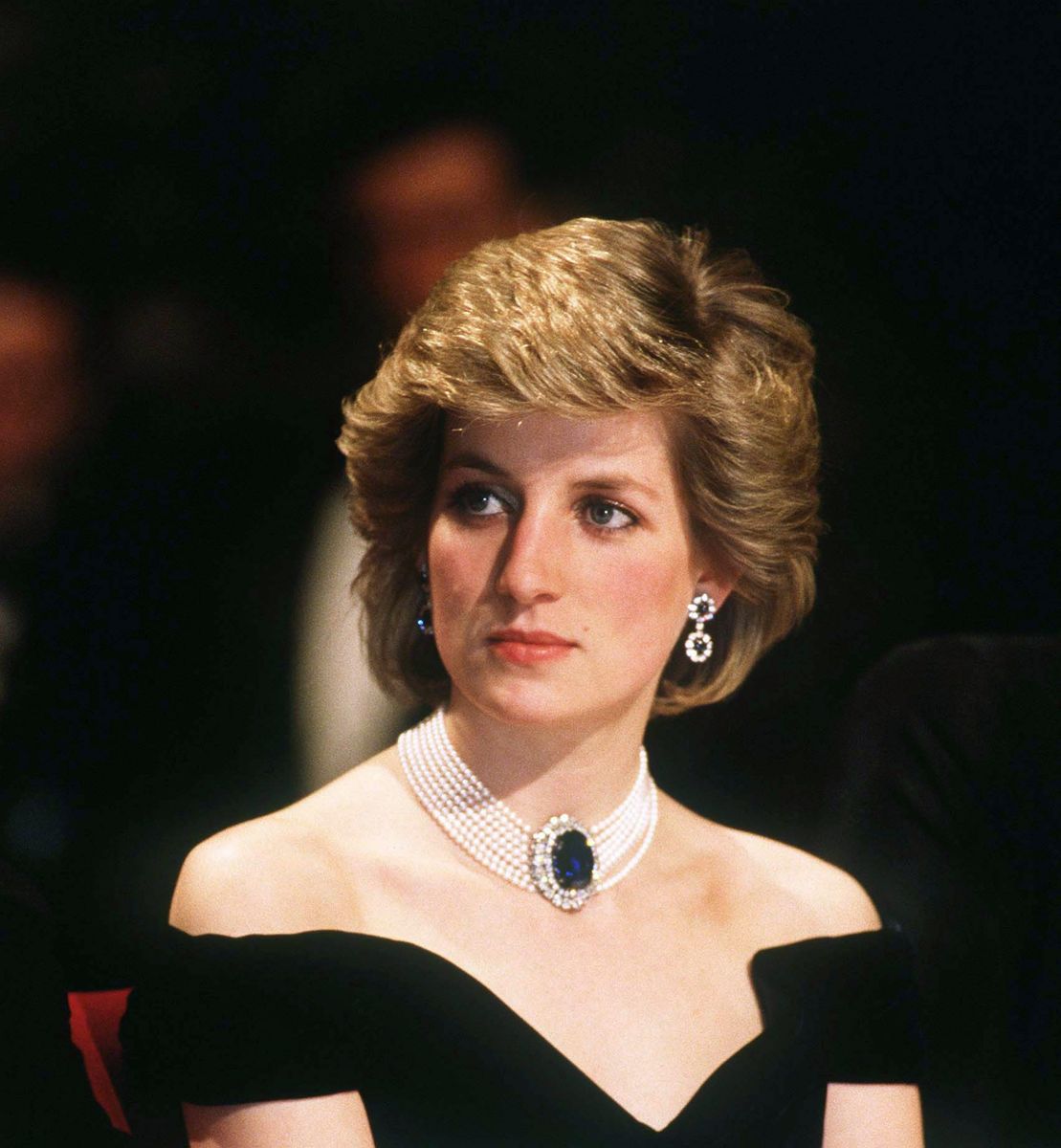 © Getty Images
She completed the look with a tanzanite and diamond necklace by G. Collins and Sons, a piece the Princess has worn before, which adds a subtle touch of luminosity without disrupting the ensemble’s understated elegance.
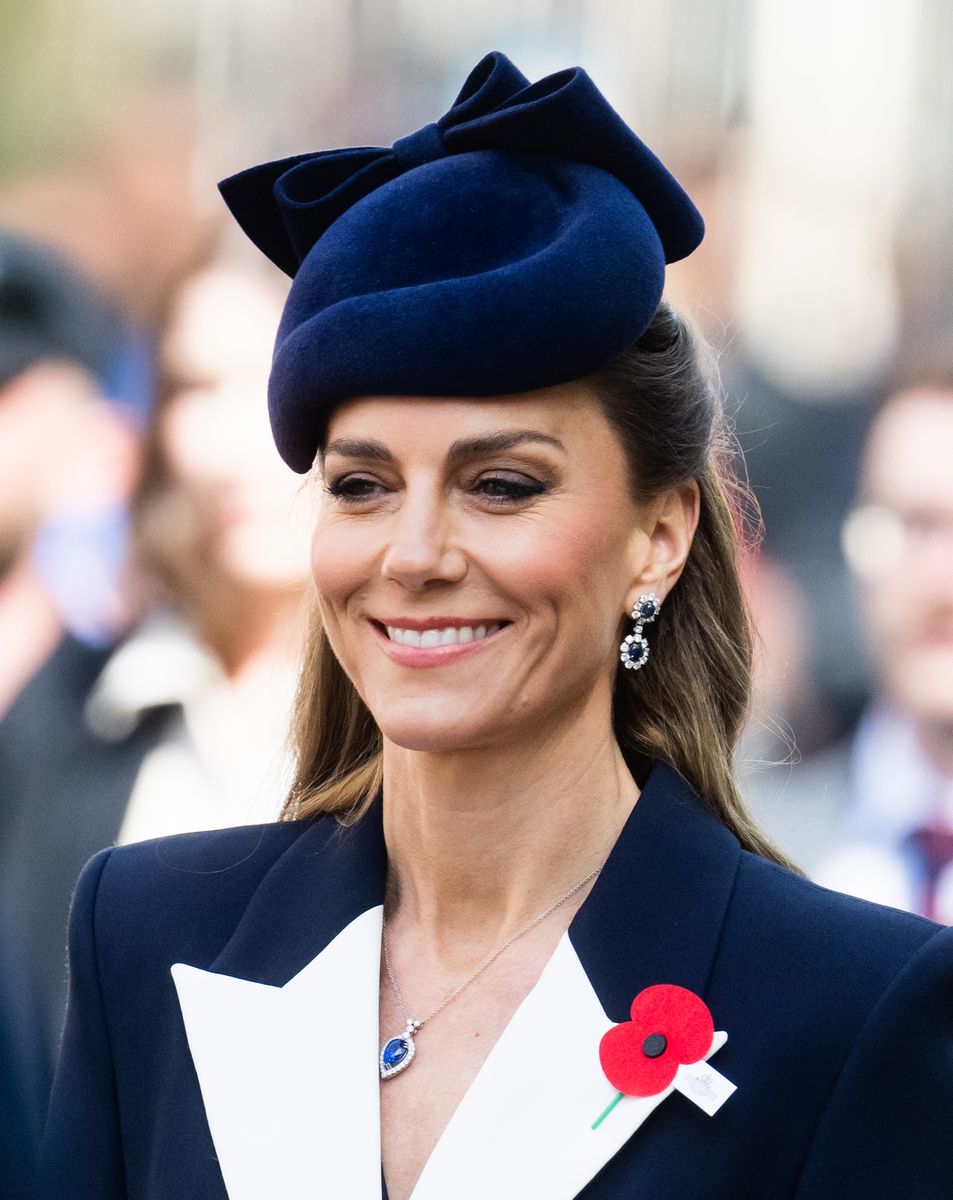 © Samir Hussein/WireImage
A beauty look true to her signature style
As for her beauty look, Kate stayed firmly within her signature aesthetic, favoring natural radiance and timeless elegance. She opted for a luminous, flattering makeup palette, with emphasis on the eyes and soft, understated tones on the lips.
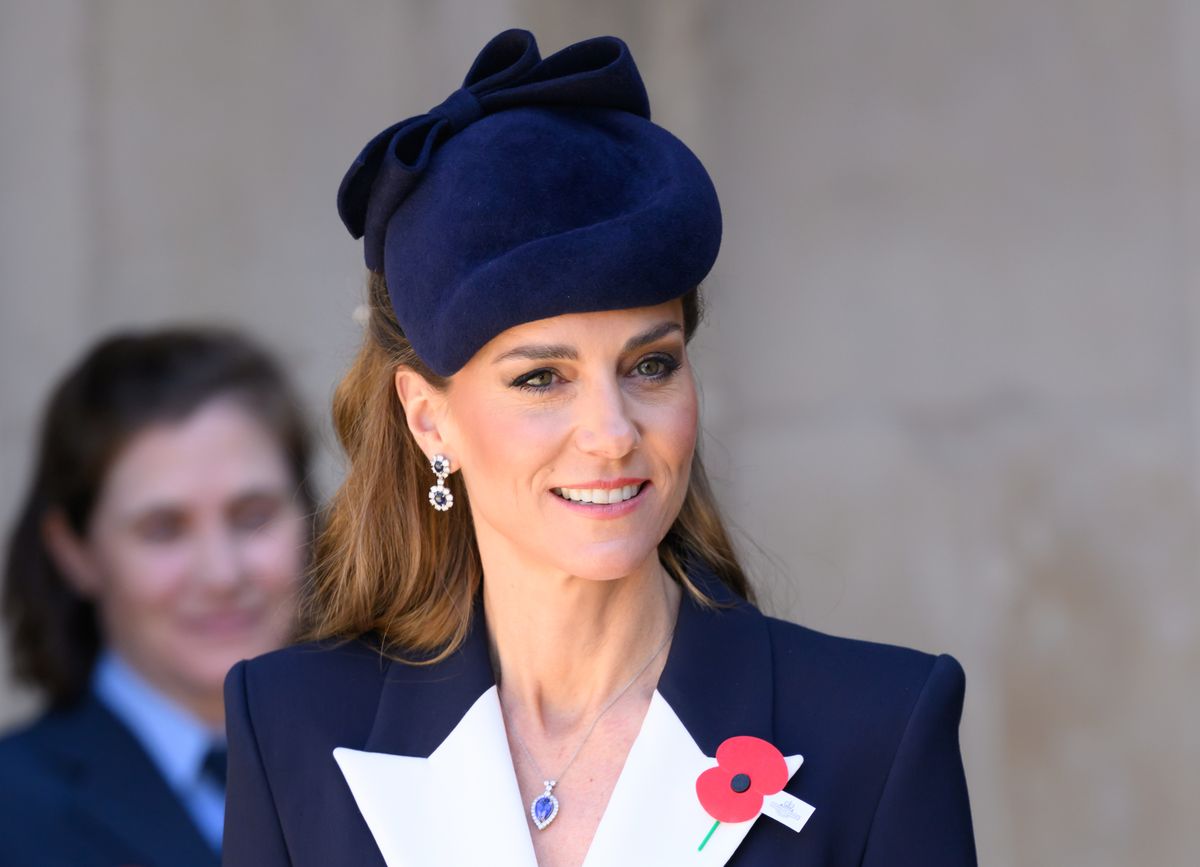 © WireImage
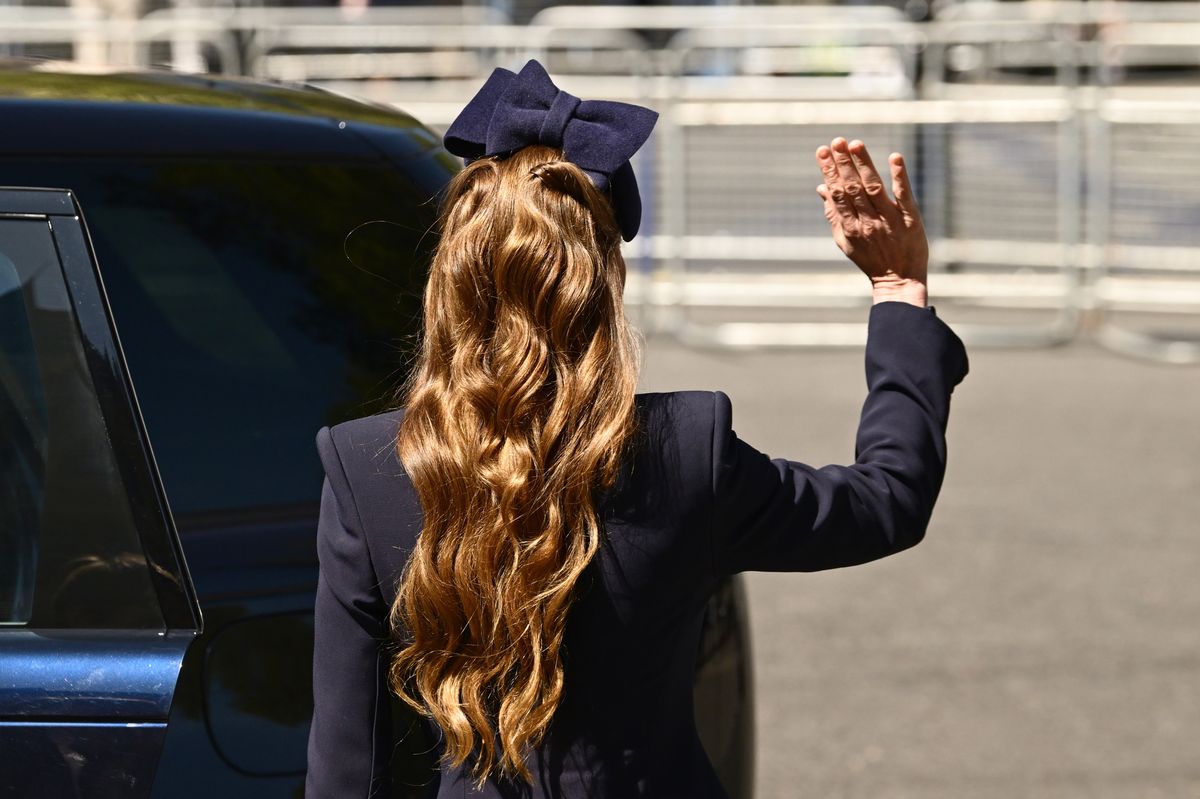
Her hair, styled in her now-signature half-up look with soft waves, framed her face and lent that polished yet effortless air that defines her. It was a choice entirely in step with the ensemble: understated, sophisticated, and flawlessly executed.
 © Getty Images
Anzac Day: memory, history, and tradition in London
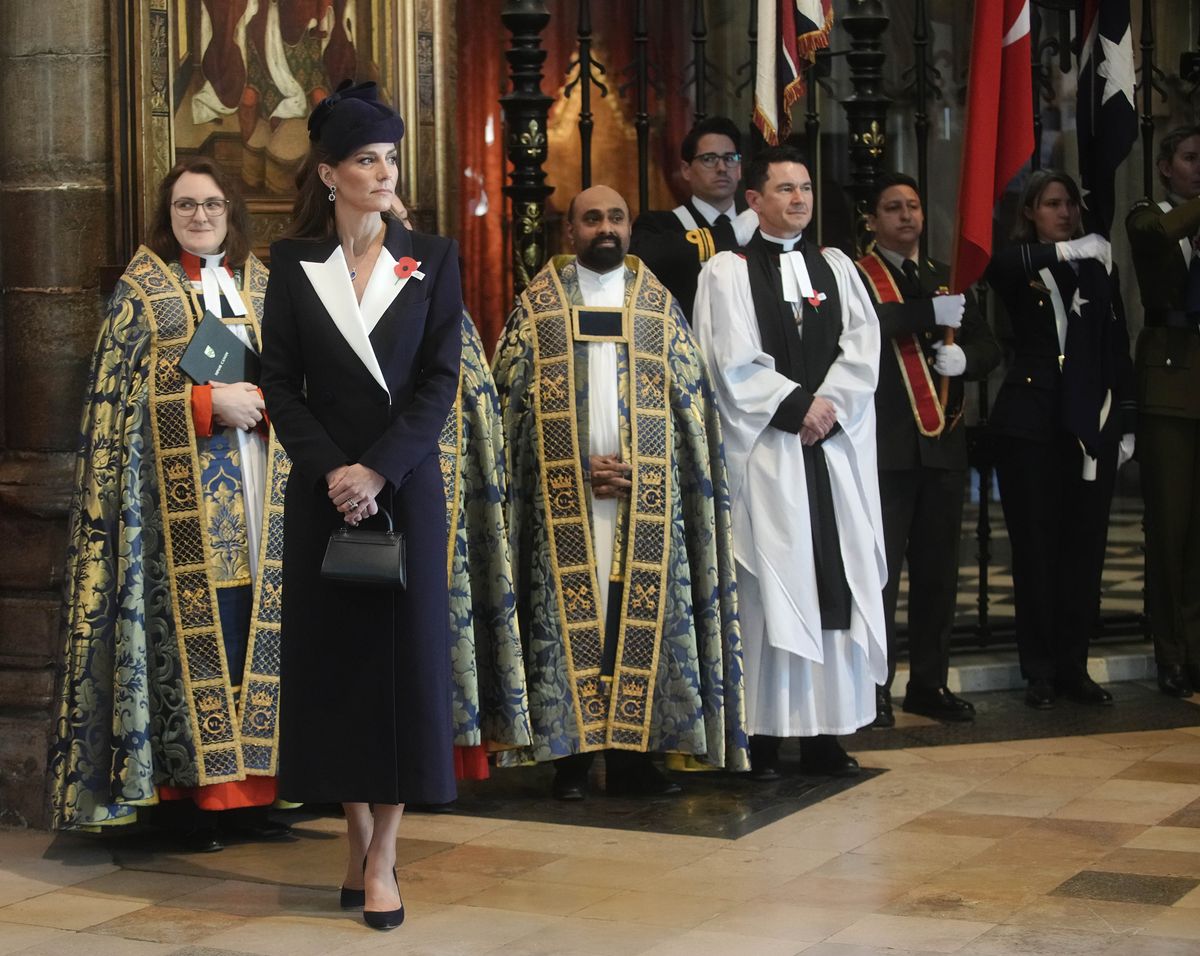
Anzac Day marks the anniversary of the Australian and New Zealand troops’ landing at Gallipoli in 1915, during World War I. Since King George V attended the first service at Westminster Abbey in 1916, the date has become one of the most significant commemorations for the Commonwealth in London.
 © Getty Images
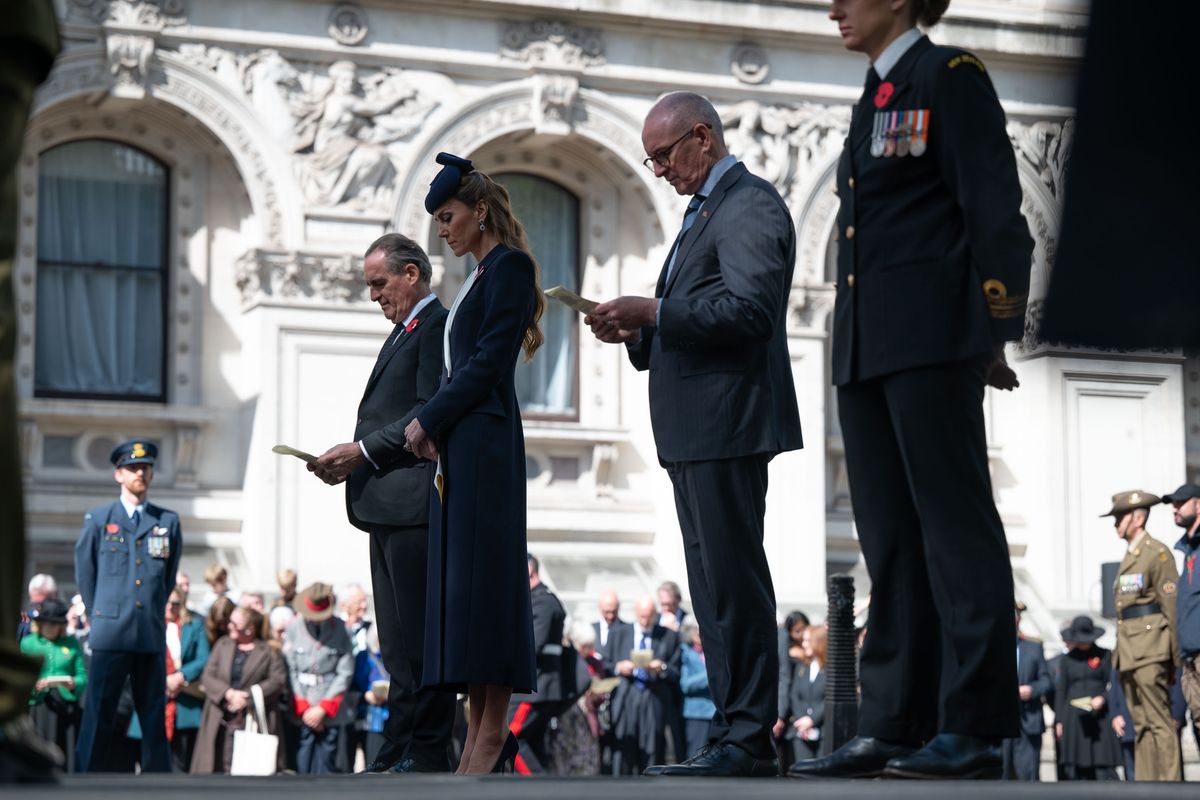
The ceremony, organized by the High Commissions of Australia and New Zealand, includes the traditional wreath-laying at the Cenotaph, followed by a service featuring readings, prayers, and cultural performances such as a Māori waiata by the group Ngāti Rānana.
 © Anadolu via Getty Images
On this occasion, Kate attended on behalf of King Charles III, underscoring her growing role within the institution. It was a solo appearance that further cements her presence on the official royal calendar.