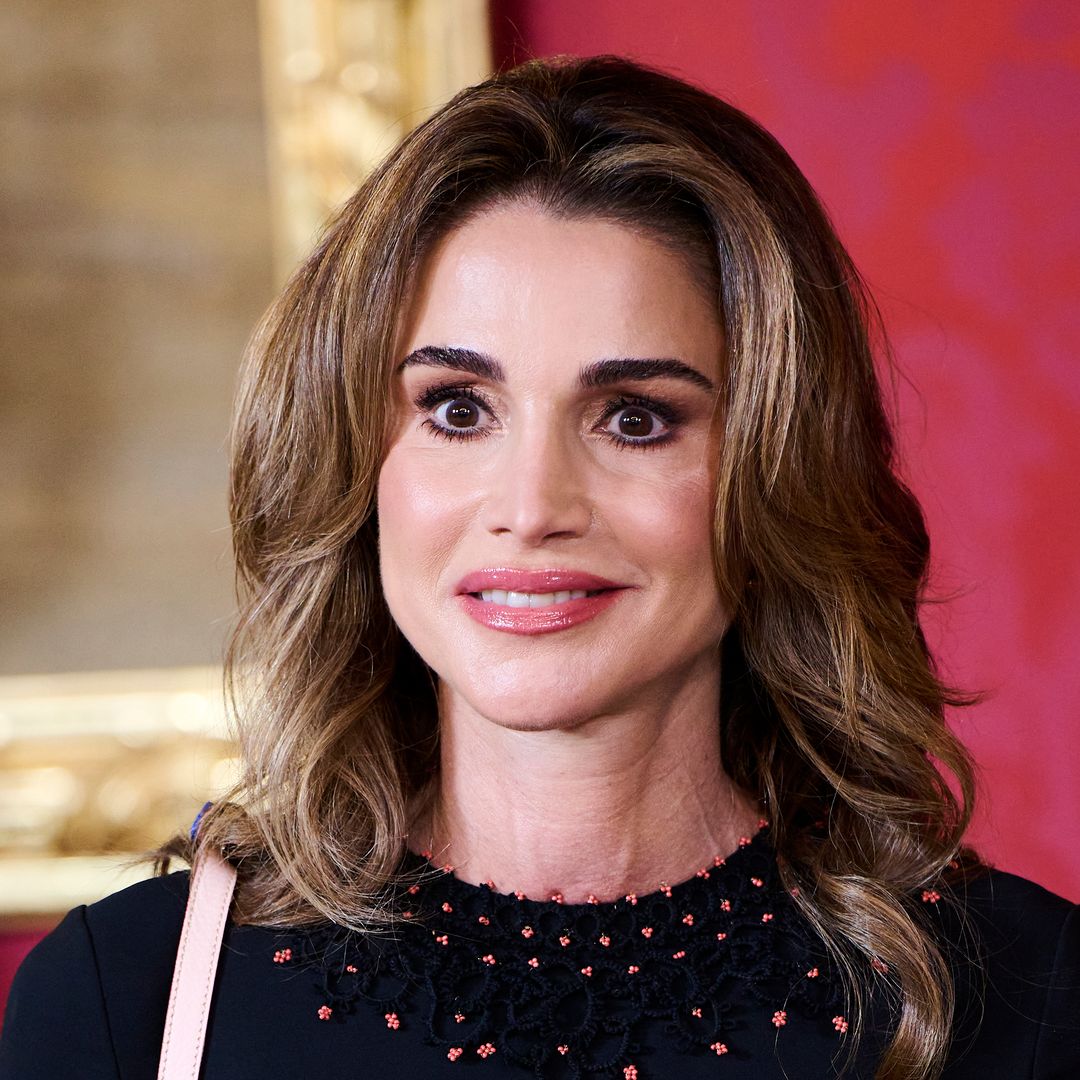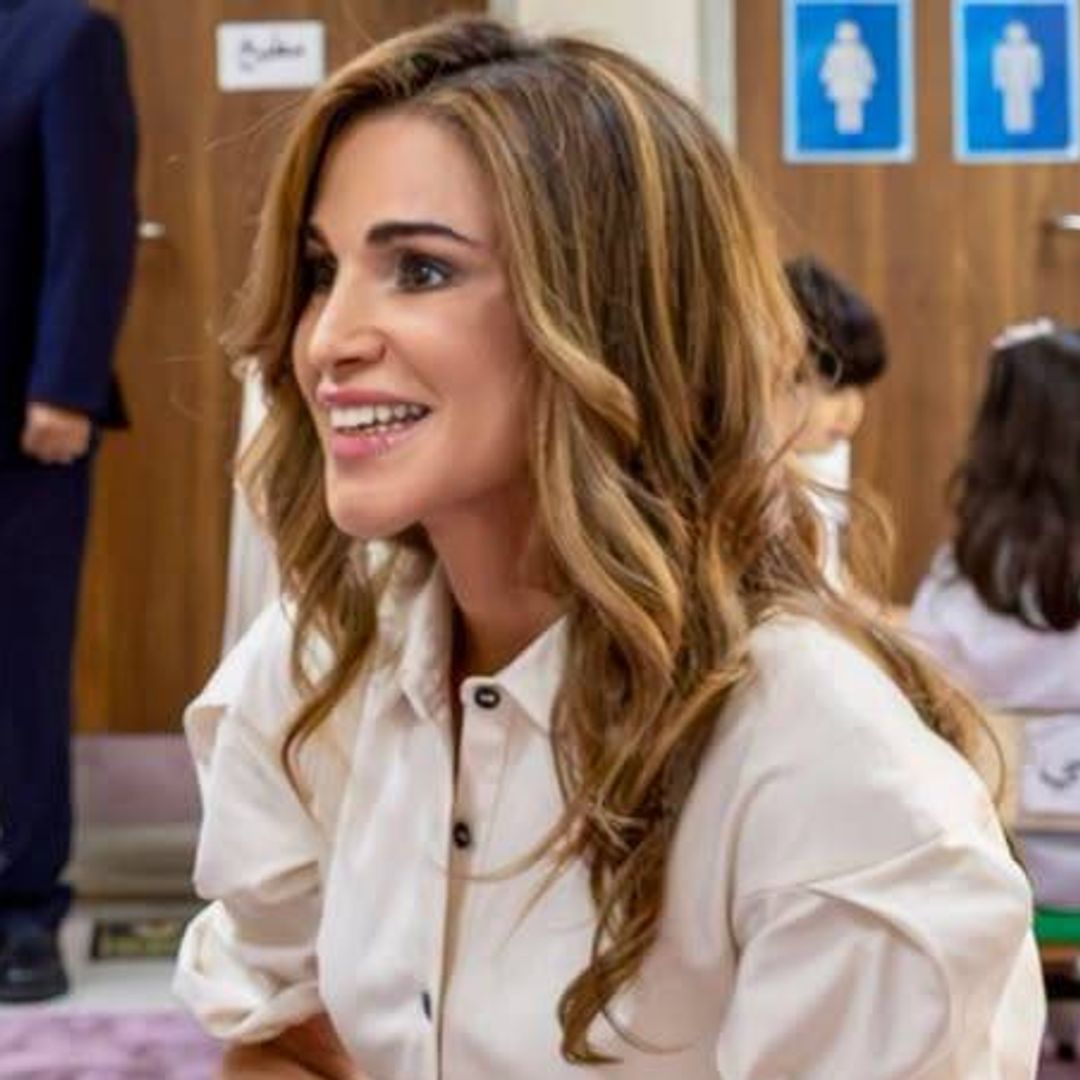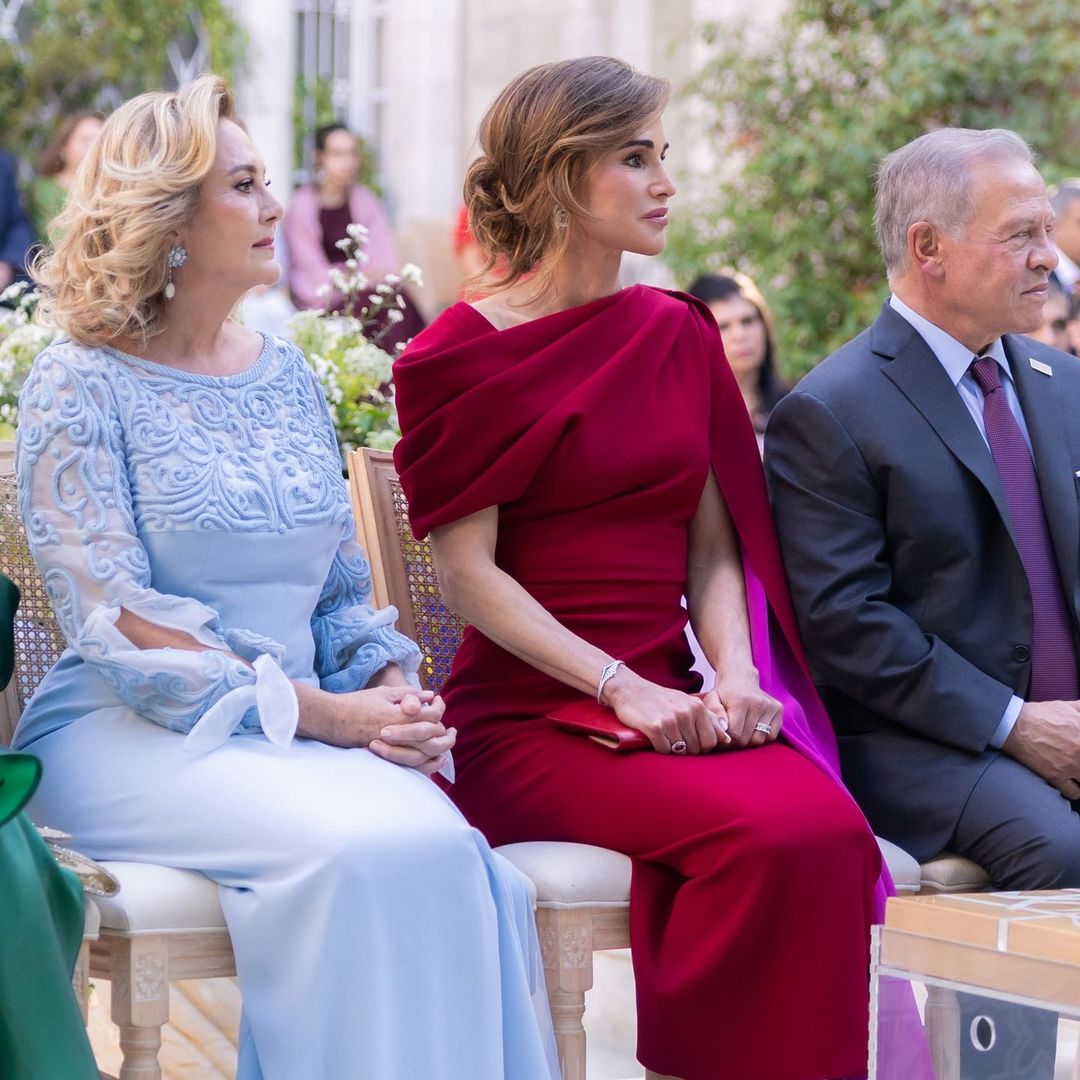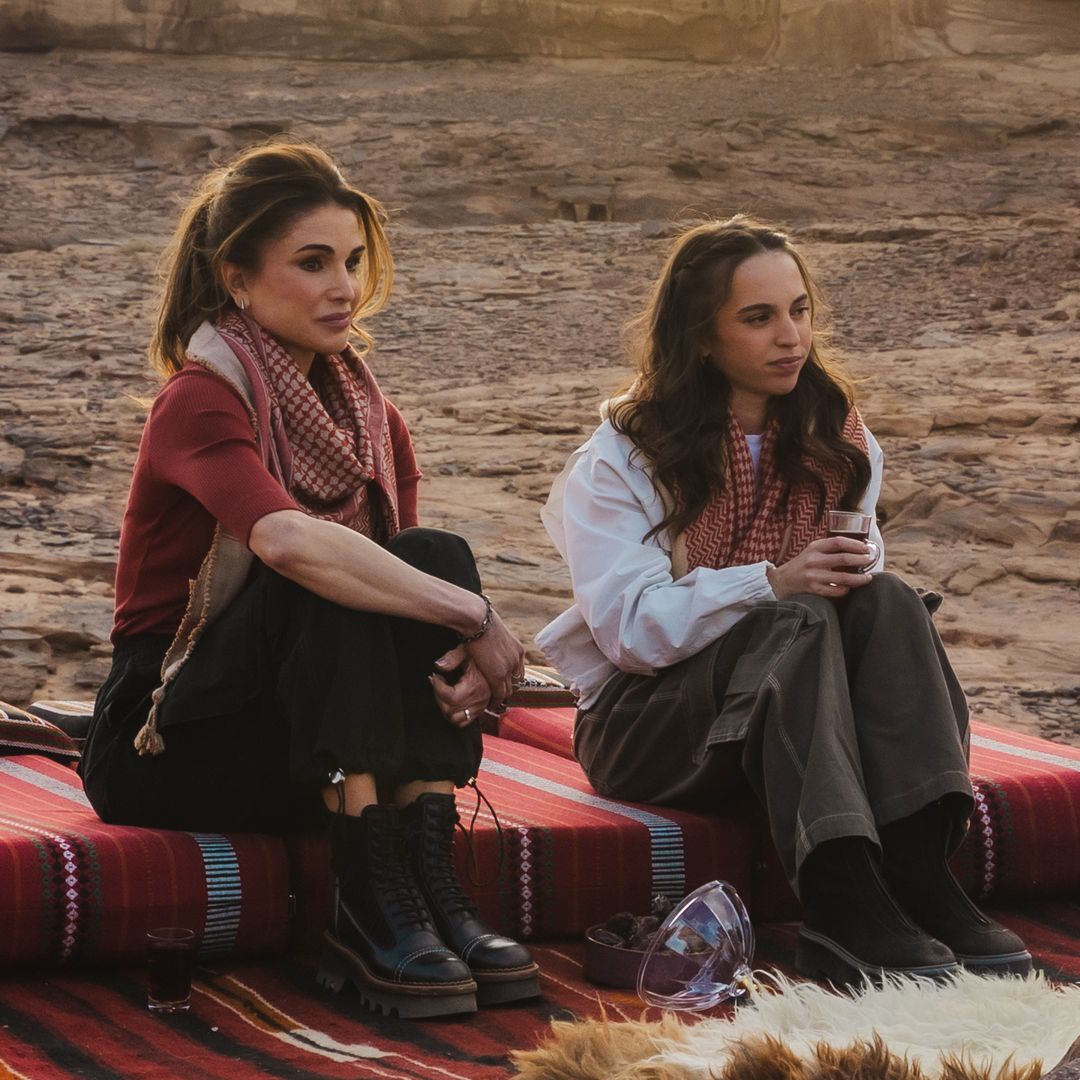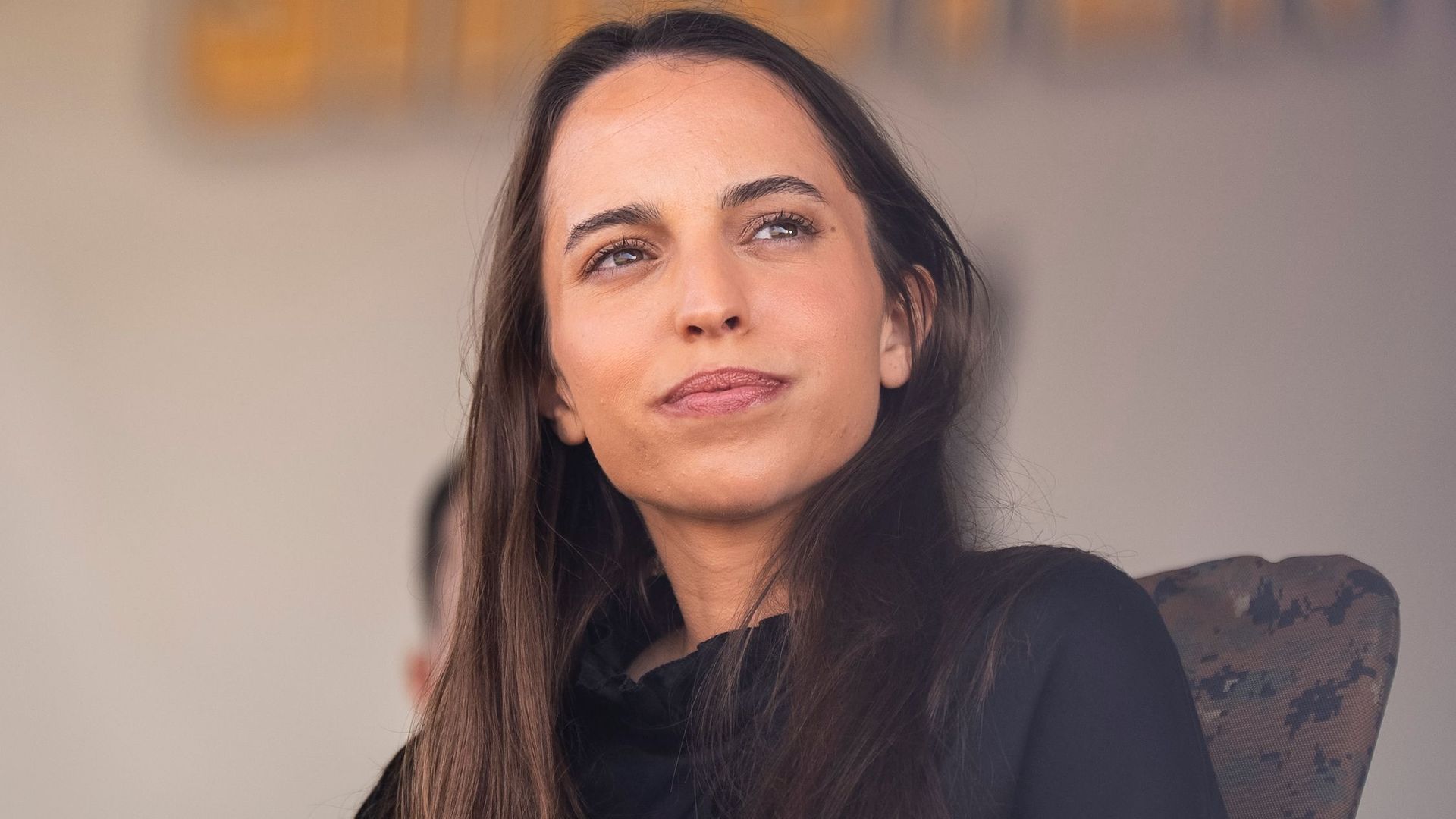
Princess Salma of Jordan brought a meaningful piece of her mother’s celebrated wardrobe to the international stage during the Jordanian royal family’s state visit to China.
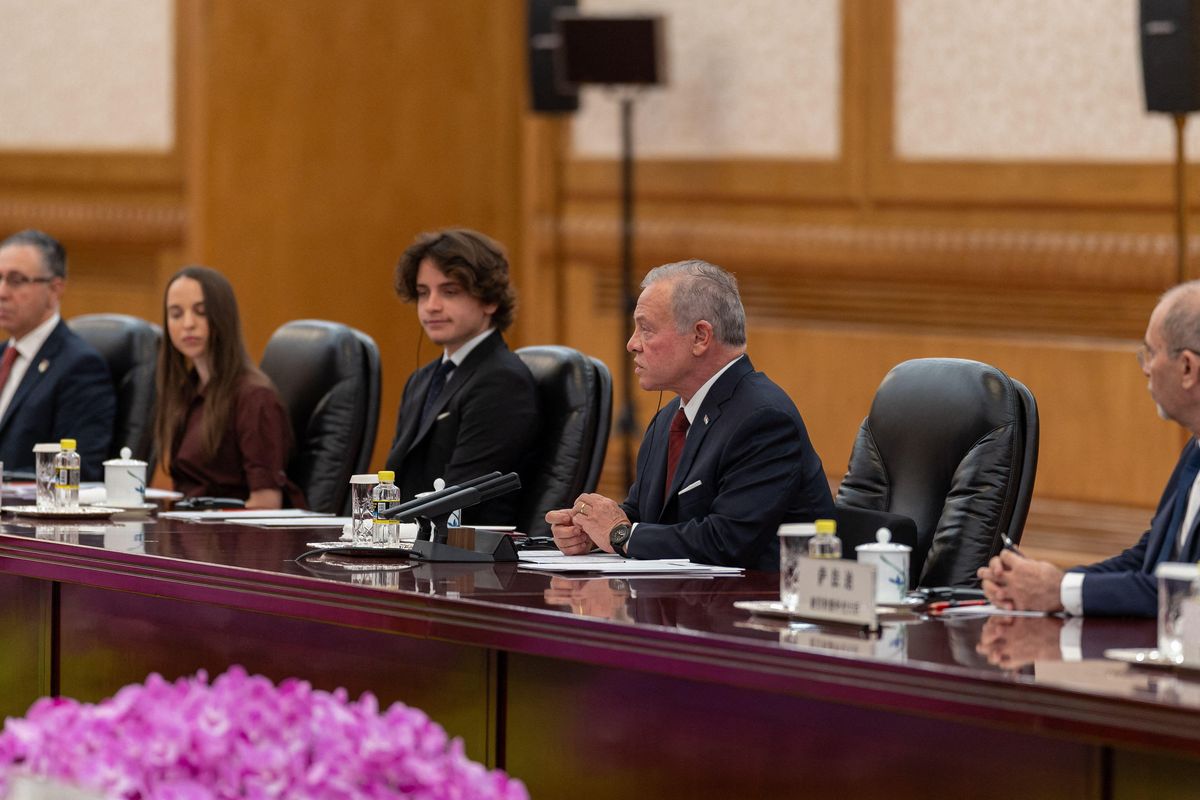
The 25-year-old princess joined her father, King Abdullah II, and younger brother, Prince Hashem, for a series of high-profile engagements in Beijing, including talks with Chinese President Xi Jinping.
 © Abaca Press
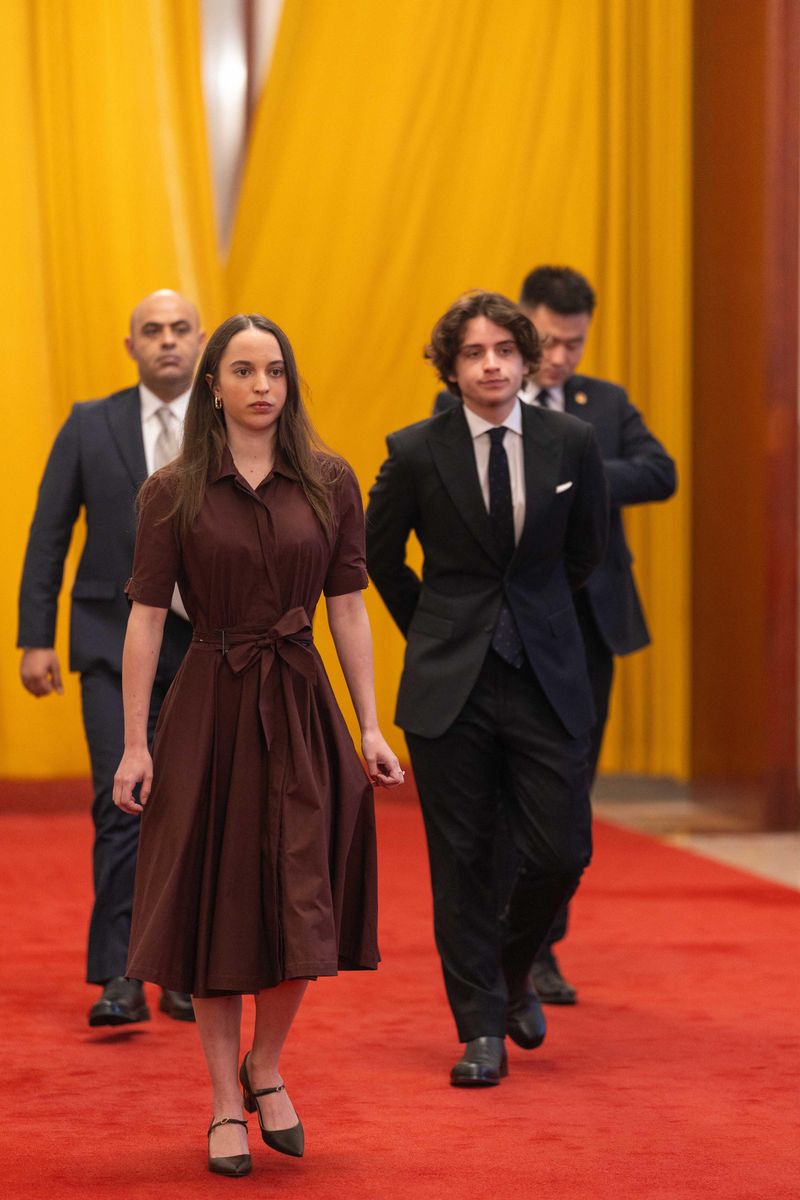
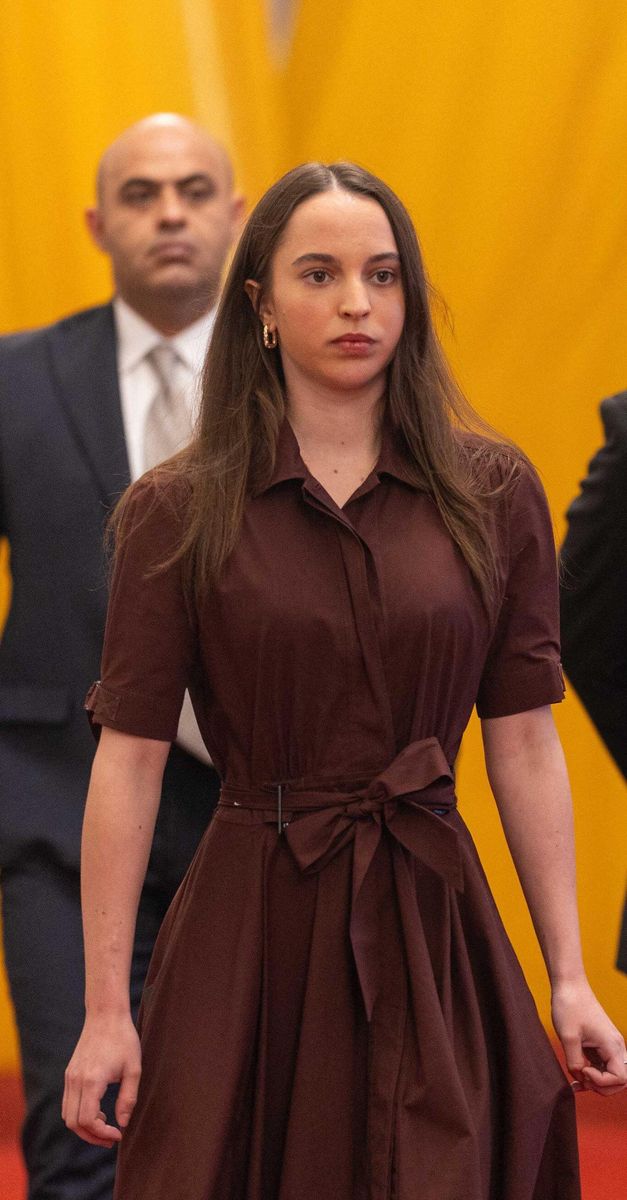
For the diplomatic occasion, Salma selected an elegant brown shirt dress by Bottega Veneta that appeared to come directly from Queen Rania’s fashion archive.
The polished midi design was made from a cotton-blend fabric and featured a pointed collar, short sleeves and a row of buttons along the bodice. Its fitted waist opened into a softly structured A-line skirt, while a coordinating belt emphasized Salma’s silhouette and created an effortlessly sophisticated finish.
 © Abaca Press
The deep chocolate shade brought warmth to the classic design and felt particularly fitting for a formal daytime engagement. Salma completed the monochromatic look with dark Jennifer Chamandi pumps, allowing the dress and its sentimental history to remain the focus.
An understated royal beauty look:
Princess Salma kept her beauty look equally refined. She wore her long brunette hair loose and sleek, styled with a precise center part and gently tucked behind her ears. The unfussy hairstyle complemented the clean lines of the shirt dress while placing the focus on her delicate drop earrings.
 © Royal Hashemite Court
Her makeup appeared natural and luminous, with softly defined brows, subtle eye makeup and a rosy lip. Rather than opting for an elaborate diplomatic beauty moment, Salma chose a fresh, understated finish that reflected her own quietly confident approach to royal dressing.
 © Abaca Press
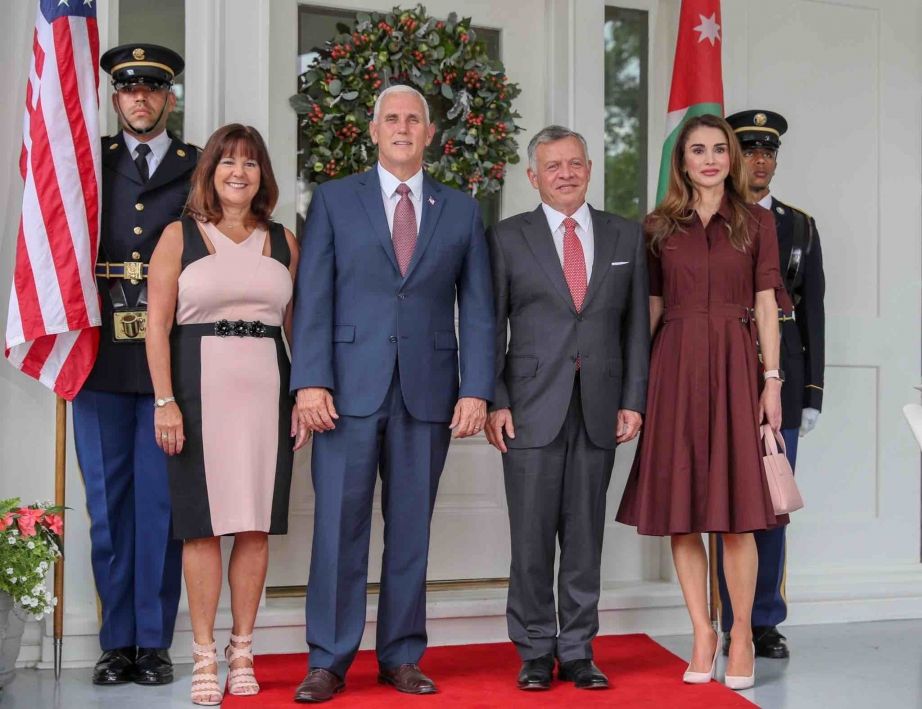
The overall look also offered a subtle contrast to Queen Rania’s original styling. When the queen wore the design during a 2018 working visit to the United States, she paired it with pale accessories and styled her hair in voluminous waves. Salma gave the dress a younger, more minimalist identity through her dark pumps, streamlined hair and pared-back beauty look.
Following in Queen Rania’s fashionable footsteps:
The appearance marked another significant step forward for Salma, who has been taking on an increasingly visible role alongside her family. King Abdullah’s state visit to China took place from August 18 through August 24 and included stops in Shanghai, Shenzhen and Beijing.
 © Abaca Press
During the final stage of the trip, Salma and Hashem attended the king’s talks with President Xi and witnessed the signing of agreements covering areas including legal cooperation and e-commerce.
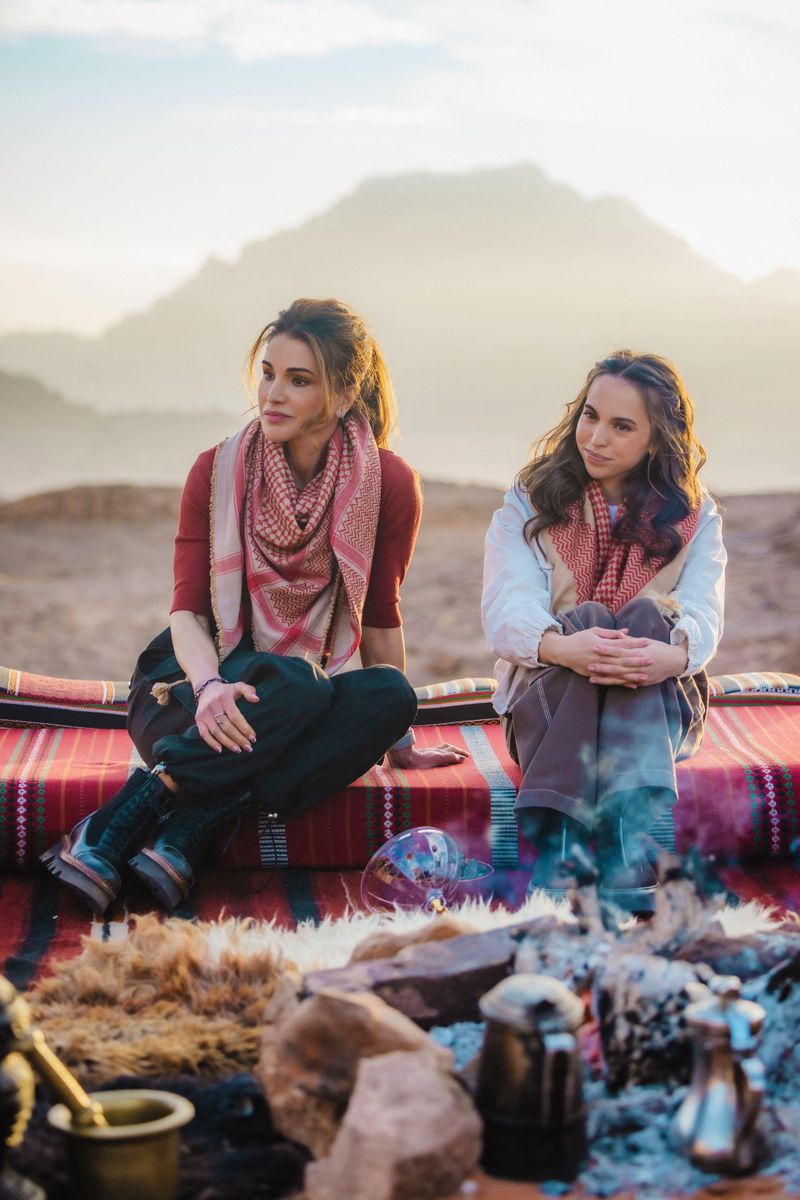
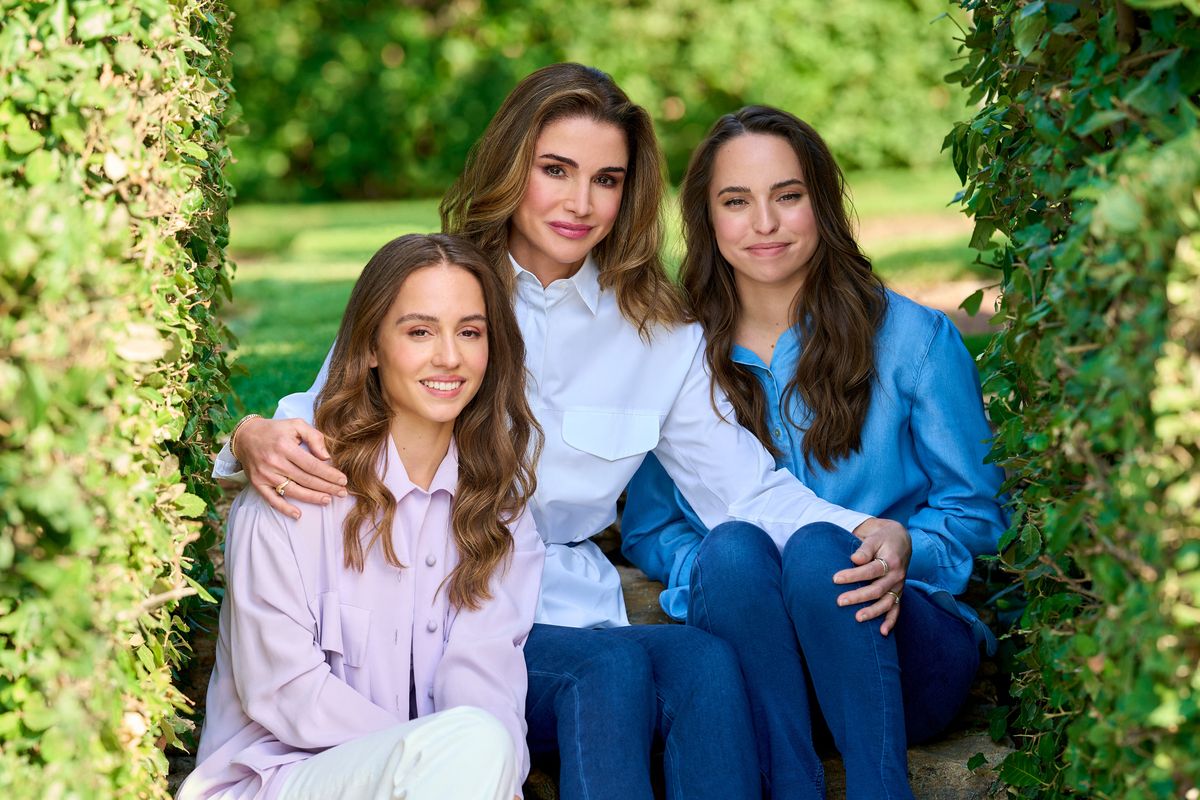
Wearing one of her mother’s recognizable designs brought a personal dimension to the important diplomatic appearance. It also continued a fashion tradition shared by the women of Jordan’s royal family, who regularly revisit pieces from one another’s wardrobes.
 © PPE
© PPESalma previously followed her mother’s example at a royal family Iftar gathering when she wore a white knotted skirt by UAE-based label REEMAMI that Rania had debuted several years earlier.
Her older sister, Princess Iman, has similarly borrowed accessories and jewelry from their mother, most notably wearing a delicate diamond tiara from Rania’s collection for her 2023 wedding.
 © Balkis Press/ABACA/Shutterstock
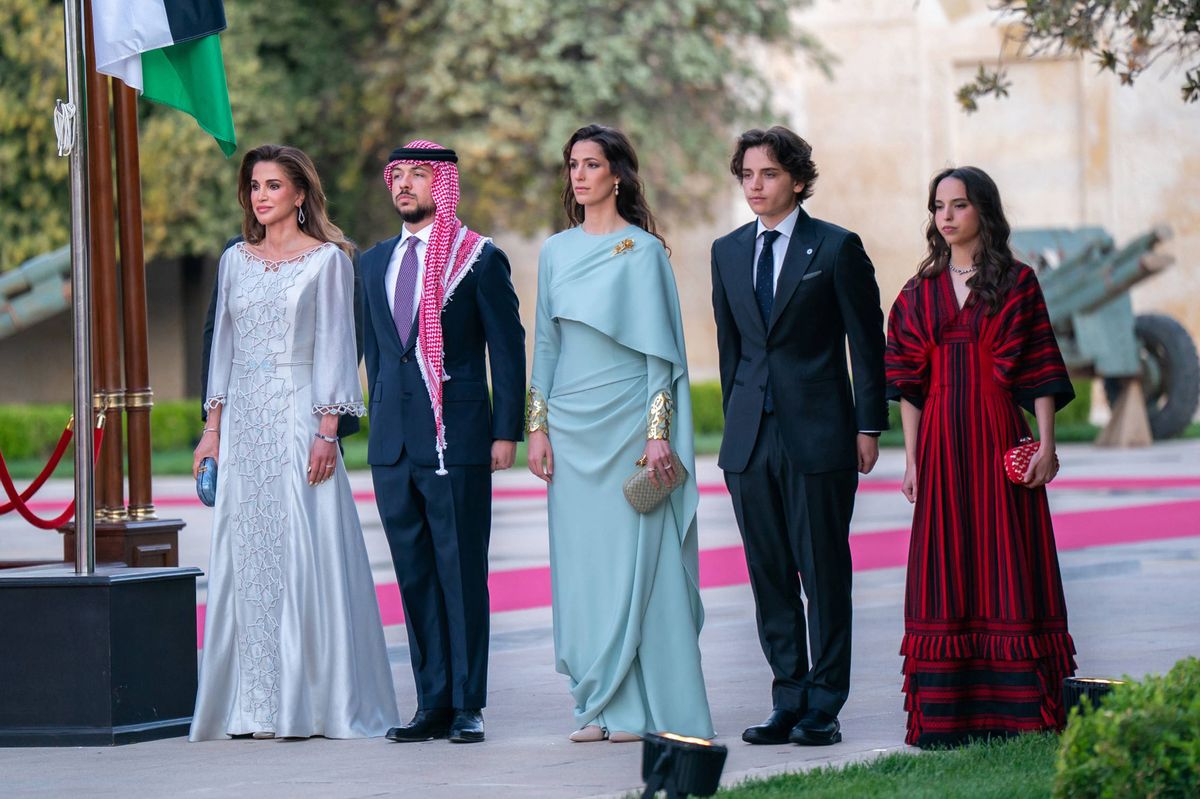
Queen Rania has also shared jewelry with her daughter-in-law, Princess Rajwa, while the two women frequently coordinate through complementary colors, elegant tailoring and similarly streamlined silhouettes.
These wardrobe connections transform designer pieces into something more personal than traditional royal fashion. Each reappearance carries a piece of family history while demonstrating how a carefully chosen garment can be adapted to suit a new generation and a different public role.
A princess with accomplishments beyond fashion:
Although Salma is emerging as a royal style figure, her accomplishments extend far beyond her wardrobe. She graduated from the University of Southern California in May 2023 and has also completed military aviation training.
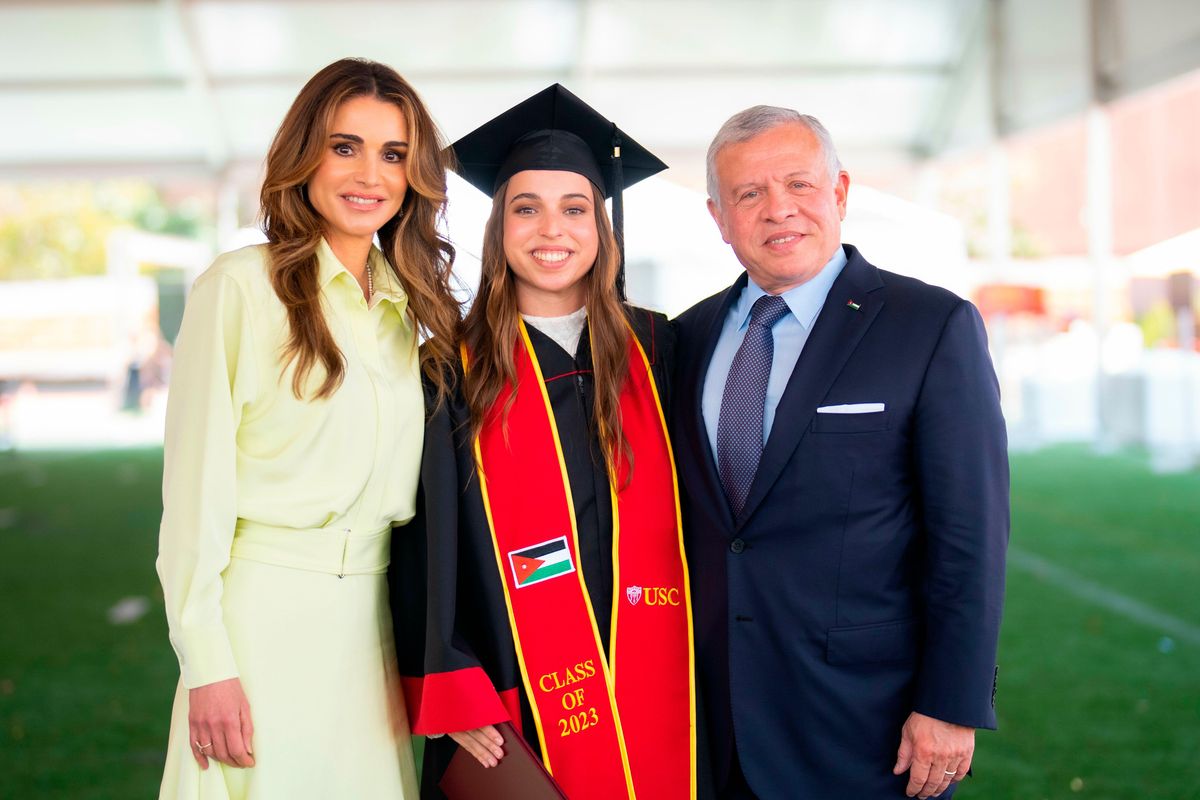 © dpa picture alliance
In January 2020, King Abdullah presented his daughter with her wings after she completed theoretical and practical pilot training. The Royal Hashemite Court described her as the first young Jordanian woman to complete preliminary training on fixed-wing aircraft, a more precise distinction than the frequently repeated claim that she is Jordan’s first female jet pilot.
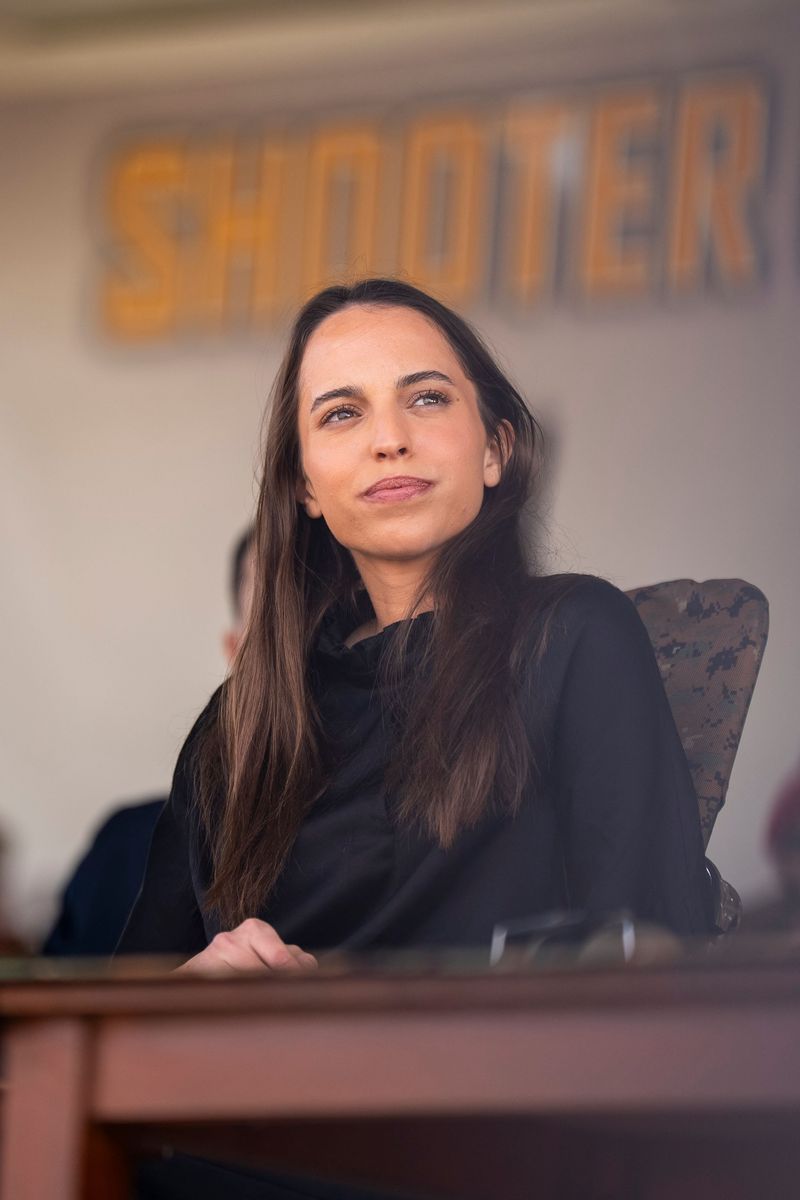 © Balkis Press/ABACA/Shutterstock
Her appearance in Beijing brought those different sides of her public identity together. The streamlined silhouette projected diplomatic polish, while the decision to reach into Queen Rania’s wardrobe offered a gentle reminder of the close relationship between mother and daughter.