
Lymphangitis is an inflammation or infection of the lymph vessels, which are part of your body’s lymphatic system. These vessels carry lymph fluid through your body and help fight infections. When bacteria, viruses, or fungi enter the lymphatic system through a cut, scrape, wound, or skin infection, lymphangitis can develop quickly and become serious if left untreated.
According to the Cleveland Clinic, lymphangitis is often linked to bacterial skin infections and may spread rapidly into the bloodstream. Healthcare providers sometimes call it acute lymphangitis because it develops suddenly and requires prompt medical treatment.
 © Getty Images
What Does the Lymphatic System Do?
Your lymphatic system works like a drainage and defense network. It moves lymph fluid away from tissues and back into your bloodstream while helping your immune system remove bacteria, toxins, and waste.
When germs enter damaged skin, they can invade the lymph vessels and trigger inflammation. This causes the red streaking pattern commonly associated with lymphangitis.
What Causes Lymphangitis?
The most common cause is a bacterial infection, especially Streptococcus or Staphylococcus bacteria. However, viral and fungal infections can also lead to the condition.
 © Getty Images
Lymphangitis often develops after cuts or scrapes and insect bites; therefore, children are exceptionally susceptible. But also, surgical wounds, skin abscesses, cellulitis, burns, and injuries involving broken skin can affect adults.
In many cases, patients report recent minor skin trauma before symptoms appear.
Noninfectious causes are possible, too. Certain cancers and tumors can sometimes trigger inflammation in the lymphatic system.
Common Symptoms of Lymphangitis
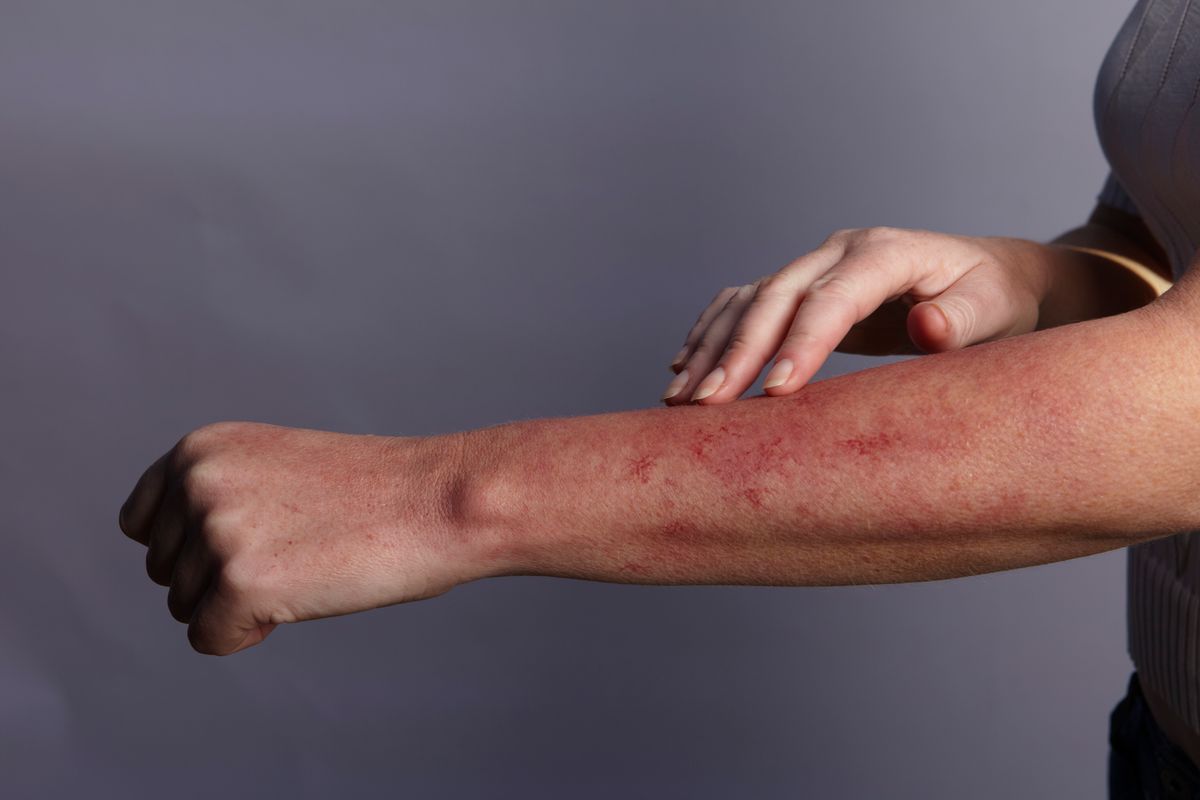
One of the most recognizable signs is red streaks spreading from the infected area toward nearby lymph nodes. These streaks may feel warm, tender, or painful.
Other symptoms include swollen lymph nodes, fever, chills, fatigue or malaise, headache, muscle aches, loss of appetite, skin blistering, rapid heartbeat, and tender, infected skin.
 © Getty Images
Children with lymphangitis often develop fever, chills, headaches, and general illness symptoms quickly.
What Does Lymphangitis Look Like?
The condition usually appears as bright red or reddish-purple streaks moving upward from the original wound or infected area. The surrounding skin may look swollen or irritated.
Nearby lymph nodes are commonly enlarged and painful to touch.
Why Lymphangitis Can Become Dangerous
Lymphangitis is not something to ignore. The infection can spread rapidly into the bloodstream, causing bacteremia or sepsis, a life-threatening response to infection.
 © Getty Images
Group A Streptococcus infections are especially known for progressing quickly.
Without treatment, the infection can spread throughout the body.
How Doctors Diagnose Lymphangitis
Healthcare providers usually diagnose lymphangitis with a physical examination and medical history. The visible red streaks and swollen lymph nodes are key clues.
Treatment for Lymphangitis
Treatment depends on the cause, but usually includes antibiotics for bacterial infections. Severe cases may require IV antibiotics in a hospital.
 © Getty Images
Most people improve quickly once treatment starts.
Can Lymphangitis Be Prevented?
You can reduce the risk by treating skin injuries properly.
Helpful prevention tips include cleaning cuts immediately, using antibiotic ointment, keeping wounds covered, watching for redness or swelling, and treating skin infections early.
People with weakened immune systems or chronic skin conditions may face a higher risk.