Amsterdam’s Royal Palace is once again set to become the backdrop for a grand state banquet, where its distinguished guests will restore a sense of royal magnificence to every corner of the historic building. The president of the Federal Republic of Germany will visit the Netherlands for a state visit alongside Elke Büdenbender.
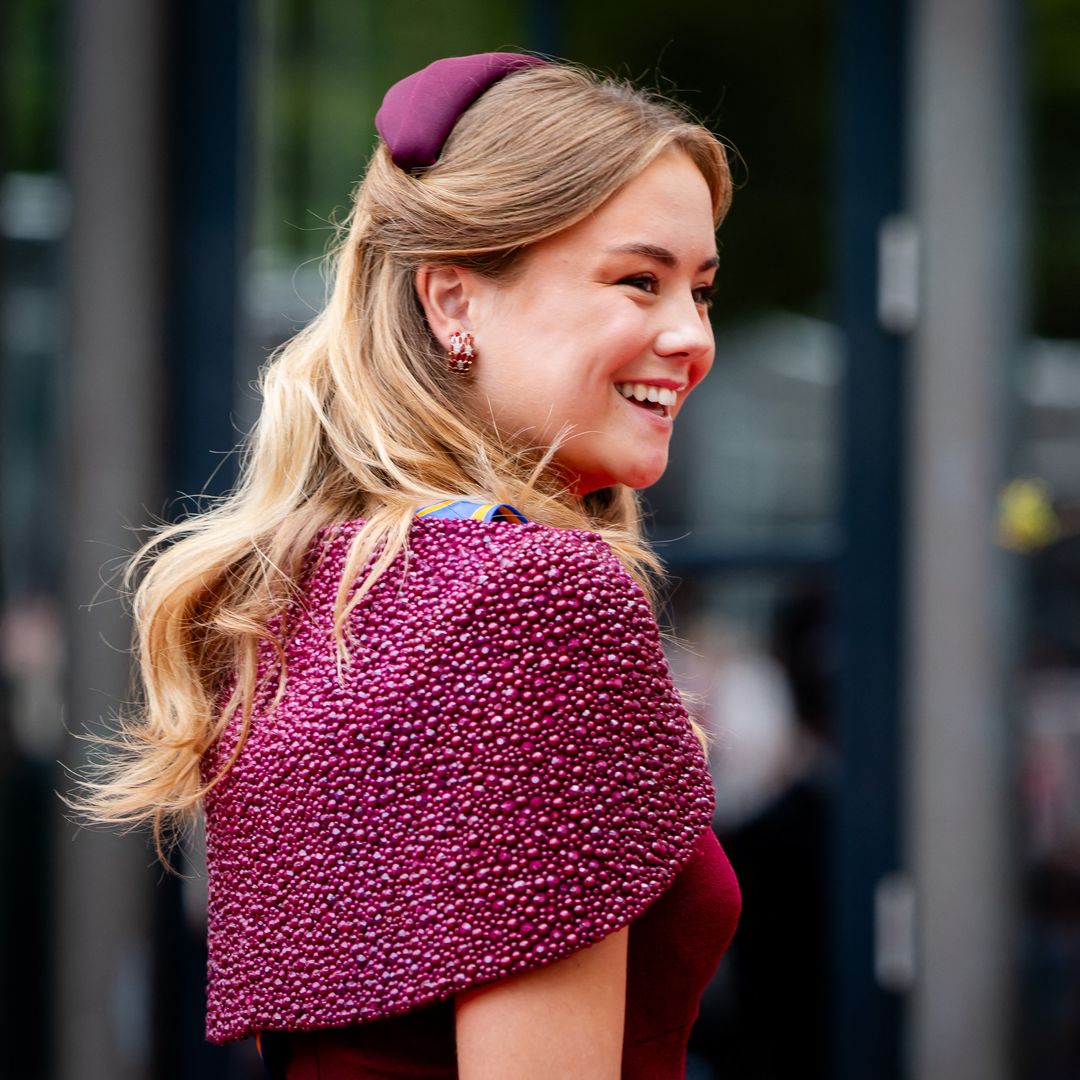
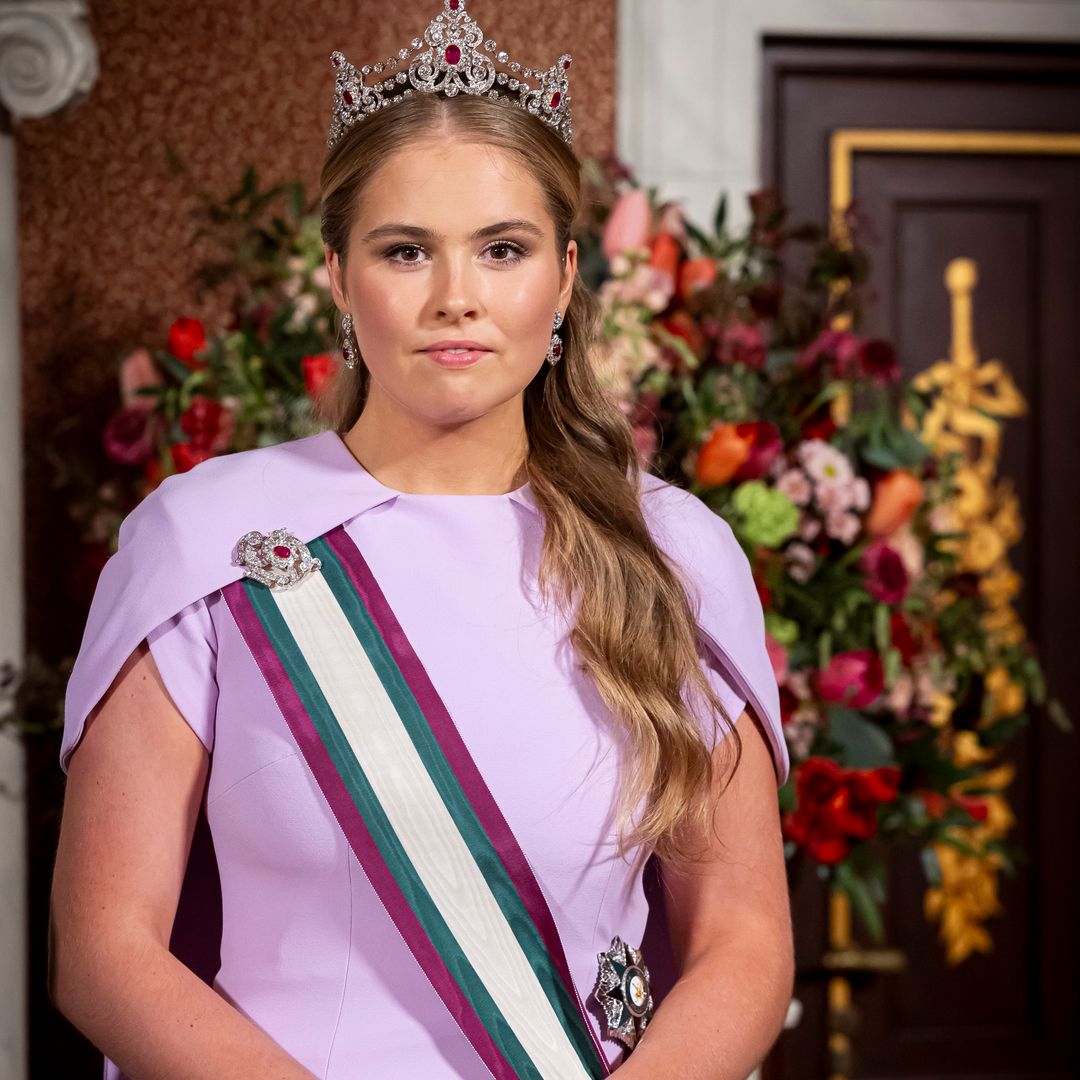
The occasion is also expected to further elevate the profile of Princess Amalia who, as the country’s future queen, will be one of the evening’s central figures at the banquet hosted by King Willem-Alexander and Queen Máxima. It marks yet another milestone moment for the woman destined to one day ascend the Dutch throne. It won’t be the first time the Princess of Orange has carried the weight of royal history on her shoulders.
 © Patrick van Katwijk
Amalia of the Netherlands’ Passion for Diamonds
Princess Amalia first debuted some of the most spectacular jewels from the royal collection during the coming-of-age celebrations for Princess Ingrid Alexandra of Norway in January 2022. It was then that the future queen made the most glamorous possible statement by wearing a striking diamond star tiara. In that moment, the eldest daughter of King Willem-Alexander and Queen Máxima revealed her fascination with the jewels of Europe’s royal houses.
“I love tiaras!” she confessed enthusiastically to Claudia de Breij, author of the book in which Amalia discusses, among other topics, her deep admiration for Europe’s most iconic royal jewels. “Show me a tiara and I’ll tell you where it’s from. I can recognize every tiara in Europe.”
 © © RVD
It’s a passion that dates back to childhood. Once, while her mother Queen Máxima was getting ready, Amalia reached for one of her tiaras and recalled: “I immediately put it on my head.”
Now, the princess is set to take center stage once again in one of those moments that clearly bring her joy as she moves through the palace halls. The state banquet honoring the German presidential couple will take place next Tuesday, June 9, as part of a state visit, the highest level of diplomatic visit, which will continue through Thursday, June 11.
Amalia’s Tiaras: A Historical Nod Through the Stars
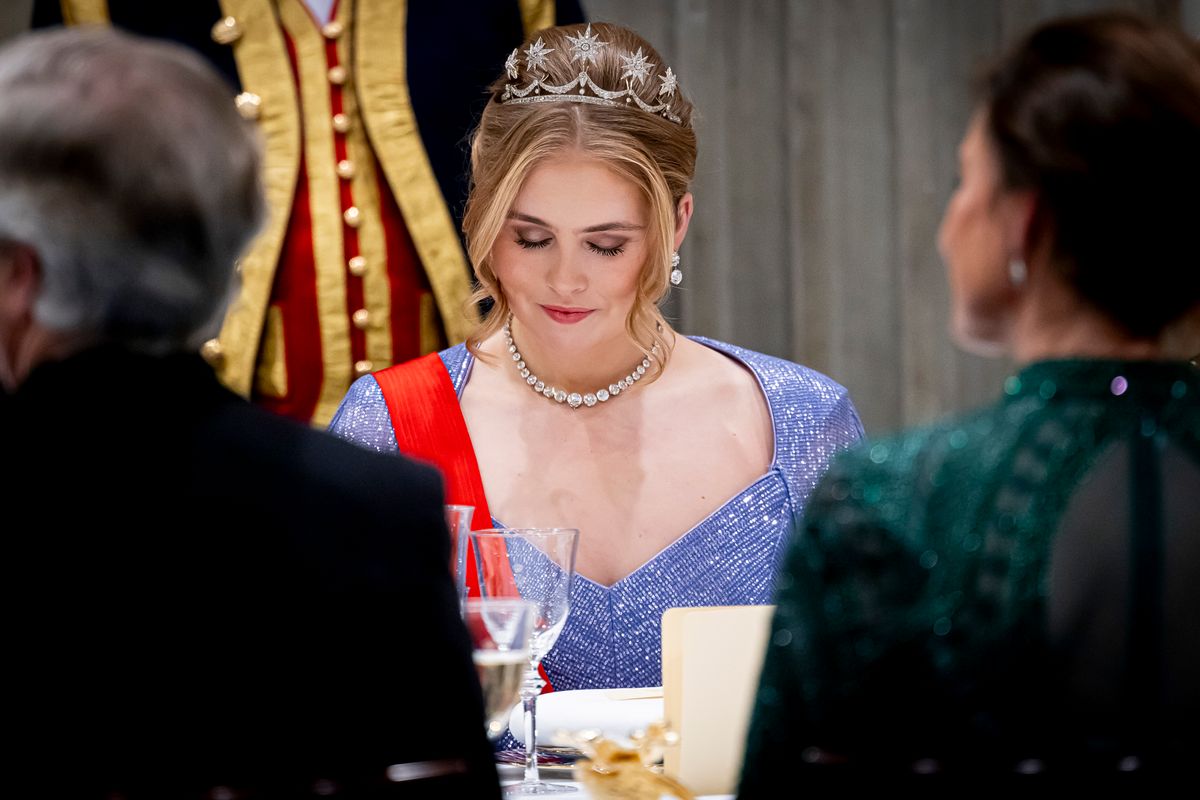
The first time Princess Amalia truly became the talk of royal watchers was during Princess Ingrid Alexandra’s 18th birthday gala, a dazzling evening filled with diamonds. On that occasion, she wore the Star Tiara, the same piece Queen Máxima famously wore on her wedding day when she married King Willem-Alexander of the Netherlands.
 © Patrick van Katwijk
The tiara is considered one of the House of Orange-Nassau’s most treasured jewels, as it belongs to the Dutch crown collection. Crafted in white gold and set with diamonds, the design features five detachable star motifs, which can also be replaced with pearl ornaments. The stars themselves once belonged to Queen Emma, the great-great-grandmother of King Willem-Alexander.
Rubies Through the Peacock Tiara
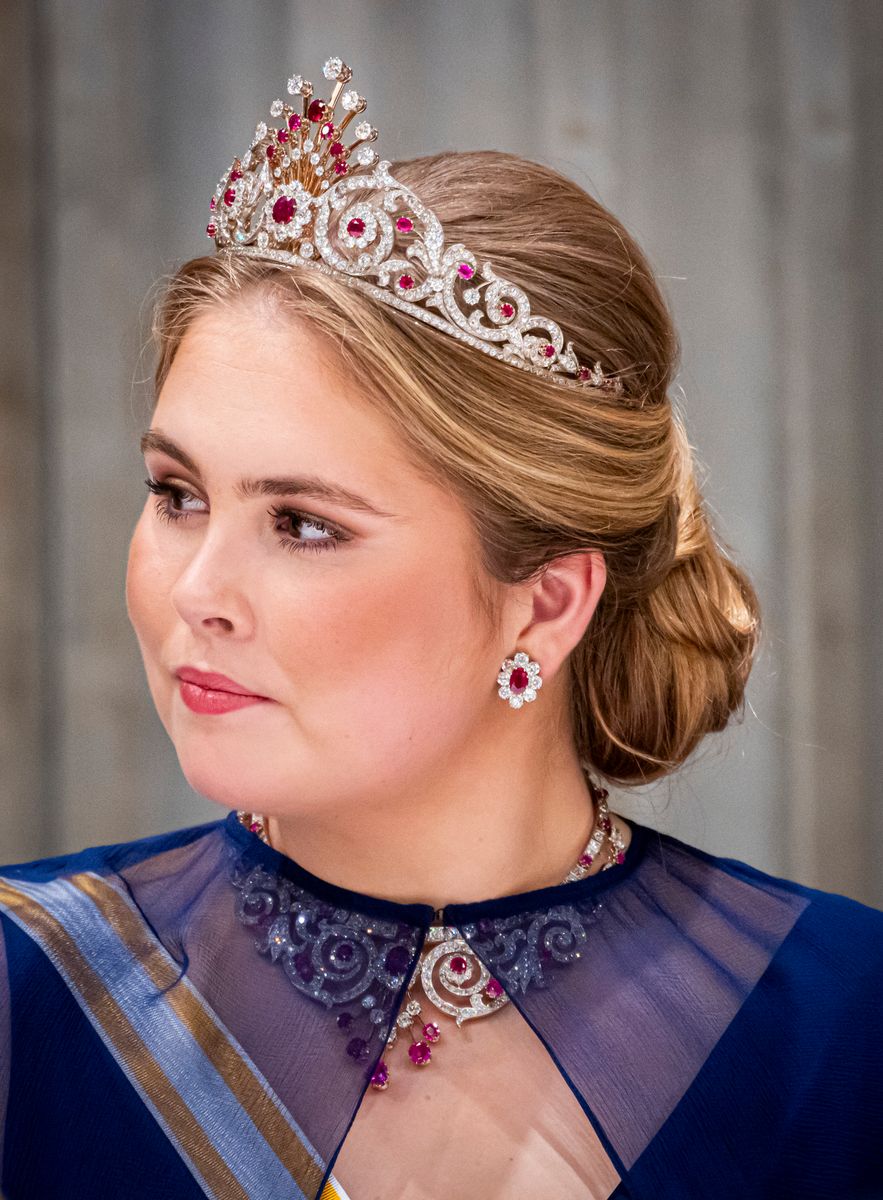
Over time, these iconic stars have been paired with other jewels from the dynasty’s historic collection. Another tiara worn by Amalia, and perhaps one of the most meaningful, is the Peacock Tiara, an almost symbolic emblem of the Dutch royal family that she wore during the state visit hosted for King Felipe and Queen Letizia of Spain in her homeland.
 © Patrick van Katwijk
The tiara dates back to 1897 and is also tied to Queen Emma, who reused rubies that had belonged to her predecessor, Queen Sophie of Württemberg. The result was an exquisite arrangement of diamonds and rubies designed to resemble the spread tail feathers of a peacock. Over the years, the piece has evolved to reflect changing tastes while maintaining its sophisticated elegance, passed down from generation to generation.
Rubies may very well be among the future queen’s favorite gemstones. Their intense red color has long inspired myths both dark and fascinating. Hindu mythology says rubies were formed from the blood tears of the demon Vala after he was defeated by the gods and his blood spilled into sacred rivers. Another legend claims that anyone who offered a high-quality ruby to the god Krishna would be reborn as an emperor in their next life. Other stories say rubies contain an eternal fire within them.
 © Patrick van Katwijk
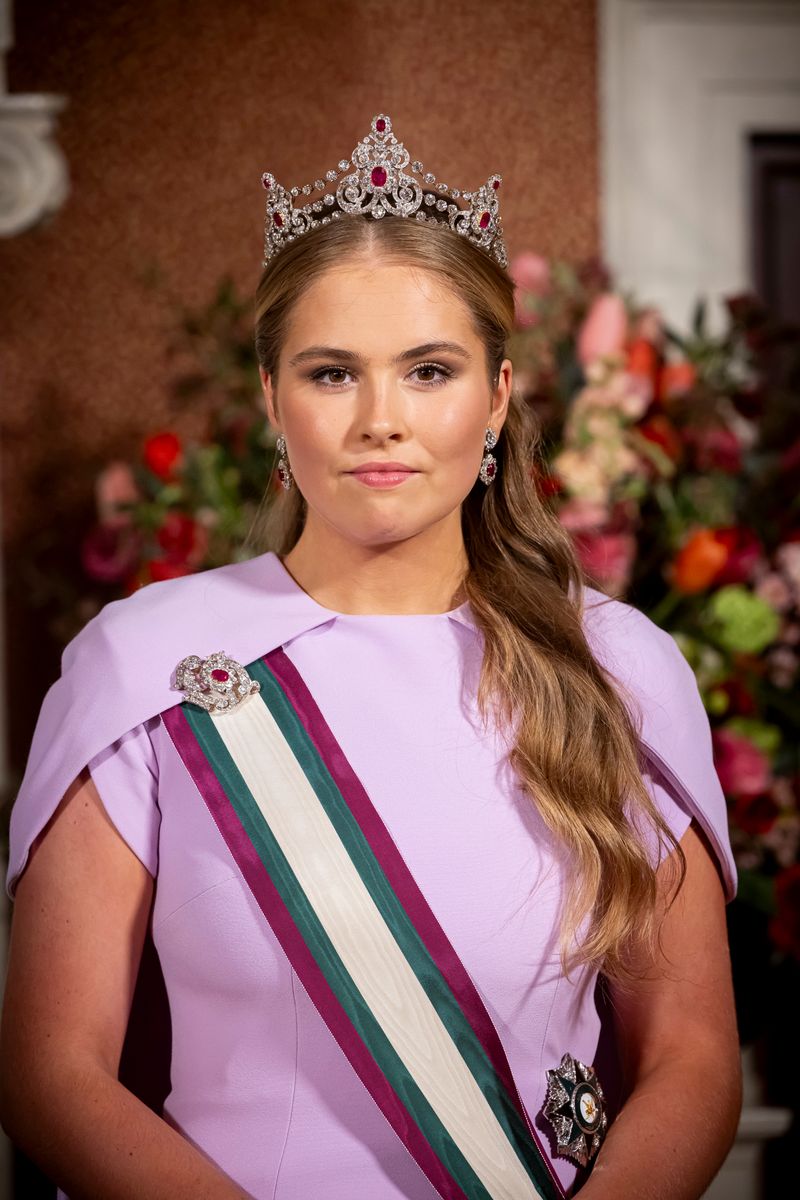
Whatever the case, diamonds and deep red gemstones have adorned Amalia on several occasions, including when she wore the Mellerio Ruby Tiara, a piece dating back to 1889. Like many jewels before it, the tiara traces back to Queen Emma and was said to be a gift reflecting the profound love King William III had for the woman considered the love of his life.
The Royal Court’s Transformable Sapphires
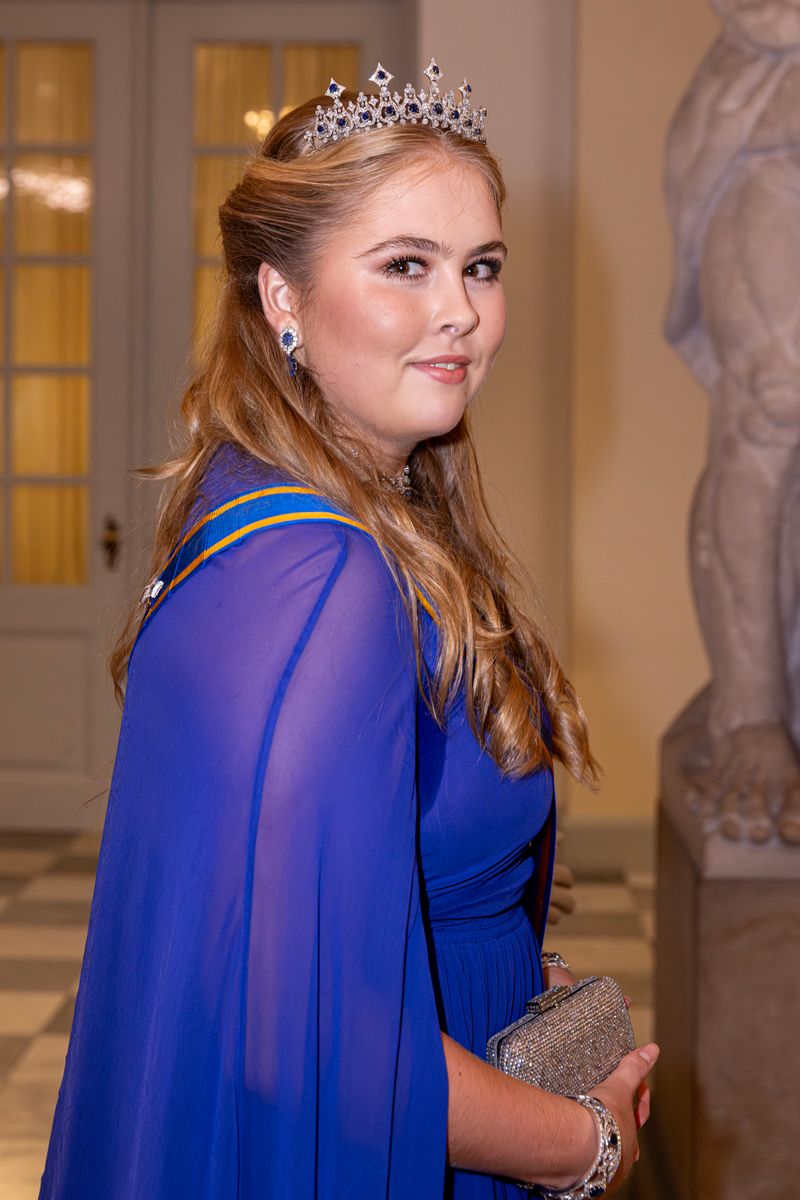
Princess Amalia also wore an imposing sapphire tiara during Prince Christian of Denmark’s gala celebrations, carrying centuries of royal history in her hair. Though the tiara itself is relatively modern, it was created using Queen Emma’s sapphire necklace, originally designed by Mellerio in 1880.
The piece incorporates antique gemstones and once again reflects the dynasty’s rich history, featuring five sapphires surrounded by brilliant-cut diamonds from a sapphire parure Queen Wilhelmina received as a wedding gift from the Dutch people.
 © Patrick van Katwijk
It was one of Amalia’s earliest major appearances among Europe’s royal courts, and she unquestionably stole the spotlight with these iconic jewels from the Dutch royal collection.
The Diamond Bandeau: A Jewel of Incalculable Beauty
Princess Amalia has shined every time royal protocol has allowed her to step into the spotlight. Her appearances reflect a sense of continuity deeply rooted within the same dynasty. Amalia embraces that historic legacy effortlessly, adapting to royal tradition while dazzling as though the stars once placed upon her head belonged, symbolically, to the universe itself.
 © Patrick van Katwijk
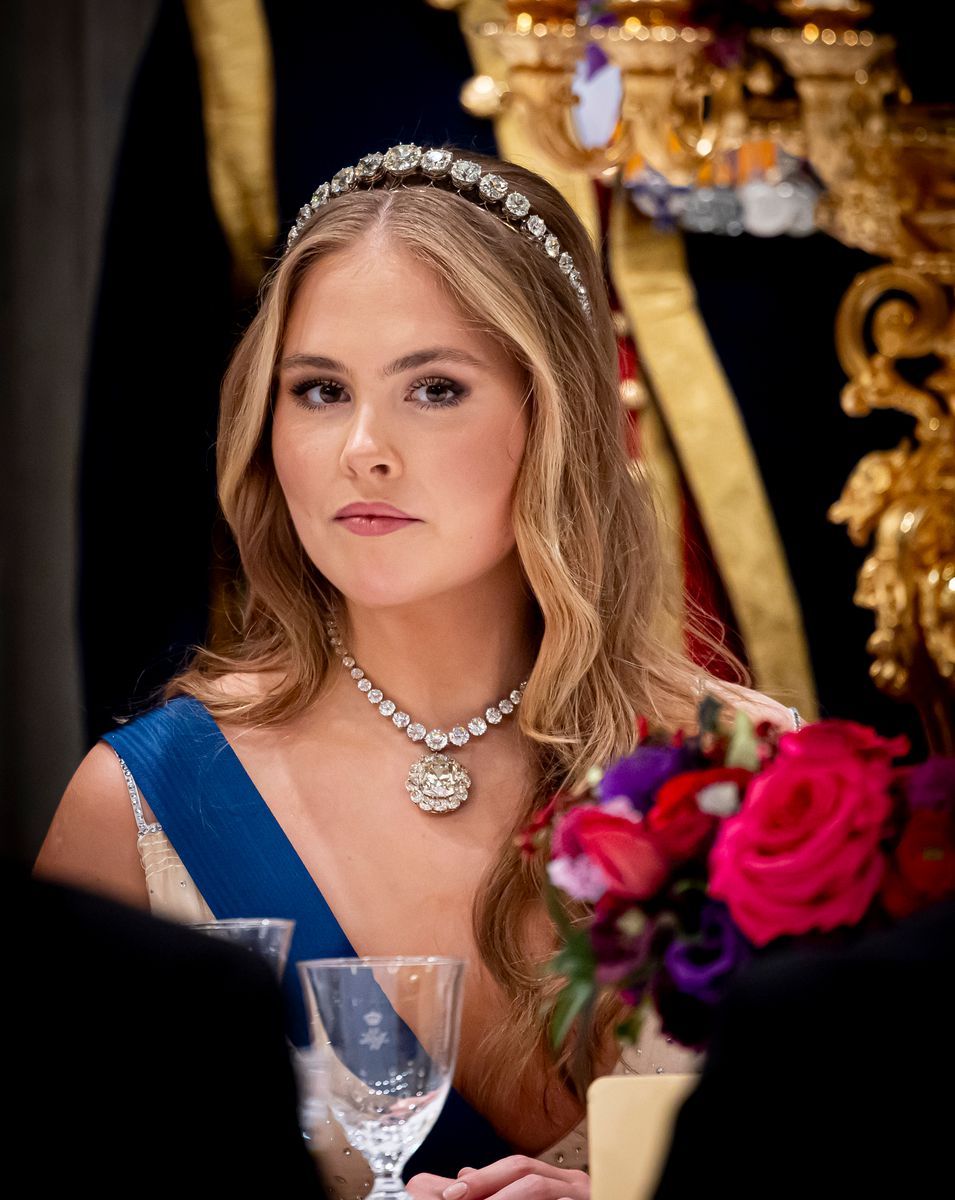
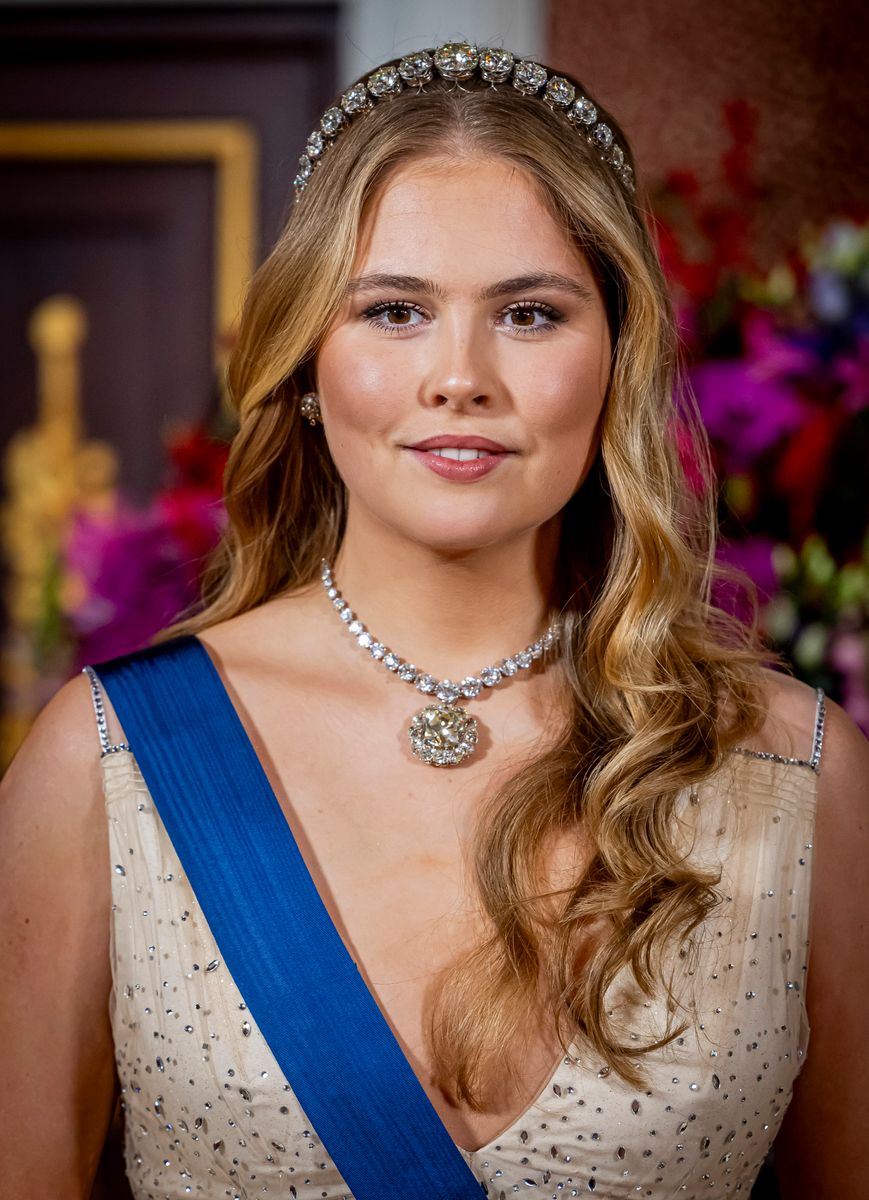
No matter the size of the jewels she wears, each piece seems to radiate with exceptional brilliance. For the visit of Finland’s president, Amalia wore Queen Máxima’s favorite diamond bandeau, a slender diamond-set tiara weighing more than 100 carats in total.
The piece was created using diamonds that once belonged to Queen Emma. Once again, the late queen’s legacy dominates the royal jewelry collection in what feels like a symbolic gesture of continuity. Originally designed as a necklace, the piece was later transformed into a tiara at the request of Queen Wilhelmina.
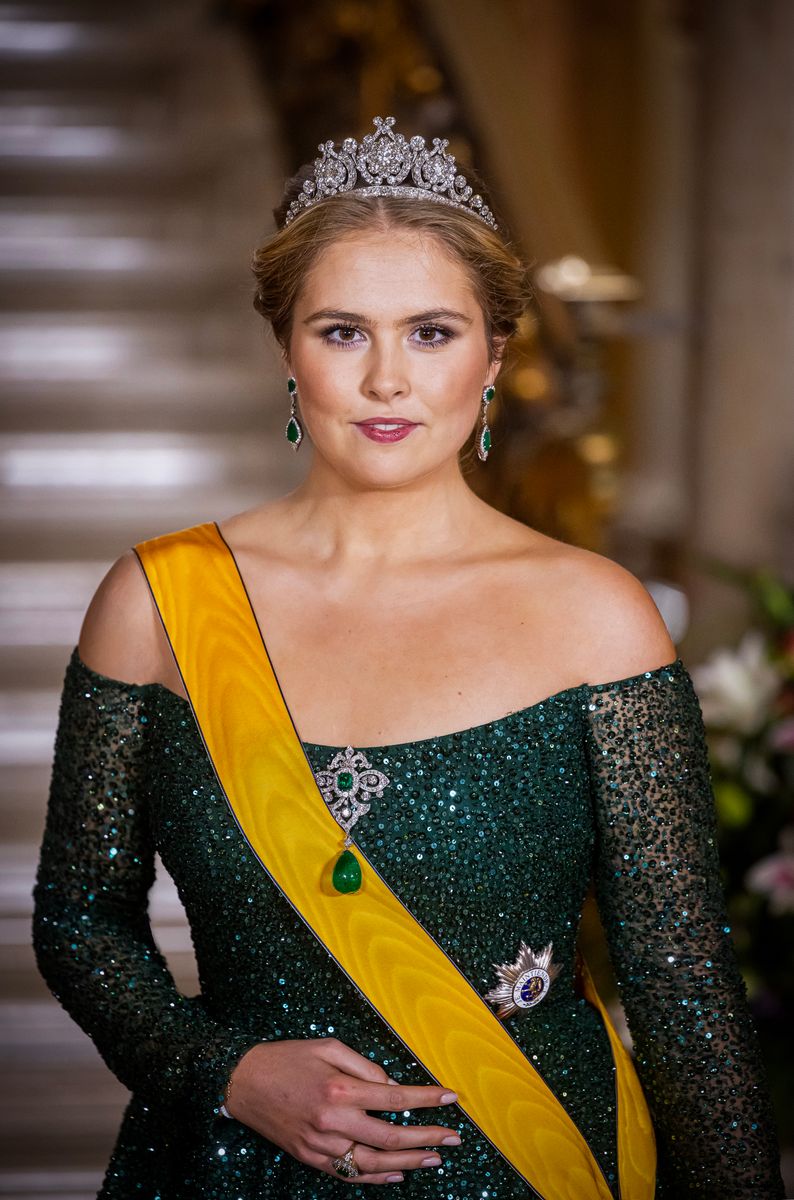
Amalia showcased the same timeless elegance in Luxembourg during the accession celebrations for Grand Duke Guillaume and Grand Duchess Stéphanie. There, she wore Queen Emma’s Diamond Tiara, featuring three central diamond clusters, each composed of a large center stone surrounded by eight slightly smaller diamonds in floral-inspired motifs.
 © Patrick van Katwijk
Since then, the diamonds in these historic pieces, long regarded as symbols of divinity, purity, and indestructibility, have sparkled atop the princess’s blond hair, carrying centuries of royal history in their brilliance.
Next Tuesday, June 9, Amsterdam’s Royal Palace may become the setting for the debut of yet another extraordinary jewel, though only time will tell.