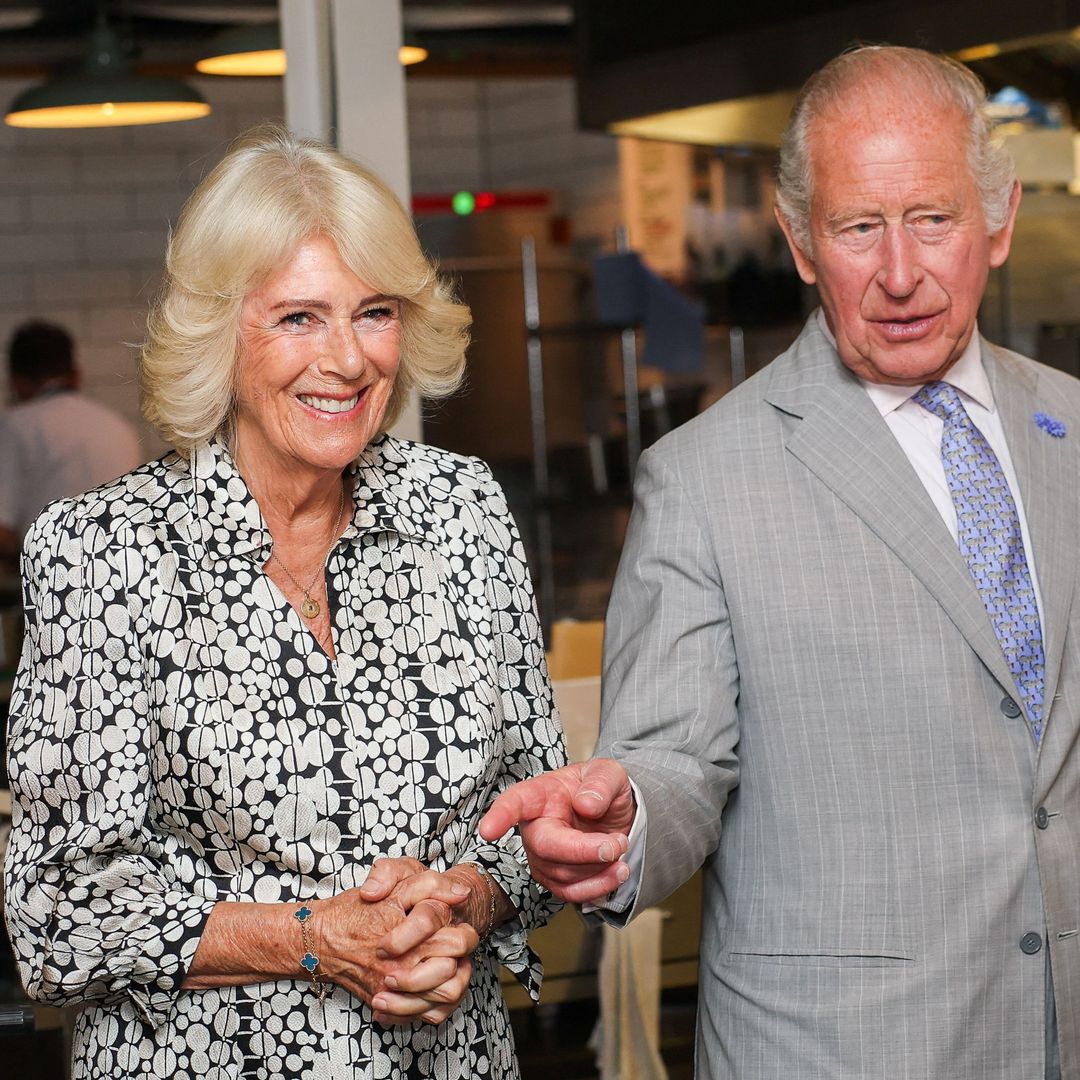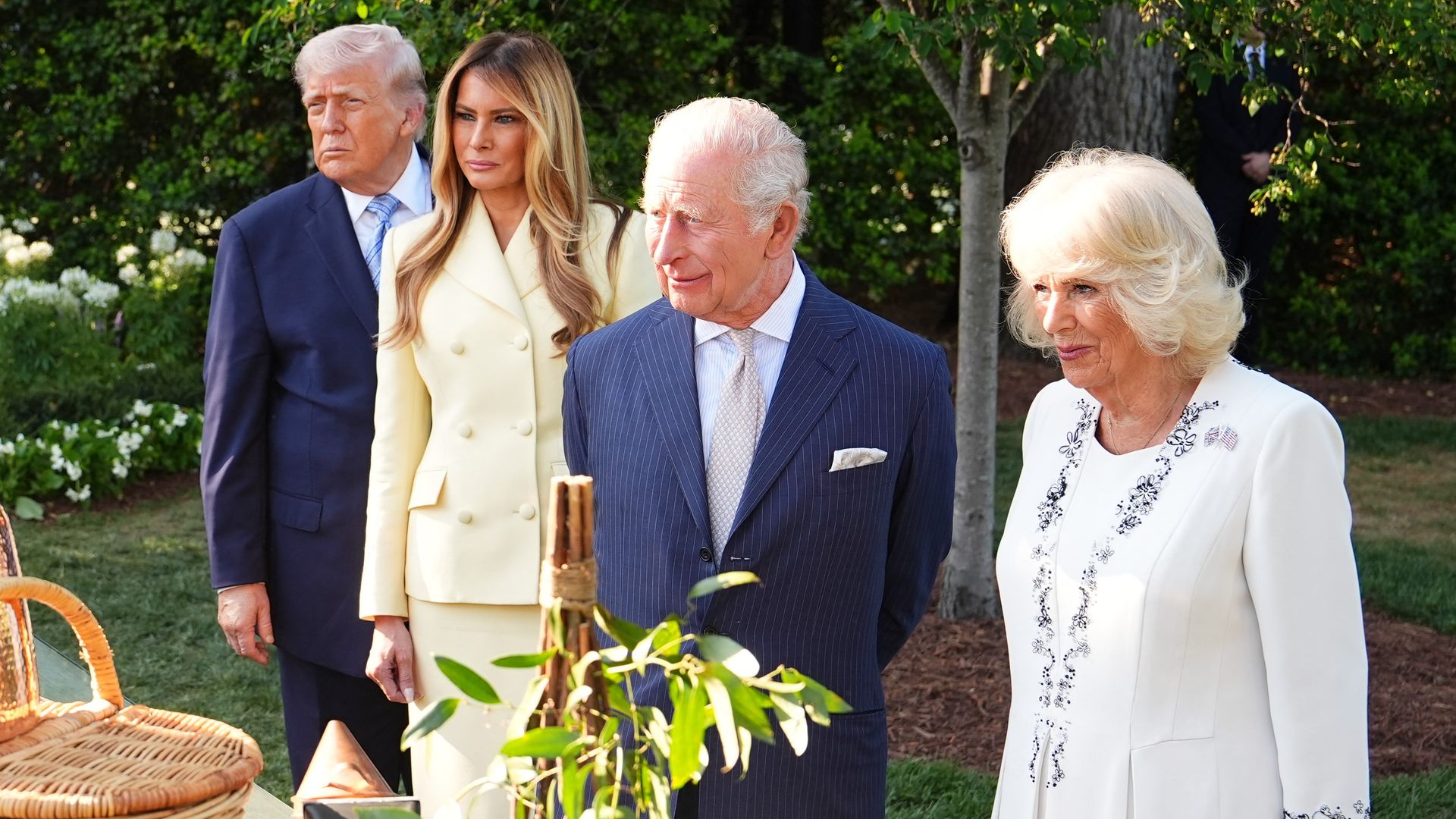
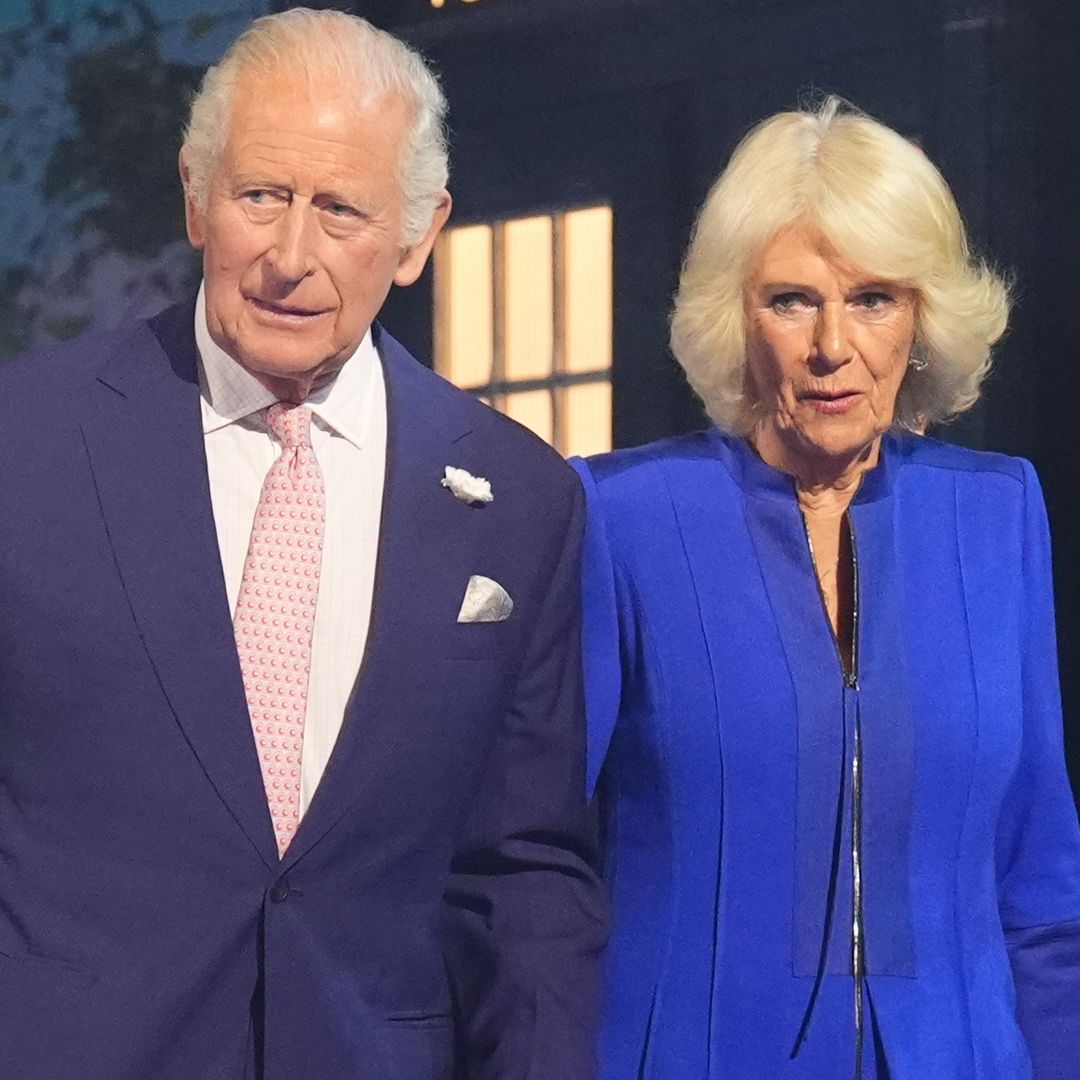
Just hours after their arrival in Washington, King Charles III and Queen Camilla stepped into the next defining moment of their U.S. state visit, a private meeting at the White House with Donald Trump and Melania Trump.
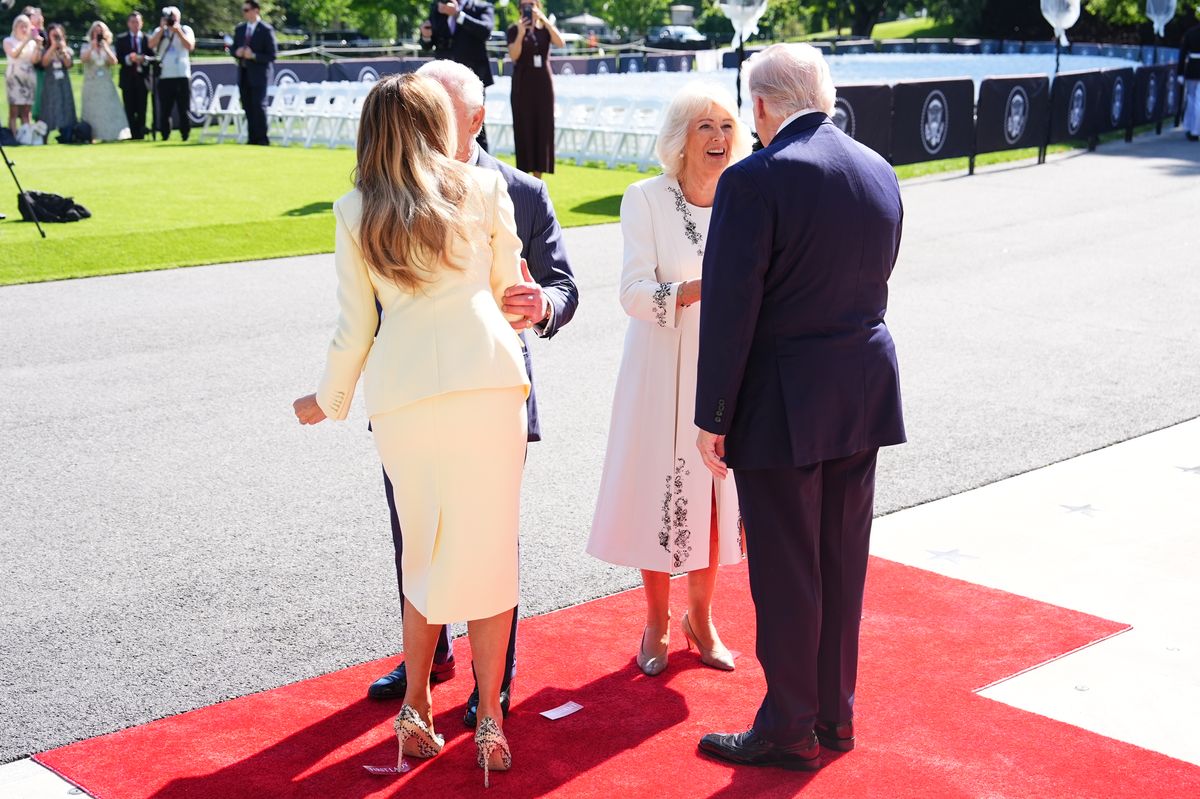
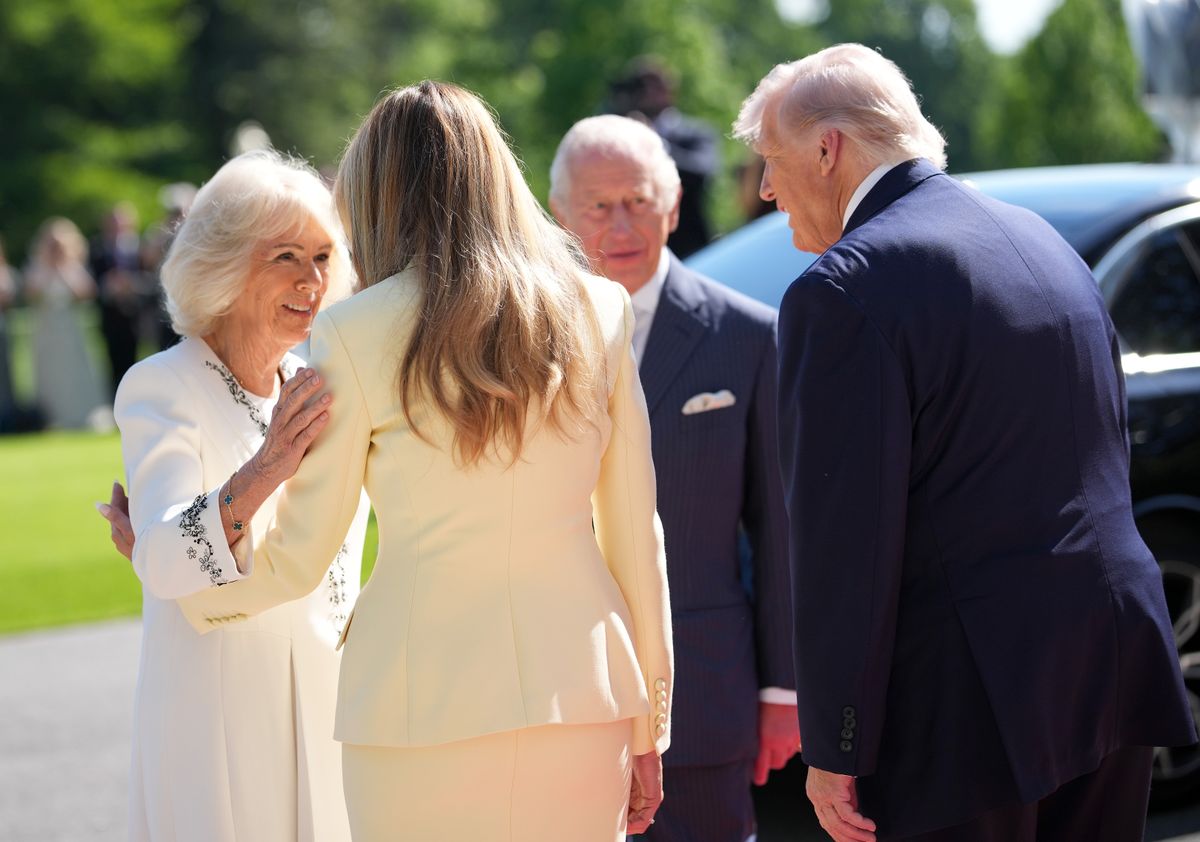
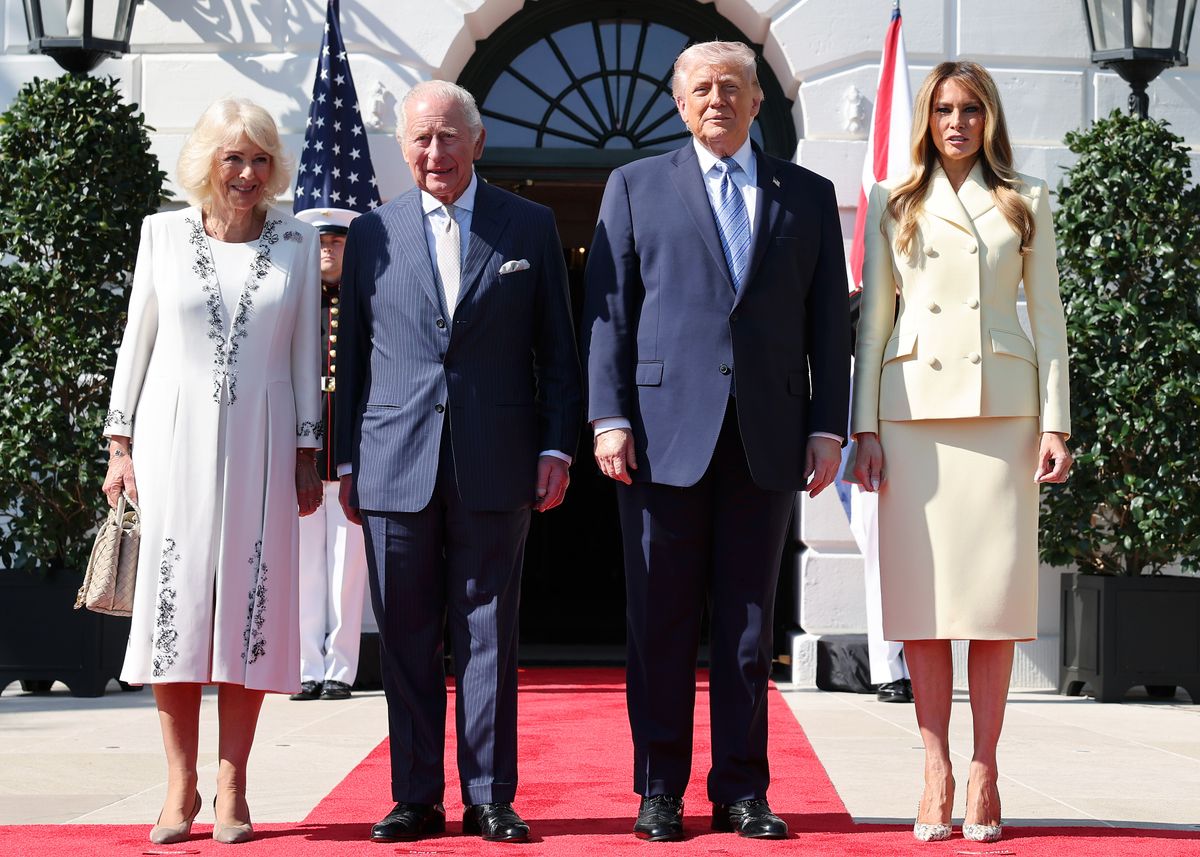
Held at the South Portico, the greeting unfolded with familiar diplomatic choreography. Handshakes were exchanged, brief kisses on the cheek followed, and photographs were taken before the group moved inside.
 © Getty Images
It appeared relaxed on the surface, but the staging was deliberate. Unlike the more formal ceremonies scheduled later in the visit, this encounter was intentionally restrained, designed as a private tea rather than a public spectacle.
 © Getty Images
That choice of setting carried weight. In diplomatic terms, a private meeting allows for tone-setting without the pressure of ceremony. It creates space for personal rapport at a time when broader U.S.-U.K. relations are navigating political strain, particularly over the ongoing conflict involving Iran and differing positions between Washington and London.
 © Chris Jackson
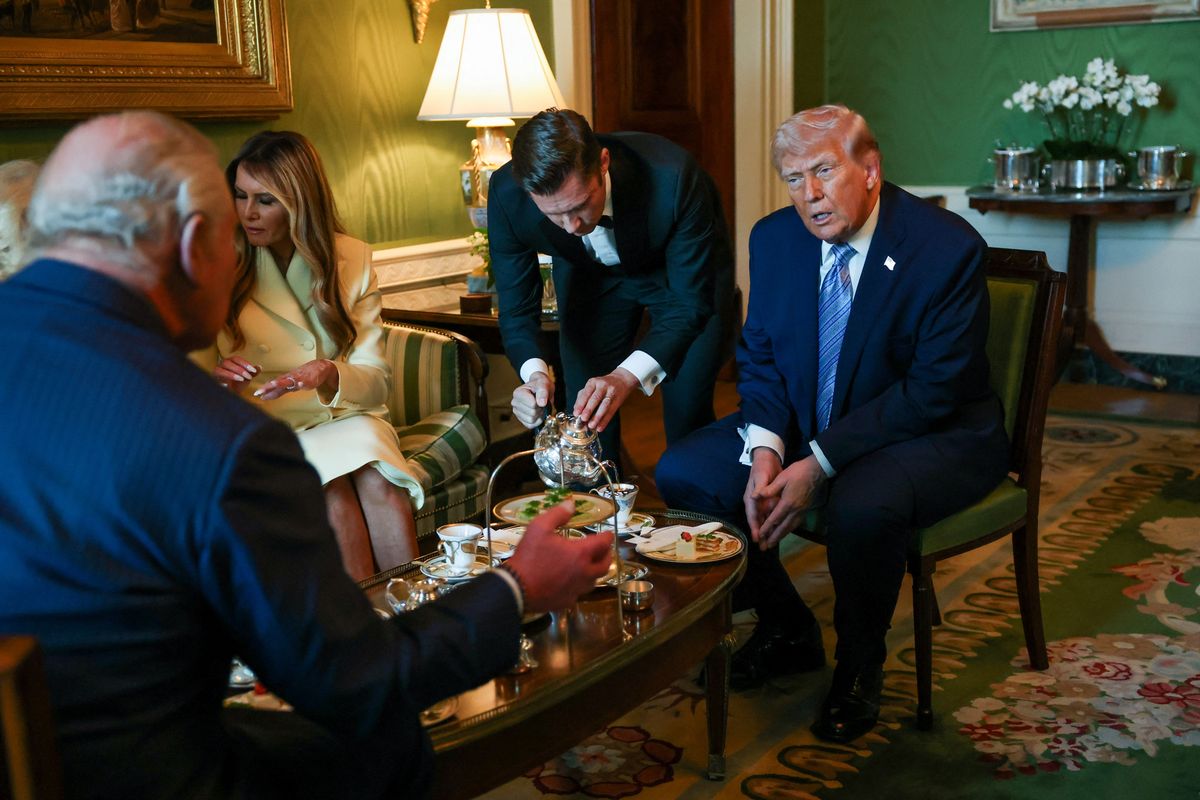
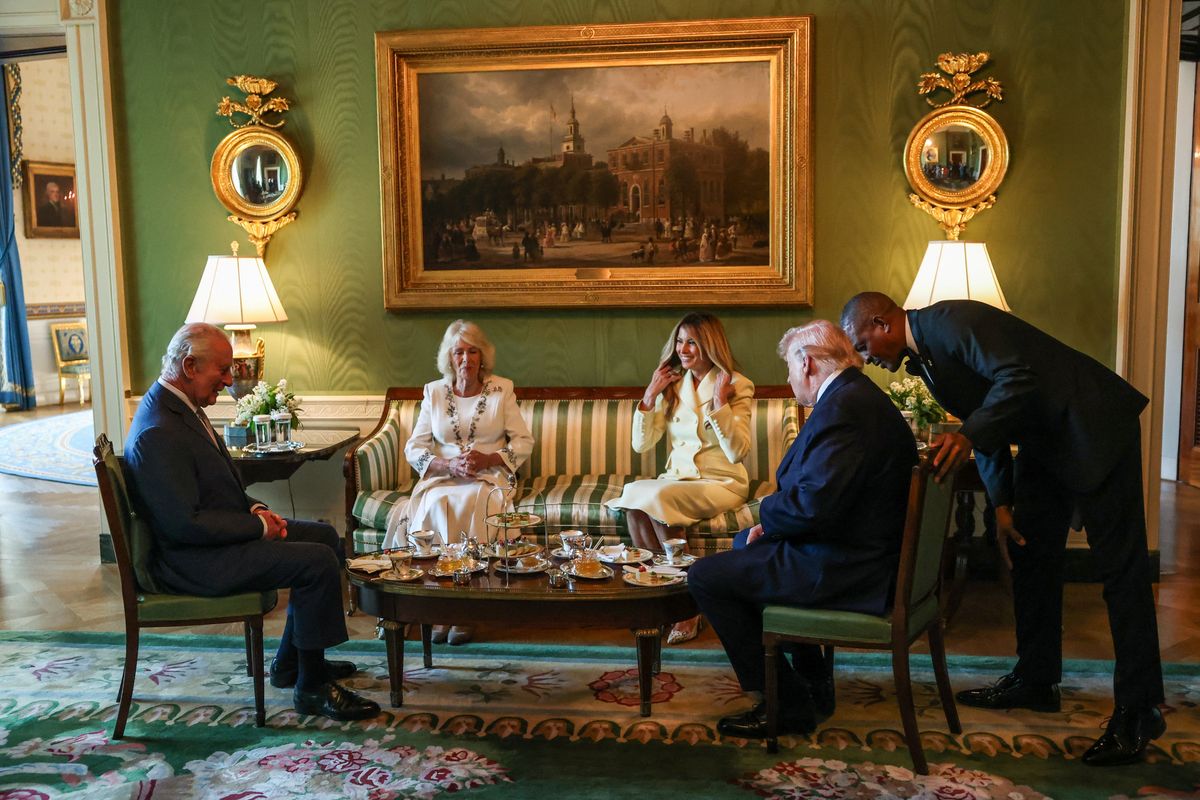
Inside the White House, the atmosphere reflected that balance between ease and protocol. The leaders gathered in an ornate sitting room where tea was served on low tables, continuing a long tradition of informal Anglo-American diplomacy.
 © Pool
King Charles III and Trump sat opposite one another, while Queen Camilla and Melania Trump were seated together on a nearby sofa, a subtle visual pairing that echoed the relationship between the two nations.
 © Getty Images
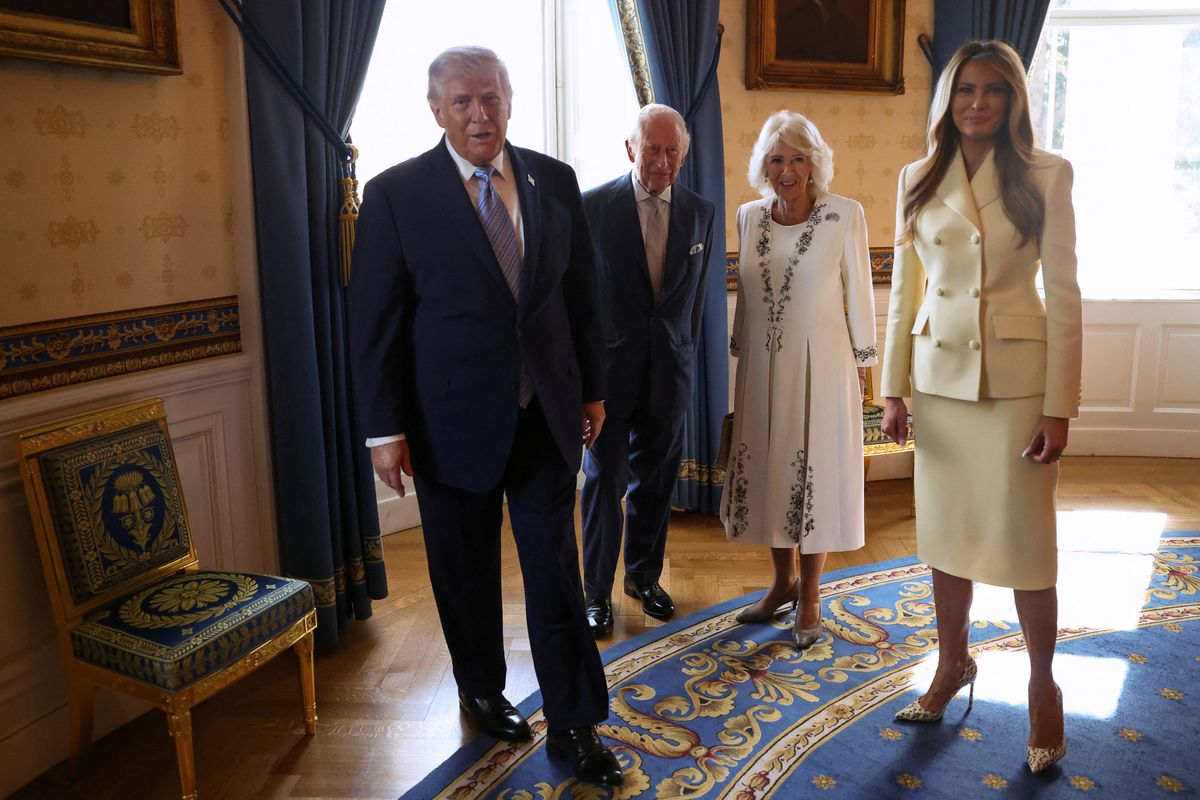
Even wardrobe choices contributed to the tone of the meeting. Melania Trump wore a butter-yellow suit by American designer Adam Lippes, a look that projected brightness and national identity. Queen Camilla, who had earlier arrived in a blush-toned Dior ensemble, opted for similarly soft tones, creating an unspoken visual harmony between the two women.
 © Getty Images
While the conversation remained private, the structure of the afternoon pointed toward carefully managed symbolism rather than overt political messaging.
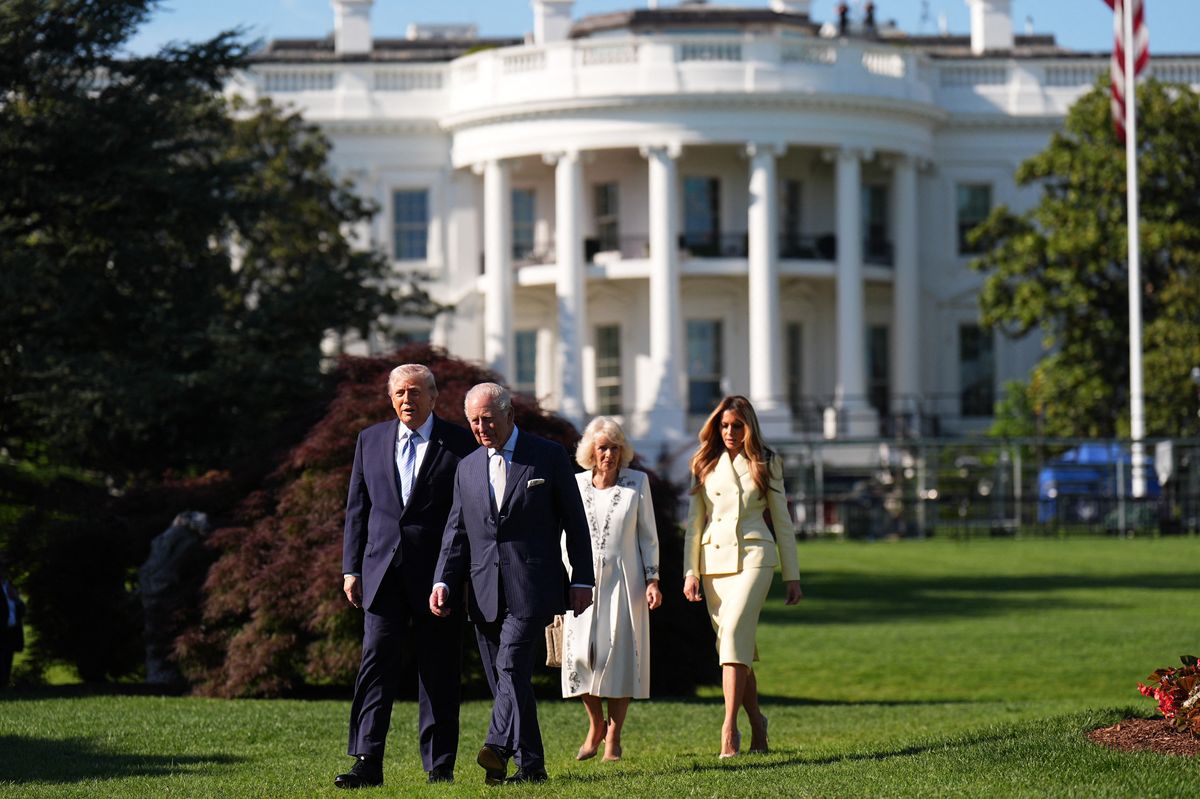 © AARON CHOWN
The inclusion of a planned visit to the White House beehives on the South Lawn reinforced that approach. Beekeeping is a long-standing personal interest of King Charles and connects directly to his environmental advocacy, turning a modest garden feature into a quiet point of alignment.
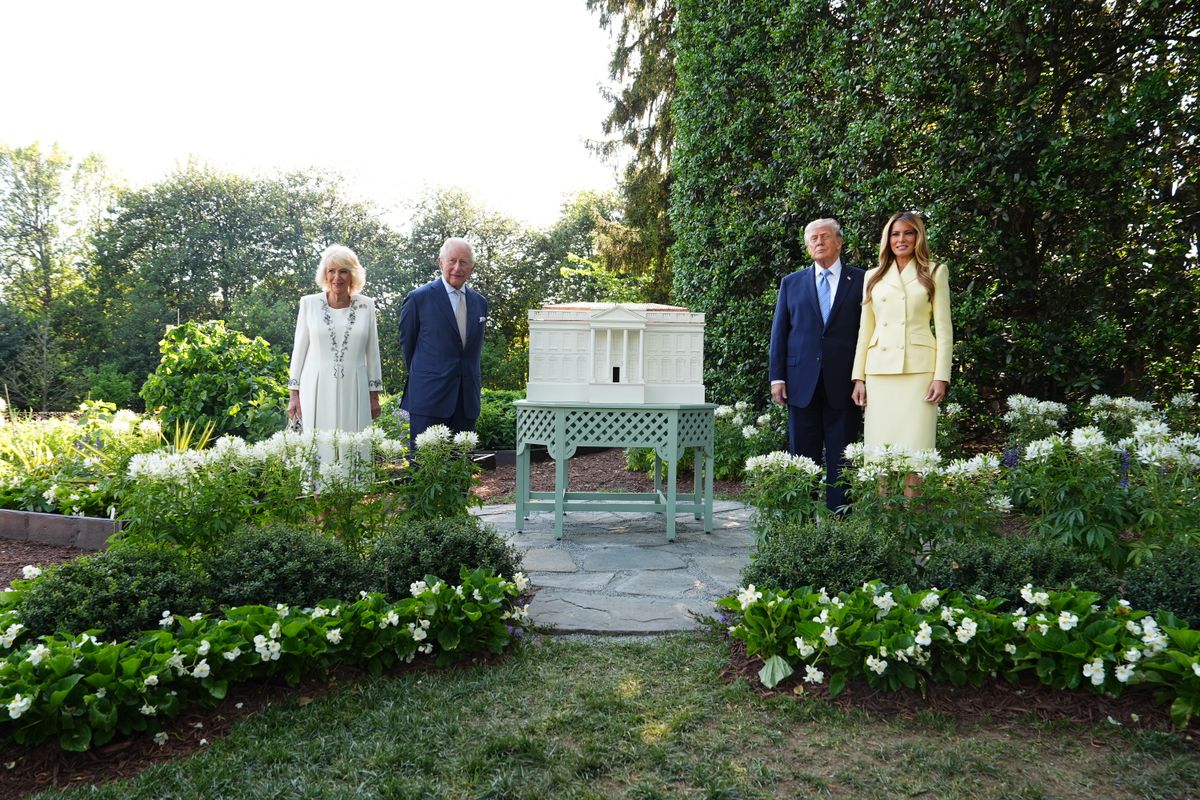 © Getty Images
Moments like this are often understated, but they carry strategic purpose. By focusing on shared interests such as sustainability, cultural tradition, and informal exchange, the visit builds continuity without requiring direct political statements.
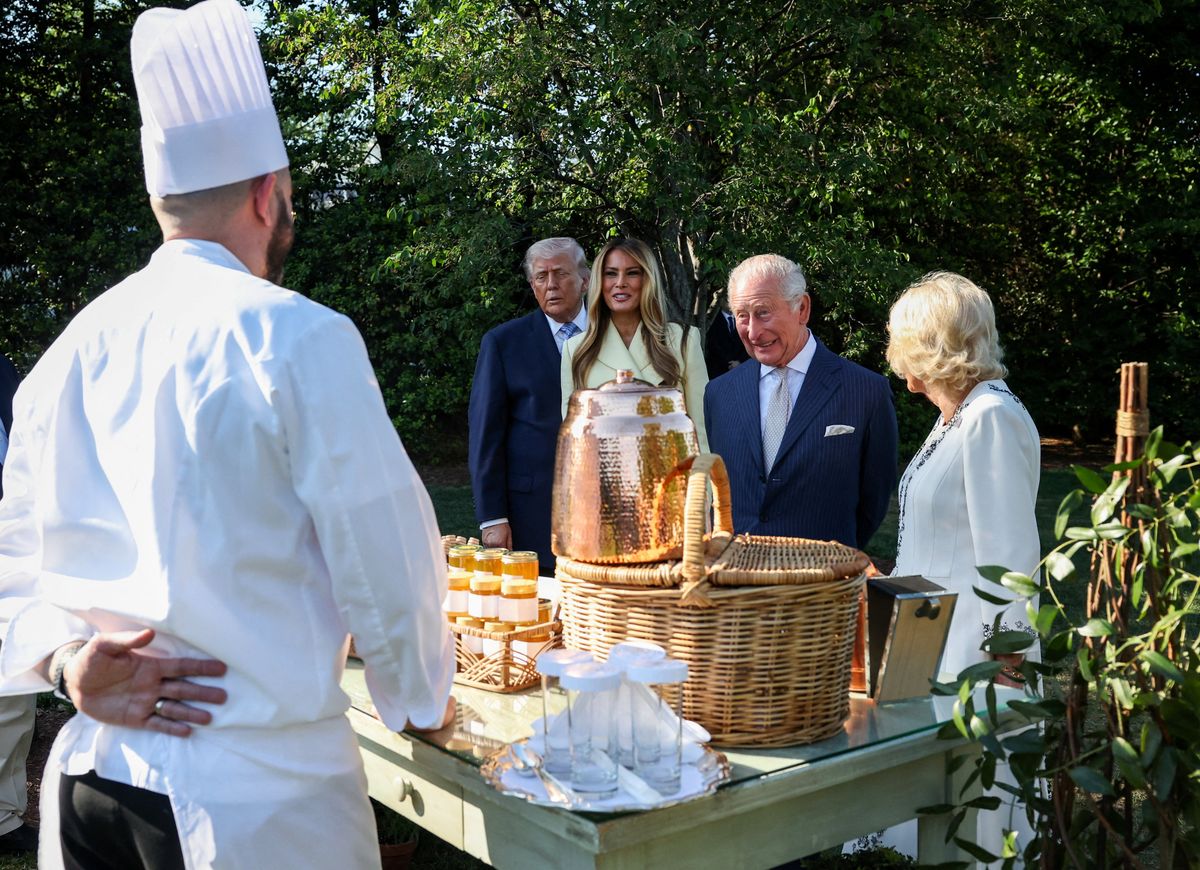 © SUZANNE PLUNKETT
The White House meeting also acts as a transition point in the broader schedule. It sits between the arrival ceremony at Joint Base Andrews and the more formal engagements ahead, including a ceremonial welcome, congressional address, and state dinner. Each stage builds on the last, gradually escalating from private diplomacy to public spectacle.
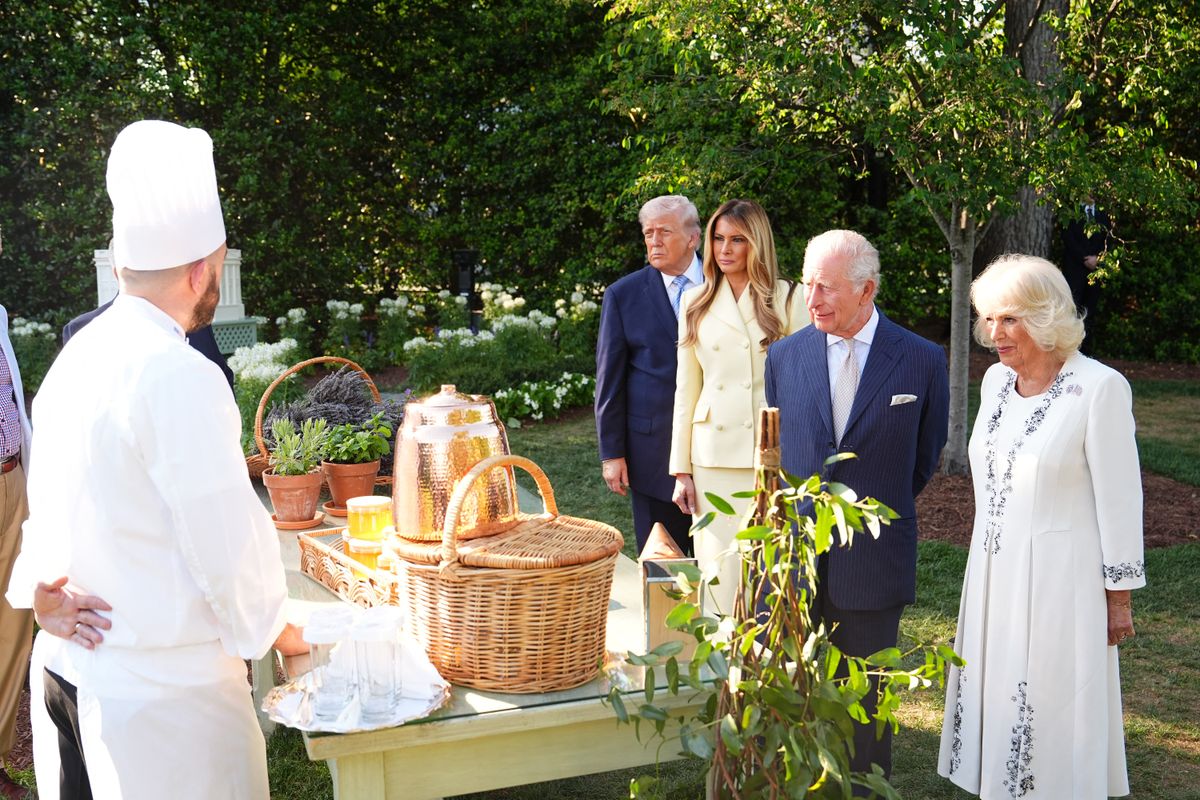 © AARON CHOWN
In the context of a visit marking 250 years since American independence, the message embedded in this opening encounter is subtle but clear. Through gesture, setting, and carefully chosen symbolism, the meeting reinforces a relationship designed not just to acknowledge history, but to outlast political cycles entirely.
![Donald and Melania Trump's private meeting with King Felipe and Queen Letizia after Spain's World Cup victory [Photos]](https://www.hola.com/us/horizon/square/bd93b17a8055-319b3b36c16b-fco0791.jpg)