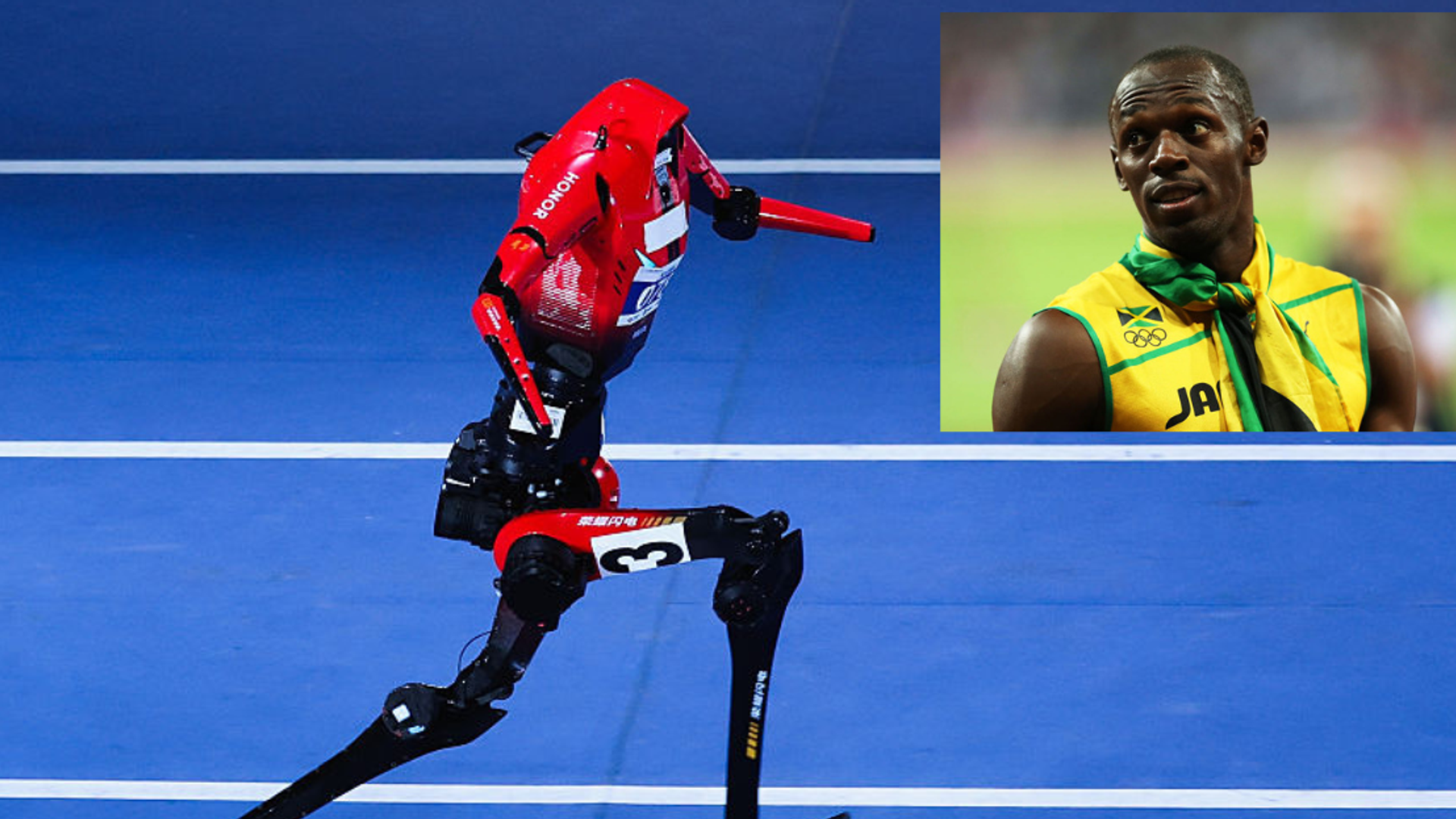
During this very tech-driven, AI moment in history, wild headlines are popping up about our advancements. While we don't usually hear about robots making their way to the track, over the weekend a robot was able to beat Usain Bolt's 100-meter record that has stood for 17 years. There's just one pretty hilarious detail - it couldn't stop.
 © Getty
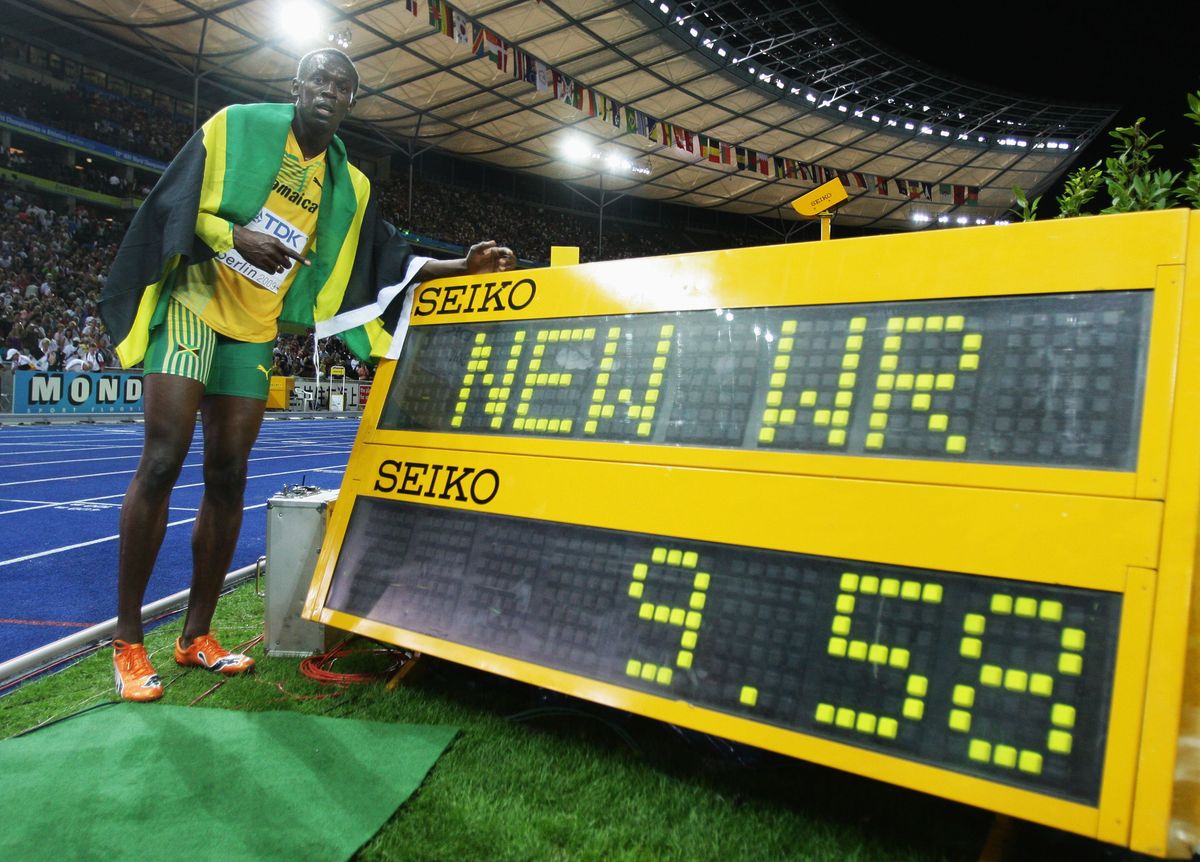
It all went down at the World Humanoid Robot Games in Beijing on August 22. A humanoid robot developed by Chinese company X-Humanoid reportedly finished the 100 meters in 9.39 seconds, beating the Jamaican's legendary 9.58-second time from the 2009 World Athletics Championships in Berlin.
 © Mark Dadswell
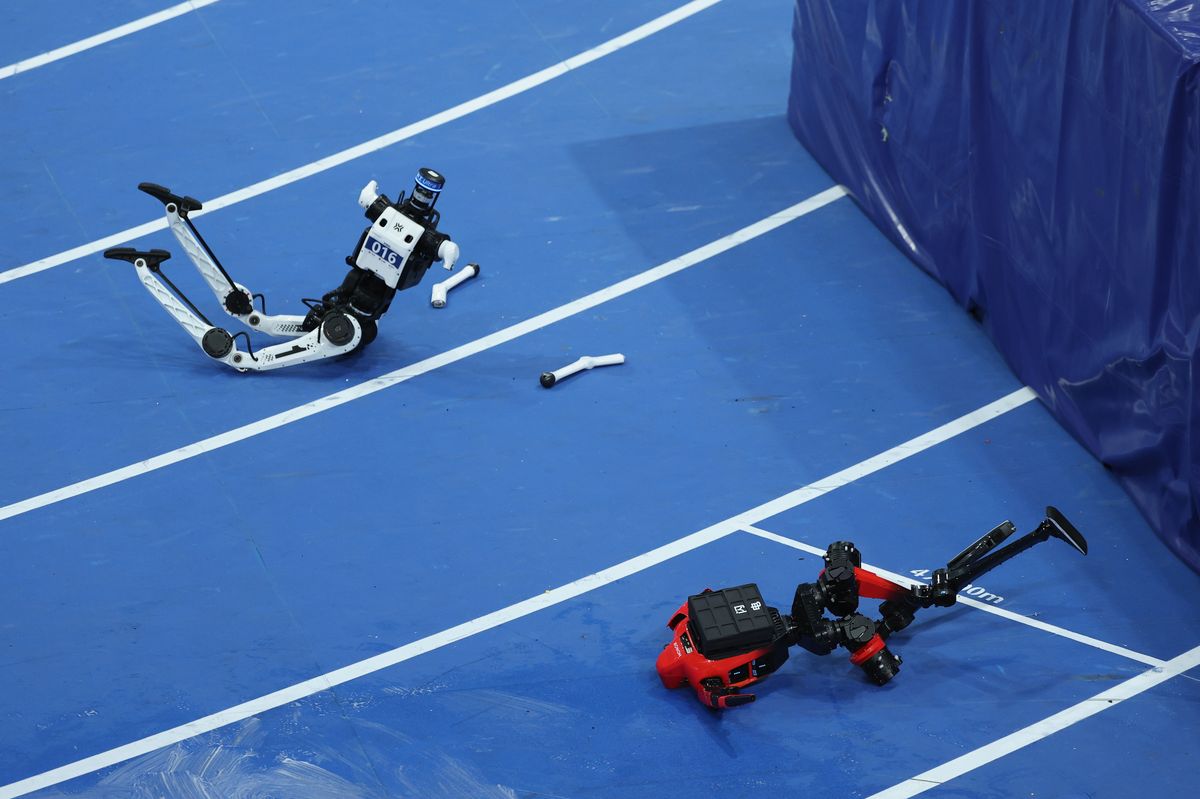
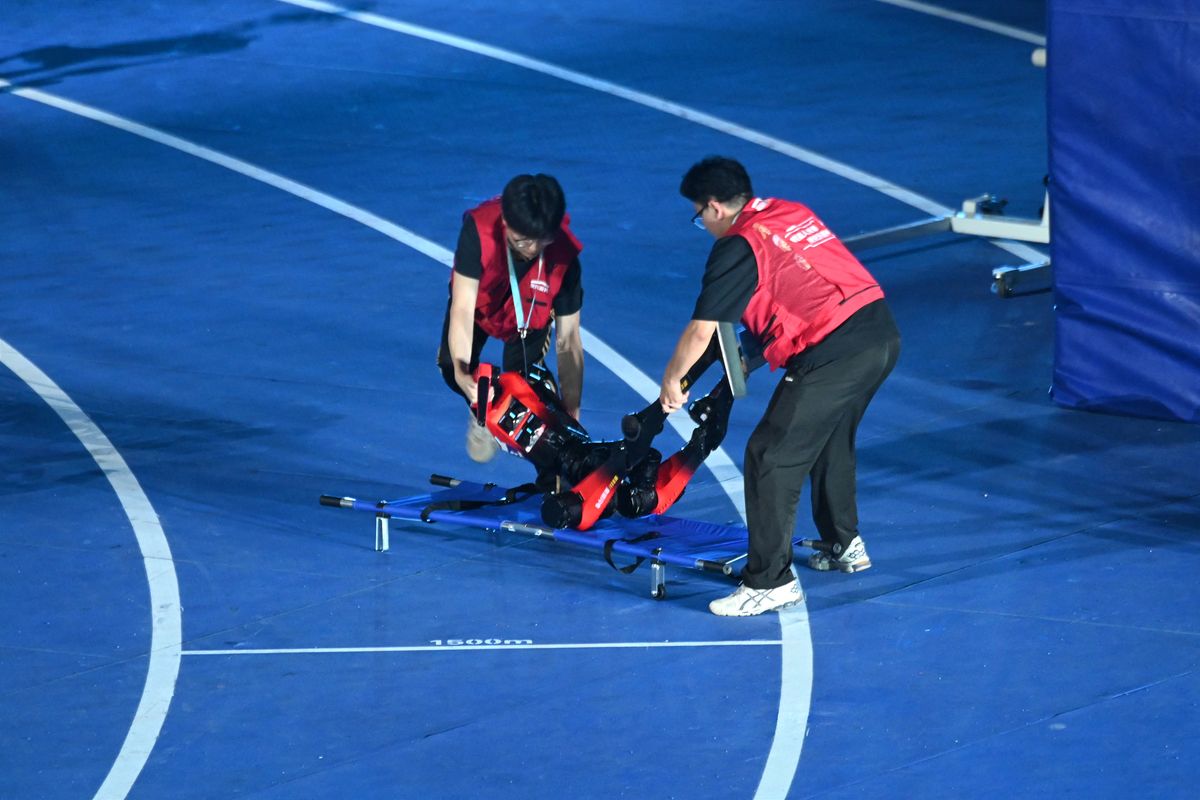
But instead of slowing down and celebrating its historic victory, the robot went straight into a padded wall. It hit 23.8 MPH before crashing into the barrier at full speed then it fell over and had to be carried away by human assistants.
 © Getty
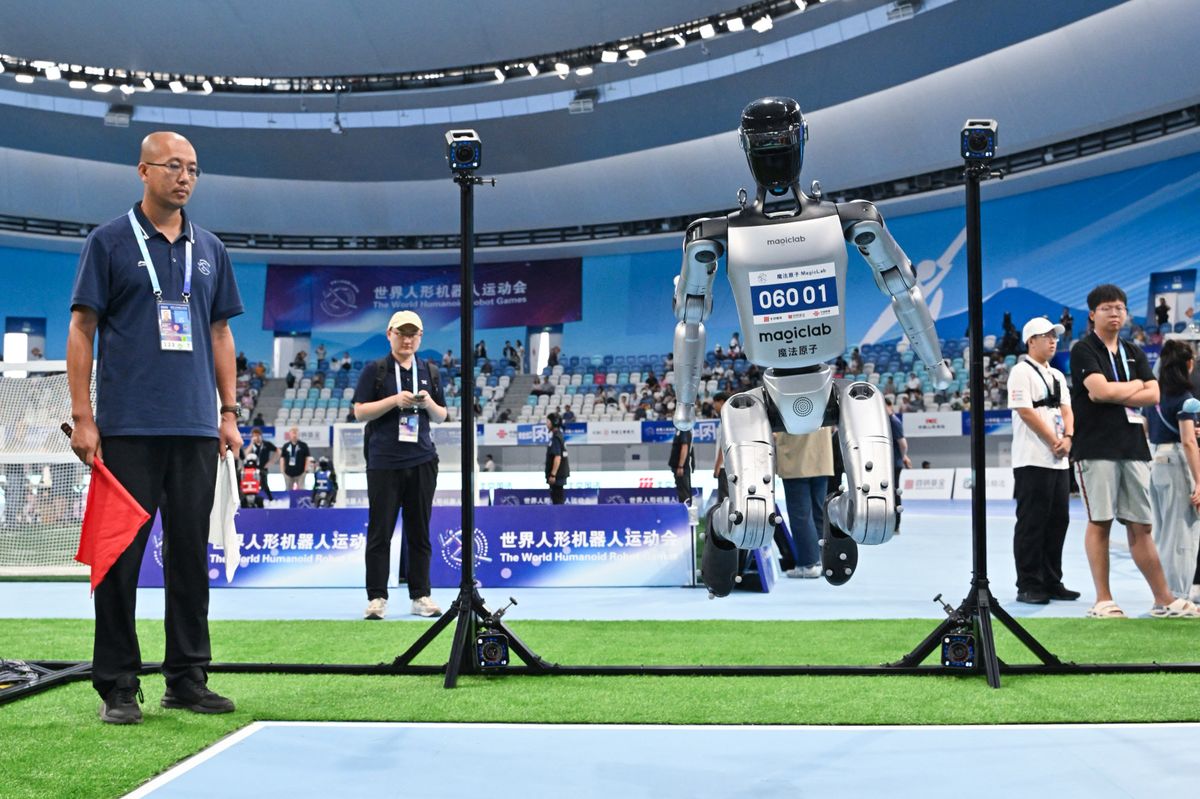
That wasn't the only track and field-related success for the robots. During the standing high jump, a humanoid robot reached 2.88 meters, clearing the 2.45-meter human world record set by Cuba’s Javier Sotomayor in 1993.
 © Getty
The jump was also an example of how much they've improved. The robot more than tripled the .95-meter best recorded by a humanoid robot at last year’s inaugural games, per AP.
 © Lintao Zhang
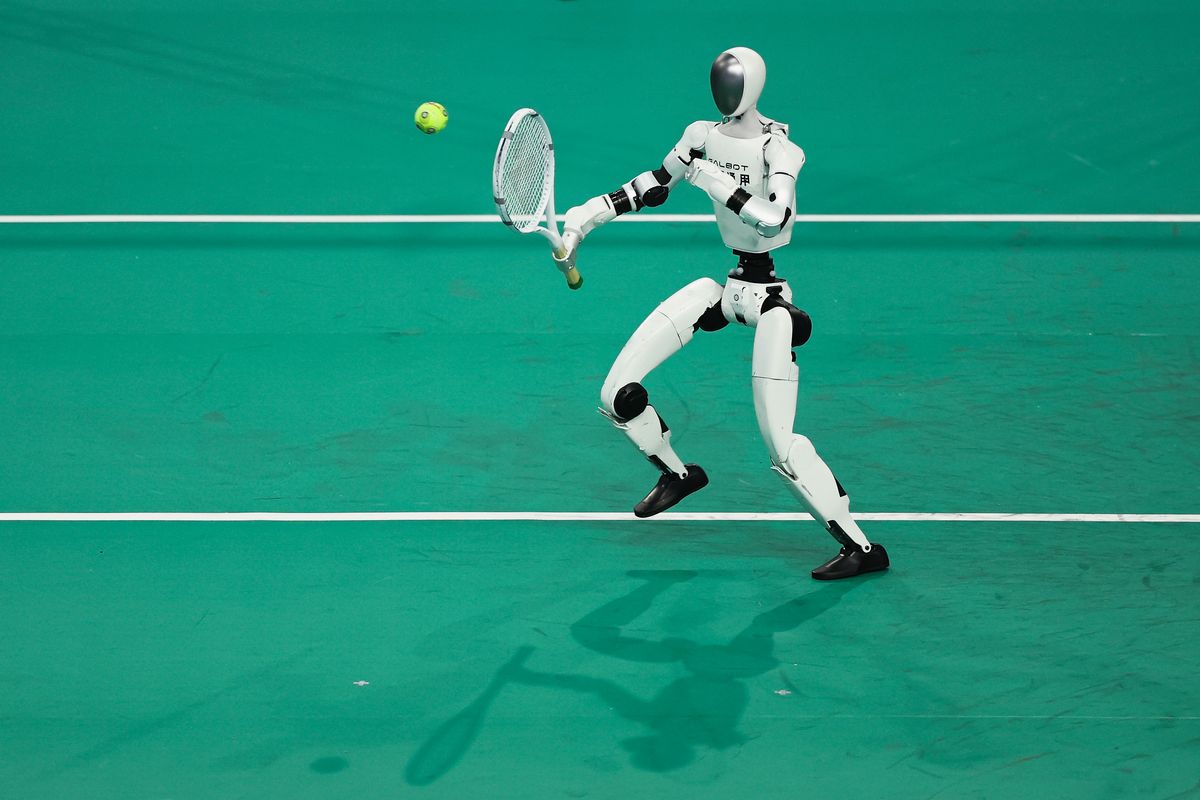
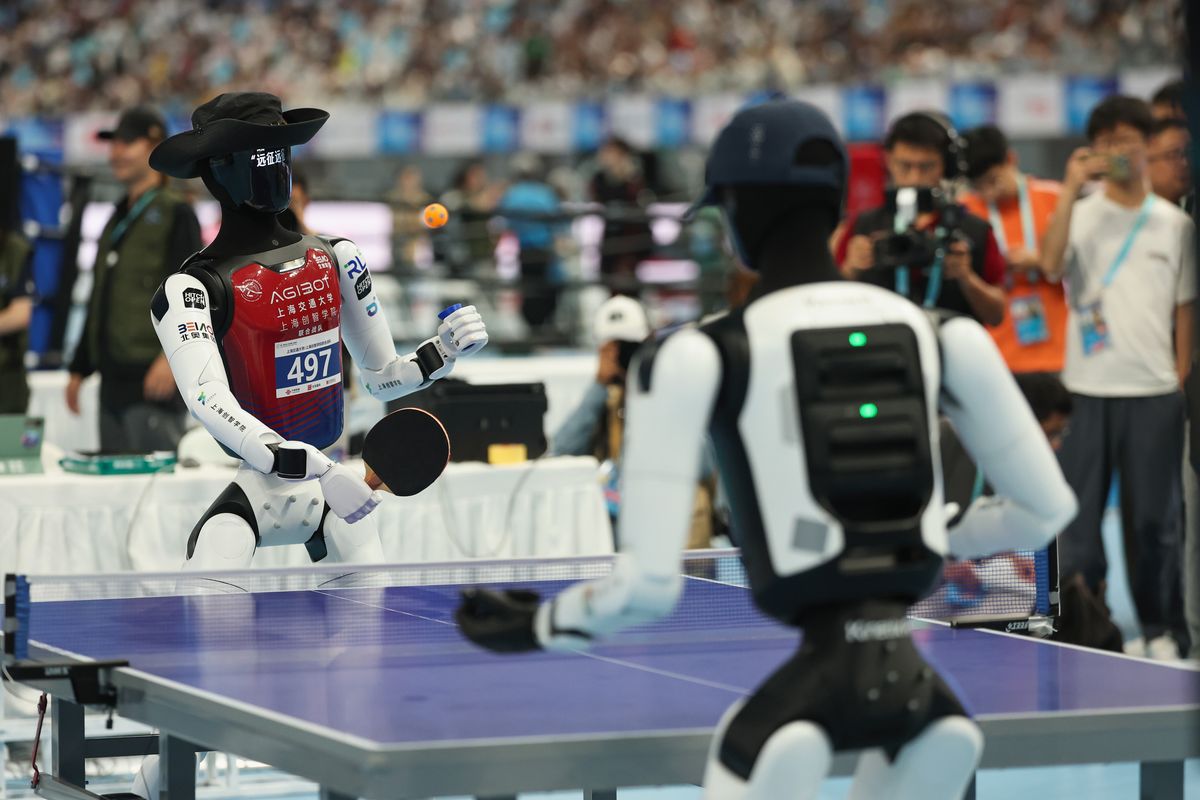
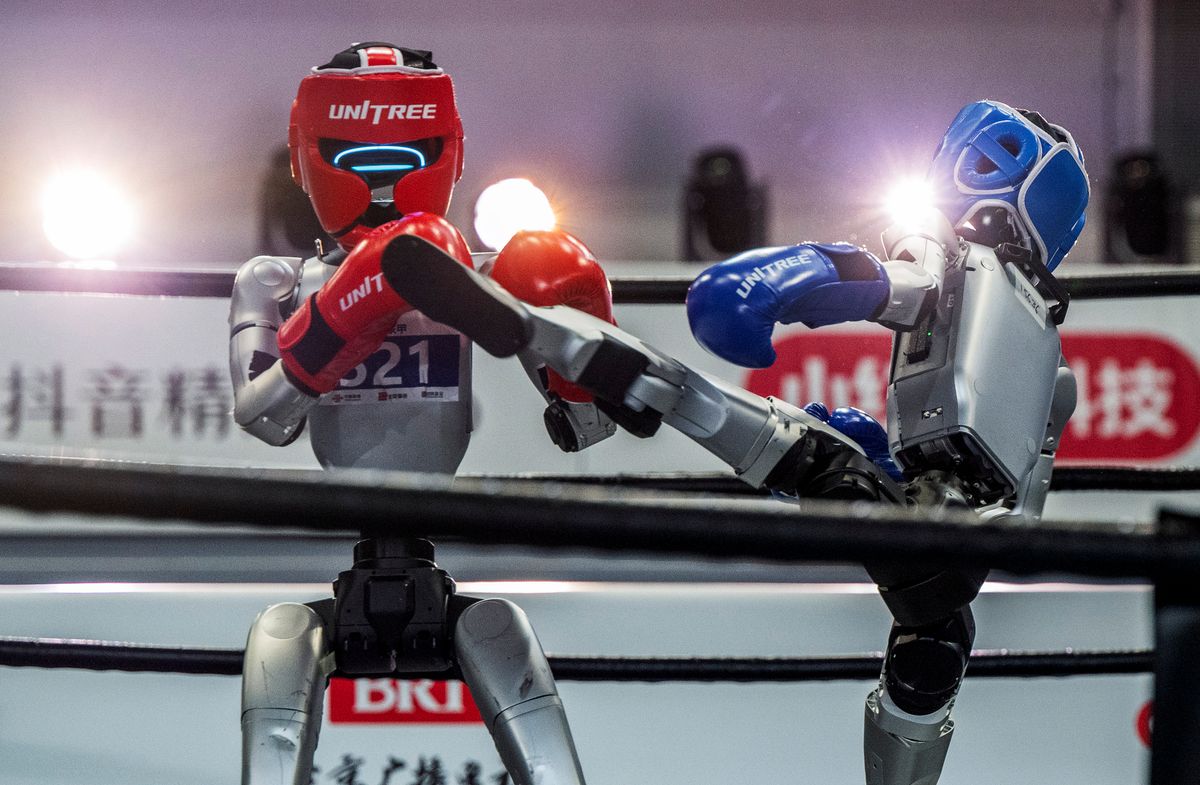
China has invested heavily in humanoid robotics, and the country's latest robot competitions have turned into a showcase. The World Humanoid Robot Games were first held in 2025, and robots competed in everything from boxing and soccer to tennis.
One robot even played against a human, tracking the ball and moving around the court to return shots.
But being able to run 100 meters really fast and high jump isn't necessarily the same thing as being able to function in the real world. Michael Milford, a professor and robotics researcher at Queensland University of Technology, told The New York Times that many of the sports being used to test humanoids are “very specific and somewhat contrived events.”
 © Lintao Zhang
From an engineering perspective, a 9.39-second run is incredible. And it's a huge improvement to see a two-legged robot running 100 meters in 24.73 seconds in 2022 to under 10 seconds just four years later. But it doesn't mean robots have suddenly surpassed humans.
 © Getty
Alan Fern, a robotics professor at Oregon State University who was part of the team behind a 2022 Guinness World Record for the fastest 100-meter run by a two-legged robot, told The New York Times that these machines still struggle when the environment isn't predictable, and everything doesn't go according to plan.
He made a comparison to Formula 1, saying, “We still marvel at the engineering achievements in Formula 1,” but a faster lap doesn't mean transportation itself has been revolutionized.