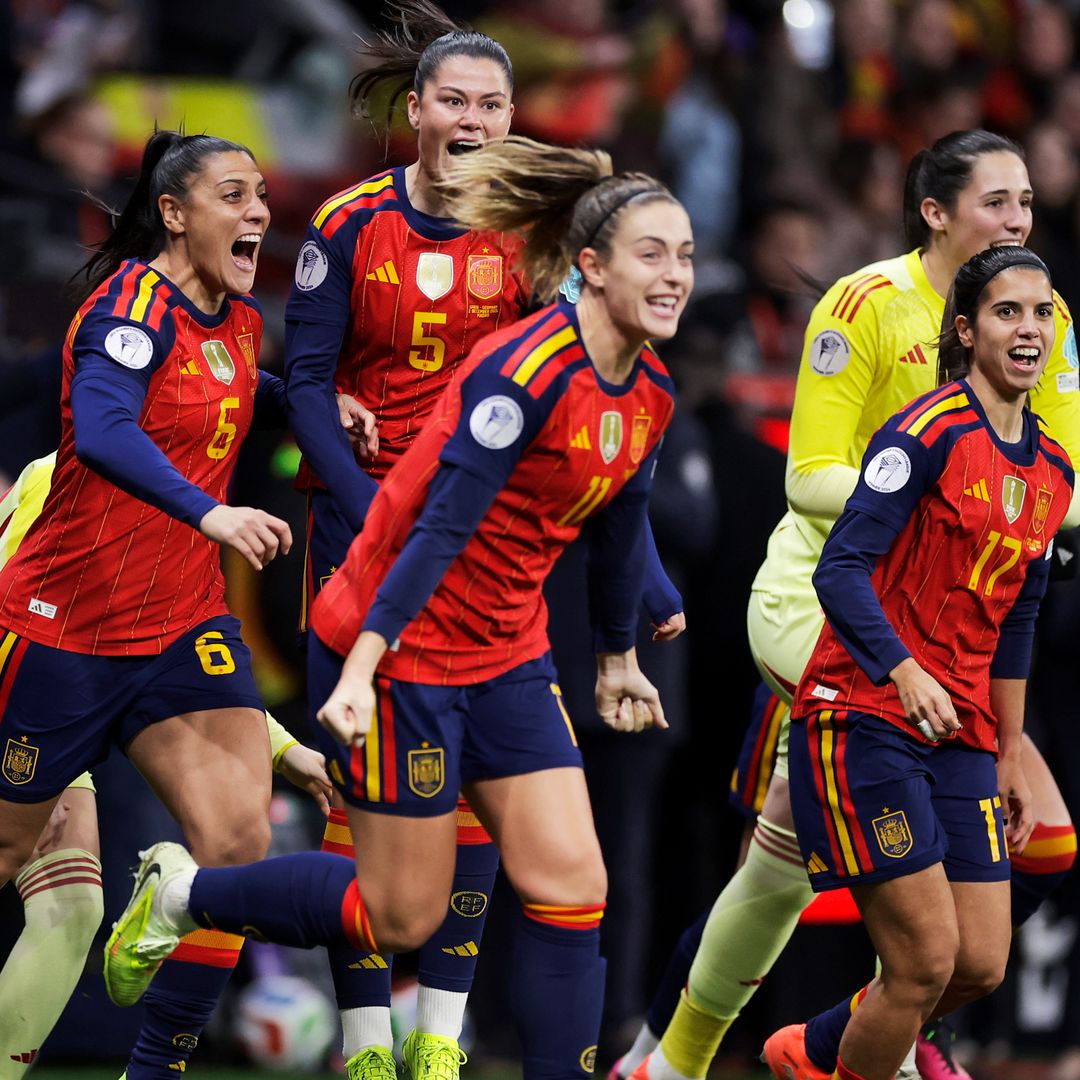
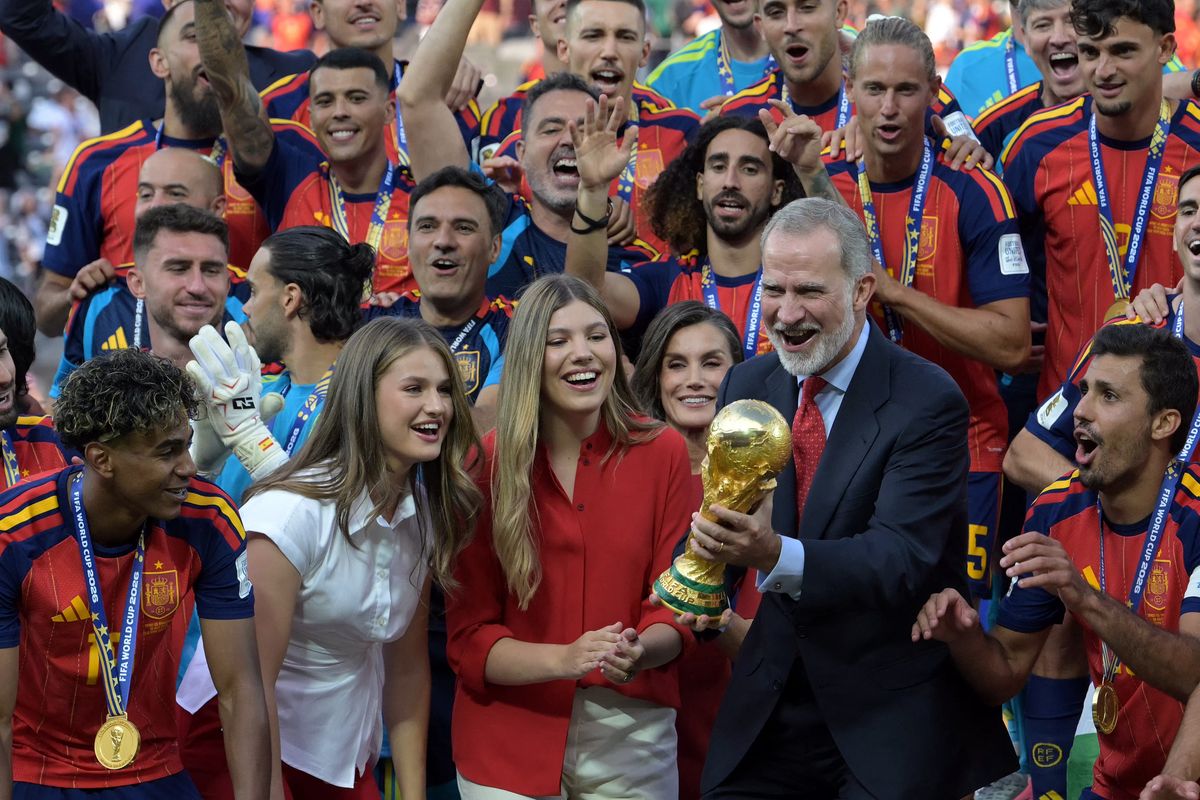
The World Cup final had never included a dedicated halftime show. On Sunday, that changed. Spain also left New Jersey as world champion, defeating Argentina 1-0 in extra time to claim its second World Cup title.
 © AFP via Getty Images
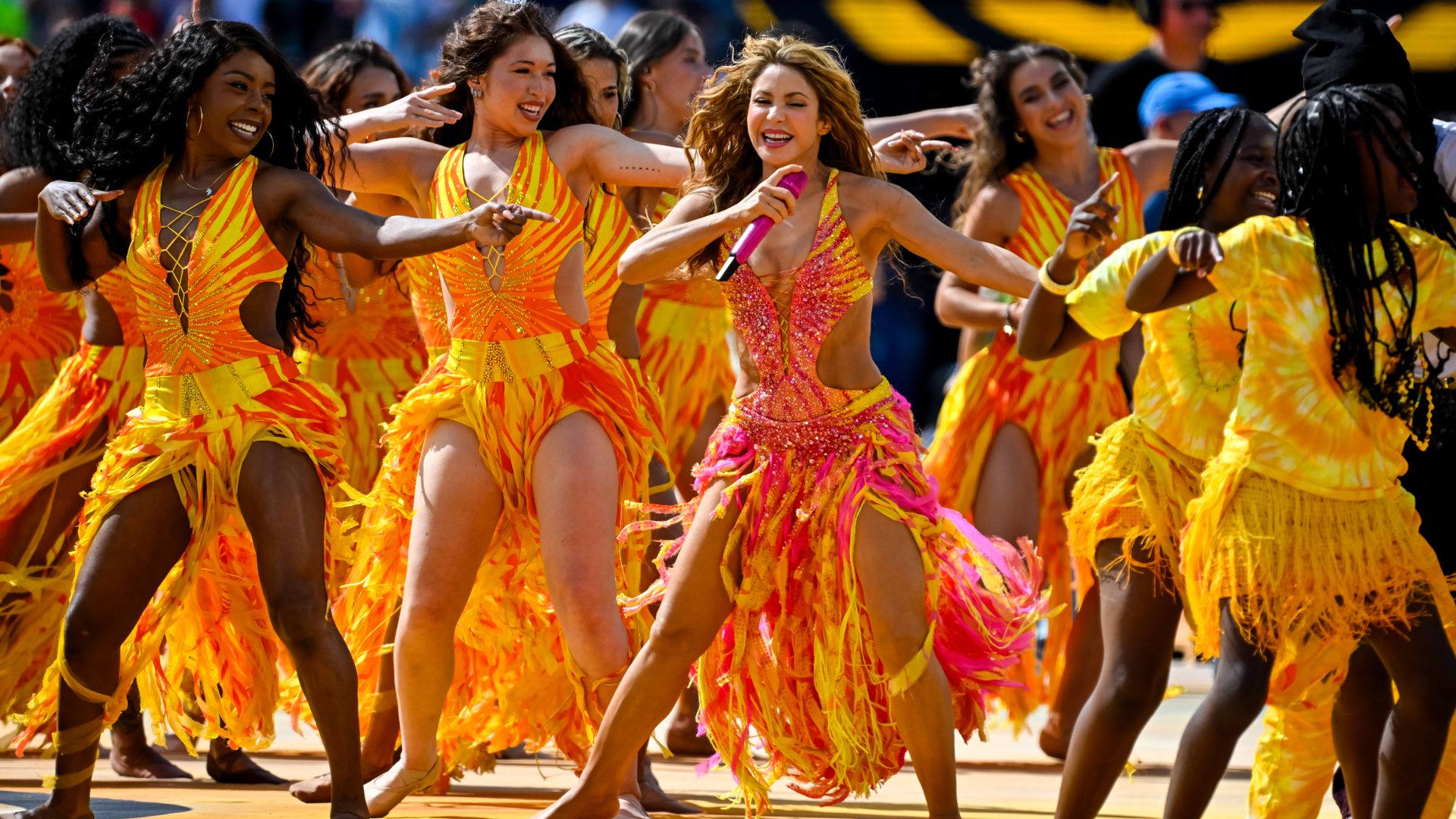
During the final, FIFA turned the 11-minute halftime break into a production featuring more than 350 performers. Madonna entered through the stadium tunnels. Gustavo Dudamel conducted an orchestra. BTS and Shakira took the field. Coldplay performed alongside schoolchildren from Staten Island, joined by characters from Sesame Street and The Muppets.
 © Getty Images
For the first time, the World Cup final had a halftime show of its own. What had once been a simple pause in the match became one of the day’s main events, complete with a huge cast and a production worthy of the occasion. Coldplay frontman Chris Martin curated the show. Global Citizen produced it in partnership with Live Nation and Done + Dusted.
 © PA Images via Getty Images
Madonna Opens the First Halftime Show
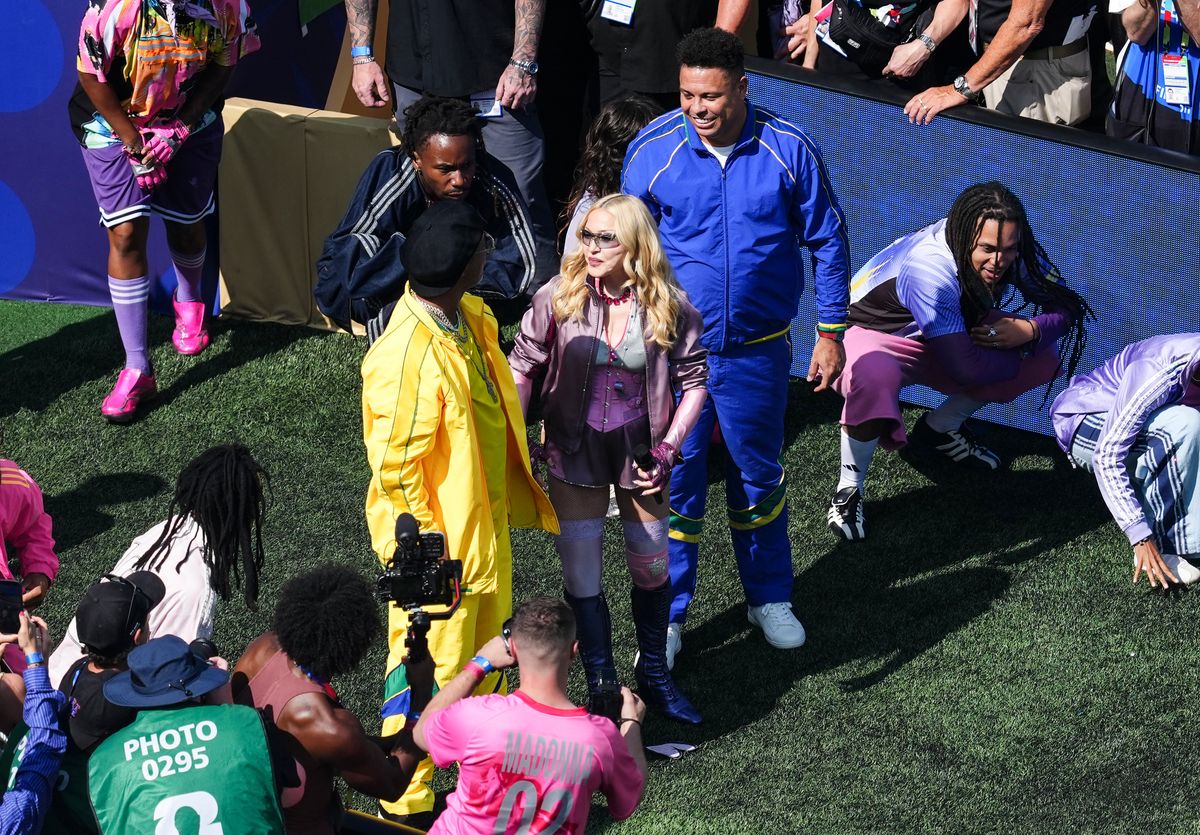
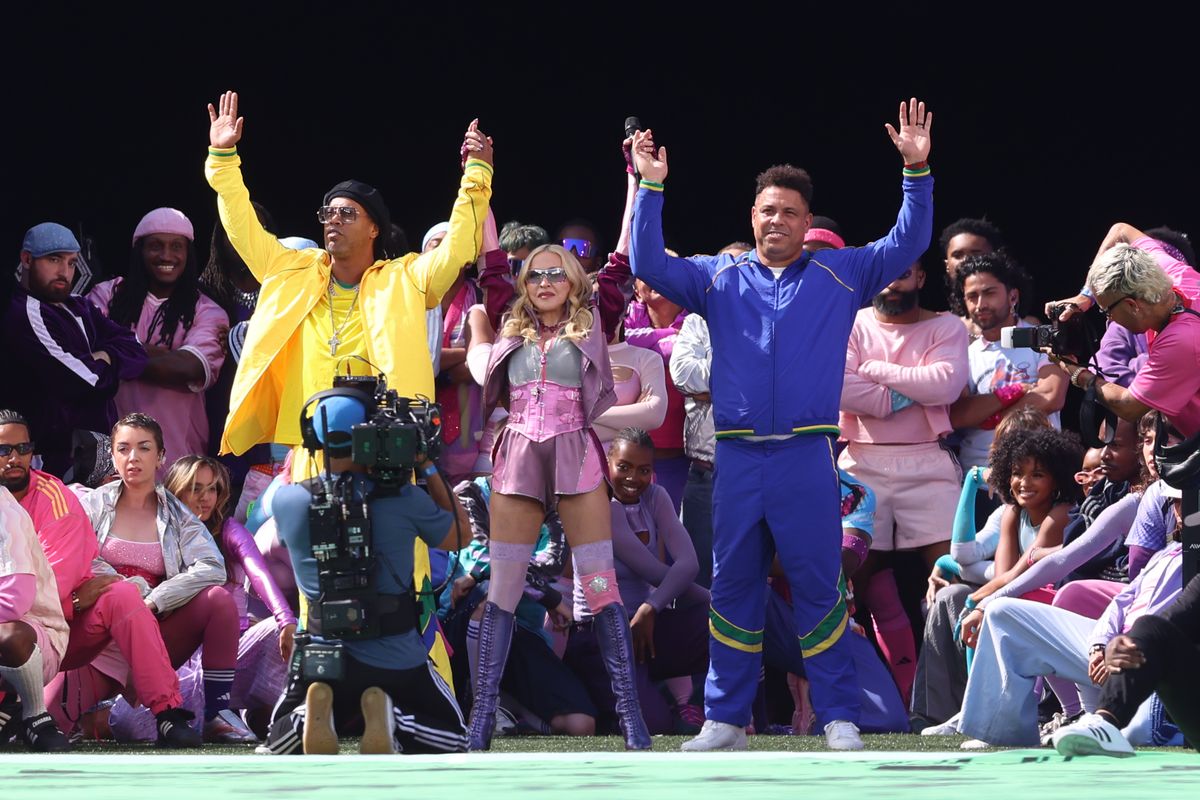
Madonna arrived by dune buggy. Brazilian soccer legends Ronaldo Nazário and Ronaldinho drove the vehicle through the stadium tunnels. She stepped onto the field and launched into a new version of “Music,” which blended elements of The Trammps’ “Disco Inferno” with her own “Danceteria.”
 © Getty Images
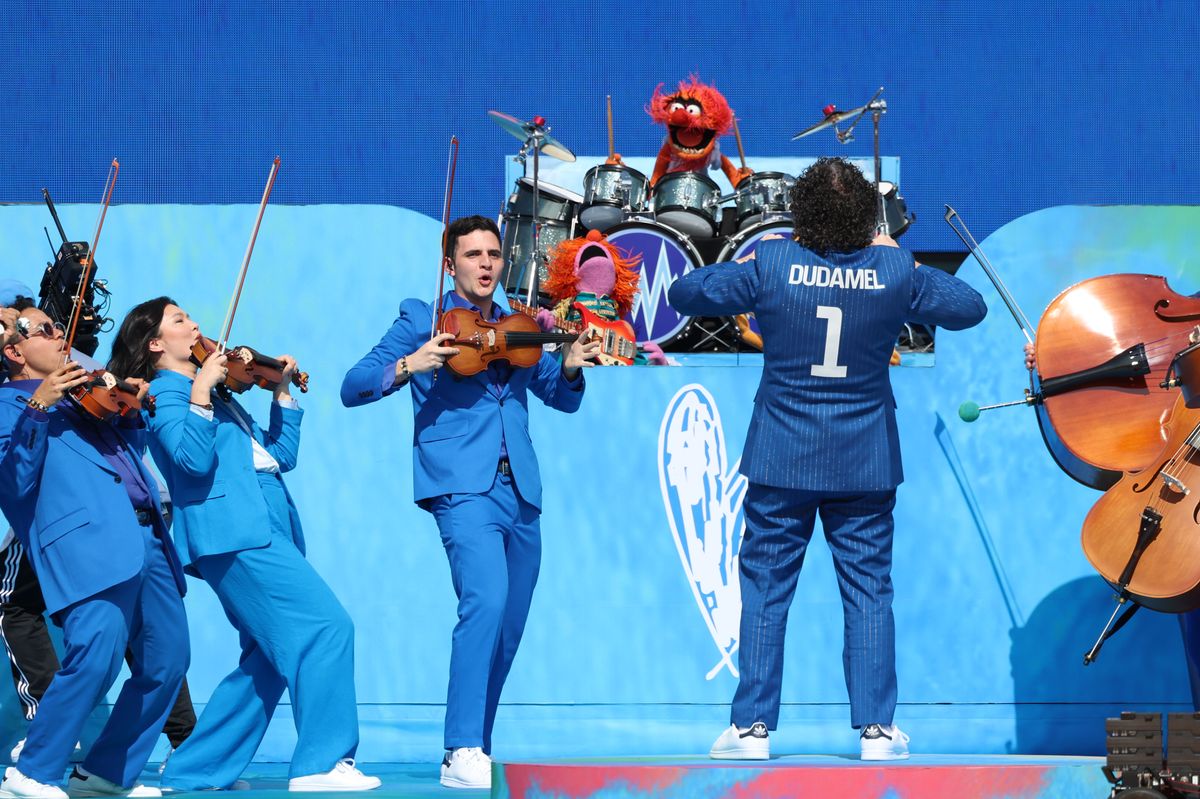
Venezuelan conductor Gustavo Dudamel led musicians from the New York Philharmonic and the Simón Bolívar Symphony Orchestra through “Seven Nation Army.” Iranian violinist Bijan Mortazavi joined them, along with members of the Muppet band Electric Mayhem.
 © Kevin Mazur/Getty Images for Glo
 © PA Images via Getty Images
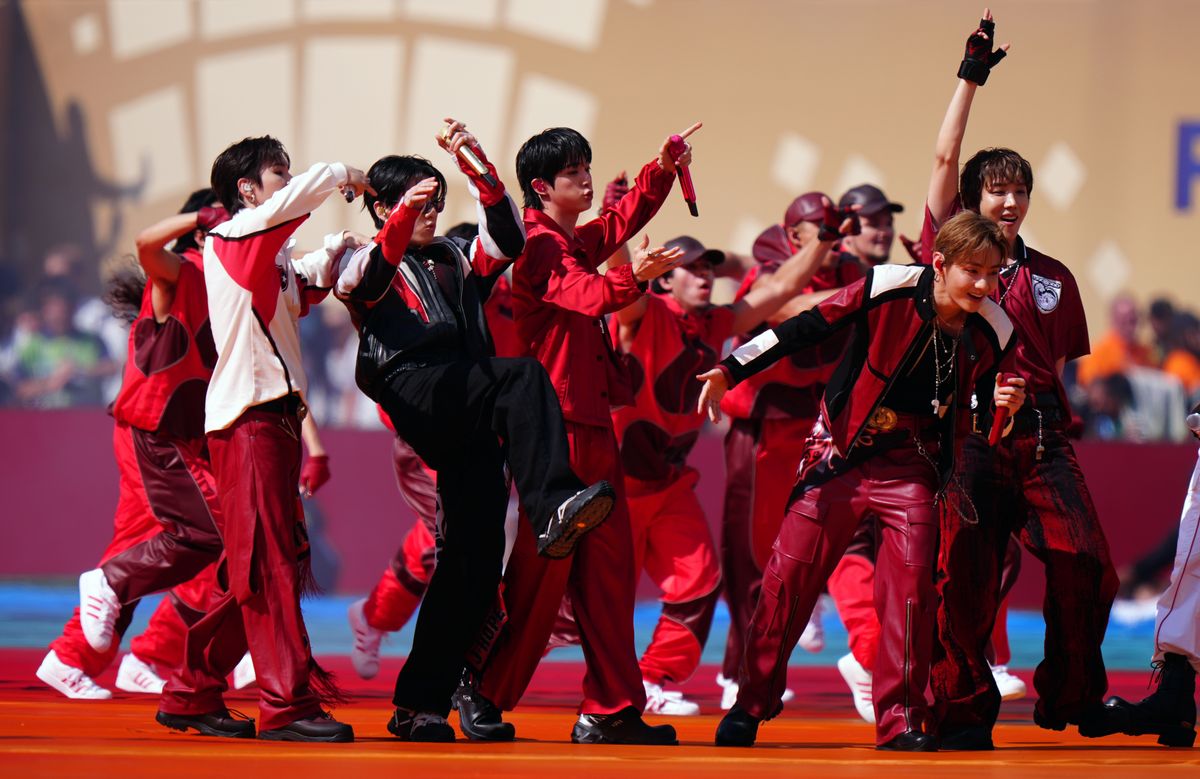
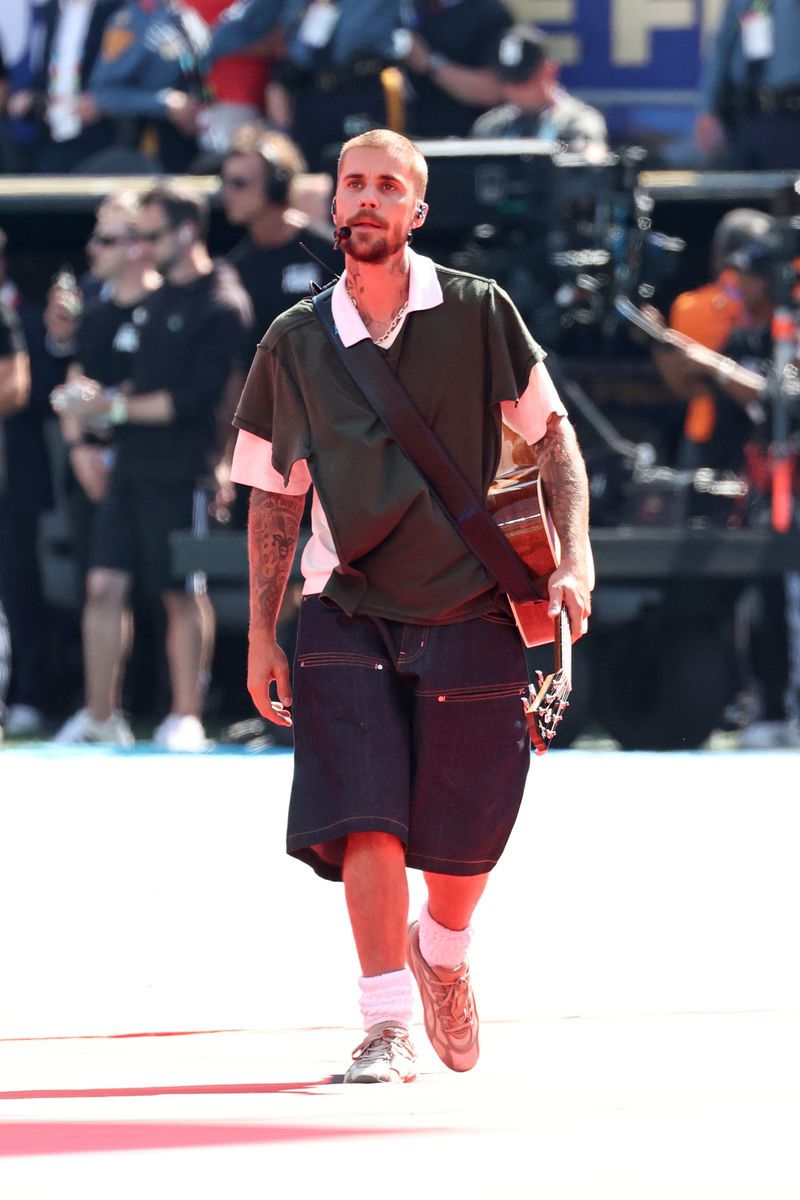
BTS kept the momentum going with a World Cup version of “Dynamite,” complete with tournament-themed lyrics. Then the mood shifted. Jason Sudeikis and Brendan Hunt appeared as Ted Lasso and Coach Beard to introduce Justin Bieber, who came out with an acoustic guitar and performed a stripped-down version of his 2025 song “Everything Hallelujah,” adding a few lyrics written for the occasion.
 © Getty Images for Global Citizen
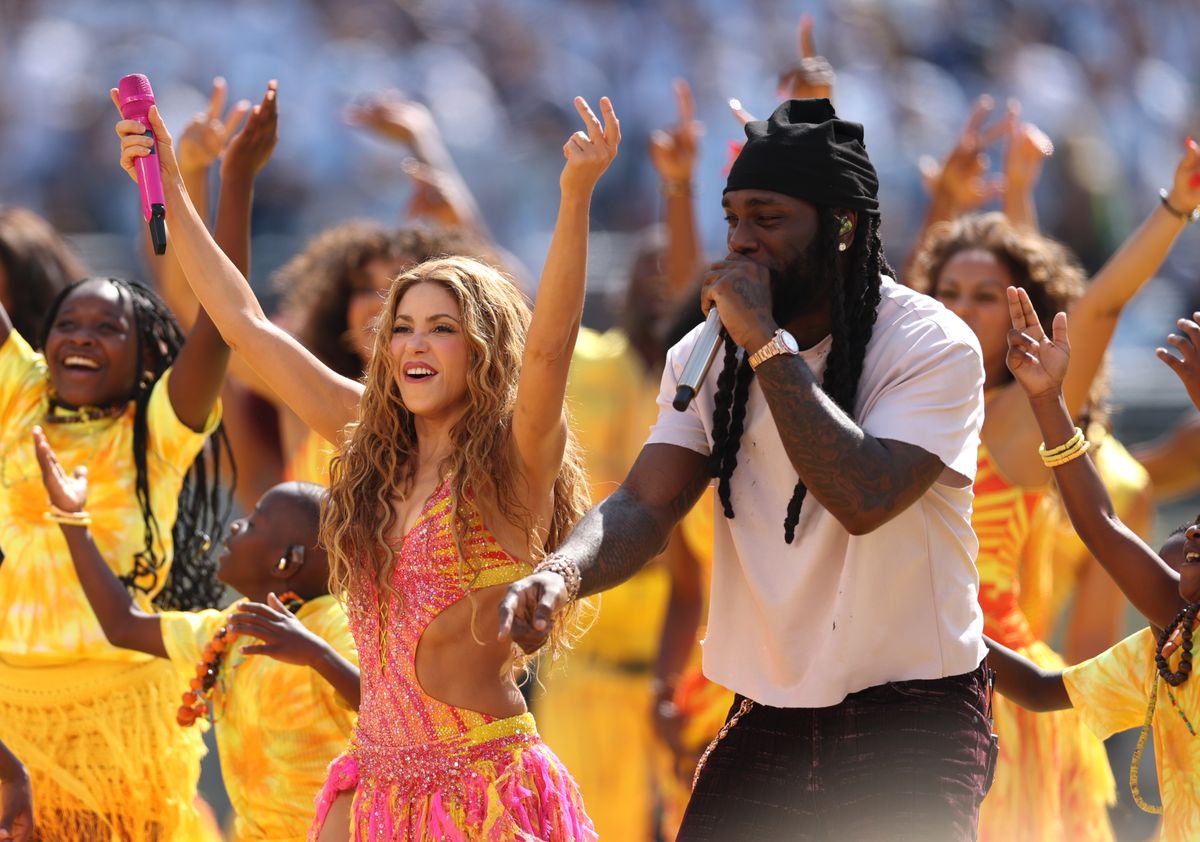
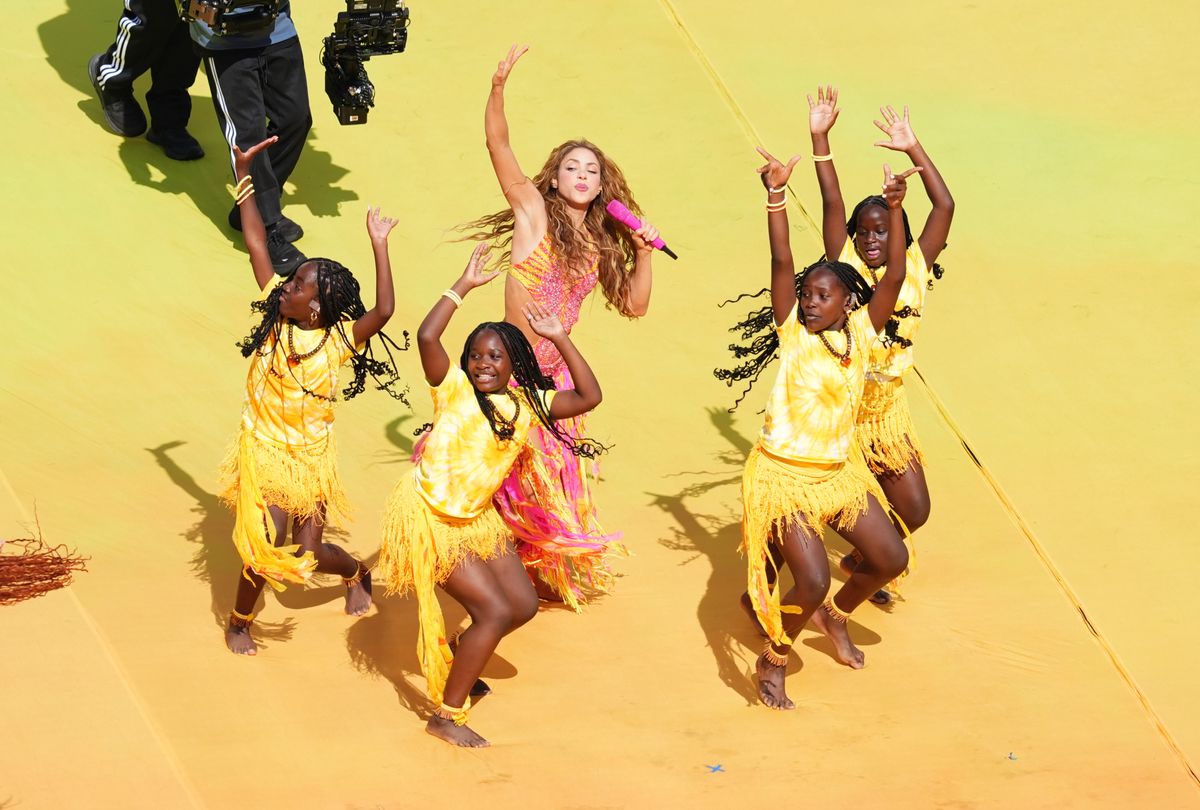
Shakira’s arrival brought another surge of energy. Appearing at her fourth World Cup, the Colombian star took the field in a custom Roberto Cavalli look to perform “Dai Dai,” the tournament’s official song. Burna Boy joined her for the number, while Uganda’s Ghetto Kids danced beside them.
 © FIFA via Getty Images
 © PA Images via Getty Images
Pelé’s Final Message Returns to the Meadowlands
Then the music paused, and Pelé returned to the Meadowlands on the stadium screens. The footage came from his farewell match at Giants Stadium on October 1, 1977, when more than 75,000 fans watched him take the field with his father and Muhammad Ali nearby. The old stadium once stood in the same complex, only steps from where the current venue was later built.
 © AFP via Getty Images
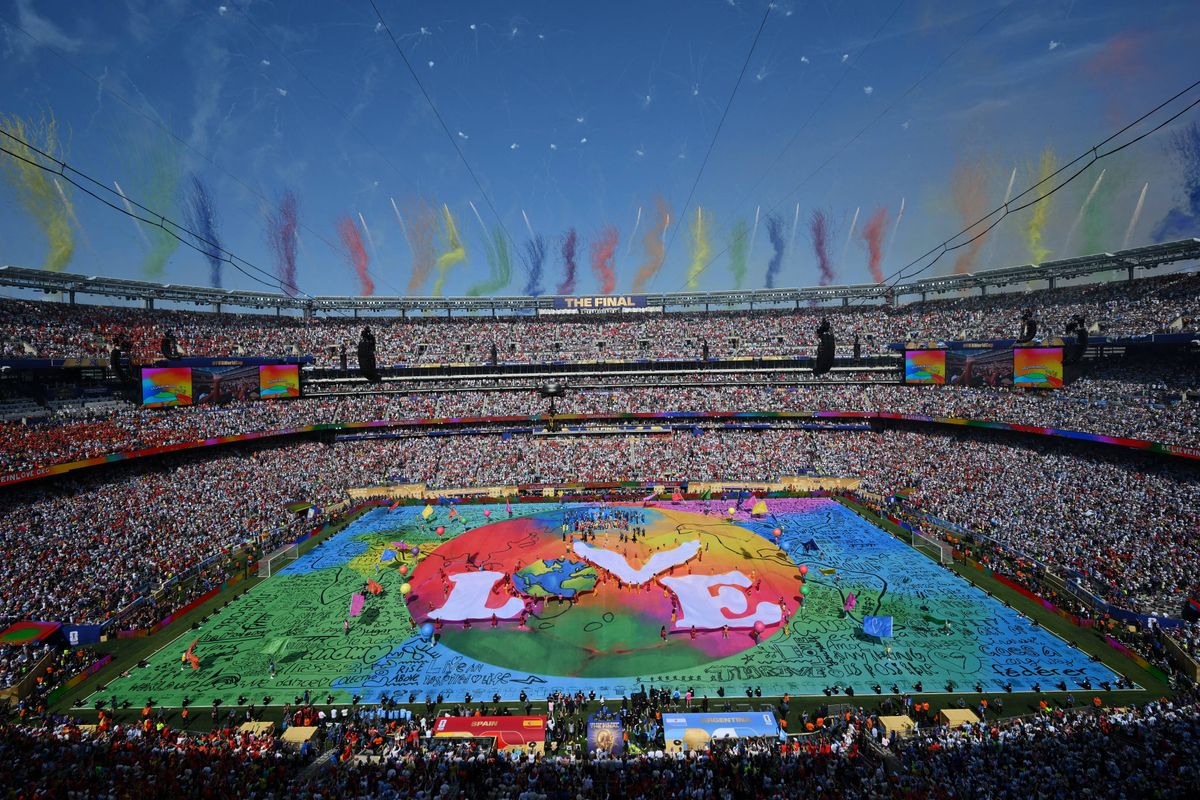
In the recording, Pelé asked the crowd to repeat a single word three times. “Love.” After the rush of the opening acts, the single word landed with unusual force. For a moment, FIFA’s first halftime show shared the Meadowlands with Pelé’s farewell.
Coldplay and the PS22 Chorus Close the Show
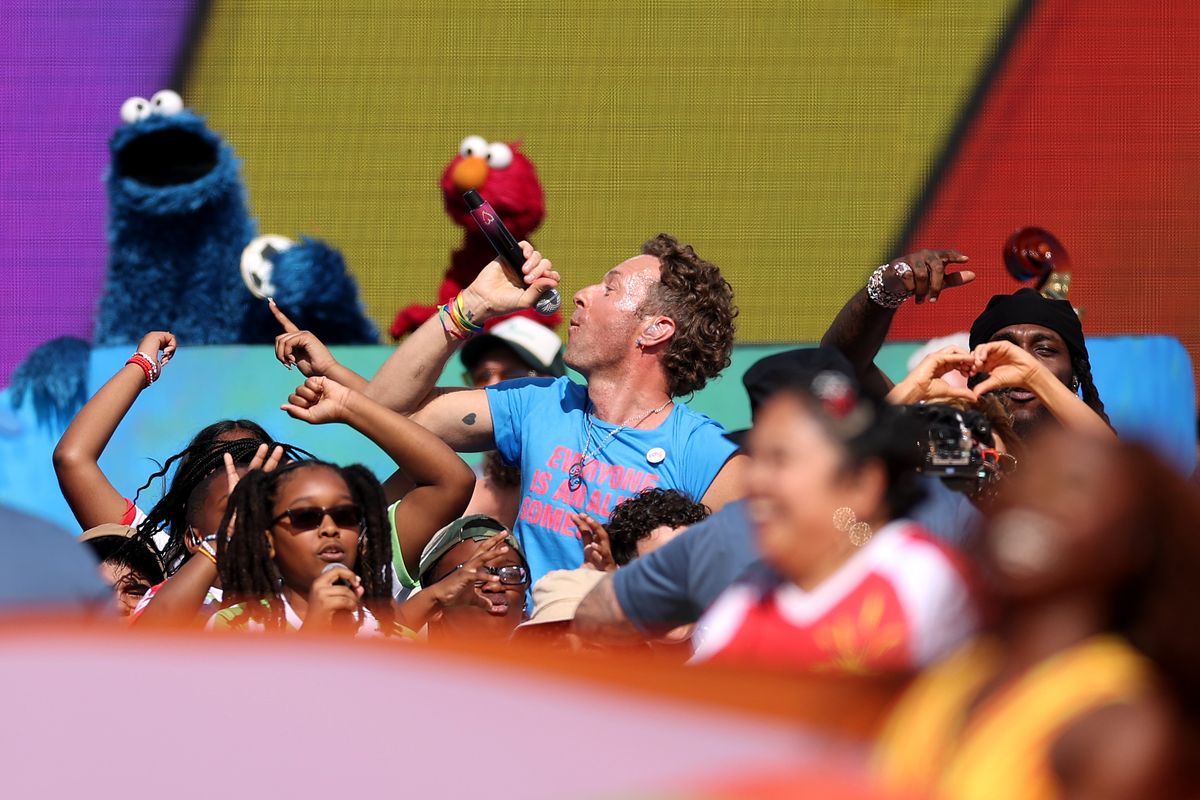
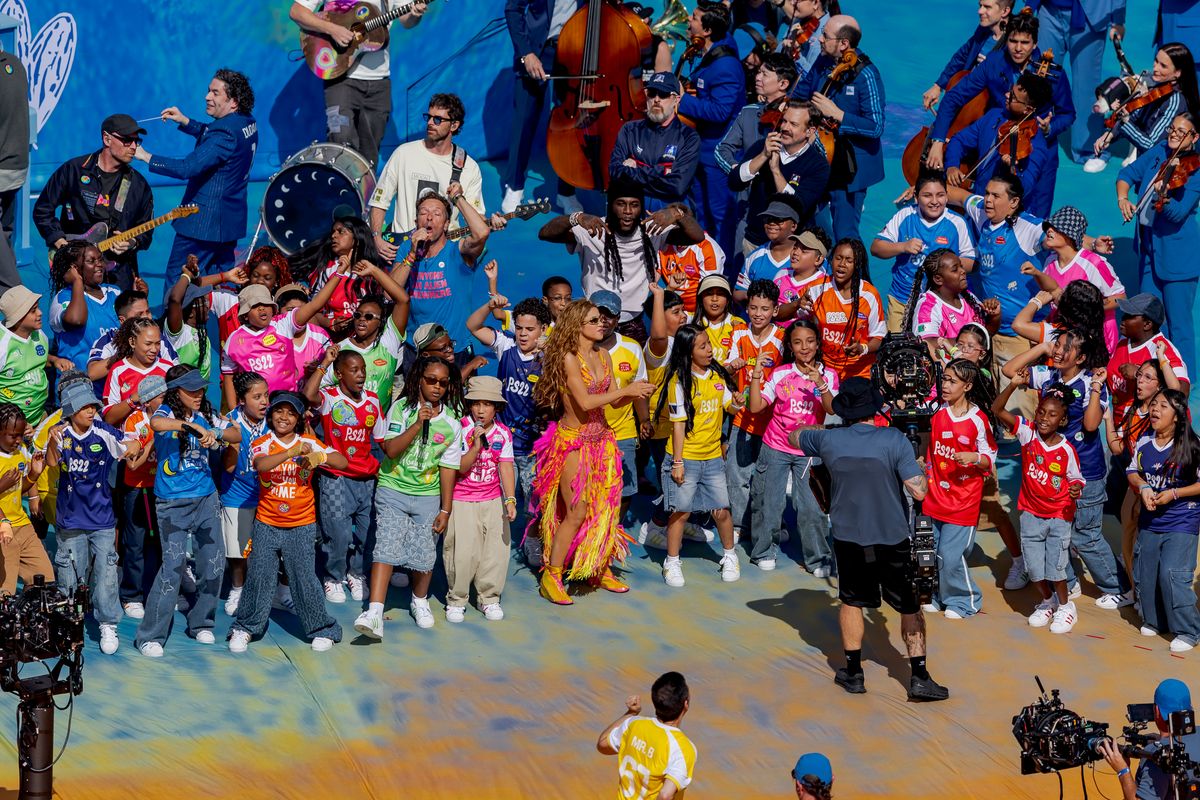
The finale featured students from Staten Island’s PS22 Chorus performing “We Dance,” a song Coldplay wrote for the occasion. Coldplay joined them, along with Emmanuel Kelly and characters from Sesame Street and The Muppets. The song picked up Pelé’s message from nearly five decades earlier.
 © Getty Images
 © Getty Images
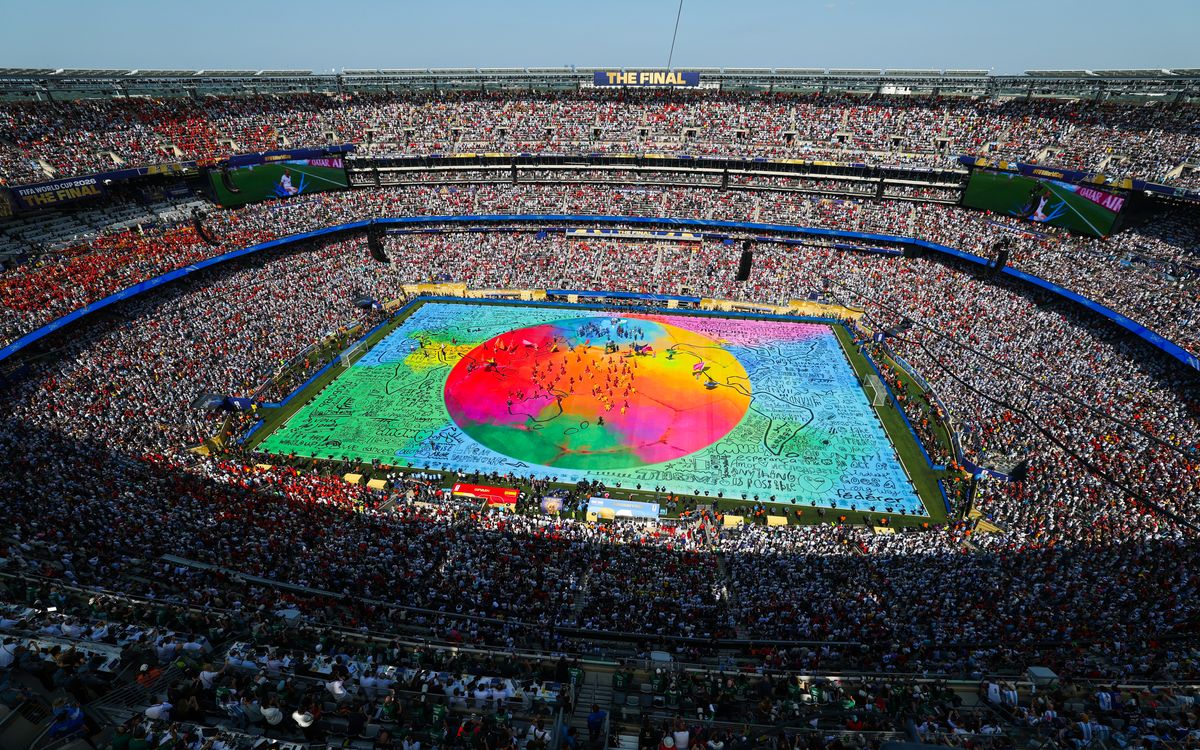
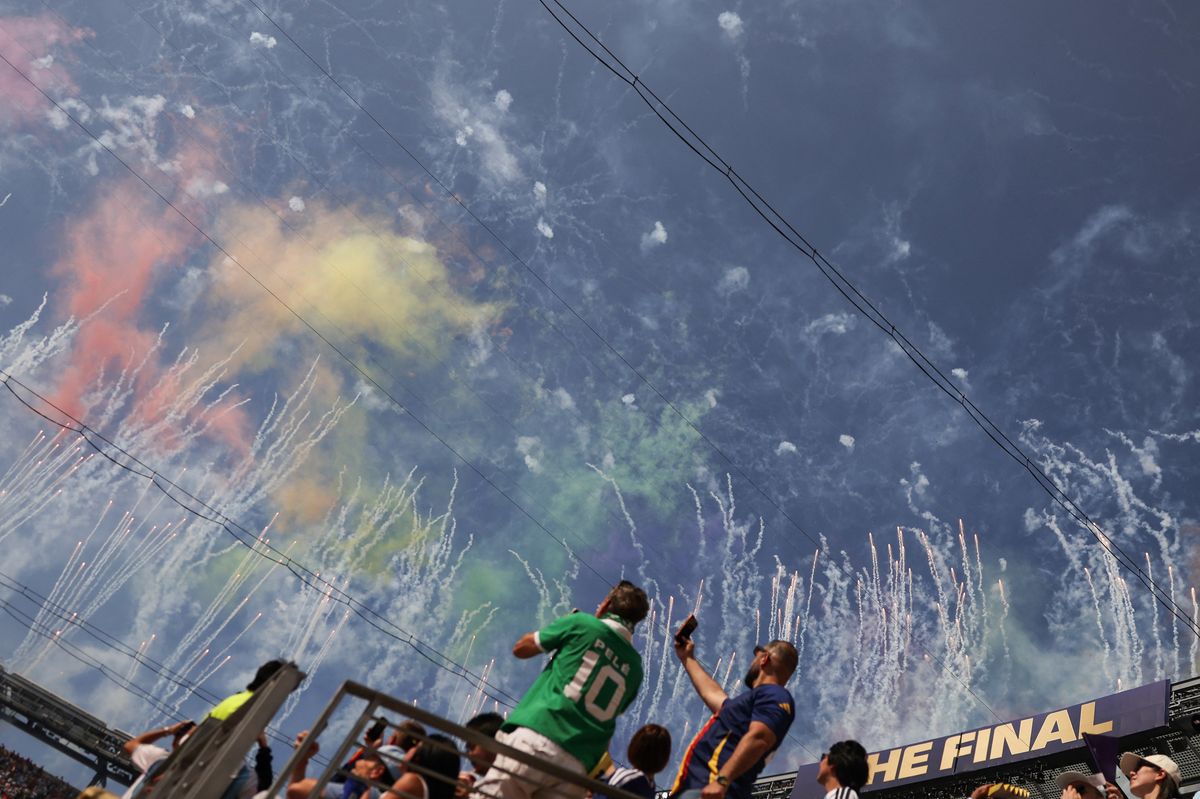
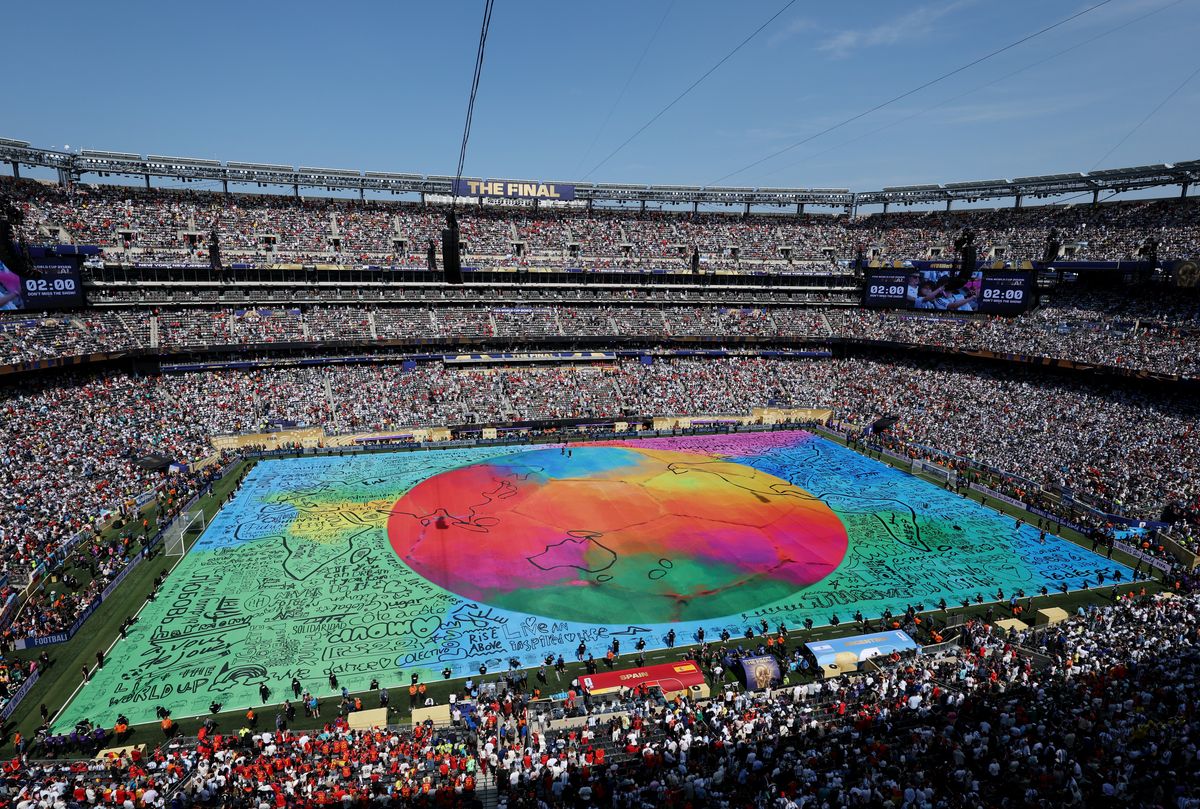
Argentine commentator Andrés Cantor brought the number to a close with his signature cry of “GOL!” as fireworks burst above the stadium. Below, the performers filled a pitch-sized covering designed by Misty Buckley and installed by a crew of 120. From the upper decks, their hand-drawn jerseys stretched across the field, representing all 211 FIFA member associations. Messages in nine languages, created by adults and children around the world, were woven throughout the design.
A Show With a Fundraising Mission
The halftime production also supported the FIFA Global Citizen Education Fund, which finances education and sports programs for children in underserved communities.
 © AFP via Getty Images
FIFA donated one dollar from every World Cup ticket sold to the fund. According to Global Citizen, the campaign raised more than $60 million. It selected 58 organizations in 20 countries to receive grants. Those programs were expected to reach more than 400,000 children. The show also served as a fund-raiser. The grants were already moving to local organizations by the time the performers took the field.
A Final Filled With Celebrities
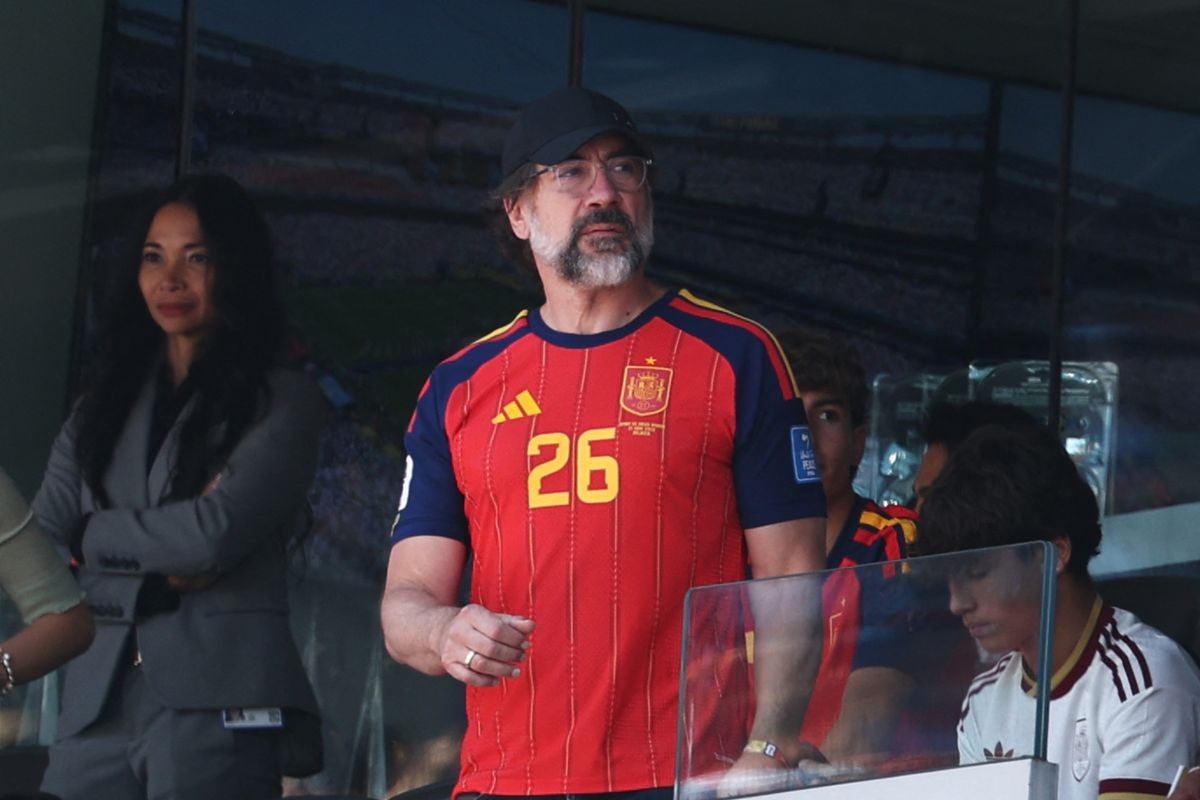
The performers were only part of the celebrity presence inside the stadium. FIFA invited 130 high-profile guests, which it described as the largest celebrity guest list ever assembled for a World Cup final. Spain’s King Felipe and Queen Letizia attended with their daughters, Princess Leonor and Infanta Sofía. Other Spanish guests included Álvaro Morata and Javier Bardem. Several members of Spain’s 2010 World Cup-winning team were also there, including Iker Casillas, Xavi Hernández, David Villa, and Fernando Llorente.
 © AFP via Getty Images
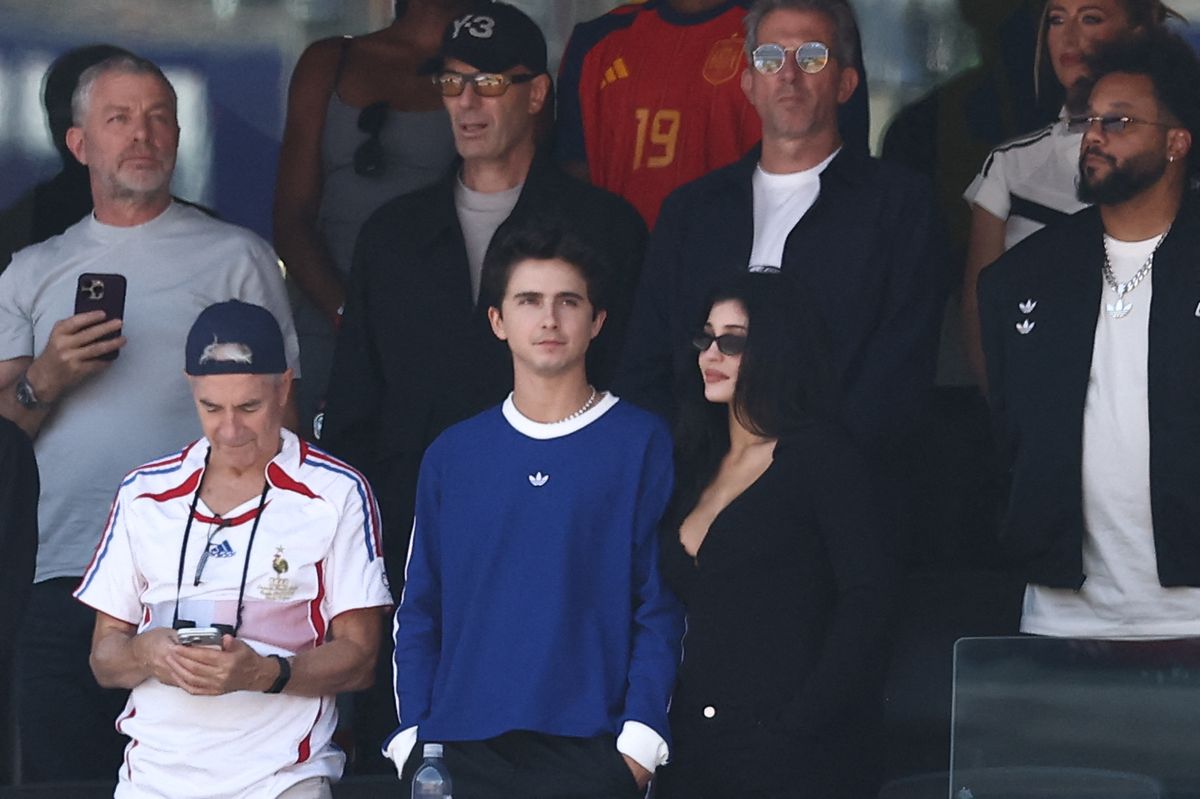
The guest list also included Mick Jagger, Dua Lipa, Brad Pitt, Timothée Chalamet, Kylie Jenner, Brooke Shields, and Sarah Jessica Parker. Among the sports figures were David Beckham and his family, Diego Simeone and Carla Pereyra, Didier Drogba, Kaká, and Zinedine Zidane. The guest list made FIFA’s ambition plain. The final was still a soccer match, but the organization wanted it to command the same attention as the world’s biggest entertainment broadcasts.
 © AFP via Getty Images
A New World Cup Tradition
The show closed as fireworks lit up the stadium. In 11 minutes, it moved from Madonna’s theatrical entrance to Shakira’s familiar World Cup rhythm, then from Pelé’s farewell to schoolchildren singing on the field. The scale borrowed from the Super Bowl, but the story belonged to soccer. Between Shakira’s energy and Madonna’s vision, FIFA had created something new: a halftime show with a World Cup identity of its own.
 © Getty Images