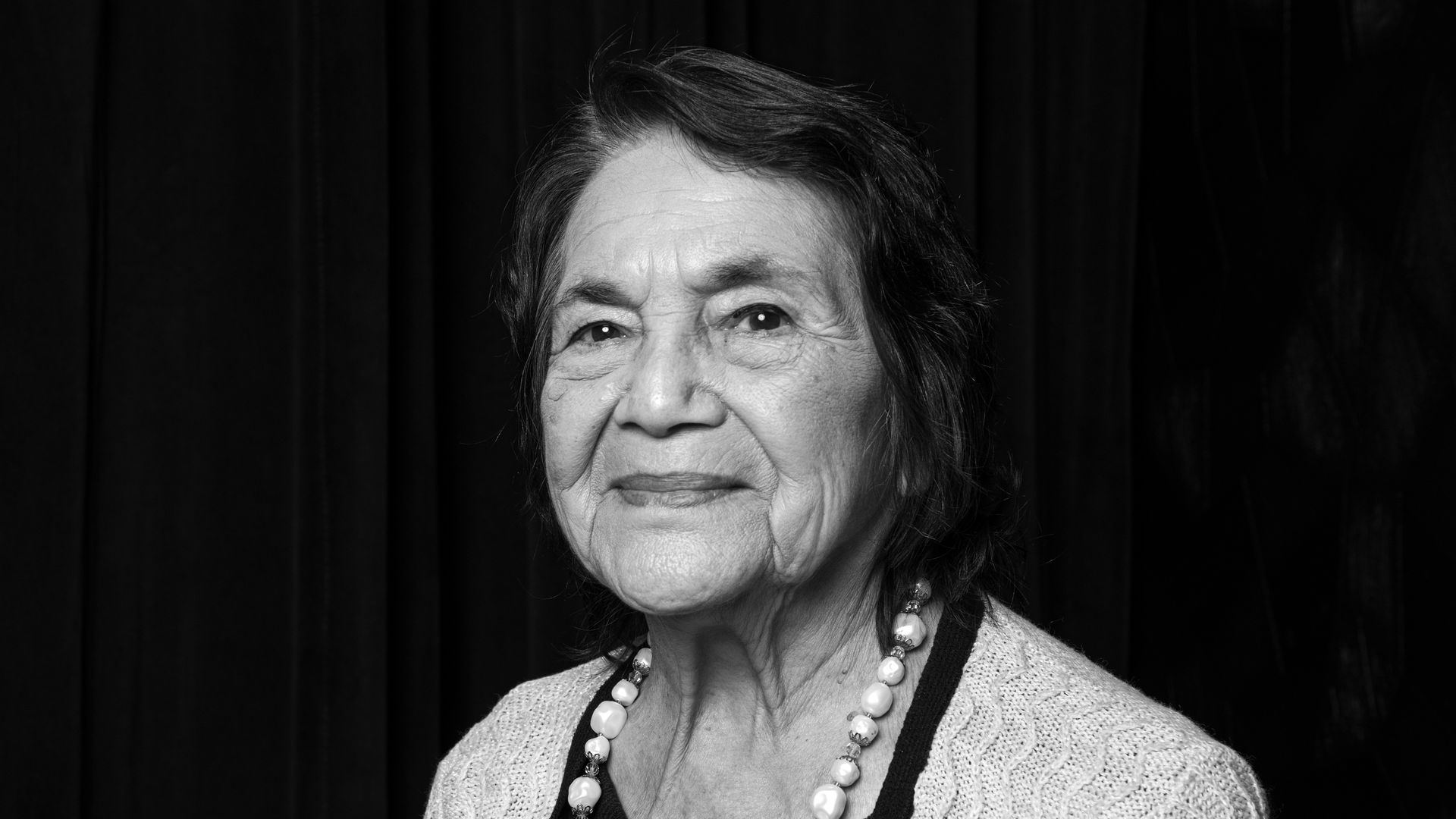
Dolores Huerta, the pioneering labor leader and civil rights activist who helped transform the lives of American farmworkers and inspired generations of Latinas to fight for equality, has died at 96.
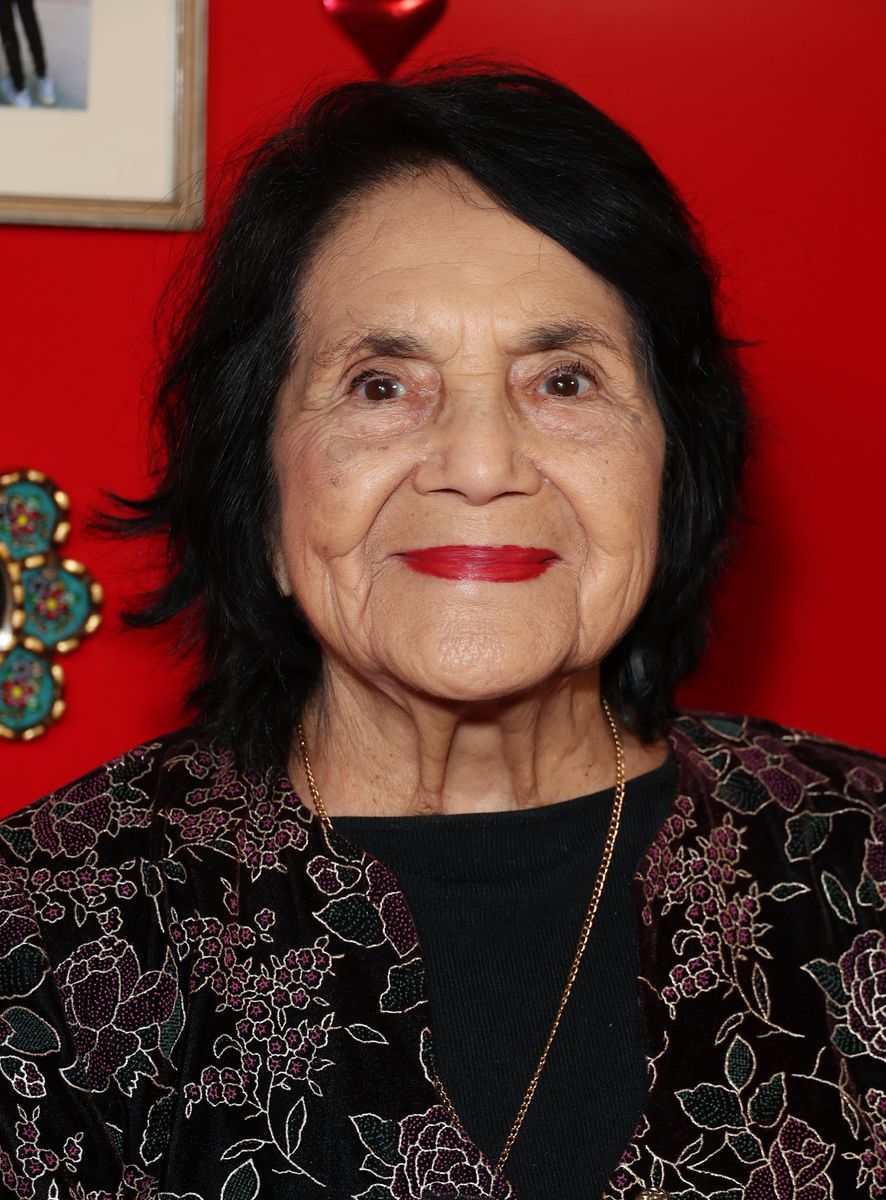
The legendary activist died Wednesday, October 28, 2026, at her home, according to a statement released by her family through the Dolores Huerta Foundation. Her death marks the end of an extraordinary life dedicated to social justice, labor rights, women's empowerment, and political activism.
 © Getty Images for State of the Ar
Huert, a's family confirmed the heartbreaking news on her official Instagram account, writing, "We are deeply saddened to announce that our beloved mother, Dolores Huerta, has passed away today."
The family requested privacy during this difficult time and said plans to honor her life and legacy would be announced later.
 © Getty Images for TIME
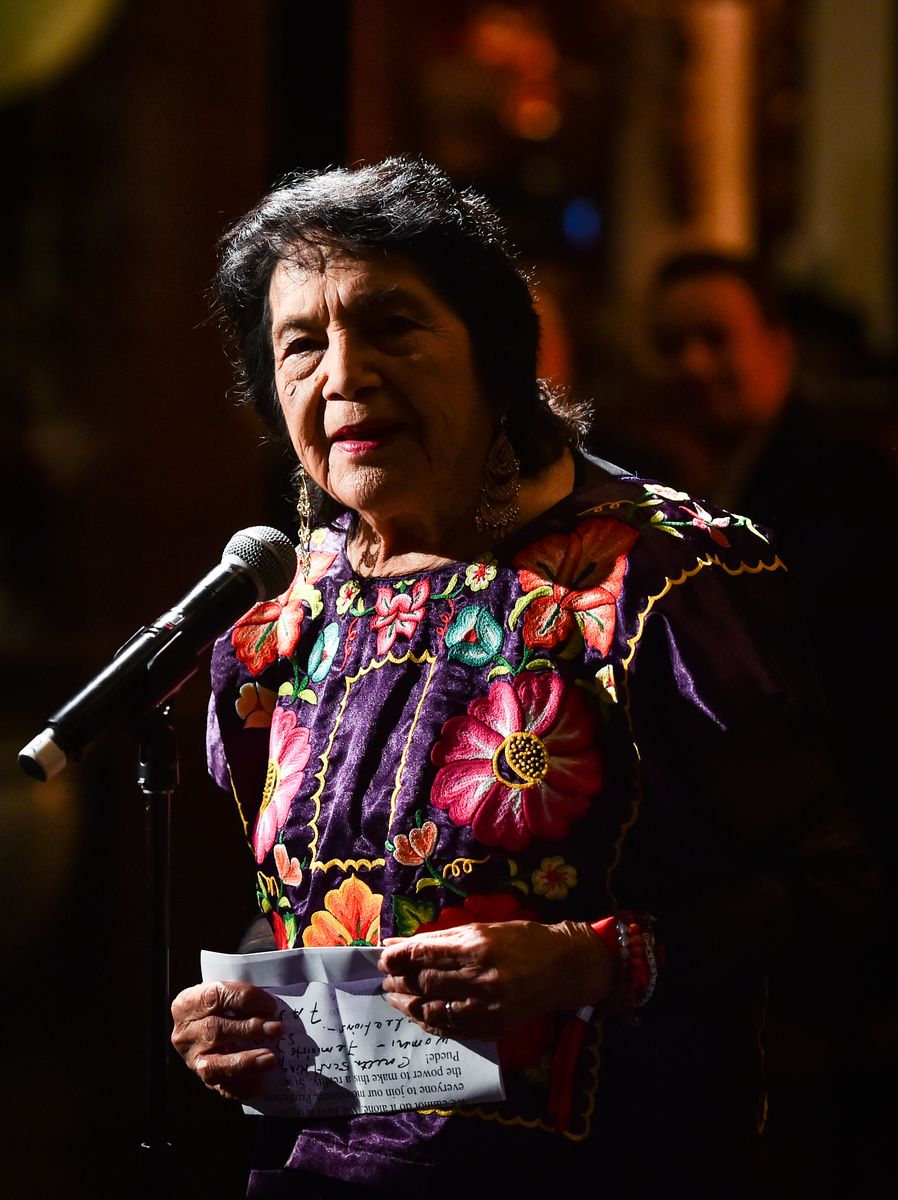
For more than seven decades, Huerta was one of the most influential voices in the American civil rights movement. She helped secure better wages, safer working conditions, and essential protections for agricultural workers, while proving that women could lead some of the country's most consequential social movements.
How Did Dolores Huerta Die?
Dolores Huerta died on October 28, 2026, at the age of 96. Her family did not disclose a cause of death in its initial public announcement. However, a family spokesperson told The New York Times that Huerta died of cancer, according to a report by City News Service.
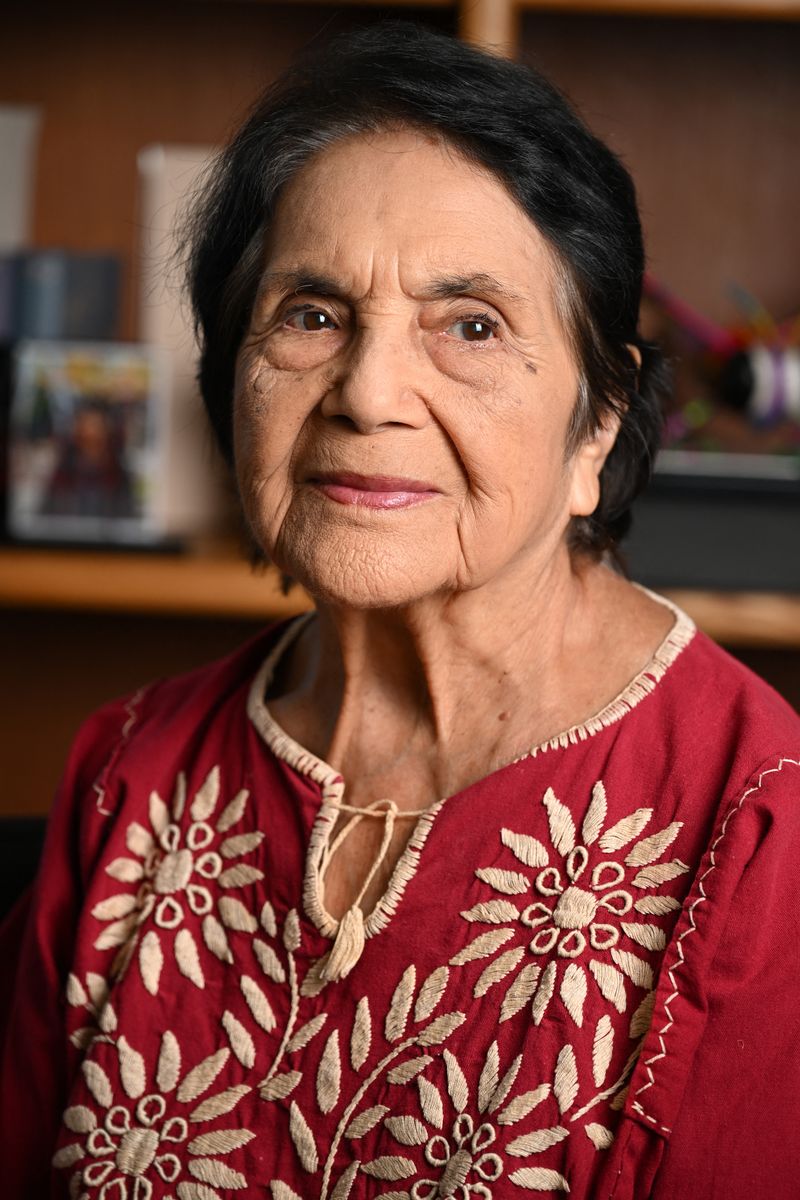
Huerta remained remarkably active well into her 90s, continuing to attend demonstrations, speak publicly, and advocate for immigrant communities, voting rights, and women's equality.
 © AFP via Getty Images
Through her Bakersfield-based Dolores Huerta Foundation, she continued encouraging younger generations to become politically engaged and organize for change.
Who Was Dolores Huerta? The Woman Who Changed American Labor History
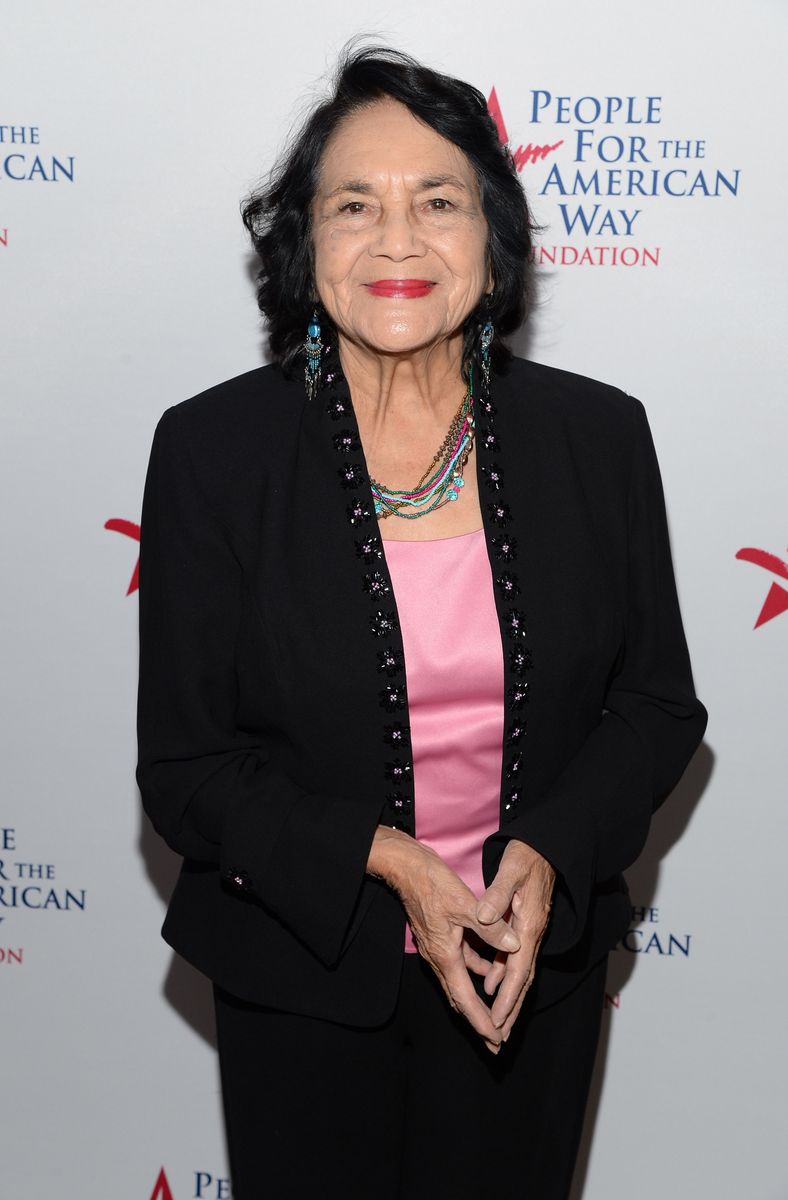
Born Dolores Clara Fernández on April 10, 1930, in Dawson, New Mexico, Huerta grew up in Stockton, California, where she witnessed the economic struggles of working-class families.
Her mother, Alicia, operated a restaurant and hotel and helped shape Huerta's commitment to compassion, independence, and community service.
 © Getty Images
Before becoming a nationally recognized activist, Huerta worked as an elementary school teacher.
Seeing children arrive at school hungry, without adequate clothing or basic necessities, deeply affect. She realized that improving children's lives required addressing the poverty and exploitation their parents experienced.
That realization changed the direction of her career. Rather than remaining in the classroom, Huerta dedicated herself to organizing agricultural workers and challenging the conditions that kept families in poverty.
Dolores Huerta and César Chávez Founded the United Farm Workers
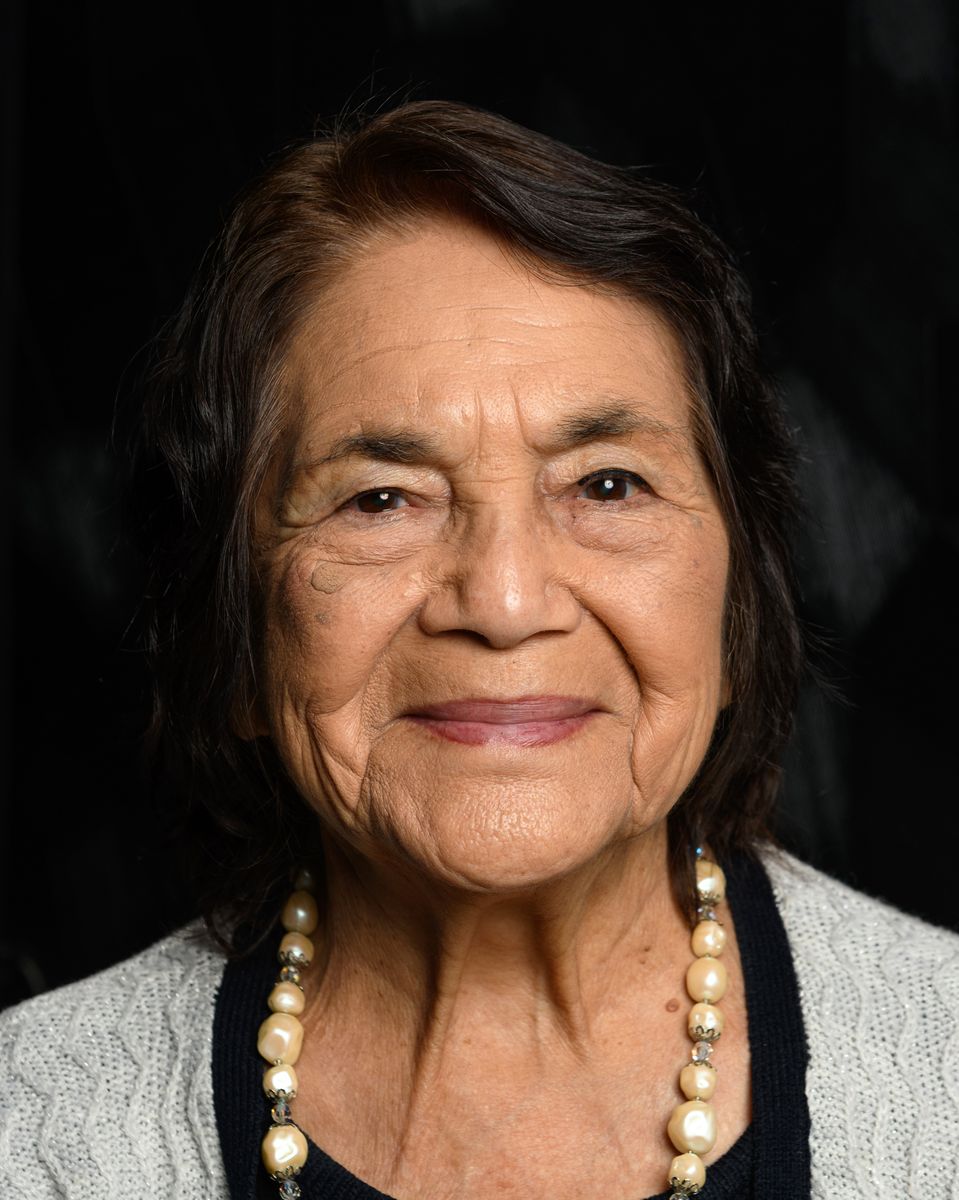
In 1962, Huerta and fellow labor organizer César Chávez established the National Farm Workers Association, which eventually became the United Farm Workers of America.
Together, they helped build one of the most influential labor movements in American history.
 © Getty Images
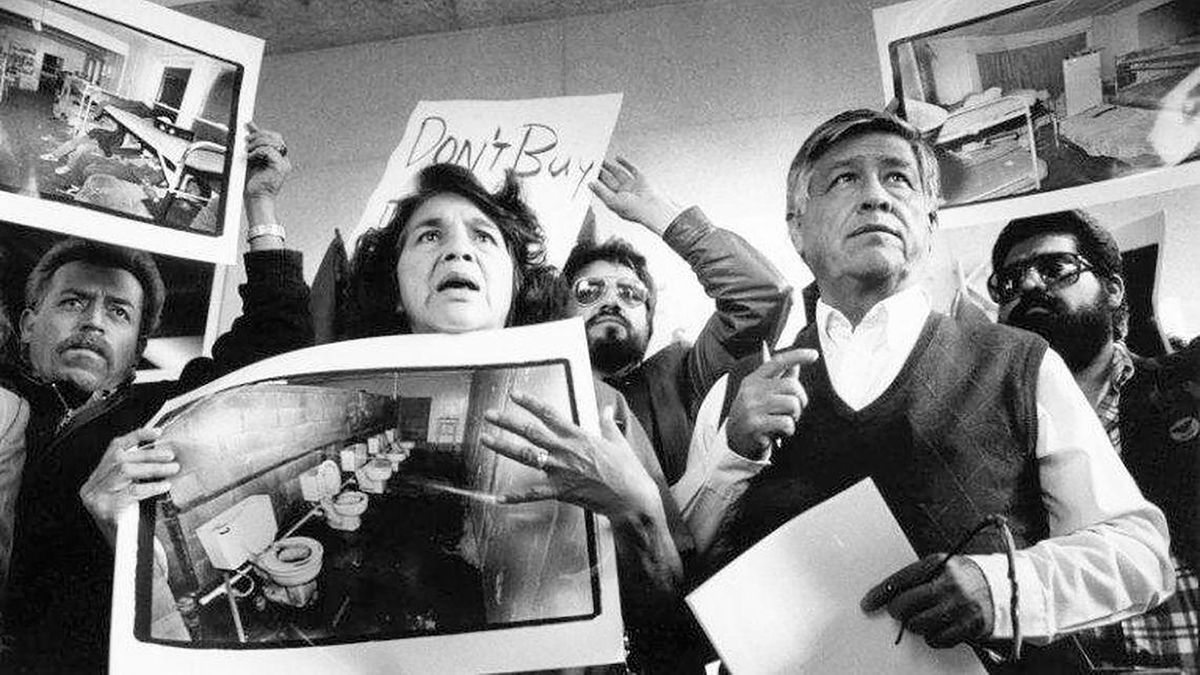
Huerta played a central role in organizing strikes, coordinating consumer boycotts, and negotiating contracts with agricultural employers.
One of the movement's defining moments was the 1965 Delano grape strike, initiated by Filipino farmworkers and supported by Huerta, Chávez, and their organization.
The strike and subsequent grape boycott helped bring national attention to the difficult working conditions experienced by farmworkers.
 © TNS
Their efforts contributed to historic improvements in wages, healthcare benefits, and collective bargaining protections.
Huerta was also recognized as a formidable negotiator, frequently challenging powerful agricultural companies and political leaders on behalf of workers who had little influence over their employment conditions.
The Story Behind Dolores Huerta's Famous “Sí, Se Puede” Slogan
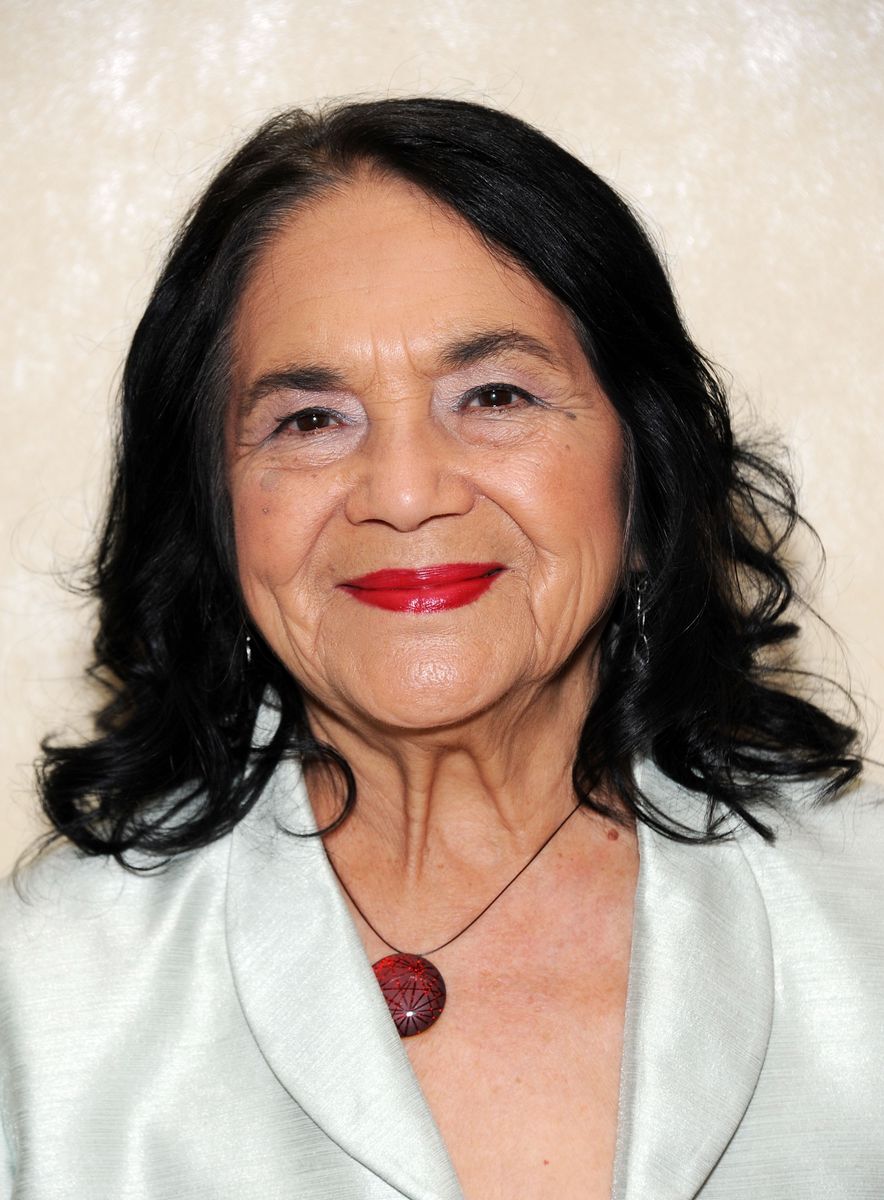
Few phrases are as closely associated with Latino activism as "Sí, se puede." Huerta popularized the expression in 1972 while organizing against legislation in Arizona that restricted farmworkers' ability to strike and boycott.
When someone suggested that the movement's goals were impossible to achieve in Arizona, Huerta responded with the words that would become an enduring symbol of determination.
 © WireImage
The phrase, commonly translated as "Yes, we can," became a rallying cry for the United Farm Workers and later spread to civil rights campaigns, political movements, and demonstrations around the world.
Decades later, former President Barack Obama embraced "Yes We Can" during his successful 2008 presidential campaign.
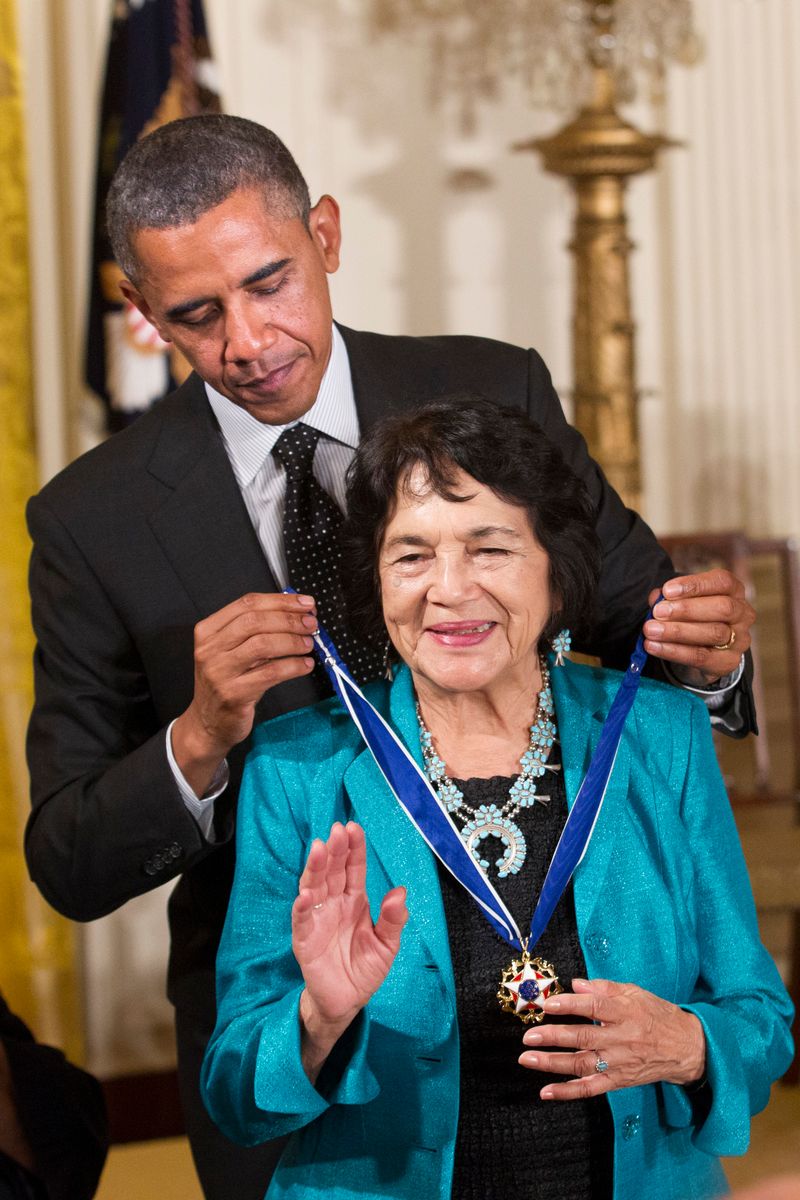
When Obama presented Huerta with the Presidential Medal of Freedom in 2012, he acknowledged borrowing inspiration from her famous slogan.
 © Corbis via Getty Images
For Huerta, those three words represented more than optimism. They reflected her lifelong belief that organized communities could challenge powerful institutions and achieve meaningful change.
Dolores Huerta's Impact on Women's Rights and Latina Empowerment
Although Huerta became widely recognized for her work alongside Chávez, her influence extended far beyond organized labor. As a Mexican American woman working in a movement historically dominated by men, she challenged expectations about leadership, motherhood, and women's roles in public life.
She advocated for reproductive rights, educational opportunities, political representation and economic equality.
 © Cathy Murphy
Huerta also encouraged Latinas to register to vote, seek leadership positions, and participate in decisions affecting their communities. Her activism made her a significant figure in both the labor movement and the broader struggle for women's rights.
In 1988, Huerta suffered serious injuries after being struck by a police officer during a protest in San Francisco. Despite the physical and emotional toll, she returned to organizing and public advocacy.
Her persistence helped establish her reputation as one of the country's most determined civil rights leaders.
Dolores Huerta's Awards and Lasting Legacy
Huerta received numerous honors recognizing her contributions to American society. Among the most prestigious was the Presidential Medal of Freedom, awarded by President Barack Obama in 2012.
Her achievements also inspired documentaries, educational programs, and community initiatives examining her contributions to labor organizing, feminism, and Latino political representation.
 © GettyImages
The Dolores Huerta Foundation, established to strengthen community organizing and civic participation, remains one of the most visible expressions of her commitment to empowering underserved communities.
Even in her later years, she continued speaking about the importance of voting, education, and collective action.
Her influence can be seen in generations of activists who advocate for workers' rights, immigrant protections, racial equality, and women's leadership.