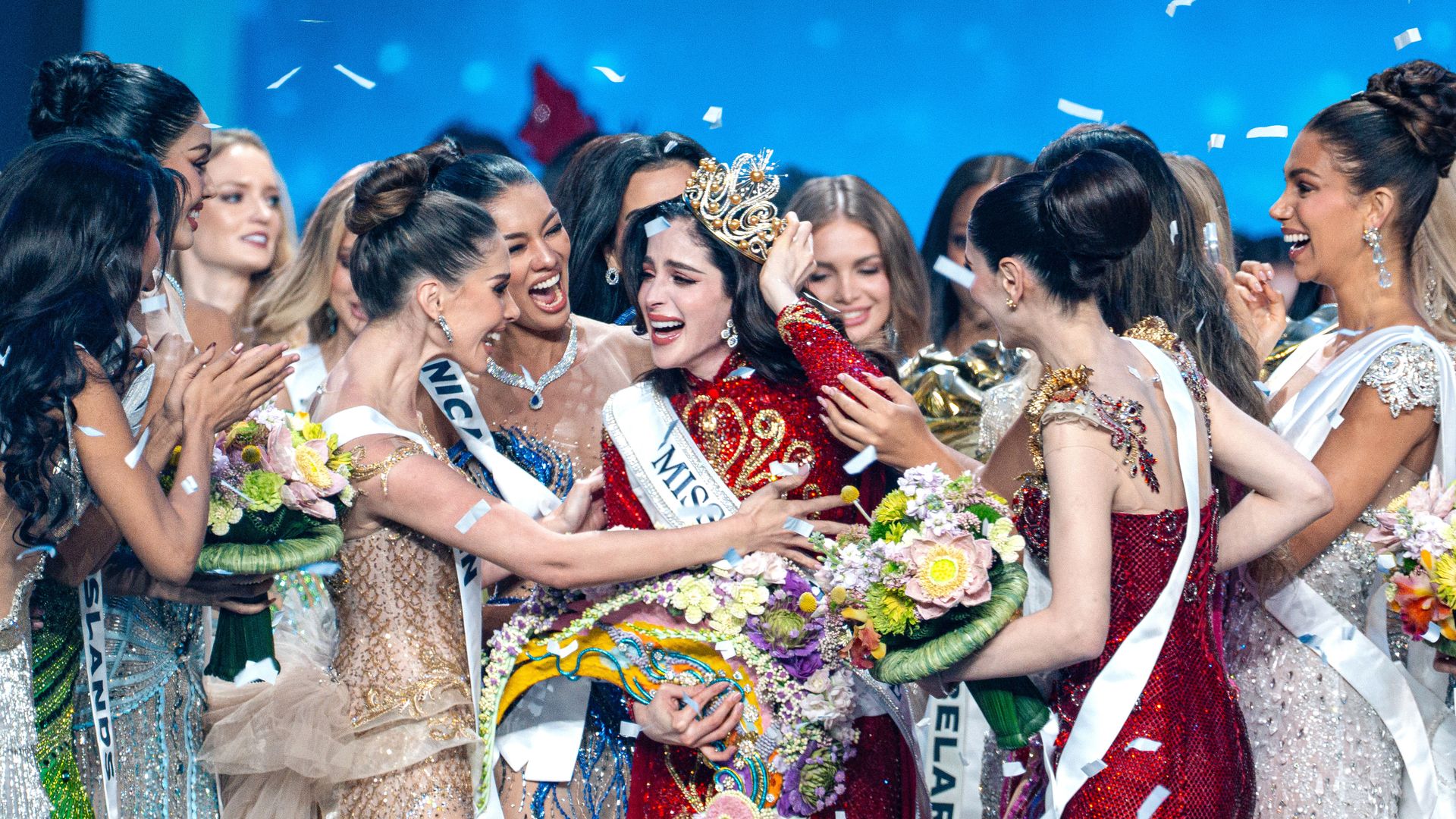
The Miss Universe Organization is facing another turbulent chapter, with an escalating dispute over franchise rights, corporate authority and the eligibility of contestants from six Southeast Asian countries now threatening to overshadow preparations for the 75th Miss Universe competition.
In its latest public message, the organization emphasized its commitment to protecting the Miss Universe brand and maintaining what it describes as the proper legal framework for licensing and franchise operations.
 © Getty Images for Art Hearts Fash
“The Miss Universe Organization remains committed to protecting the integrity of the Miss Universe brand and ensuring that all licensing and franchise operations are conducted through the proper legal and authorized framework,” the organization said.
It added: “We encourage our community, partners, and stakeholders to read the full statement for accurate information and official clarification.”
The brief message accompanied a far more detailed statement addressing Miss Universe Eastern Pte. Ltd., Thai businessman Nawat Itsaragrisil, disputed franchise agreements and the participation of several countries in Miss Universe 2026.
 © AFP via Getty Images
The development comes after months of public disagreements involving people and entities connected with the global pageant. More recently, the dispute has developed into competing interpretations of who has the authority to manage franchises and make decisions on behalf of the Miss Universe brand.
What the latest Miss Universe statement says
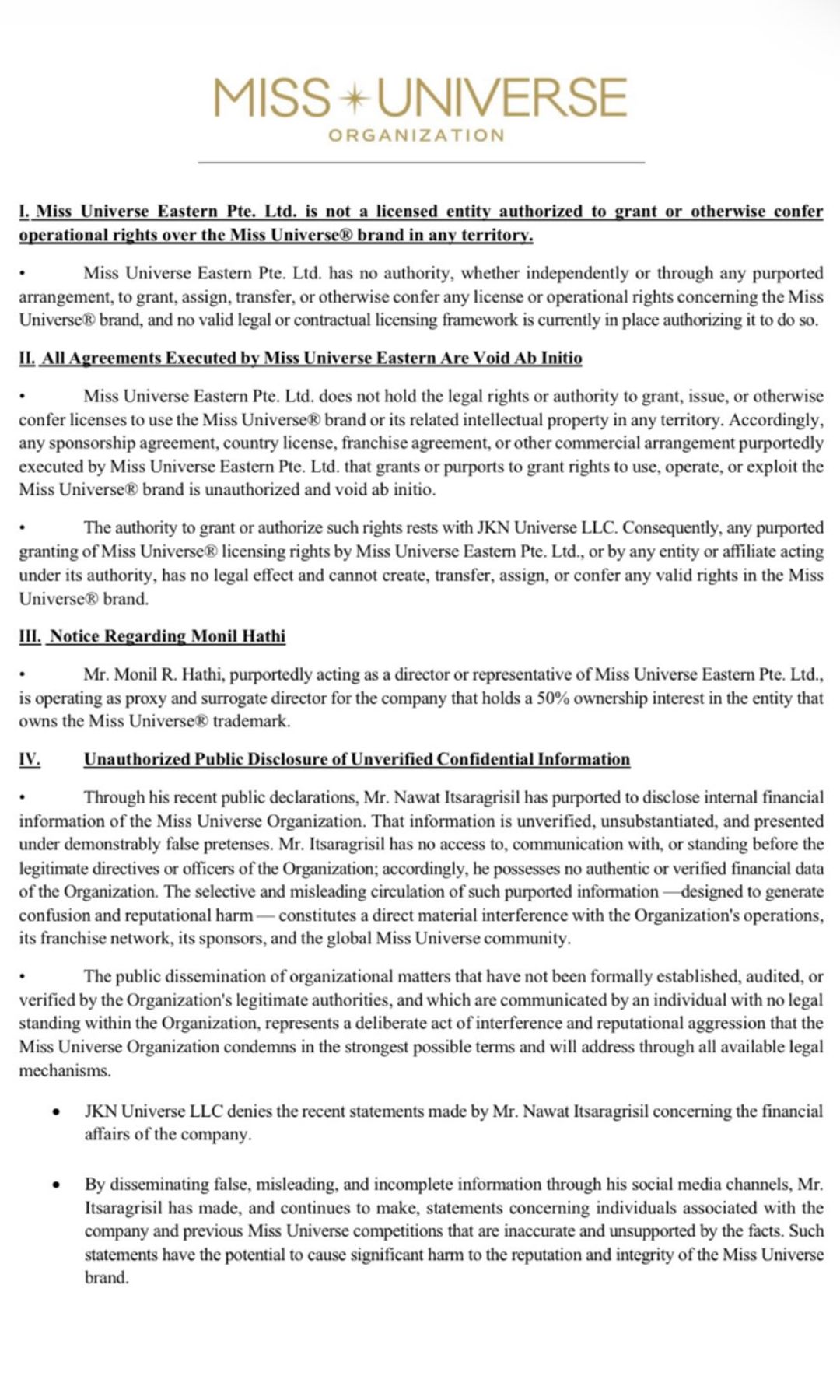
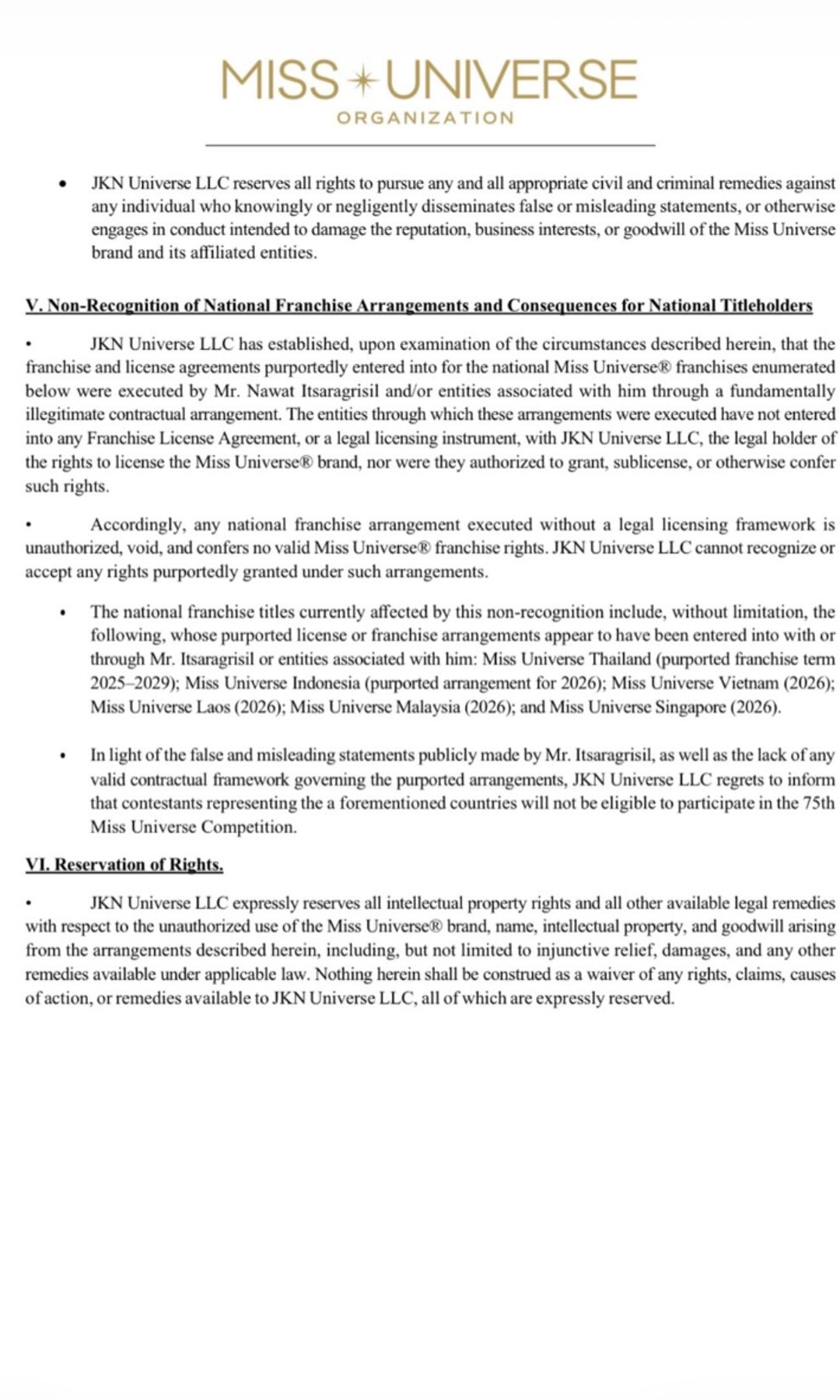
In the document shared by the organization, JKN Universe LLC maintains that Miss Universe Eastern Pte. Ltd. is not authorized to grant licenses or operational rights to the Miss Universe brand.
The statement says that JKN Universe LLC considers franchise, sponsorship and licensing agreements purportedly executed by Miss Universe Eastern to be unauthorized and “void ab initio,” a legal term meaning invalid from the outset.
 © Miss Universe
 © Miss Universe
It also specifically addresses Nawat Itsaragrisil and Monil Hathi, while challenging public statements about the company's financial affairs.
According to the statement, JKN Universe LLC disputes financial information publicly presented by Nawat, describing it as unverified and unsupported. Those assertions are claims by JKN Universe LLC and have become part of a broader dispute between the parties.
The document also warns that JKN Universe LLC reserves the right to pursue available legal remedies over what it considers unauthorized use of Miss Universe intellectual property or false and misleading statements.
 © Nawat Itsaragrisil
But that is not the end of the story. Another side of the Miss Universe ownership structure is publicly disputing those assertions.
Six Miss Universe 2026 contestants are caught in the dispute
Perhaps the biggest immediate consequence concerns Thailand, Indonesia, Vietnam, Laos, Malaysia and Singapore.
JKN Universe LLC's statement says it does not recognize franchise arrangements purportedly made for Miss Universe Thailand for 2025-2029 or agreements involving Indonesia, Vietnam, Laos, Malaysia and Singapore for 2026.
 © @sarinkp.official
It consequently maintains that contestants representing those six countries would not be eligible to participate in the 75th Miss Universe competition. That would have major implications for the upcoming pageant in Puerto Rico.
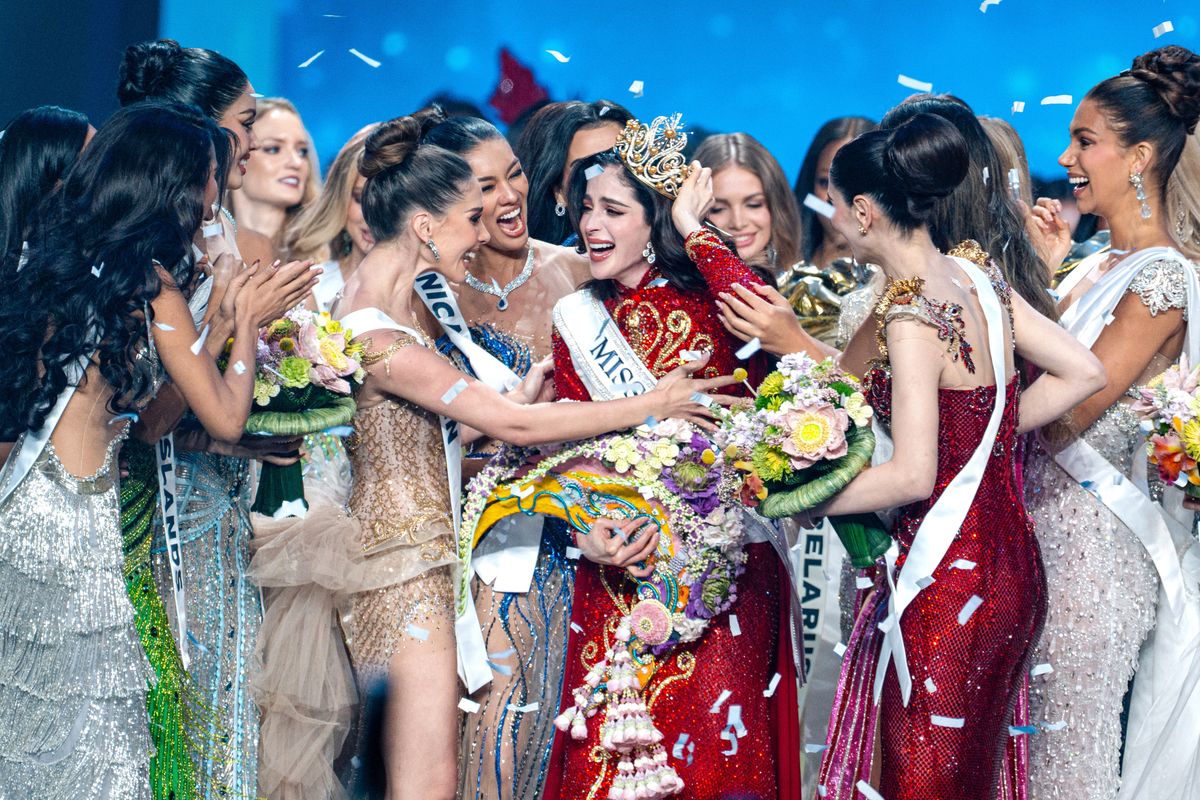
Thailand has already crowned Tharina Botes as its Miss Universe 2026 representative, while some of the other affected countries are still moving through their national pageant schedules.
However, the contestants' status is now contested rather than conclusively settled, because MU East issued its own statement on September 18 challenging JKN Universe LLC's position.
MU East challenges the Miss Universe statement
In an unusual development, a response from MU East was also published on the official Miss Universe website on September 18.
MU East said it “did not review or approve” the statement challenging its authority and argued that it did not represent the agreed position of both sides of the ownership structure.
 © Agencies
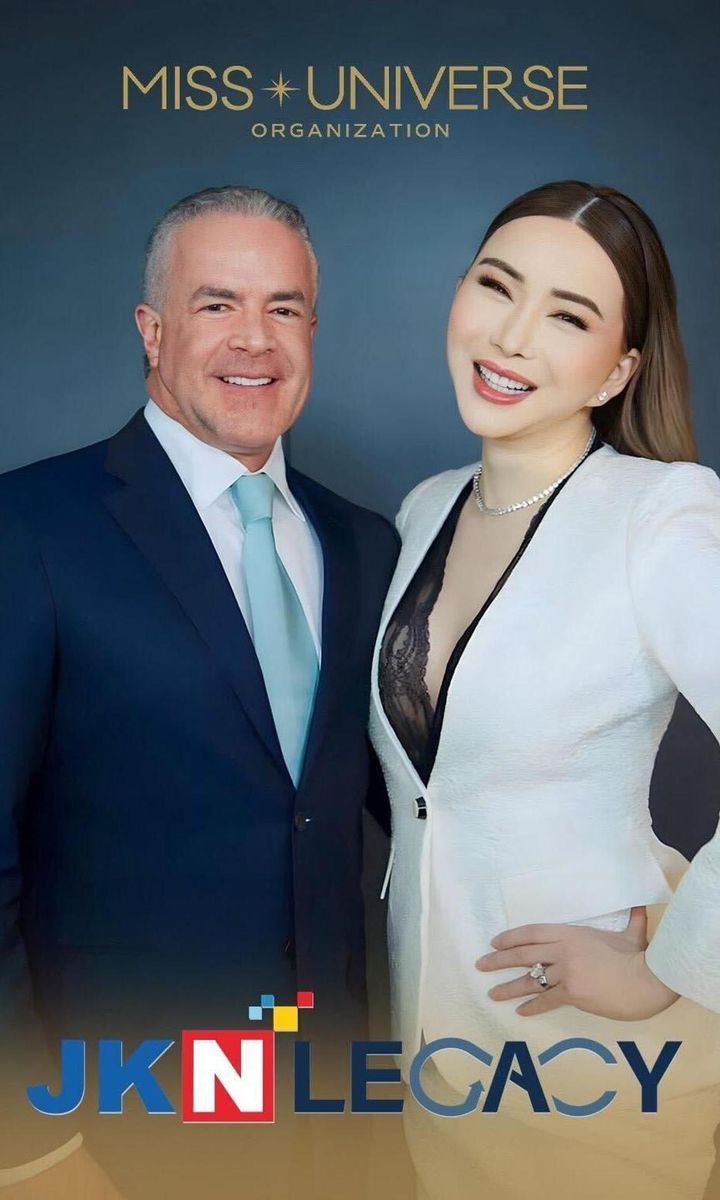
According to MU East, JKN Universe LLC, which does business as the Miss Universe Organization, operates through a 50:50 ownership structure involving MU East and MU West through JKN Legacy Inc. MU East further maintains that a Hemisphere Agreement gives it exclusive rights to operate, promote and develop the Miss Universe brand across 95 Eastern territories and appoint franchise partners there.
MU East therefore rejects the assertion that the six affected national franchise agreements can simply be invalidated through a unilateral public statement. It also maintains that eligible delegates selected from Thailand, Indonesia, Vietnam, Laos, Malaysia and Singapore have a contractual right to participate in Miss Universe 2026.
Nawat Itsaragrisil says the six delegates will still compete
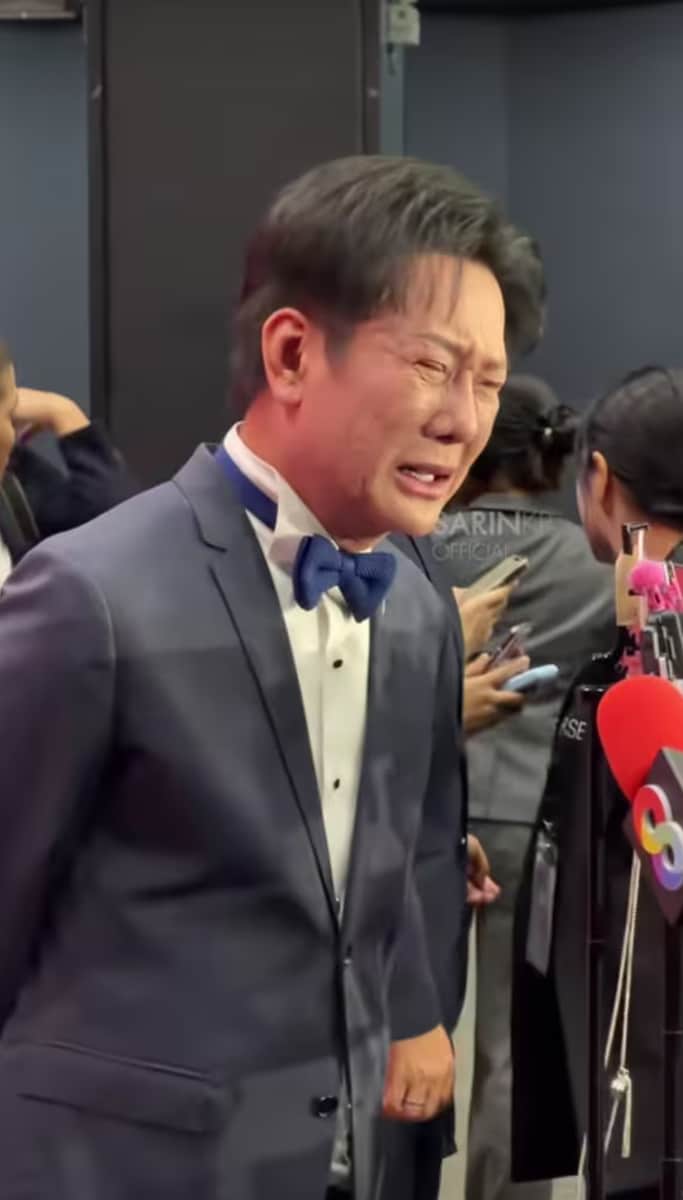
Nawat has also pushed back against the exclusion announcement. Speaking at a press conference on September 18, he maintained that all six contestants would travel to Puerto Rico and argued that the disputed statement could not unilaterally determine their eligibility.
 © rrss
He has also raised questions about financial and contractual arrangements connected with the Puerto Rico competition. Those allegations have not been independently established, and the opposing side disputes his account.
The disagreement follows another public clash earlier this month over Nawat's role. MU East identifies Nawat as its duly appointed CEO and a recognized Miss Universe franchise holder. A September 9 MU East statement said it supported him in both capacities.
Yet other statements issued in the name of MUO have challenged the extent of his authority in relation to JKN Universe LLC and the global Miss Universe Organization.
Miss Universe controversies have intensified ahead of the 75th pageant
The latest confrontation did not appear in isolation. Miss Universe's official website shows a remarkable series of public statements throughout August and September addressing corporate authority, communication channels, commercial revenue, payment verification, franchise treatment and the powers of different executives.
On August 15, for example, an official release identified Nawat as CEO of Miss Universe Eastern and said he would lead operations and development across 95 participating countries. The same release described the company's structure as governed on an equal 50:50 ownership basis under relevant agreements and resolutions.
 © Nawat Itsaragrisil/IG
By September, competing public statements were presenting substantially different interpretations of that structure and the authority flowing from it.
On September 8, MU East separately issued a statement addressing commercial revenue and payment verification, urging broadcasters, sponsors, agencies and partners to verify payment instructions against contracts and authorized corporate documentation.
The frequency and substance of these releases show that the current controversy extends beyond a typical pageant disagreement. It involves corporate governance, licensing authority, franchise contracts and competing interpretations of agreements governing the Miss Universe business.
What happens to Miss Universe 2026 now?
For pageant fans, the most immediate question is whether Thailand, Indonesia, Vietnam, Laos, Malaysia and Singapore will ultimately appear on the Miss Universe 2026 stage. At the moment, the two sides are giving conflicting answers.
JKN Universe LLC's position is that the disputed franchise arrangements are invalid and that contestants representing the six countries are therefore ineligible. MU East maintains that its territorial and contractual rights authorize those arrangements and protect the delegates' participation.
 © Thai News Pix/LightRocket via Ge
Until the dispute is resolved through agreement, corporate action or legal proceedings, reporting that the six countries have definitively been “banned” risks overstating what is currently a contested corporate and contractual matter.
The 75th edition was expected to be a milestone celebration for one of the world's most recognizable pageant brands. Instead, the lead-up is increasingly being shaped by questions about who has the authority to license that brand, who can speak on behalf of the organization and whether six national representatives will ultimately be allowed to compete.