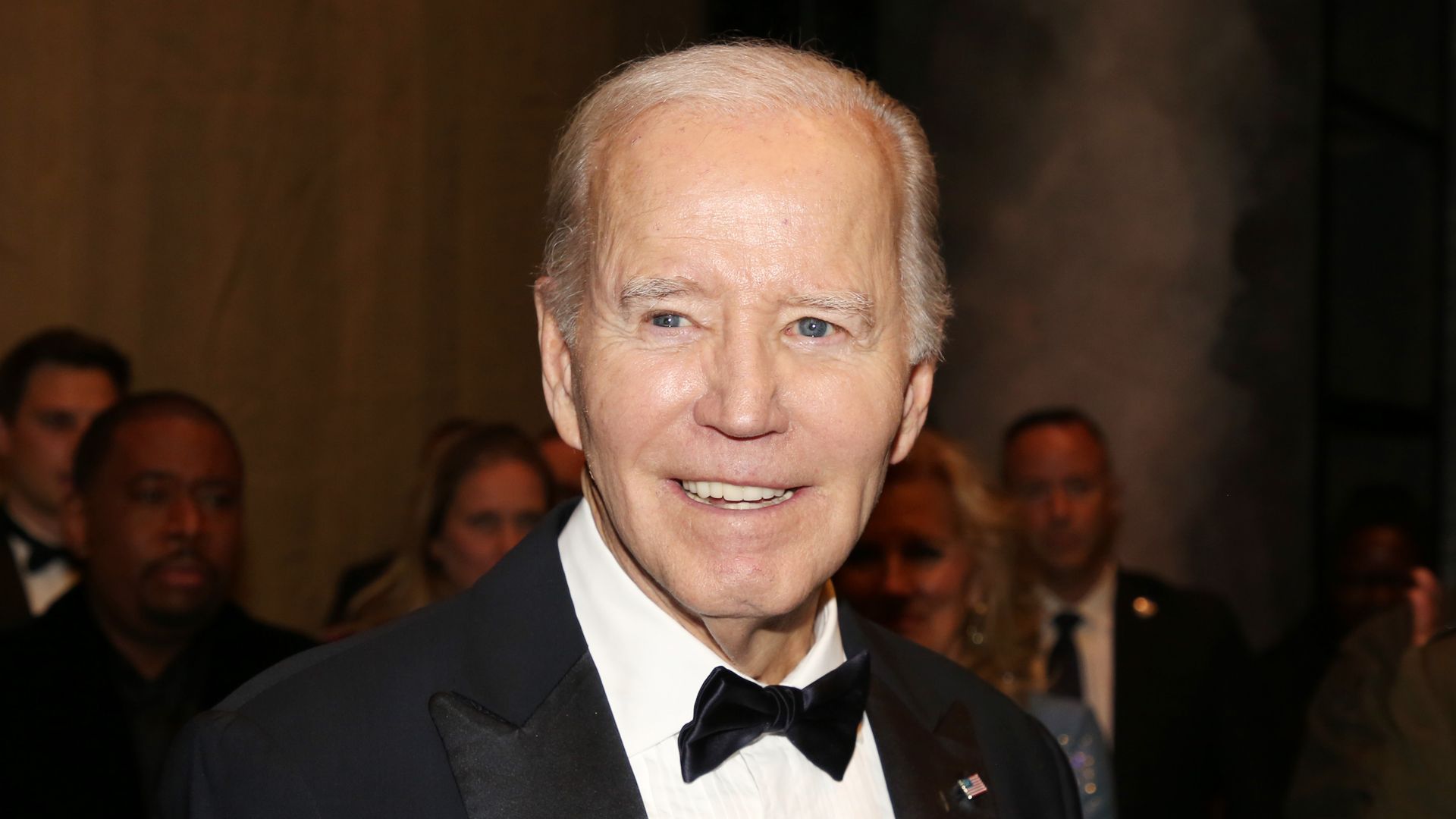
Former President Joe Biden's cancer journey has become one of the most closely followed health stories in the United States. Since revealing his diagnosis in 2025, Biden has shared updates on his treatment while continuing to make select public appearances, write a memoir, and speak about resilience.
His experience has also renewed conversations about prostate cancer symptoms, screening, treatment options, and the realities of living with advanced disease.
 © GC Images
Joe Biden's cancer diagnosis
In May 2025, Biden's office announced that he had been diagnosed with an aggressive form of prostate cancer after seeking medical evaluation for urinary symptoms. Doctors determined the cancer had spread to his bones, making it stage 4 metastatic prostate cancer.
His office said the cancer received a Gleason score of 9, indicating a highly aggressive form of the disease. However, the cancer was also described as hormone-sensitive, meaning it could respond well to hormone-based therapies and other treatments.
"Last week, President Joe Biden was seen for a new finding of a prostate nodule after experiencing increasing urinary symptoms. On Friday, he was diagnosed with prostate cancer, characterized by a Gleason score of 9 (Grade Group 5) with metastasis to the bone," the statement began.
 © GC Images
"While this represents a more aggressive form of the disease, the cancer appears to be hormone-sensitive which allows for effective management. The President and his family are reviewing treatment options with his physicians," the statement concluded.
The announcement prompted an outpouring of support from political leaders, cancer organizations, and the public.
Biden's first public response
Shortly after announcing the diagnosis, Biden thanked supporters with a heartfelt message on social media. He wrote: "Cancer touches us all. Like so many of you, Jill and I have learned that we are strongest in the broken places. Thank you for lifting us up with love and support."
How Joe Biden has been doing
Over the past year, Biden has periodically shared updates about his health. In July 2026, while announcing his upcoming memoir, Promise Me, America, he said his treatment was progressing well.
 © Bruce Glikas/WireImage
"I've been spending a lot of time with my family. I'm dealing with a cancer diagnosis, been getting treatment, and it's going really well. I want to thank all those who have offered their prayers and support and well-wishes. It's meant the world to me and to Jill," he said as reported by AP News.
Although Biden has reduced his public schedule, he has continued making appearances and working on personal projects during treatment, most recently in June 2026, during a New York City trip and then the opening of the Barack Obama Presidential Center in John Lewis Plaza on June 18, 2026 in Chicago, Illinois.
 © Getty Images
Jill Biden shares a candid update
Former First Lady Jill Biden has also spoken publicly about her husband's condition.
During an August 2026 podcast interview, she explained that while many prostate cancers can be cured, Biden's diagnosis differs because the disease had already spread to his bones.
 © Getty Images
She said: "He's doing okay," adding: "Unfortunately for Joe, it metastasized to his bones, which means that he will forever live with cancer."
Jill also described the reality of caring for a loved one with advanced cancer. "Anybody who's gone through this cancer journey... it's constant, it's daily, and it's challenging," she said. She revealed that Biden undergoes medical testing every three months to monitor his condition.
Biden's diagnosis sparked national discussion
Because Biden served as the oldest U.S. president, his diagnosis immediately fueled questions about prostate cancer screening and how advanced disease can develop.
Medical experts have noted that prostate cancer often progresses silently, particularly in older men. Current screening recommendations vary based on age, overall health, family history, and discussions between patients and physicians, meaning some cancers may not be detected until symptoms appear.
 © AFP via Getty Images
Todd M. Morgan, M.D., a urological surgeon and chief of urologic oncology, said “current guidelines advise most men to begin prostate-specific antigen testing—often paired with a digital rectal examination—between ages 45 and 50.”
According to the surgeon “routine PSA screening is usually stopped around 70 to 75 because the harms of detecting indolent cancers outweigh the potential benefits.”
Tudor Borza, M.D., M.S., an assistant professor of urology, at University of Michigan Health and Weiser Center for Prostate Cancer said that “although many of these cancers are diagnosed at lower stages, about 5 to 7% of men are found to have metastatic disease at diagnosis.”
Adding: “When you factor in the frequency of the cancer, which was 300,000 incident cases in 2024, it turns about that about 18,000 men present with this advanced stage per year in the U.S.”
 © Getty Images
Experts also emphasized that metastatic prostate cancer is increasingly treated as a chronic disease for many patients, thanks to advances in hormone therapy and newer medications. Some patients live for many years with good quality of life while receiving ongoing treatment.
Biden's long connection to cancer advocacy
Long before his own diagnosis, Biden made cancer research one of his signature causes.
Following the death of his son Beau Biden from brain cancer in 2015, Biden helped launch the Cancer Moonshot initiative, aimed at accelerating cancer research, improving prevention, and expanding access to innovative treatments.