Oprah Winfrey has spent decades being one of the most visible women on Earth. She has faced down presidents, billionaires, and prime-time TV critics without breaking a sweat. Yet when she sat down for a PEOPLE interview two years ago to admit she was using a GLP-1 weight loss medication, she was, in her own words, “shaking.”
“I knew that admitting to being on medication was going to be a big freaking deal,” Winfrey says in the magazine’s new cover story. “I knew I was going to get lots of pushback. And I did.”
 © Kevin Mazur
That moment was more than just a celebrity reveal. It was Oprah stepping into one of the most emotionally charged debates of our time, starring obesity, willpower, and the role of modern medicine. For someone whose weight has been scrutinized and politicized for decades, saying she needed pharmaceutical help felt like jumping into a storm without an umbrella.
But what makes Oprah’s story so powerful is what happened next.
The 'aha moment' that changed her thinking
Winfrey didn’t arrive at GLP-1 medications lightly. In July 2023, while taping a show about obesity with a panel of experts, she had what she now calls an “aha moment.” It flipped everything she thought she knew about her own body. “I came to understand that overeating doesn’t cause obesity. Obesity causes overeating. And that’s the most mind-blowing, freeing thing I’ve experienced as an adult,” she says.
That insight strikes at the heart of the shame so many people carry. For years, the cultural script has been eat less, move more, try harder. If you fail, it is because you were weak. Science, however, tells a much stranger and kinder story. Bodies have built-in weight set points, driven by genetics and environment. When weight drops below that range, hunger hormones roar back like an alarm system.
Winfrey decided to try GLP-1 injections, a class of medications that help regulate appetite and blood sugar, because for the first time, she understood her struggle wasn’t a moral failing. It was biology.
Why did she quit on her 70th birthday?
Then came the plot twist. Less than six months after starting the medication, Winfrey stopped on her 70th birthday in January 2024. “I tried to beat the medication,” she admits.
Even after that powerful revelation about obesity, a familiar voice was still whispering in her ear. She wanted to prove she could keep the weight off on her own. She wanted to see if the science was really right. “I said, ‘I’m going to see if the science is right. I want to see if I can do without it.’”
 © Getty Images
She stayed committed to healthy eating and working out. She didn’t go off the rails. She simply removed the medication and waited. At first, nothing dramatic happened. But over the next 12 months, the scale quietly crept upward. By the end of the year, she had gained 20 pounds.
The lesson landed hard and clear. “It’s going to be a lifetime thing,” Winfrey says now. “I’m on high blood pressure medication, and if I go off the high blood pressure medication, my blood pressure is going to go up. The same thing is true now, I realize, with these medications. I’ve proven to myself I need it.”
The science behind her ‘Enough Point’
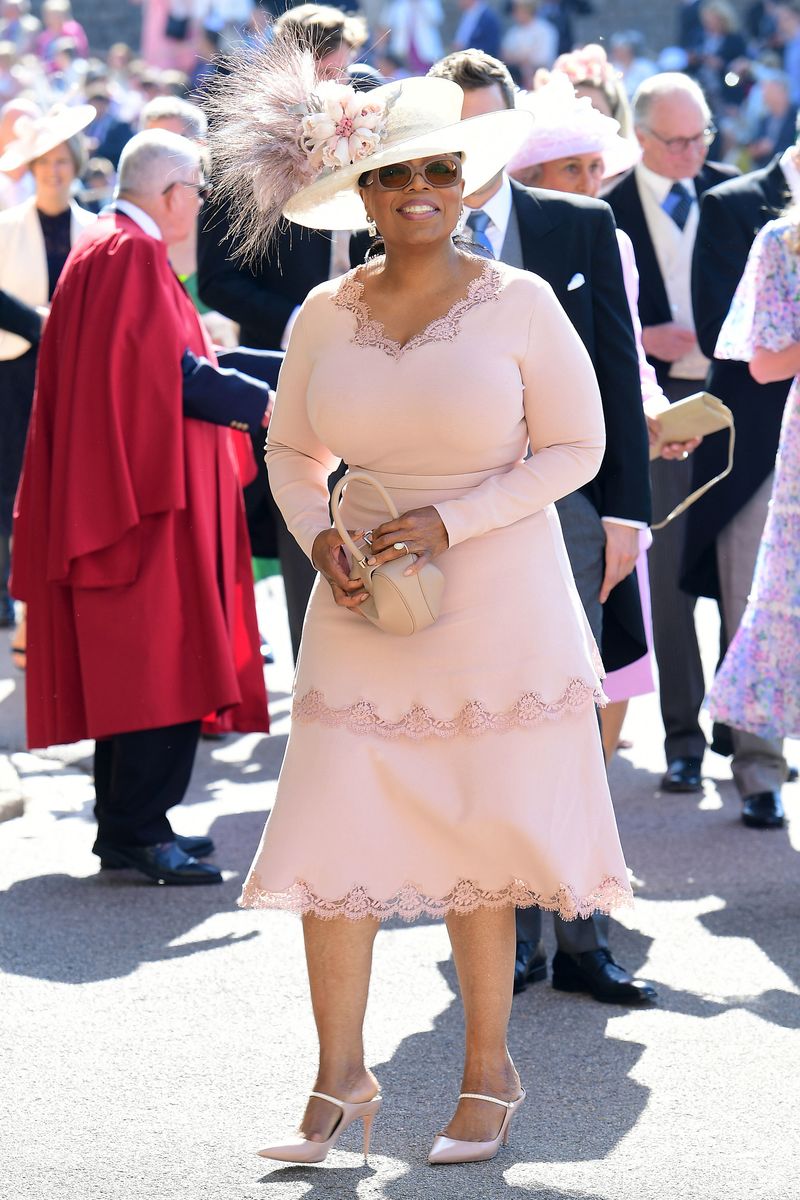
Winfrey’s new book, “Enough: Your Health, Your Weight and What It’s Like to Be Free,” co-written with Dr. Ania M. Jastreboff of the Yale Obesity Research Center, explains what was happening inside her body. Dr. Jastreboff describes something called the “Enough Point,” a set weight range your body tries to defend. It is shaped by genetics and the environment you grew up in. For Oprah, that point sits around 211 pounds.
 © Getty Images
“I was not healthy at 211,” Winfrey says. At that weight, she was pre-diabetic and had high cholesterol. Without GLP-1 medication, her body kept pushing her back toward that number, no matter how disciplined she was. With the medication, her appetite and metabolism finally stopped fighting her every step of the way.
That clarity changed everything.
Paying it forward and saying goodbye to shame
The medication has been so life-altering that Winfrey now pays out of pocket to help several acquaintances afford it. She also declines to share which brand she uses, choosing to keep the focus on the science, not the logo.
But more important than the injections is the message she is sending. “If you have obesity in your gene pool, I want people to know it’s not your fault,” she says. “And people need to stop blaming other people. Don’t say, ‘Why don’t you just work out more and eat less?’ That is not the answer.”
 © STEFANO RELLANDINI
For Oprah, the biggest transformation was not just physical. It was emotional. “No more shame,” she says. “Let the people say what they will.”