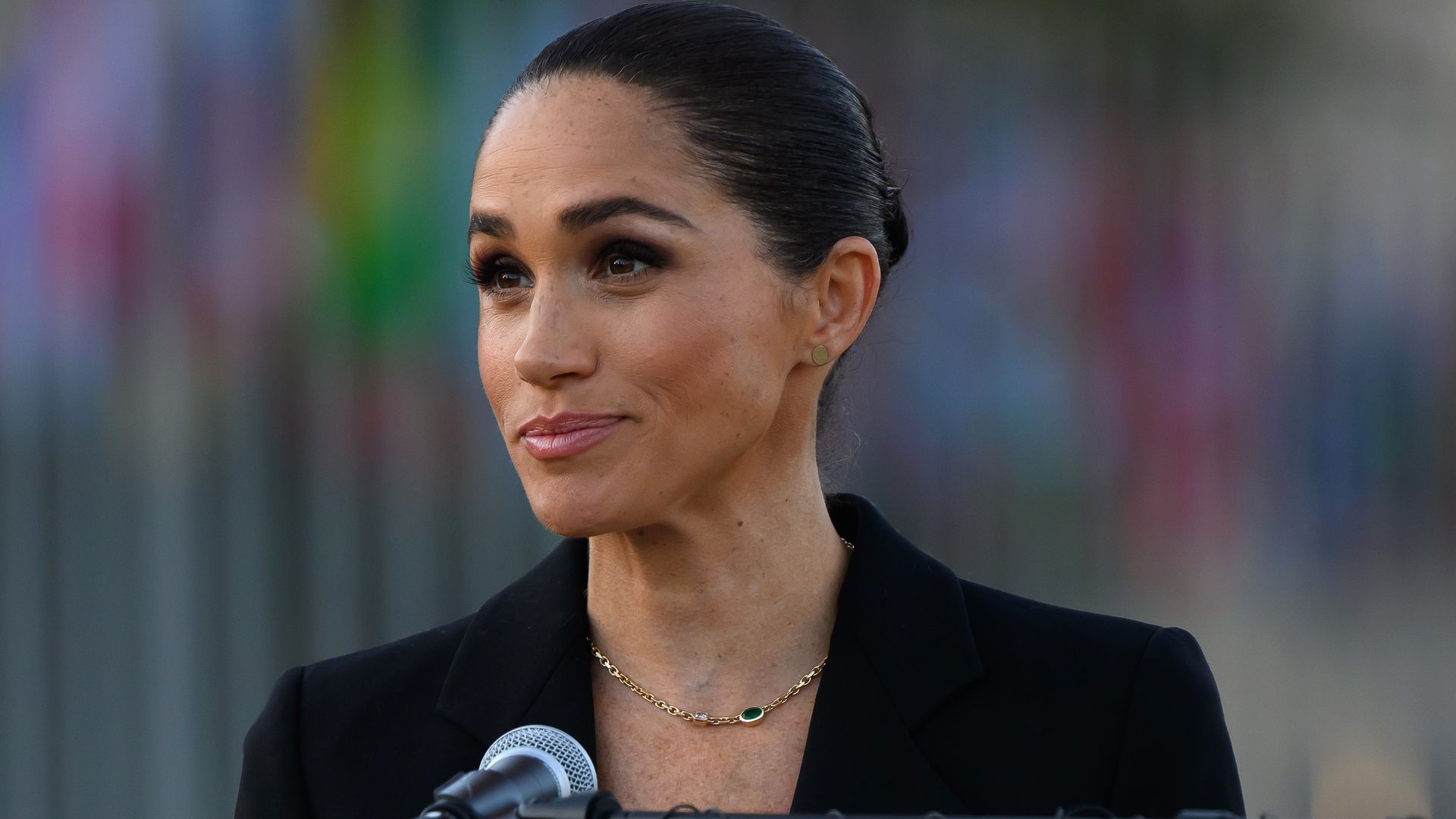
Meghan Markle continues to attract attention for the way she styles one of the most symbolically charged elements of bridal fashion, her wedding ring stack.
Rather than following long-established etiquette, she frequently reworks the order of her rings, turning a traditionally fixed hierarchy into something fluid, personal, and highly styled.
 © Max Mumby/Indigo
For centuries, bridal ring placement has followed a convention said to date back to ancient Roman times. According to tradition, the wedding band is worn first on the left ring finger, closest to the heart, followed by the engagement ring, and finally any eternity or anniversary bands.
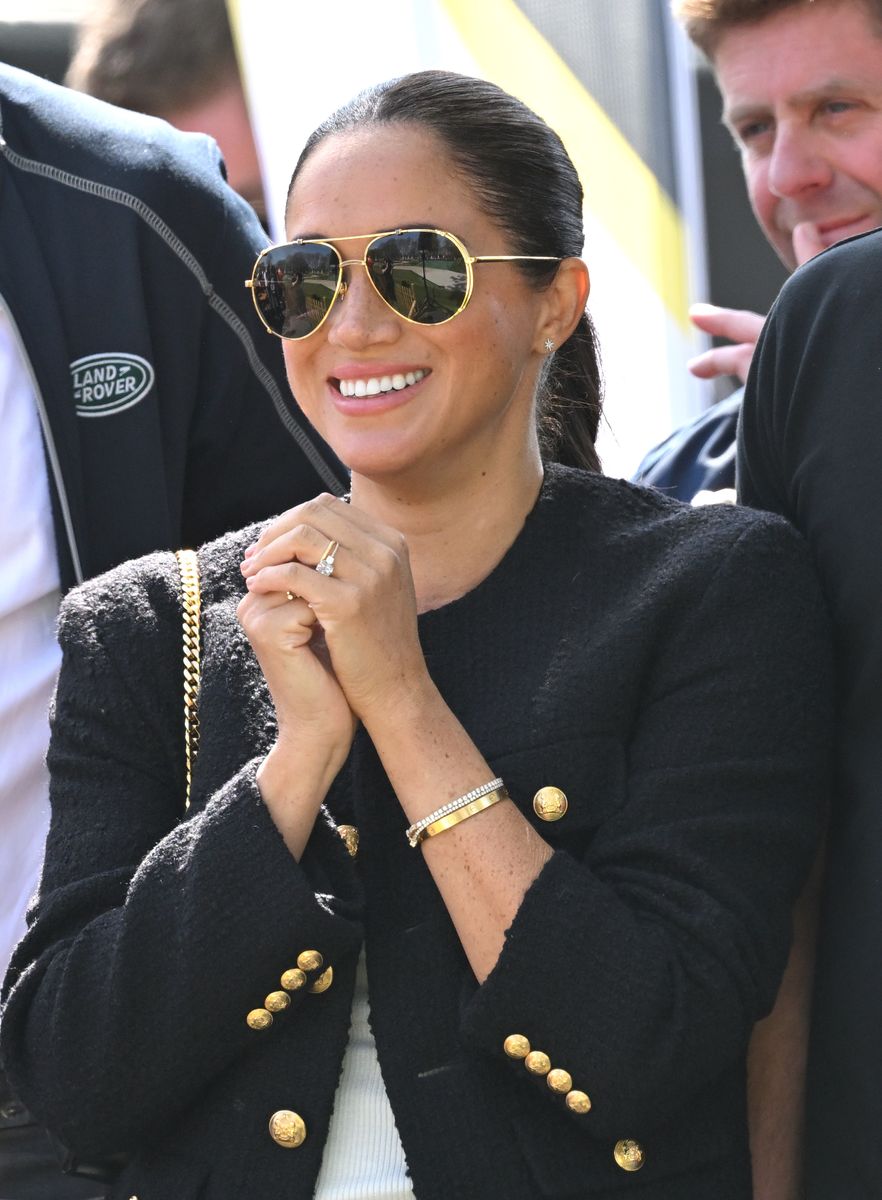
The structure carries symbolic weight. Meghan, however, treats that structure as optional. Her Welsh gold wedding band, traditionally meant to anchor the base of the stack, has instead appeared at the top, in the middle, and sometimes not in its expected position at all.
 © Karwai Tang
While these choices may appear unconventional, they reflect a broader shift in how modern wearers approach bridal jewelry, prioritizing styling and meaning over rigid order.
Her public appearances and shared images have made that flexibility especially visible. In a close-up image tied to her lifestyle brand As Ever, her engagement ring appeared at the base of her finger, topped by a diamond eternity band, while her wedding band sat at the very top of the stack, reversing the traditional order entirely.
 © Max Mumby/Indigo
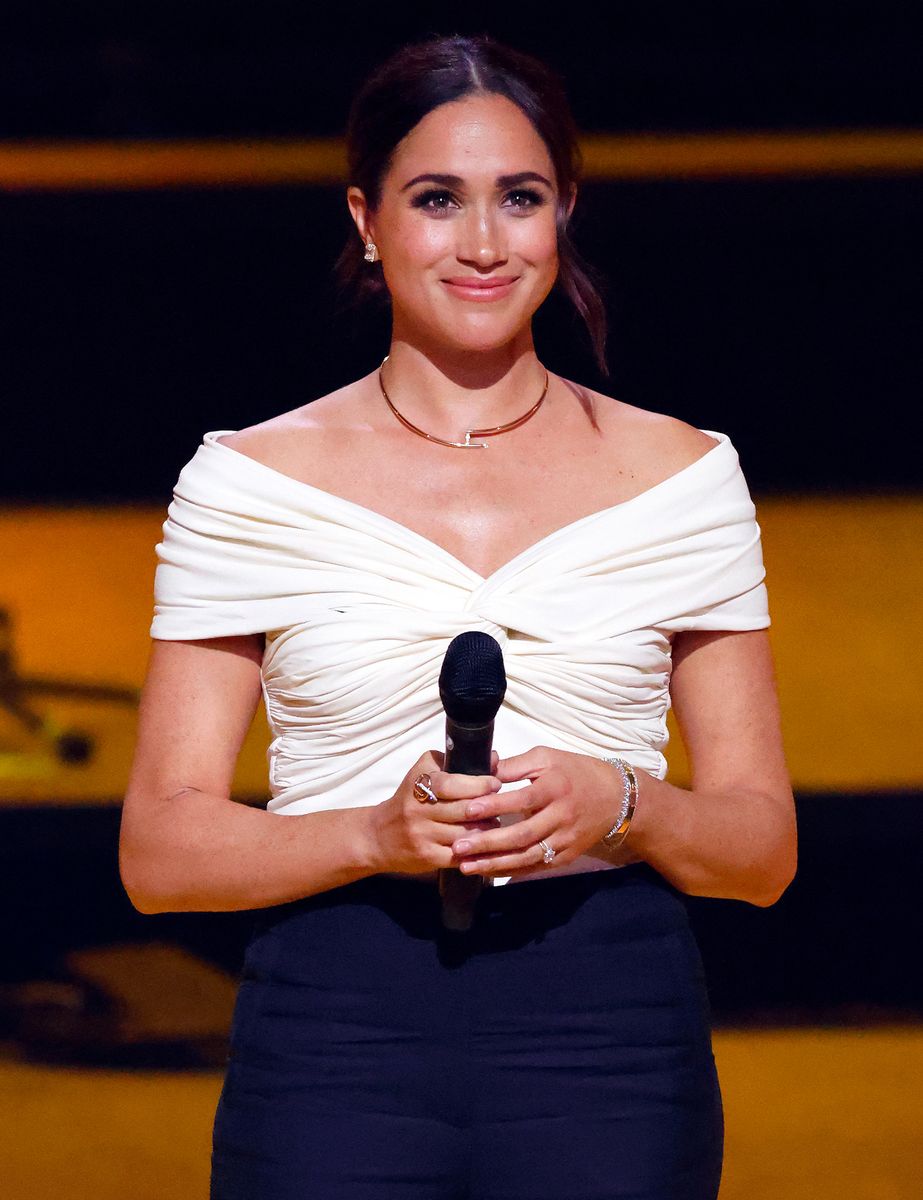
At the ESPY Awards, where she appeared alongside Prince Harry, her three-stone engagement ring was placed centrally within the stack. A thin pavé eternity band sat beneath it, while her wedding band rested above, creating a deliberately layered arrangement that departed from convention.
During a reception at the Invictus Games, she again reconfigured the order, placing her engagement ring at the bottom and positioning her wedding band above it.
In a more experimental styling moment, she also added a delicate hand chain looped beneath both rings, further emphasizing jewelry as a layered composition rather than a fixed formula.
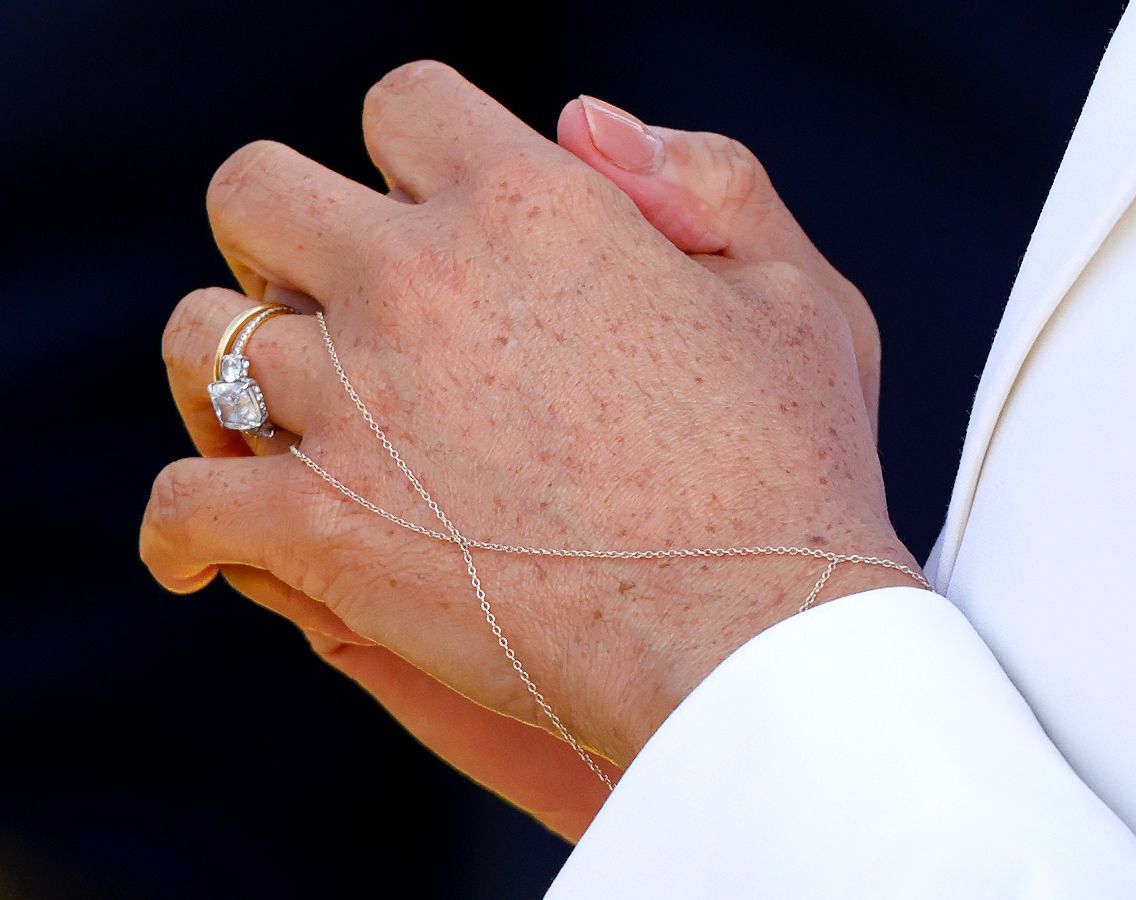 © Max Mumby/Indigo
At Trooping the Colour, she shifted the structure once more, wearing a pavé eternity band at the base instead of keeping the wedding ring closest to her palm, reinforcing her ongoing departure from traditional bridal sequencing.
Understanding why this stands out requires revisiting the origins of the tradition itself. The belief in the “vena amoris,” or “vein of love,” once held that a direct vein ran from the fourth finger of the left hand to the heart, which is why the wedding band is placed closest to the skin.
The engagement ring was later added above it as a symbolic seal of the marital promise, while eternity bands traditionally mark milestones at the outer edge of the stack.
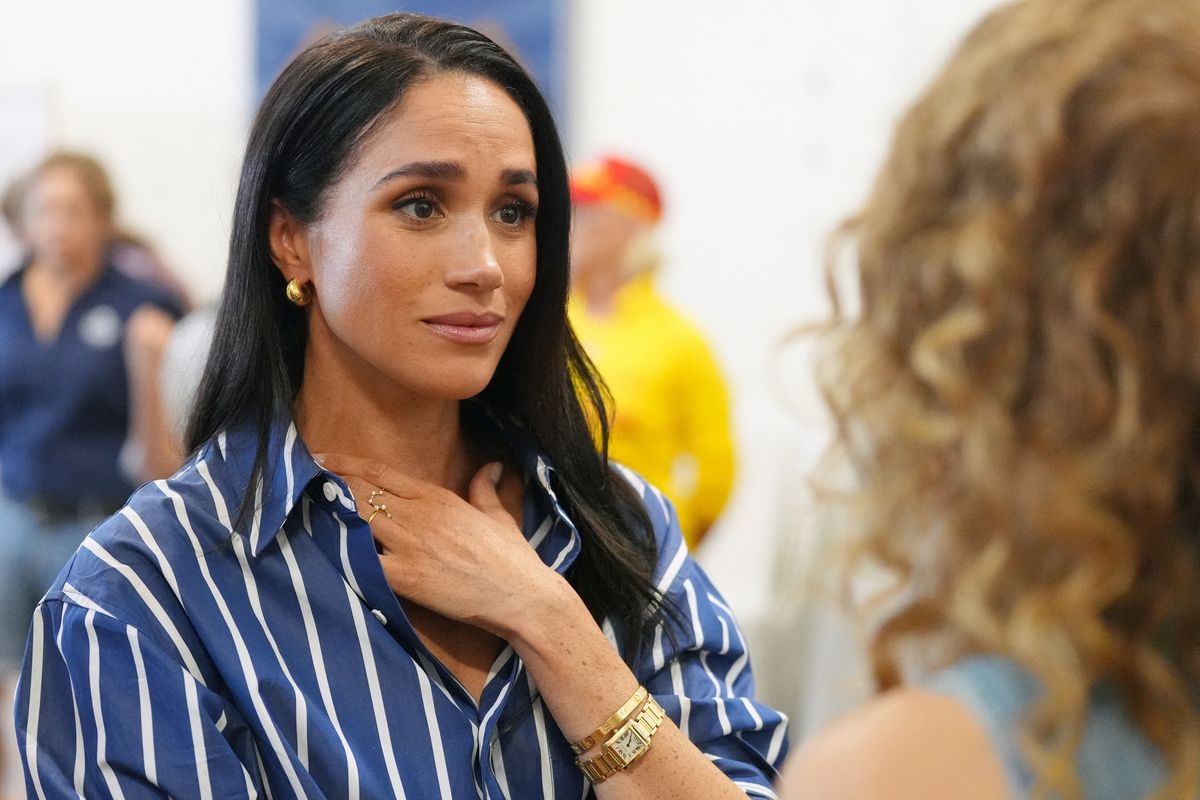 © JONATHAN BRADY
Today, however, those rules are increasingly viewed as optional. Many wearers now rearrange their rings for comfort, balance, or aesthetics, sometimes placing tighter bands on top to better secure looser stones or heavier settings. In that context, Meghan’s shifting arrangements align with a wider modern trend in which personal preference outweighs inherited convention.
That same emphasis on meaning over structure extends beyond her bridal jewelry. Meghan has also been seen wearing pieces from Logan Hollowell, including zodiac-inspired rings and layered symbolic designs.
These astrology-themed pieces, often interpreted through birth signs and personal associations, reflect the same styling philosophy seen in her ring stacks. Jewelry as narrative rather than rule-bound formality.
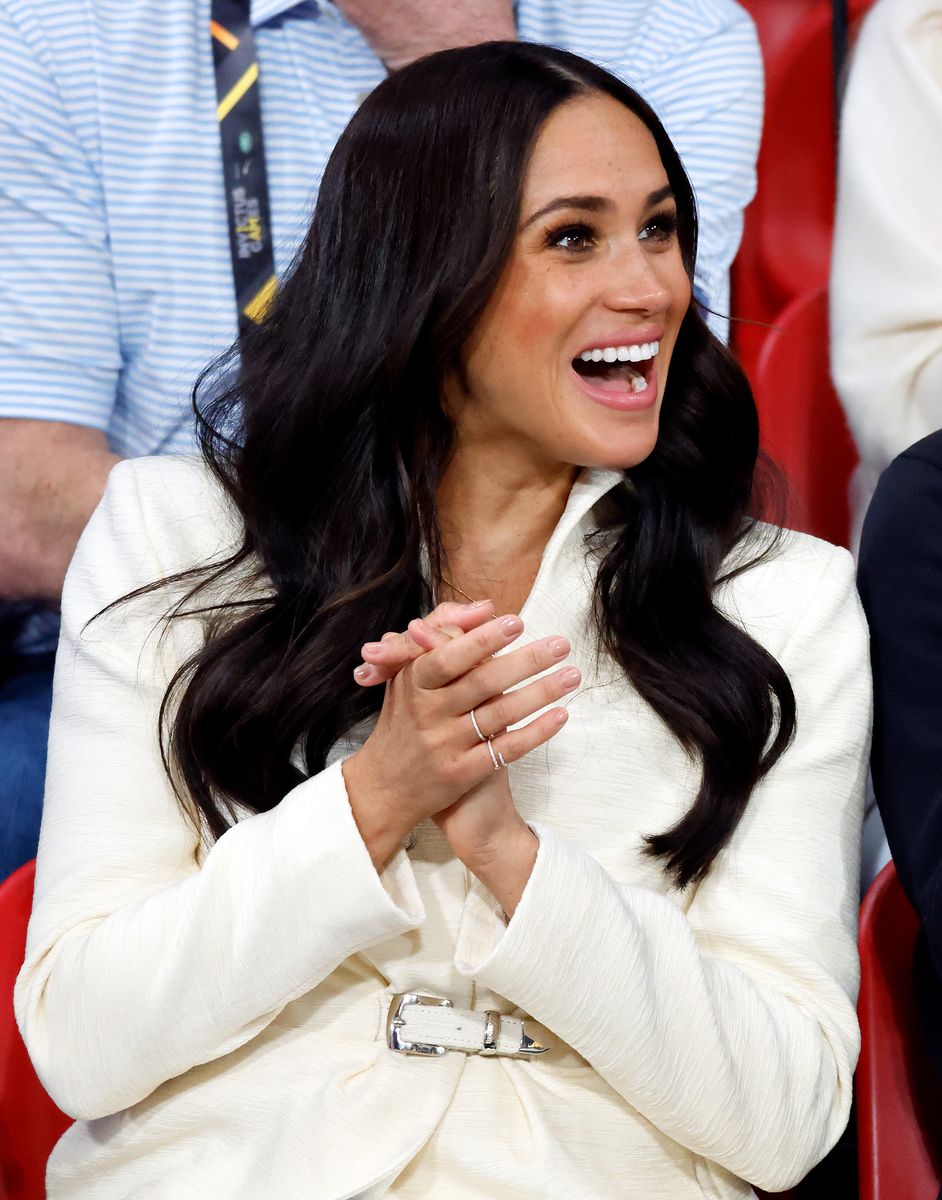
In one instance, she wore Leo and Virgo constellation rings stacked together, a detail widely read as a subtle reference to her own zodiac sign and Prince Harry’s.
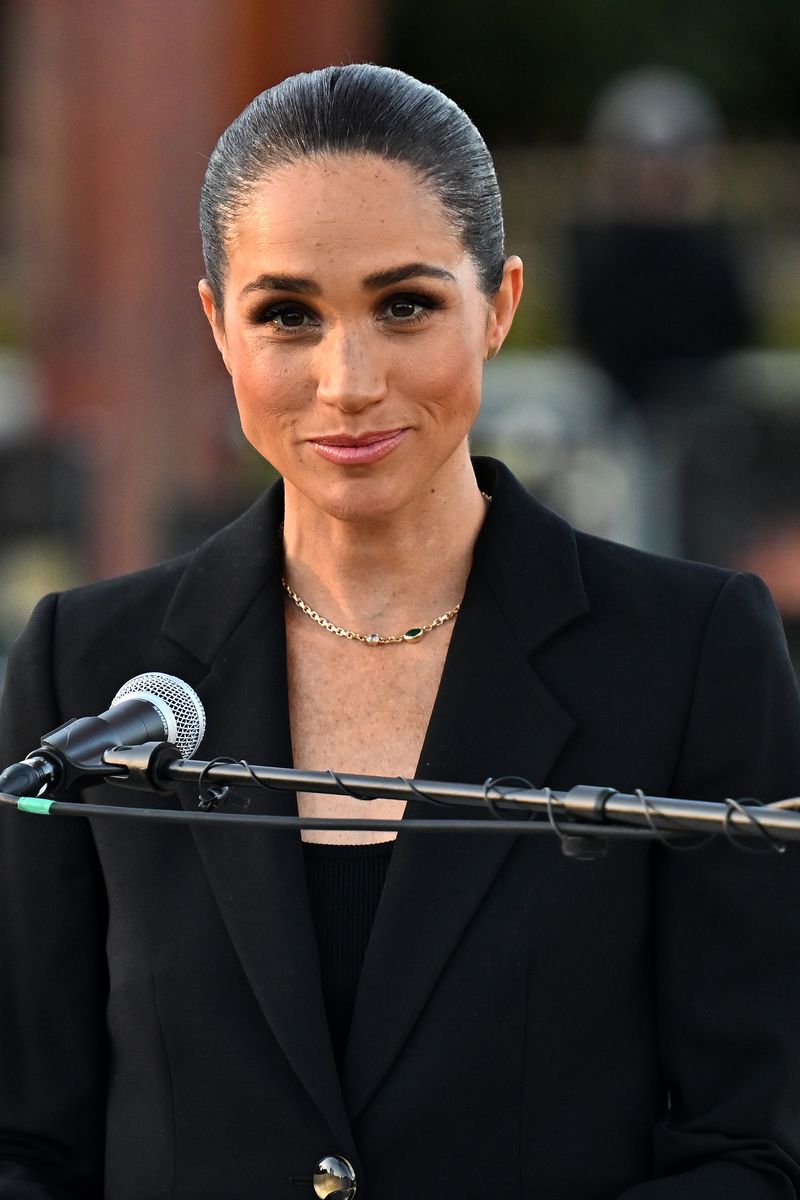 © Harold Cunningham
In another appearance, she wore a diamond and emerald “Lovers Duet” necklace, a design associated with layered personal symbolism through birthstones and contrasting stones representing connection.
Rather than adhering to traditional jewelry codes, these choices reinforce a consistent approach. A preference for pieces that carry private meaning, even when that meaning is expressed through unconventional placement or modern symbolic design.
Across both her bridal stack and her broader jewelry wardrobe, Meghan’s styling ultimately reflects a shift already visible in contemporary fashion. Tradition still informs the language of bridal jewelry, but it no longer dictates the rules. In its place is something more flexible, where sentiment, symbolism, and individual expression define how the story is worn.