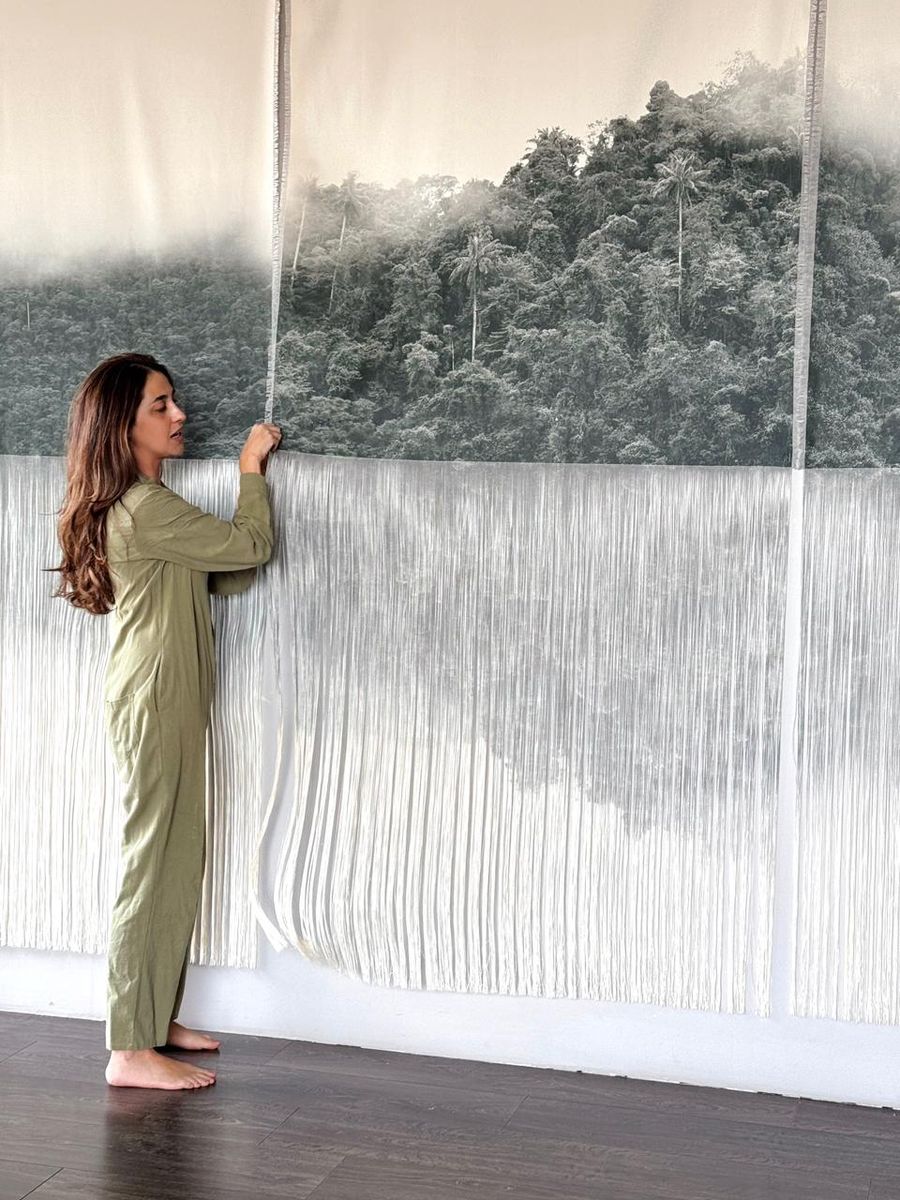
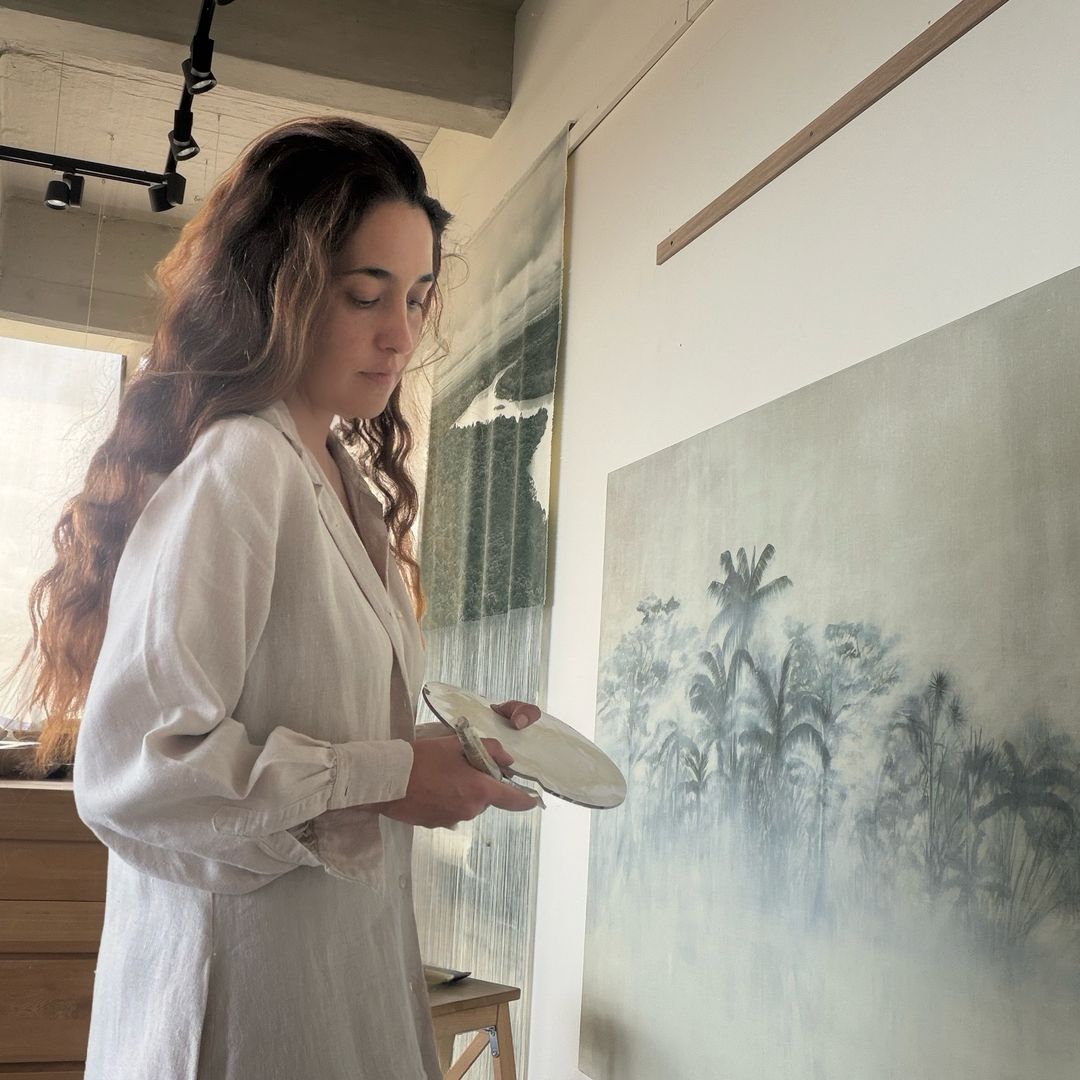
Ana González begins with some of Colombia’s most extraordinary landscapes, then slowly pulls them apart. She prints photographs of rivers, forests and vegetation onto fabric and unravels the material by hand, thread by thread. What begins as a lush landscape gradually disappears, mirroring the environmental destruction happening beyond the gallery walls.
That idea was at the center of RÍO, González’s third exhibition with Sean Kelly, presented in New York from February through April 2026. Through textiles, paintings, porcelain and video, she turned her attention to the rivers of the Amazon and Andes and the communities connected to them. New rose-colored works reflected the changing light of Amazonian sunsets, while gold became a way of challenging one of Colombia’s oldest myths. “The real gold is in nature, in water, in oxygen,” she told ¡HOLA!.
 © Courtesy
Born and based in Bogotá, González originally trained as an architect at Universidad de los Andes before continuing her studies in Paris and Dublin. Over time, her practice expanded across photography, textiles, painting, sculpture and installation, but Colombia has remained at its heart.
Her work is also rooted in relationships built outside the studio. For more than fifteen years, González has worked with Indigenous and rural communities, including Kogui communities in the Sierra Nevada de Santa Marta, the Nukak people of Guaviare and Misak women in Cauca. She also helped develop a health center in the Colombian Amazon created to bring traditional and Western medicine closer to remote communities.
The past two years have brought her work to an even wider audience. In January 2025, Bruma became her first solo exhibition in New York. That summer, she received the Anderson Ranch Arts Center Visiting Artist Prize, leading to a residency in Colorado in October 2026.
 © Ana González
Another major U.S. exhibition is already ahead. In January 2027, The Joslyn in Omaha will present González’s work examining gold mining in Colombia and its effects on forests, waterways and communities.
For González, the message running through all of it is clear: Colombia’s greatest treasures are not the ones that can be extracted from the earth. They are the rivers, forests, people and histories that remain, and her work is making sure they cannot be easily overlooked.