Before we sit down to talk about heartbreak, identity, or the long road to her long-awaited debut album, YEИDRY makes sure I have water. She offers it in a cute glass, asks if I want ice, and tells me she likes being a good host. Over the next thirty minutes, it's obvious that warmth is deeply ingrained in who she is. Later, after our conversation ends, she asks if I want to stay and eat - it’s the Italian in her, she quips.
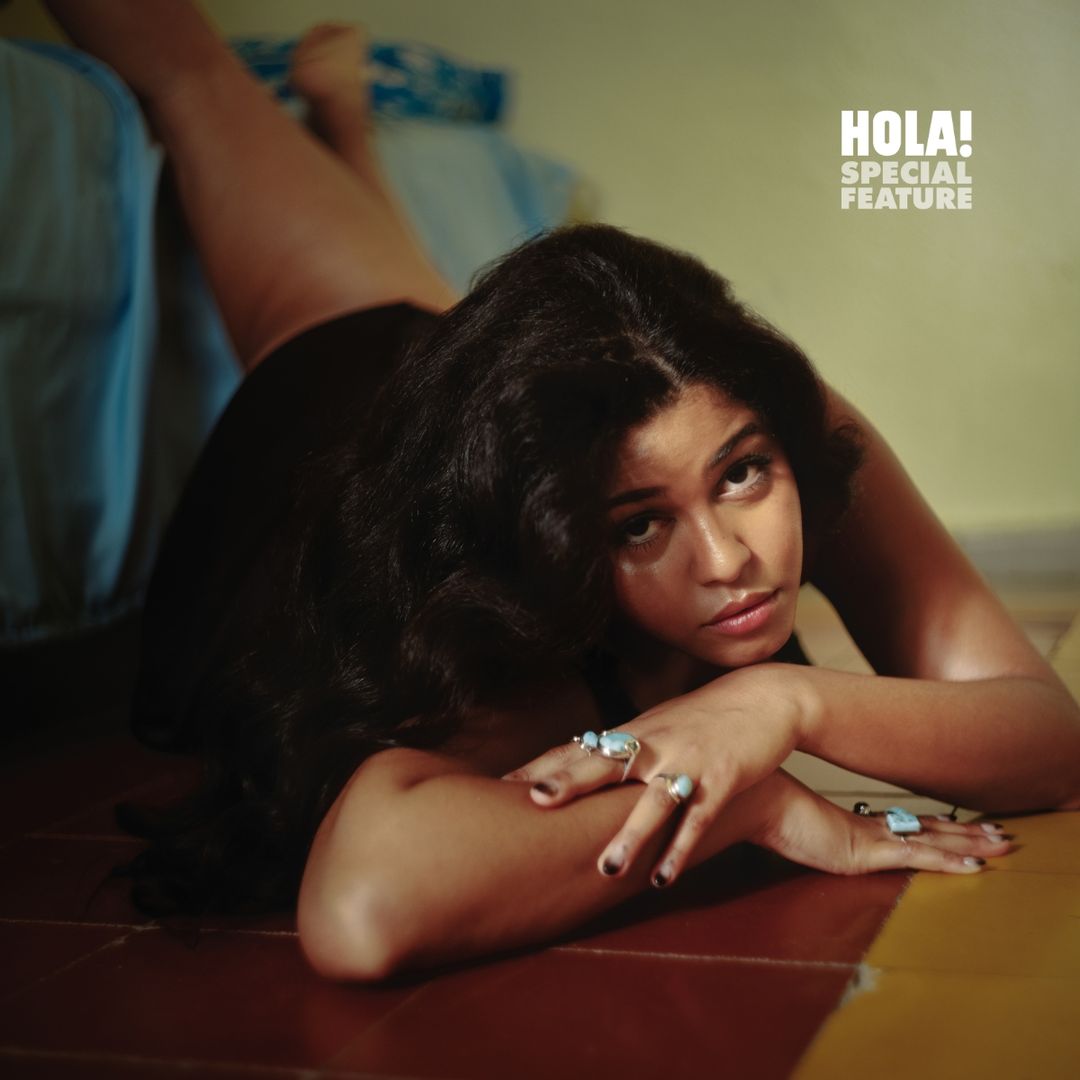
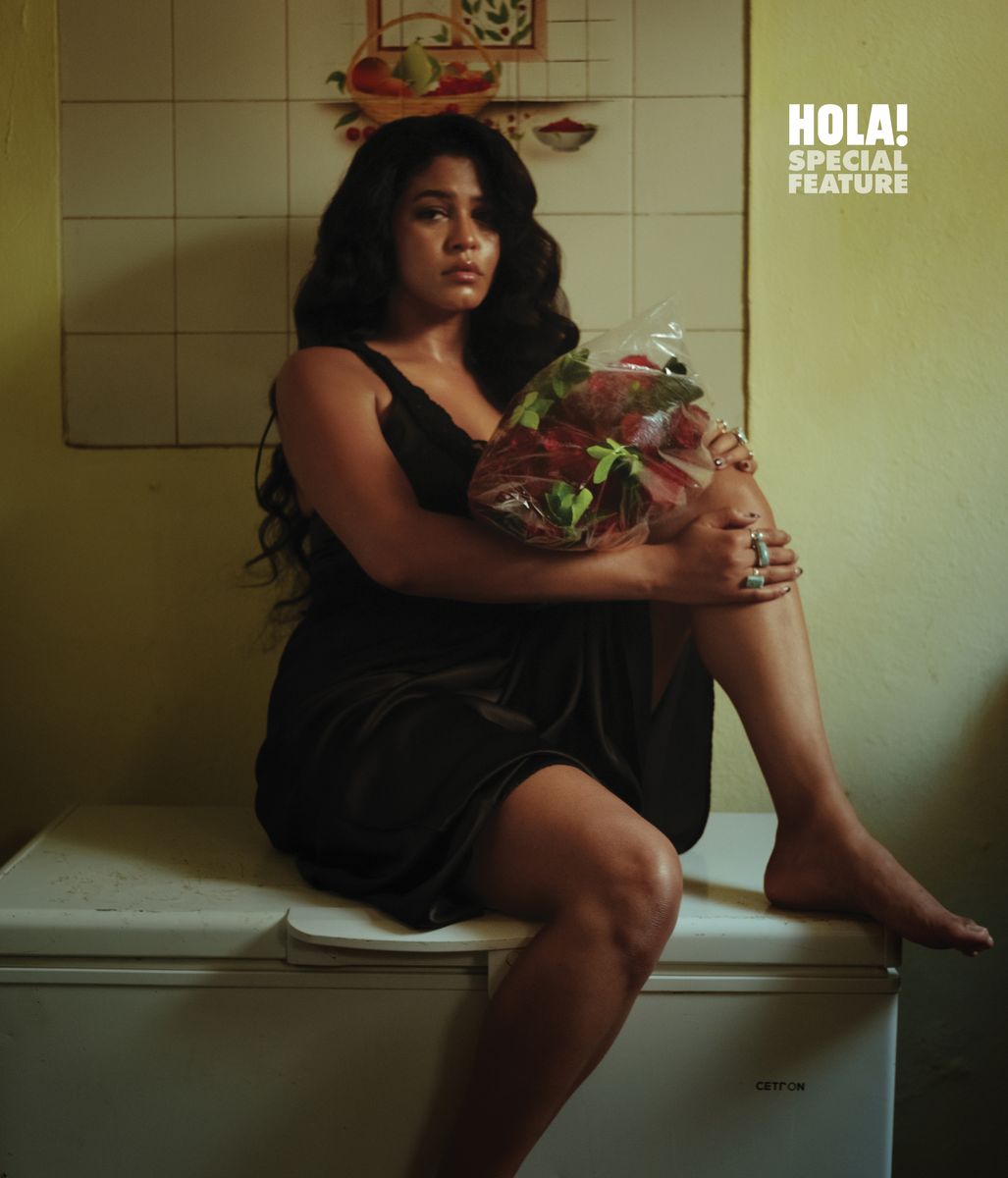
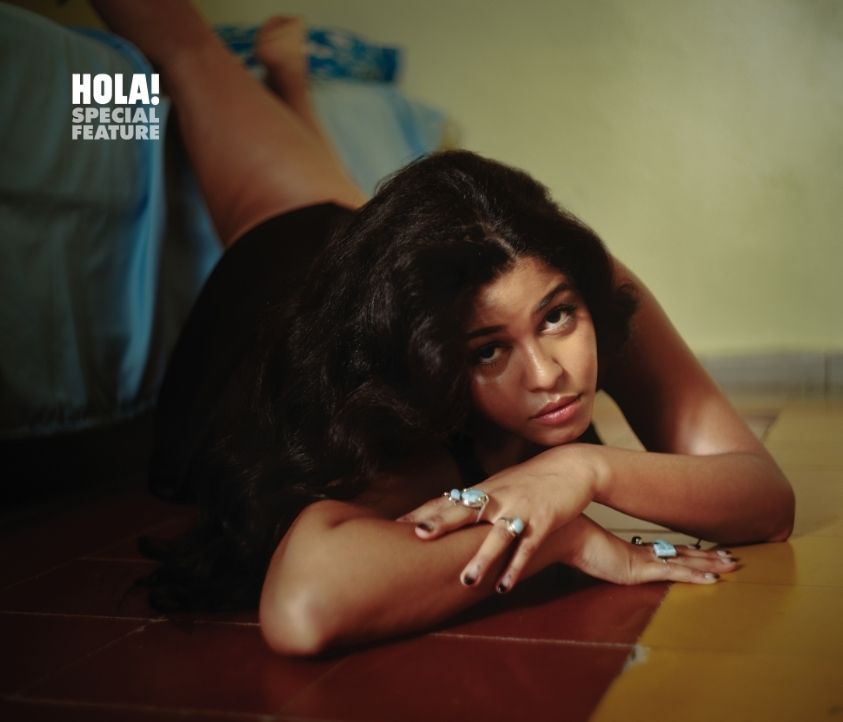
The version of YEИDRY that greets me at her home feels like a new level of authenticity. She's makeup-free and glowing, wearing white sweats and a white silk camisole, her hair still in two thick braids. Before we begin, she takes them down, revealing her luscious hair that has become a symbol in her story, wraps a green scarf around her waist, and sits on her red couch.
 © Karla Read
Fresh-faced and warm, she laughs often but stays grounded and intentional with her words. For someone who has spent much of her life navigating the space between cultures and languages, she exudes confidence.
"Mala Mia" - a goodbye to her old self
Born in Santo Domingo and raised in Turin before eventually making Los Angeles home, YEИDRY isn't an artist that can be easily categorized. Her sound blends genres and influences, shaped by her realities of diaspora and identity. It’s that same in-betweenness that sits at the heart of her bolero, “Mala Mia,” the first single from her long-awaited debut album, arriving this fall.
Though the song may initially read as a goodbye to a past relationship, YEИDRY says its deepest meaning is far more personal. “Mala Mia,” she tells me, “is like a goodbye letter to my old self.” That version of herself, she explains, lived smaller. “My old self was not allowing herself to dream as much.”
She doesn't seem interested in romanticizing pain, but knows firsthand what heartbreak can teach you. “This new version of Yendry takes love differently. She understands what real love is,” YEИDRY says. “Sometimes love is letting someone go.”
It’s a perspective that feels all too relatable in today's dating scene, filled with a culture obsessed with chasing emotionally avoidant people. "Don't give me your heart; I don't even know how to take care of my own," she sings in Spanish.
Emotional avoidance, she says, isn’t exclusive to one gender. "A cool thing is that 'Mala Mia' is about a woman who's emotionally unavailable. We always talk about men being emotionally unavailable. But I feel like this could happen to anyone. It depends on where you are at that moment of your life," she explains.
"Sometimes we end up being emotionally unavailable because we don’t know enough about ourselves,” she says. “We don’t allow ourselves to explore and deal with things—demons we don’t want to deal with. Eventually, those things catch up.” “It’s really hard to have space for someone else when you don’t allow yourself to take space," she adds.
 © Karla Read
From passenger to protagonist
For much of her life, YEИDRY spent years searching for happiness outside of herself through relationships, expectations, and the quiet pressure to become who others needed her to be.
If the woman she is today could speak to her younger self in Italy, she knows exactly what she would say. “You don’t have to look for happiness somewhere else,” she says. “It really comes from you. It’s up to you. You’re in charge of your own life.”
For YEИDRY, she realized that she had spent too long surrendering agency over her own life. “I feel like I’ve been living my life as a passenger for a long time,” she says. “Just letting things happen and looking at everything from the outside.” “Now I feel like I’m in charge of my feelings and my decisions,” she says, smiling. “And I love that. I feel so good.”
That sense of agency runs through nearly every part of her upcoming debut album, a body of work shaped over the past two years through healing and creative independence.
The project slowly revealed itself through what YEИDRY describes as three pillars: the remedy, the ritual, and the mirror. “I needed to make music to heal,” she says. “This album—I made it for myself.” “I know it sounds maybe a little egoistic,” she says with a laugh, “but I really made it for myself.”
In reality, there’s nothing selfish about the way she describes the process. If anything, it sounds like the opposite: a woman finally going beneath the surface and turning it into art that can help many people.
“I made it to explore things that were bothering me that I needed to face to grow and develop, it was therapy for me.”
She described it as an emotional purging that had long demanded release. “I needed to write things,” she says. “And after a while, I realized I had these songs that, when I listened to them, I still cried. I still felt them in a visceral way.”
When I ask whether she warns the people who inspire her songs before releasing them into the world, she laughs. “Sometimes I do,” she says. “They’re all kind of letters—a letter to Italy, a letter to my father.”
As for the guy who inspired "Mala Mia," she explains, “A friend from Italy called me the other day and was like, ‘Is this song about that ex?’” “I was like, ‘Yup.' I didn’t tell him,” she says, laughing again. “But if he listens to it… mucho amor. I told him everything he needed to know already, so there’s nothing new.”
The many homes of YEИDRY
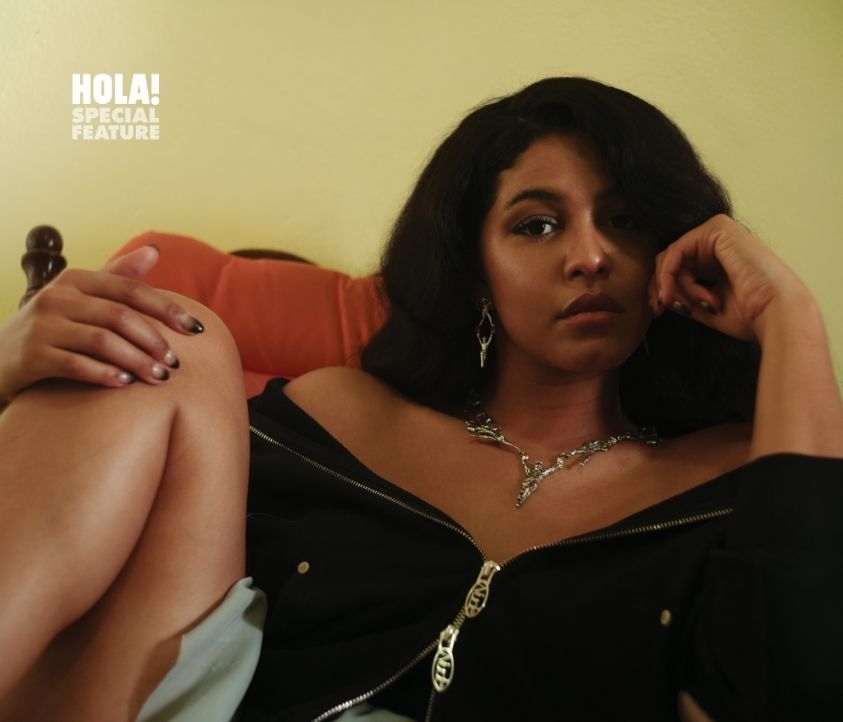
If YEИDRY’s music is rooted in healing, it is equally shaped by belonging. If you ask her where home is, her smile suggests the question has followed her for years. “Oh,” she says, “that’s a really hard question.”
Born in the Dominican Republic, raised in Italy, and now living in Los Angeles, YEИDRY has spent much of her life existing between places and never fully belonging to just one. “I’m still looking for my home,” she admits.
“The three of them are my home,” she says. Italy, she explains, will always be foundational because it shaped the person she became. Her family is there, especially her mother, and that connection remains deeply tethered to her understanding of comfort and safety. “Wherever my mom is, it feels like home to me.”
 © Karla Read
But Santo Domingo carries something different and liberating. “Whenever I go back, it really feels like home in a way that I don’t have to justify myself for existing,” she says. “I can just be myself one hundred percent.”
Los Angeles, meanwhile, has become home in its own way, too, thanks to love. "Here feels like home, too, because I have my partner and he's really my home for me now," she says. "And so it's a different kind of home in three different parts."
For many people living between cultures, race, languages, and expectations, it can feel like you need to justify your existence. That in-betweenness used to feel like a burden.
“When you grow up, you struggle with your identity,” she says. “You see it as an issue because you can’t really fit in.” “I’m not Italian when I’m in Italy. I’m not Dominican when I’m in the Dominican Republic. I’m just the Dominican-Italian girl"
For YEИDRY, it eventually became a source of power. Music helped her understand that what once felt like fragmentation could become its own kind of language. Her playlist, she jokes, is chaotic, moving from Juan Luis Guerra to Radiohead to Luigi Tenco, but that hybridity is exactly what makes her artistry feel so distinct. “That can be a huge force,” she says. “My grandma calls me a paloma voladora (a flying dove). So I’ll probably be flying, seeking home, and feeling homesick my whole life.”
Wearing her roots
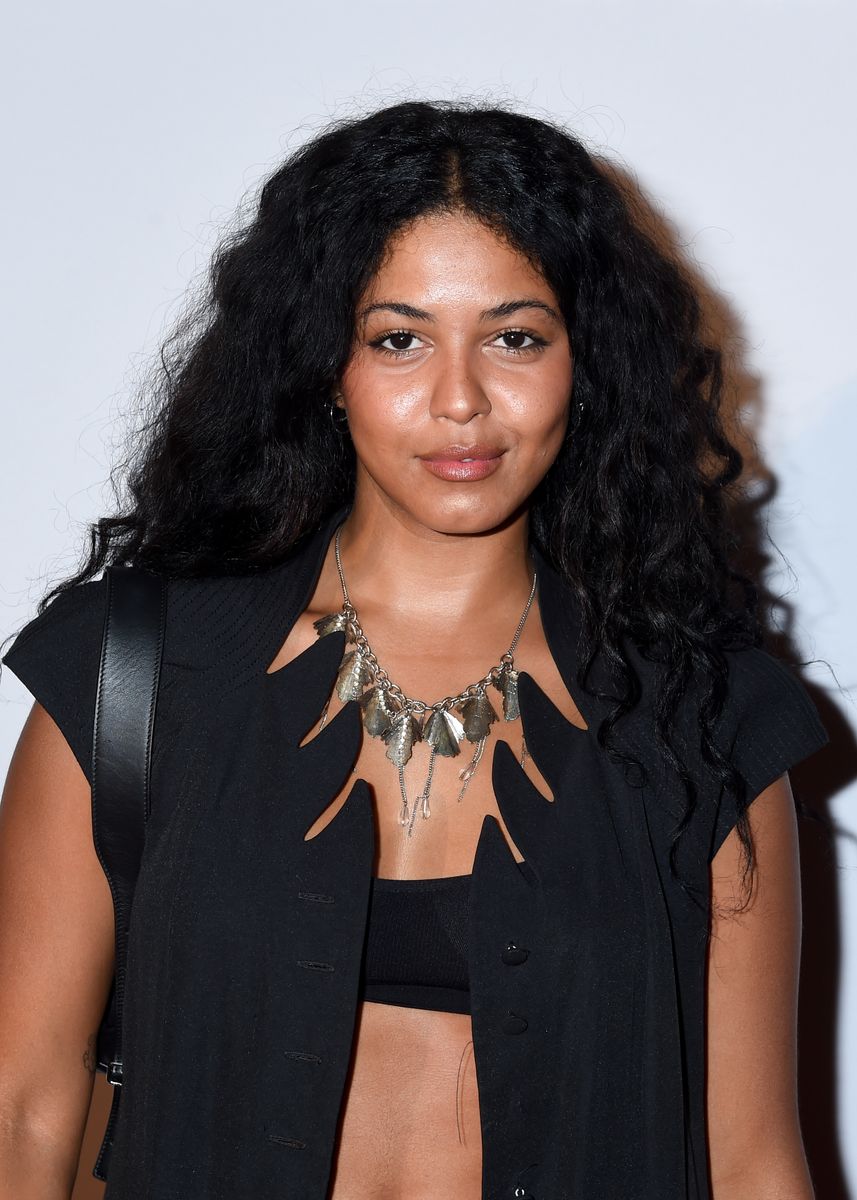
That same journey toward self-acceptance is perhaps nowhere more visible than in YEИDRY’s relationship with her hair. Earlier, as she sat across from me, casually taking down the two braids she had been wearing moments before, there was a sense of power. As she spoke about it, it became clear that her hair has long carried meaning far beyond aesthetics.
“The hair really represents the journey for me,” she says. Growing up in Turin, surrounded largely by European beauty standards, fitting in often felt synonymous with minimizing the parts of herself that felt most visibly different. “When I was in Italy, everyone around me had straight hair, so I wanted to fit in,” she says. “I always tried to straighten it.”
Then she says something that will feel painfully familiar to many women raised under rigid beauty ideals. “I almost felt like straight hair was more elegant somehow. More classy. And it’s so wrong.”
With time, and through a deeper reconnection to her Dominican roots, something began to shift. “As I started figuring out who I was and reconnecting with my roots, I automatically accepted my curls.”
That evolution is woven directly into the visual world surrounding “Mala Mia.” In the video, her hair nods to the glamour of 1960s Italian cinema, inspired by icons like Sophia Loren and Claudia Cardinale. But even that aesthetic choice serves a deeper purpose. “It starts from that,” she says, referring to the more controlled, sculpted look. Then, hinting at what’s still to come, she adds, “In the next videos, my hair gets super natural.”
When one of her earlier performances with natural curls went viral, messages began pouring in from young women who saw themselves reflected in her for the first time. “A lot of girls texted me saying they were so happy to see me wearing my hair natural,” she says. “That really represents our beauty standards.”
Whether through fashion, visuals, or the way she moves through the world, YEИDRY has learned to stop seeking permission to be fully herself. Over the last two years, one of the biggest revelations to emerge from making her debut album was about instinct. “What surprised me the most,” she says, “is that I was in charge of my own art.”
For years, she assumed others knew better, and that experience meant authority. But making this album challenged that belief. “I didn’t know how to trust my instincts before,” she admits. “But art is instinct.”
This fall, YEИDRY will finally release the debut album she spent years fighting to make. A body of work shaped by healing, migration, memory, and self-reclamation.
 © Gilbert Flores
Before we wrap, I ask what she’s manifesting for this next chapter. “My favorite part of my job is performing live and sharing energy with other humans,” she says. “I’m manifesting going to cities I’ve never been to, singing my songs there, and finding souls that can relate to my soul.”
The world will have to wait and see where the paloma voladora flies to next, but there is no denying YEИDRY is an artist you want to keep your eyes on. You can watch the whole music video for "Mala Mia" here.