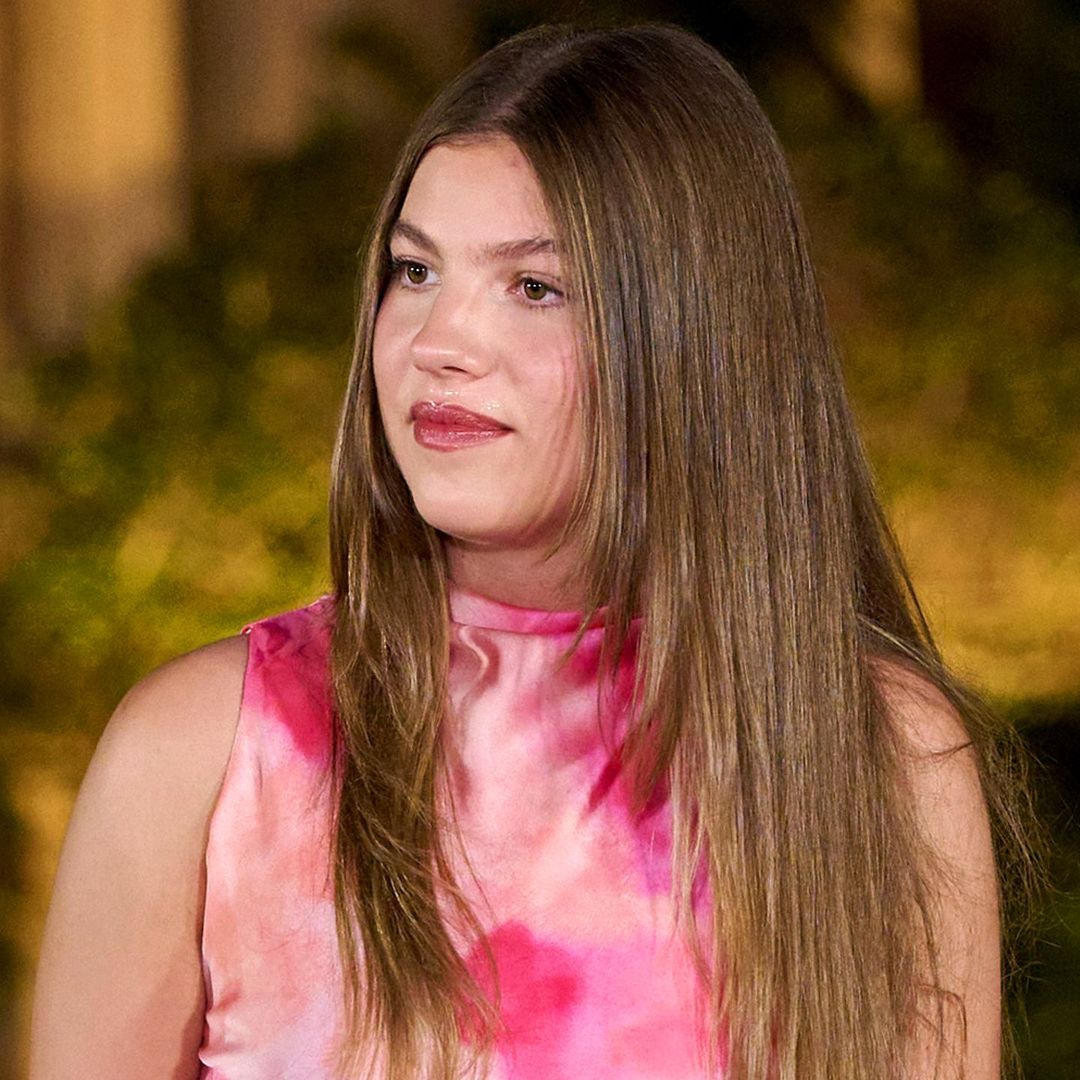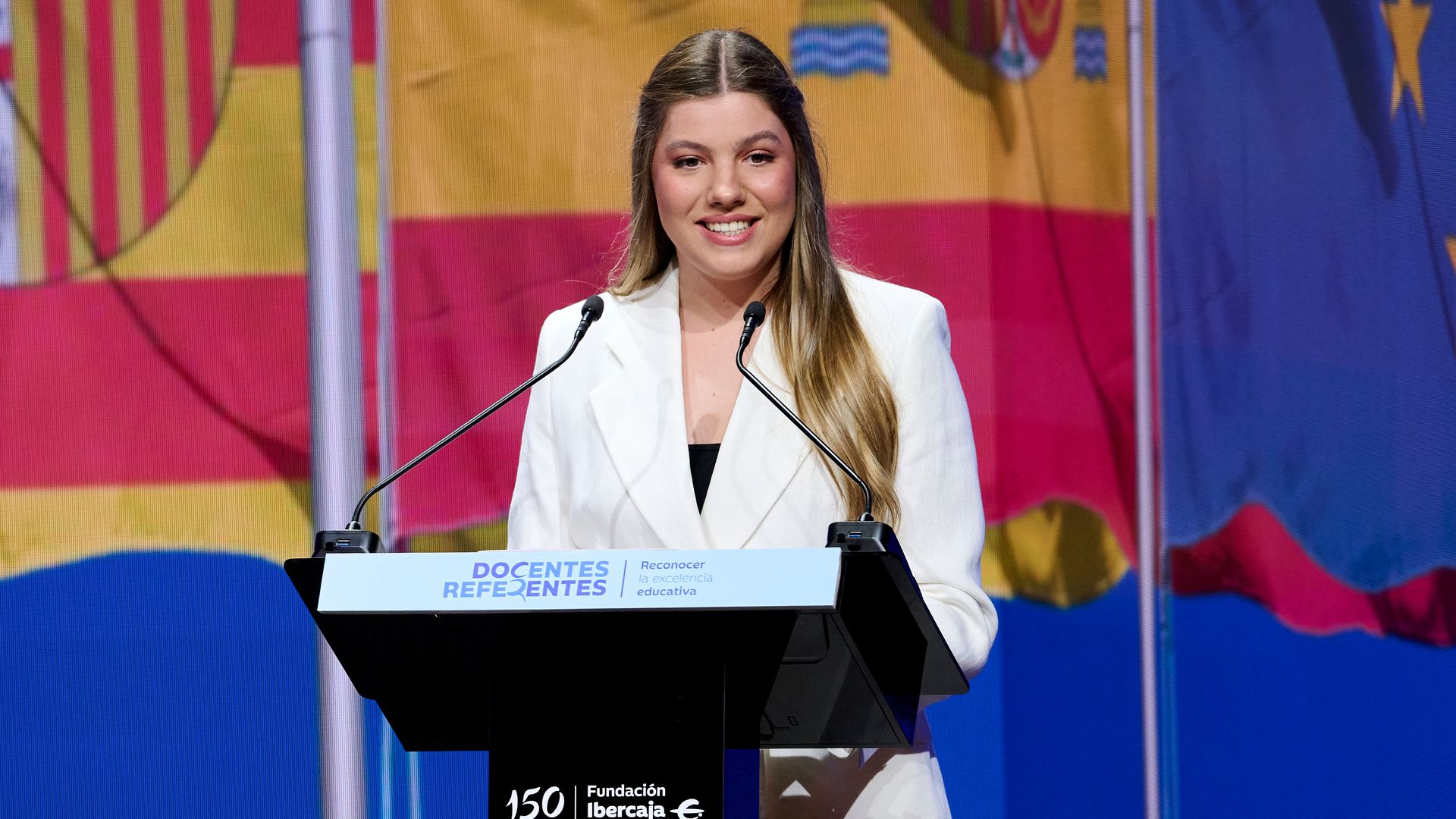
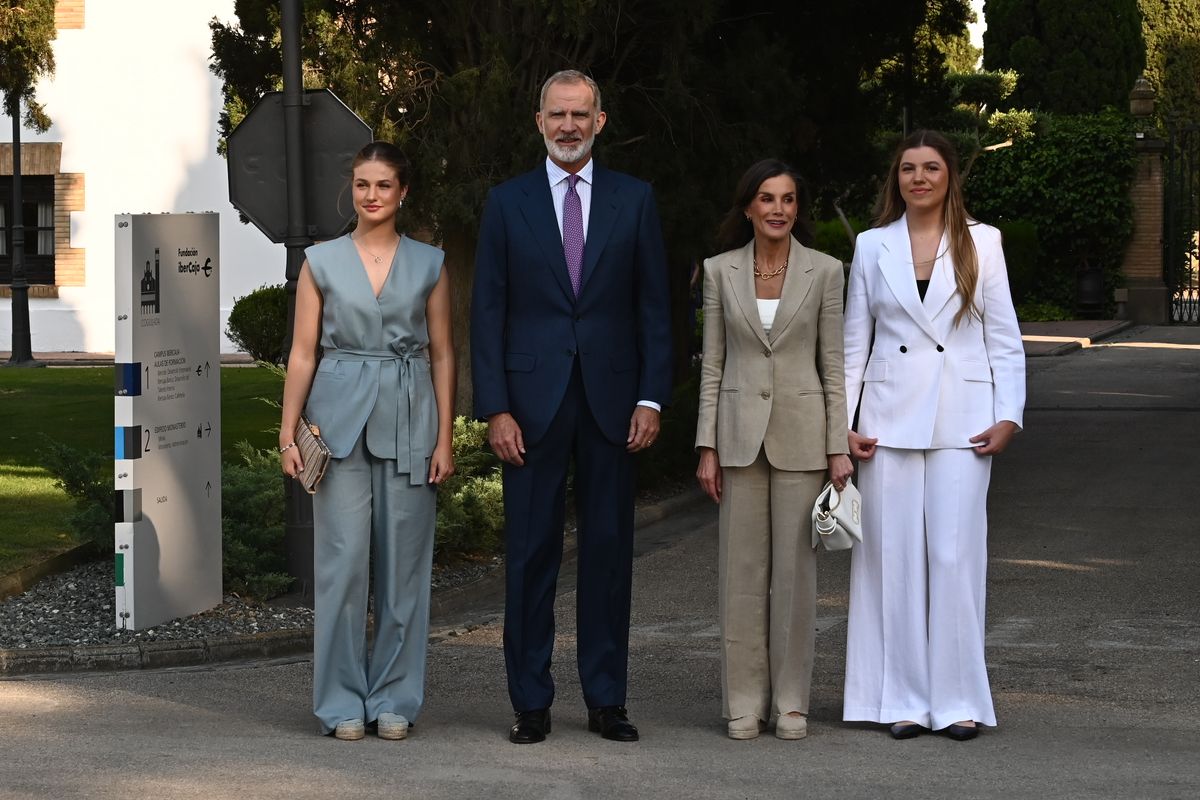
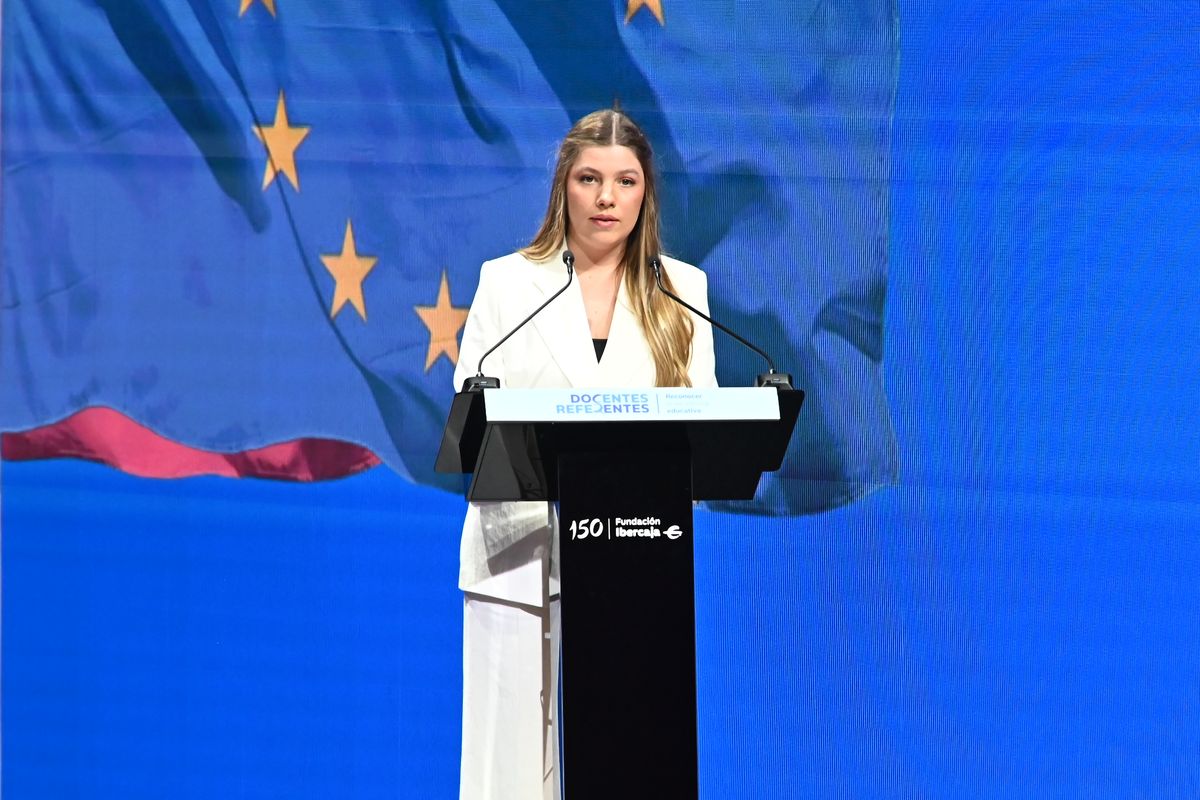
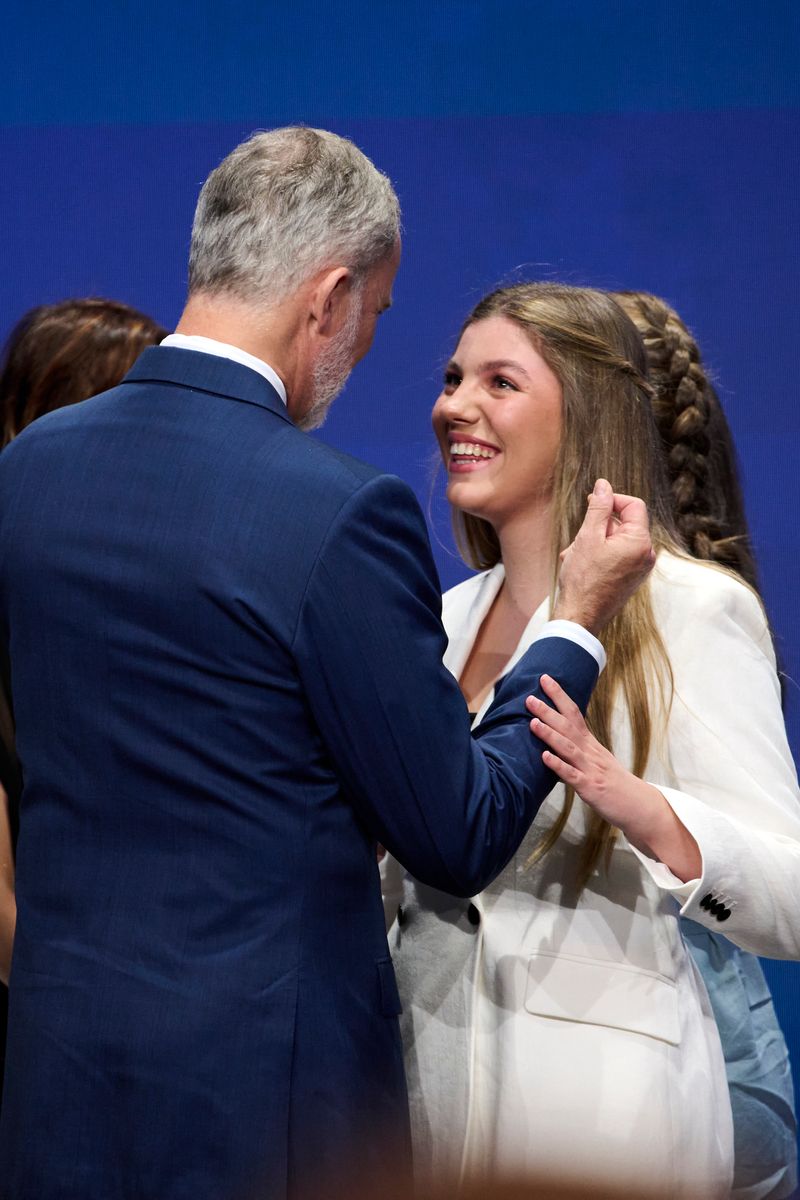
Spain's Infanta Sofía delivered her first official speech on Wednesday, marking a major milestone in her growing public role within the Spanish Royal Family. King Felipe VI, Queen Letizia, and Princess Leonor were by her side for the landmark appearance at the Monastery of Our Lady of Cogullada, underscoring the Crown's commitment to preparing its next generation for greater institutional responsibilities. The moment echoed Princess Leonor's own first public address at the 2019 Princess of Asturias Awards, highlighting the increasingly prominent role both royal sisters are expected to play in Spain's monarchy.
 © Europa Press via Getty Images
 © Europa Press via Getty Images
Sofía’s First Official Steps
 © Getty Images
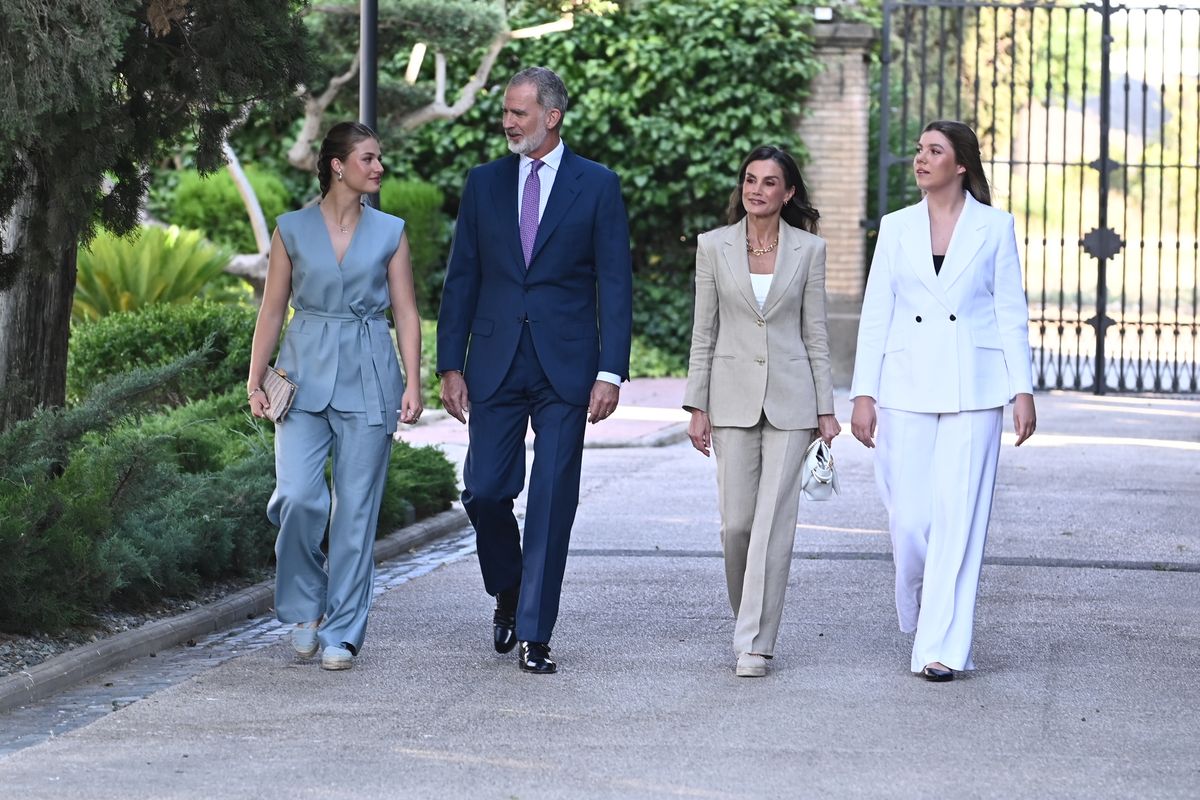
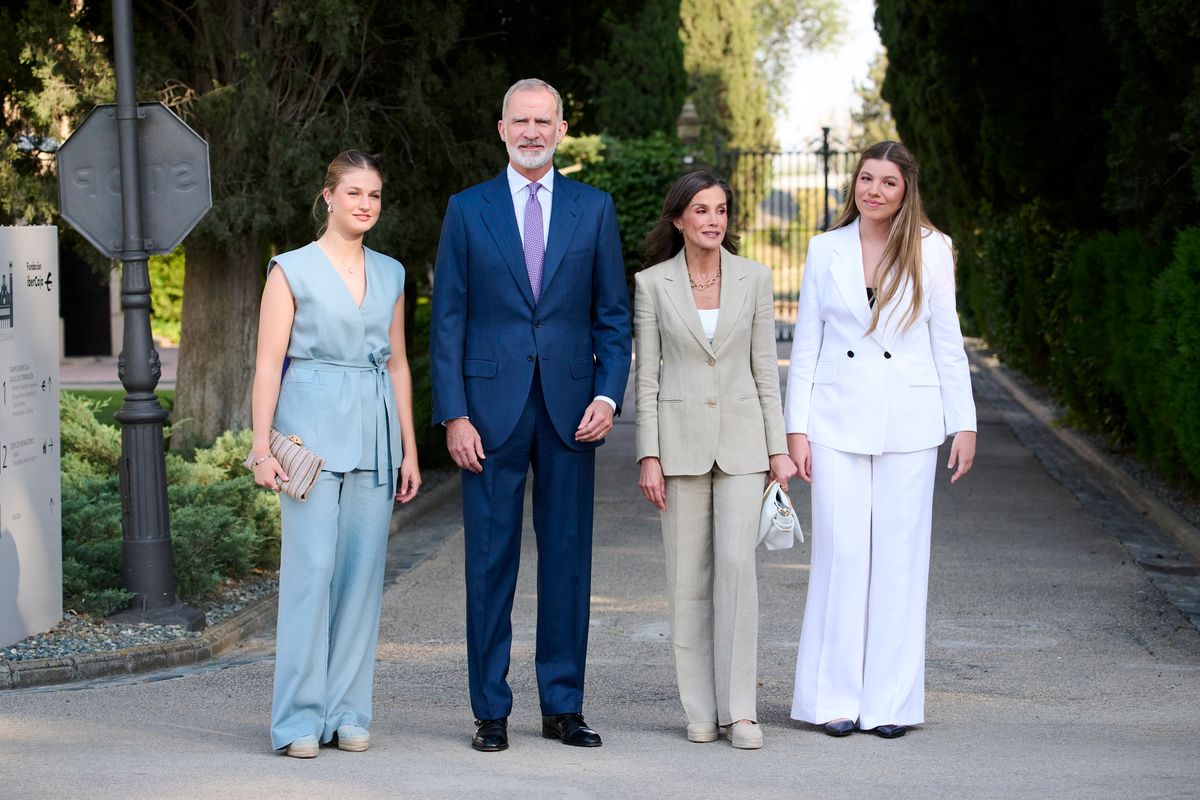
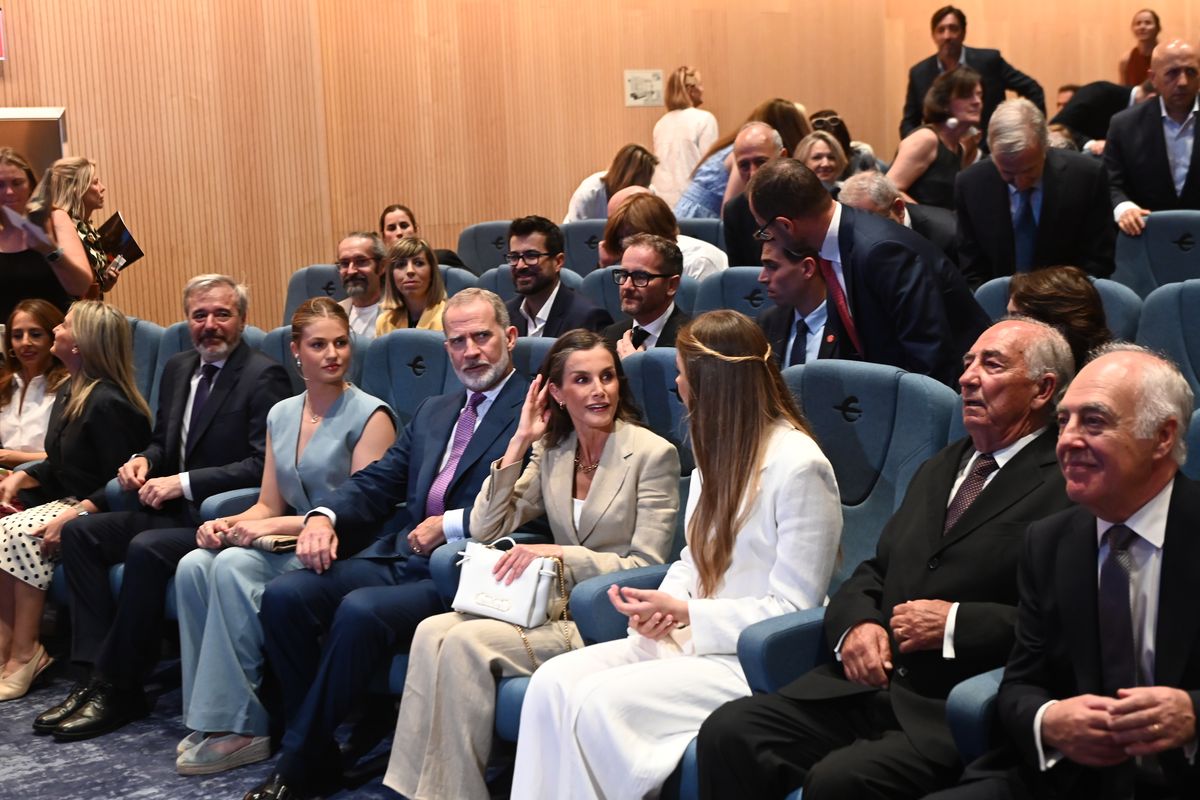
The ceremony began with Sofía arriving on foot with her parents before moving inside the Monastery of Our Lady of Cogullada. There, the Royal Family was welcomed with a standing ovation and warm words from one of the Ibercaja Foundation’s leading representatives. All eyes were on the second in line to the throne, the central figure in a day of clear significance for her public role.
“Allow me first to welcome Her Royal Highness Infanta Sofía. I thank Her Royal Highness for graciously accepting the honorary presidency,” the speaker said, highlighting the youngest royal’s place in this new institutional stage.
The welcome was then extended to the King, the Queen, and Princess Leonor, whose attendance came as a welcome surprise.
 © Europa Press via Getty Images
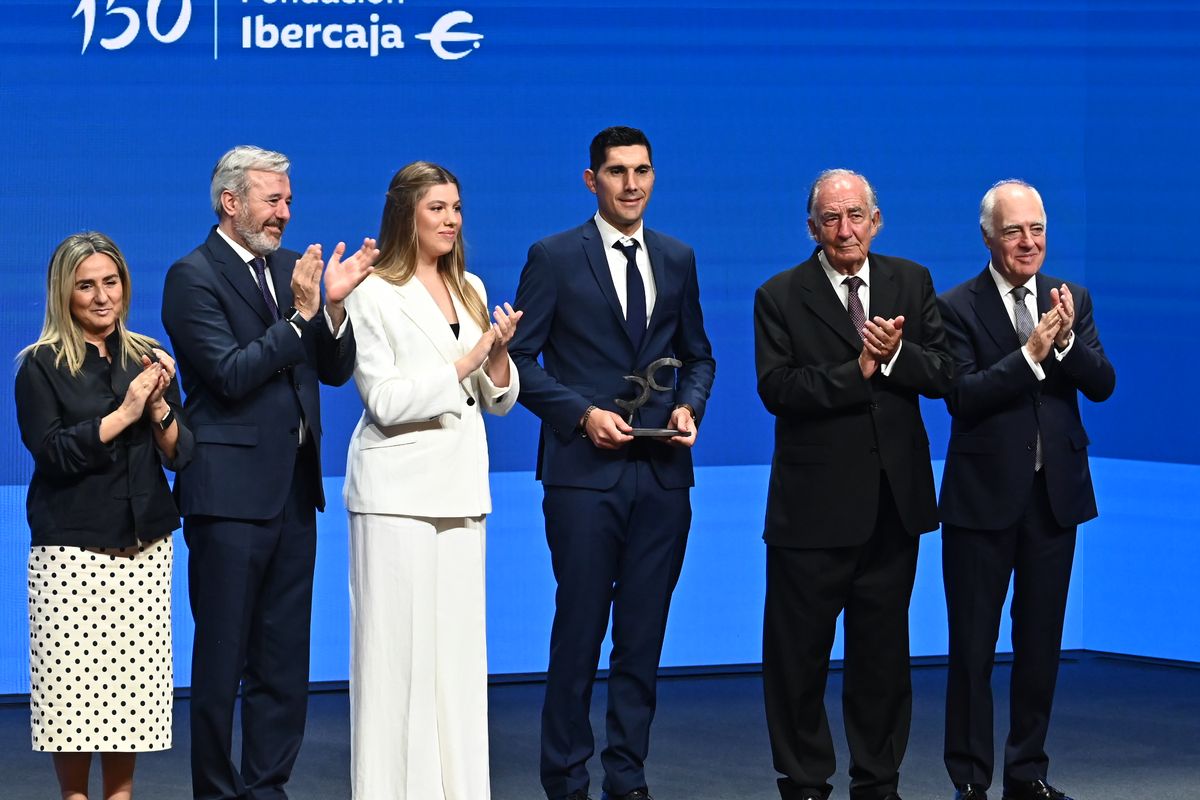
“Your Majesties, Your Royal Highnesses, thank you for honoring us with your presence,” the speaker added, calling their attendance “a reflection of the value of the Crown.” The remarks concluded with an invitation for Sofía to take the stage and preside over the presentation of the first Docentes Referentes (“Outstanding Educators”) grants. The ceremony then reached its most anticipated moment: the King and Queen’s younger daughter delivering her first official institutional address.
 © Europa Press via Getty Images
Sofía’s Full Remarks
 © Europa Press via Getty Images
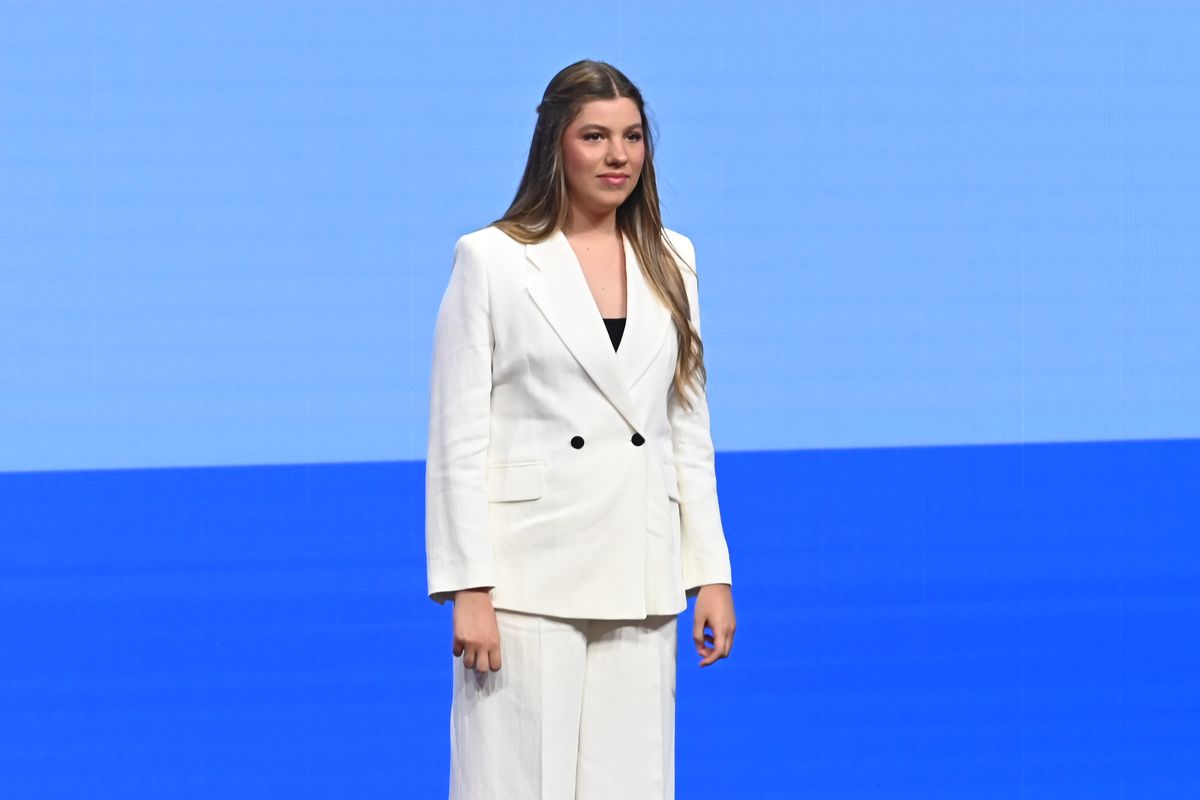
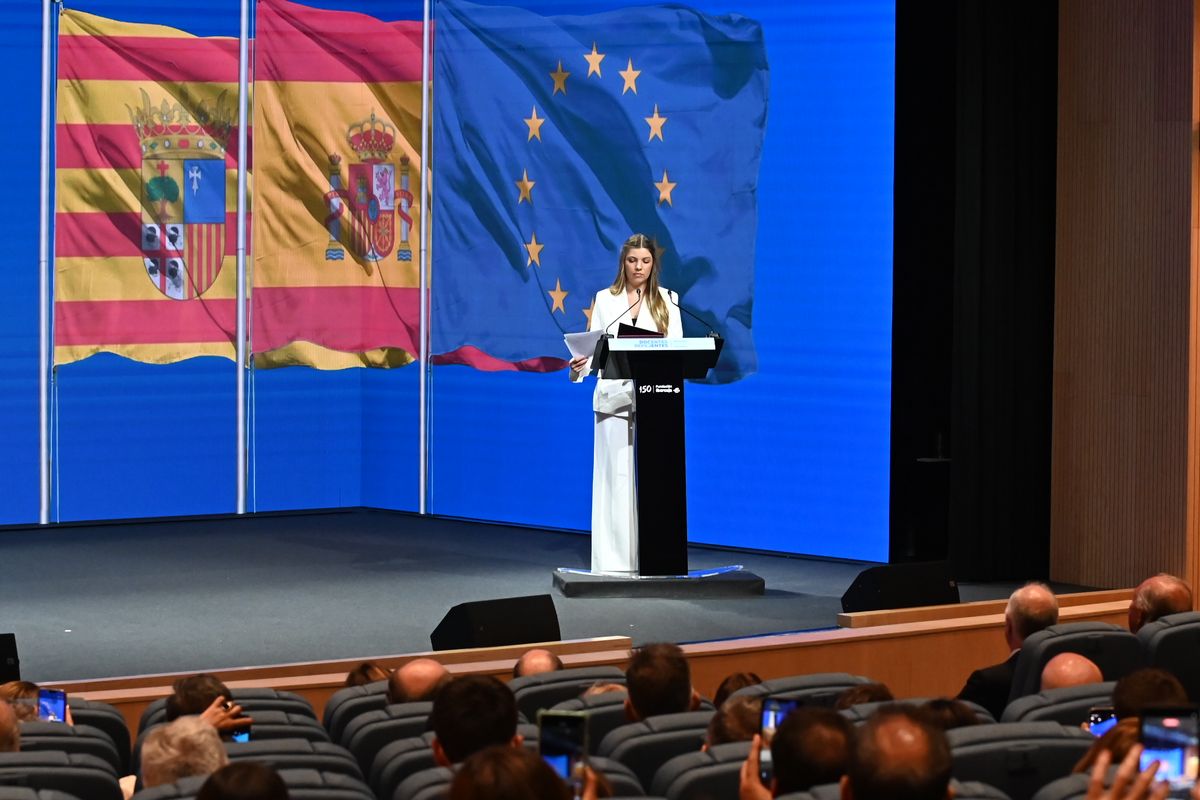
In her first official public address, Sofía spoke about the importance of education and honored the teachers shaping the next generation of Spaniards. Reflecting on a childhood memory inspired by the Afghan film Buddha Collapsed Out of Shame, she described the lasting influence educators can have on young lives and highlighted respect, curiosity, and commitment as the values at the heart of learning. Below is the full text of her remarks, delivered at the inaugural Docentes Referentes ("Outstanding Educators") awards ceremony at the Monastery of Our Lady of Cogullada.
 © Europa Press via Getty Images
“Good afternoon.
I first met Baktay when she was six years old and I was eight. It was during one of those Sunday movie afternoons at home, and one scene has stayed with me ever since. Baktay secretly gathered a few eggs to trade for a battered notebook in a dusty marketplace. Even then, what she had wasn't enough to add a pencil.
That little girl was confronting an entire world that denied her the right to learn and the right to knowledge. The film I'm referring to is Buddha Collapsed Out of Shame. That young Afghan girl fought against everything and everyone simply because she wanted an education. At the time, of course, I had no idea what was happening, and is still happening, in that country. She inspired me to walk into my third-grade classroom every morning with renewed excitement.
We're here today because education matters to us. And I want to tell you that after reading and reading and reading about what education really means, in all its dimensions, I've come to understand how vast it is and how extraordinarily complex.
 © Europa Press via Getty Images
For many years, Ibercaja and its foundation have recognized the importance of teachers' work, offering them tools, ideas, networks, and community so that educators across Spain can continue contributing decisively to our society's development and progress through education.
No one chooses teaching for the money or the recognition. You know that better than anyone. And all of us, including the youngest among us, know the challenges are real: bullying, declining authority in the classroom, questions about pay, dropout rates, overcrowded classrooms, students with special educational needs, excessive bureaucracy, funding, and educational inclusion.
It is worth remembering the three words that Professor Carlos López Otín, a native of this region, associates with "the art of educating," which goes beyond the task of teaching: respect, curiosity, and commitment.
Because talking about education, the education system, is almost too broad. It touches nearly every part of society. That is why, in every school, there is a teacher, often exhausted, who, despite the difficulties, keeps trying to reach our hearts and our minds, one by one, student by student.
In every classroom, whether urban or rural, led by new teachers or veterans, in public, publicly funded private, or independent schools, there is a teacher protecting that sacred time for learning. Whenever possible, with patience and calm, they help us understand the world, develop our own judgment, and shape a hopeful, enthusiastic way of seeing reality.
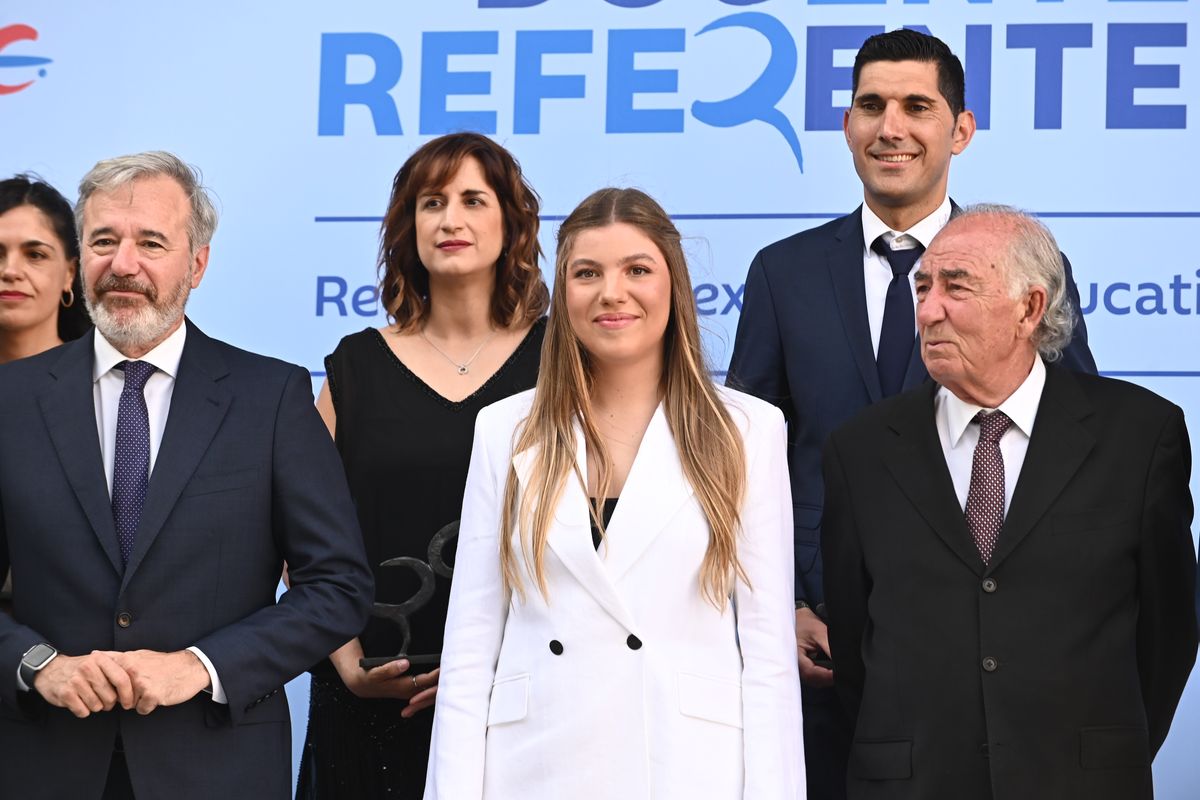
And this morning, here at La Cogullada, I saw that same spirit in our Outstanding Educators. They are not merely transmitters of knowledge. They are teachers who accompany their students.
Diego, Clement, Belén, Cristian, and Mercedes; and the honorable mention recipients—congratulations to all of you.
I will not be the one today to speak about varied teaching methods and new pedagogies; the debate over artificial intelligence in education; the difference between digital literacy and digital education; values-based education; evaluation systems; whether we should place greater emphasis on skills and competencies or structure curricula around the humanities and philosophy; or attention, memory, concentration, and cognitive capacity.
Put that way, even this brief inventory is dense. To me, teaching is a profession whose value and relevance go beyond the strategic. It belongs to what is essential.
Beyond educational trends, circumstances, or market demands, beyond whether students pay more attention to someone's latest Reel than to a classroom explanation, and beyond all the noise, real or imagined, there is a day in every classroom, in every childhood, that is never forgotten.
 © Europa Press via Getty Images
A day when, while we still have the capacity for wonder, a teacher says something that stays inside us forever.
It may be, "You're smart."
Or, "Have you read this book?"
Or, "Have you ever thought about...?"
Or, "Are you asking the right question?"
Or it may simply be a conversation that seems ordinary but is well reasoned, uninterrupted, and attentive to the slow process of learning to want to learn.
Many of us believe yours is one of the finest professions in the world. It should be valued far more. It carries immense responsibility, and it sows hope today for the future.
That is why it deserves respect, resources, and full recognition. These grants, and this community of educators beginning its path today, are proof of that. And that is why I am grateful that you have welcomed me and allowed my first public address to become part of that journey.
Thank you very much.”
 © Getty Images