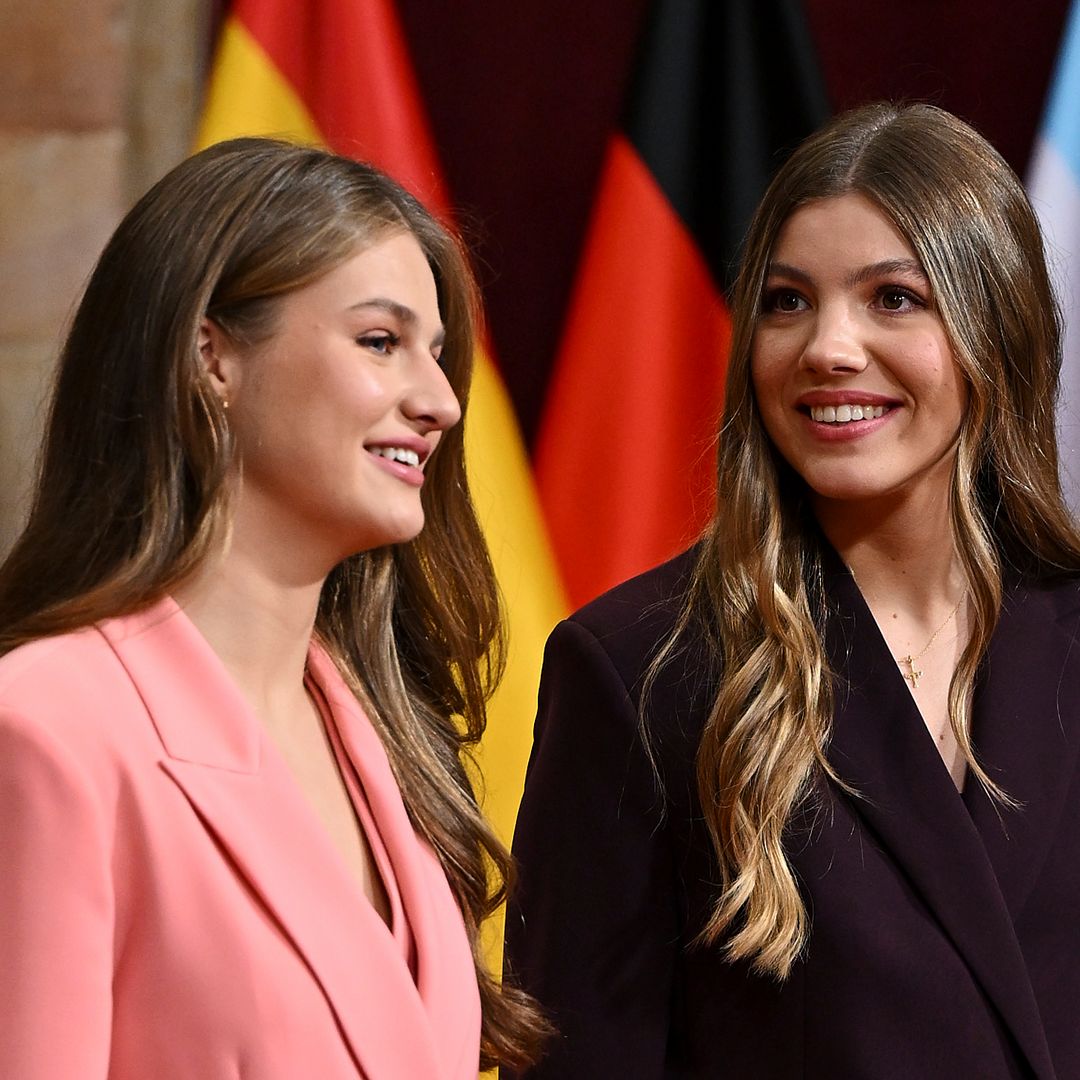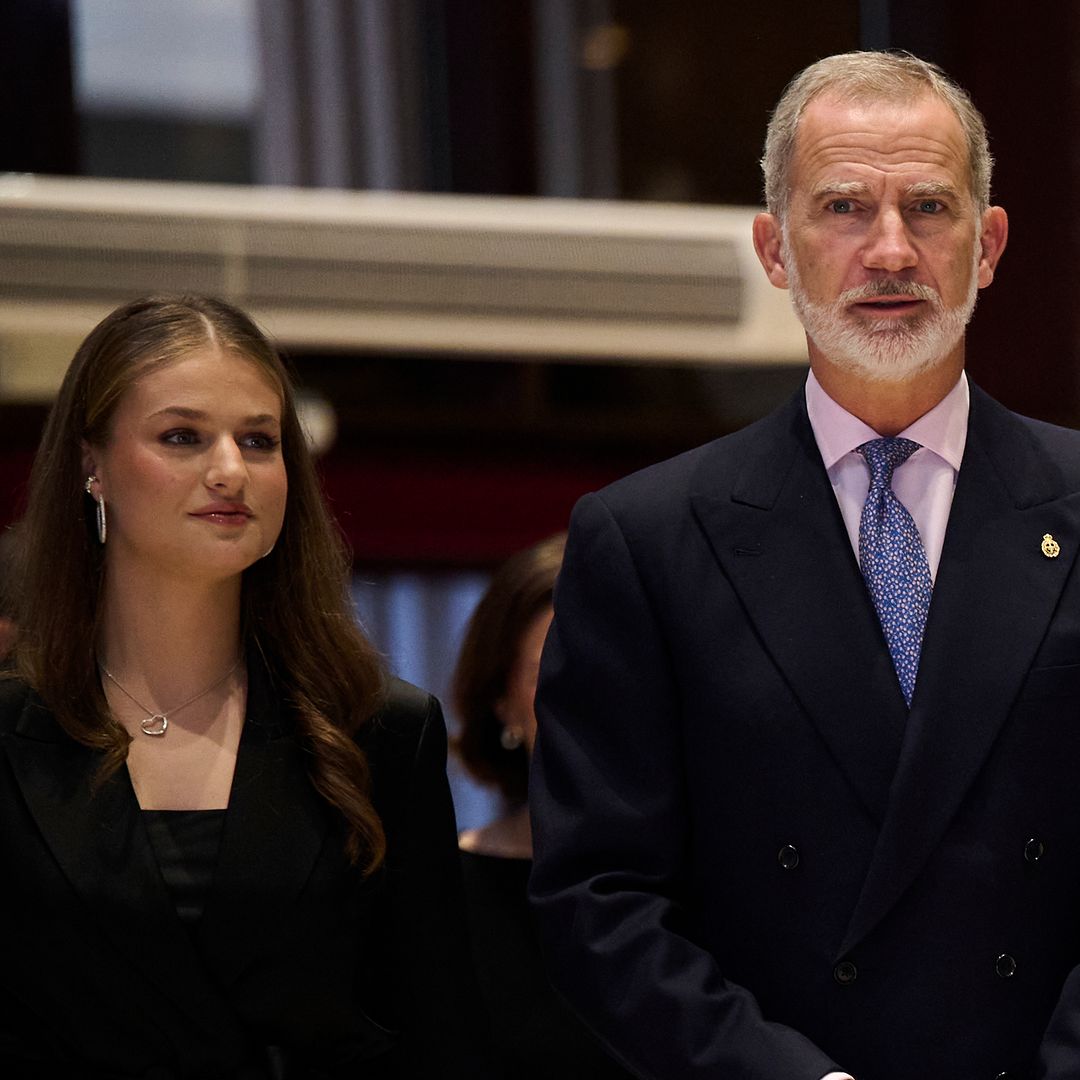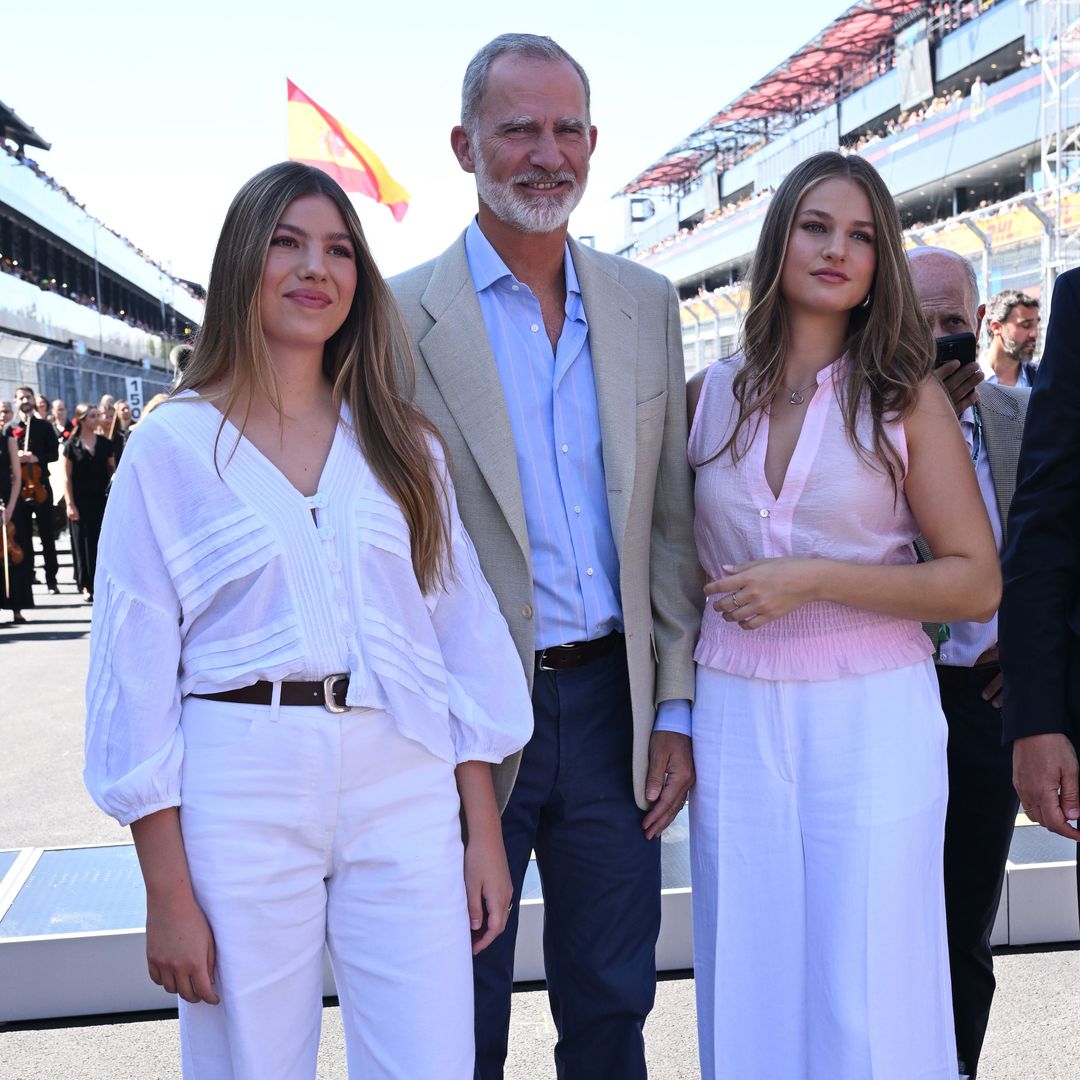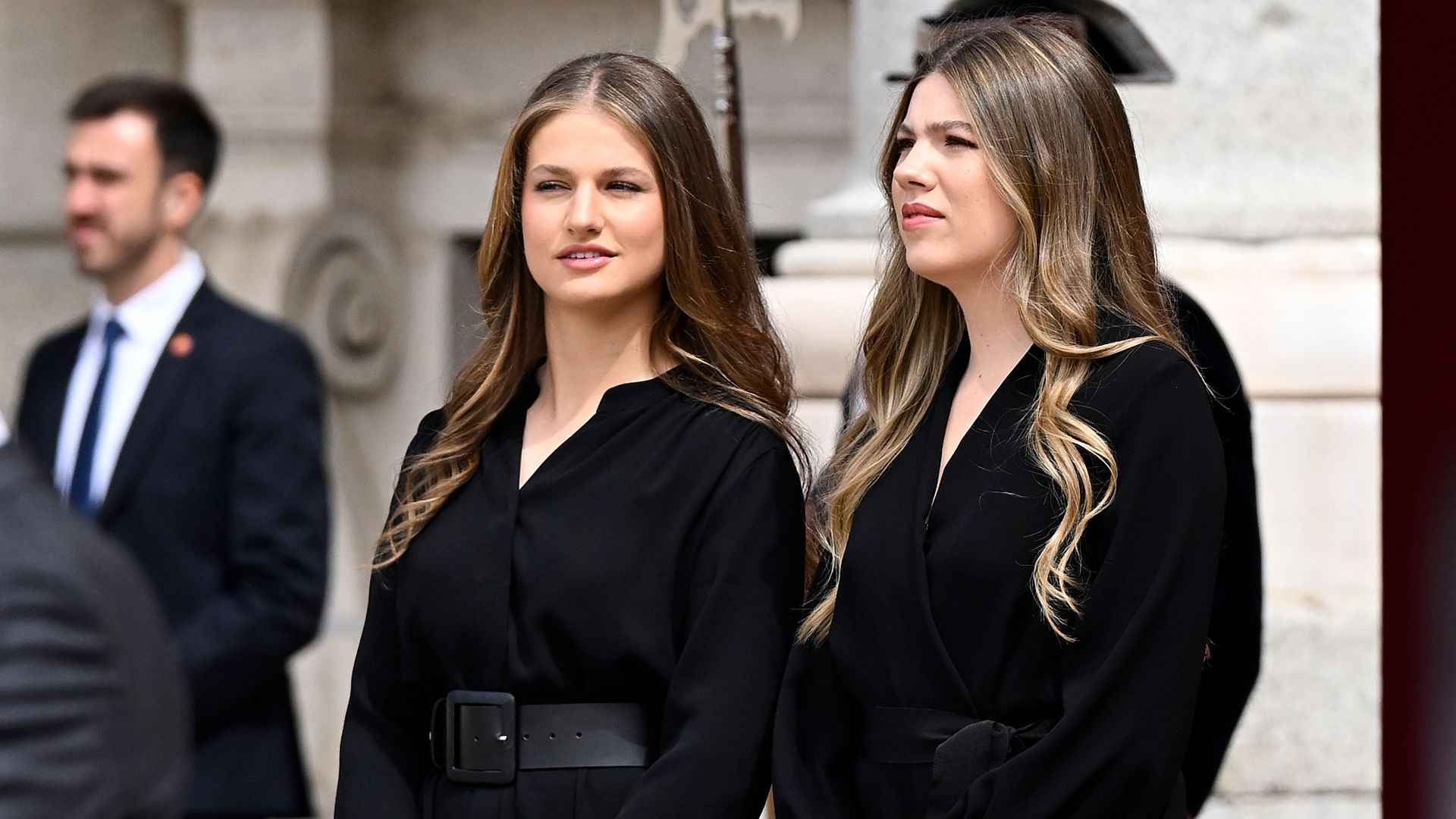
Madrid is experiencing a historic day with the arrival of Pope Leo XIV, who is making his first visit to Spain since his election. Among the most anticipated moments of the trip is one image in particular: the meeting between Princess Leonor, Infanta Sofía, and the Pontiff, now as adults with clearly defined institutional roles within the Crown.
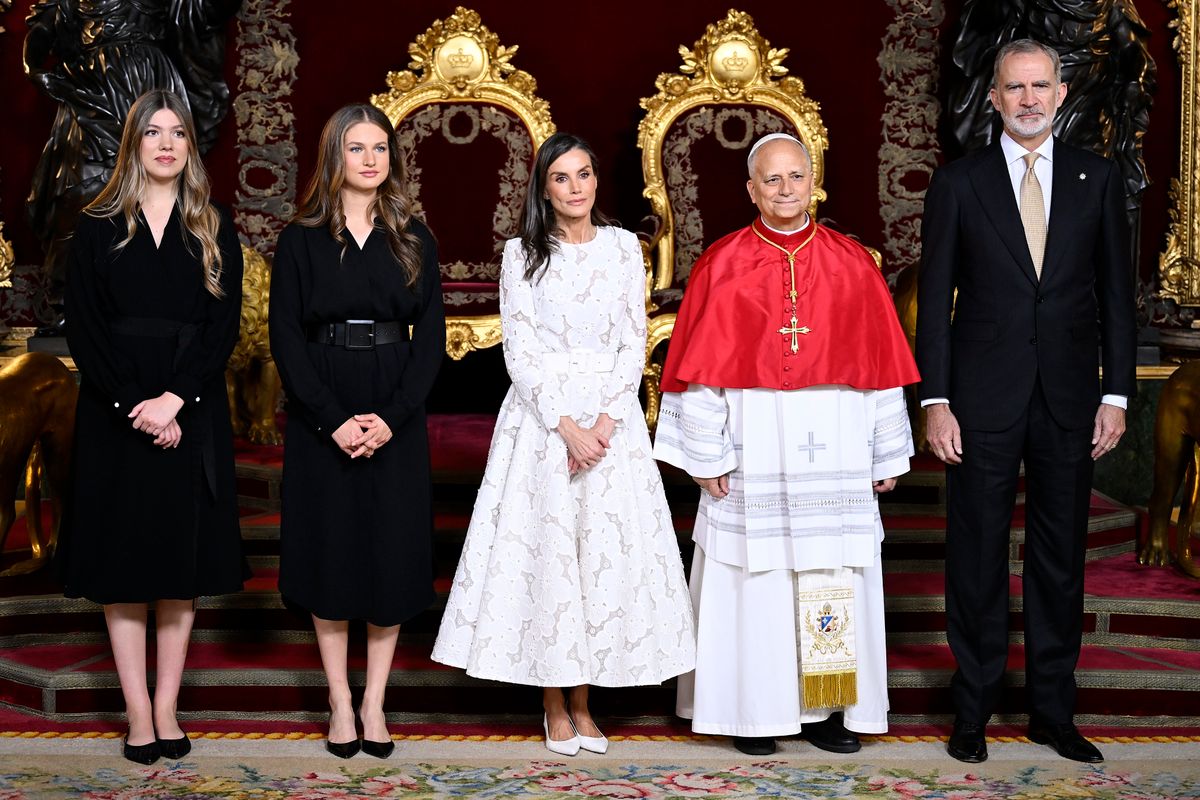
The daughters of King Felipe VI and Queen Letizia, who exercised her privilege of wearing white in a flowing floral lace dress, previously met Pope Benedict XVI when they were children. Back then, they appeared in matching floral dresses and ballet flats. Today, the circumstances are entirely different.
 © Getty Images
Beyond the curiosity surrounding the greeting itself and where they would stand in the official order of precedence, attention has also focused on a question that blends tradition, fashion, and diplomacy: whether they would wear mantillas and which colors they would choose for an event destined to capture headlines around the world.
Princess Leonor’s Look: An Impeccable Black Midi Dress
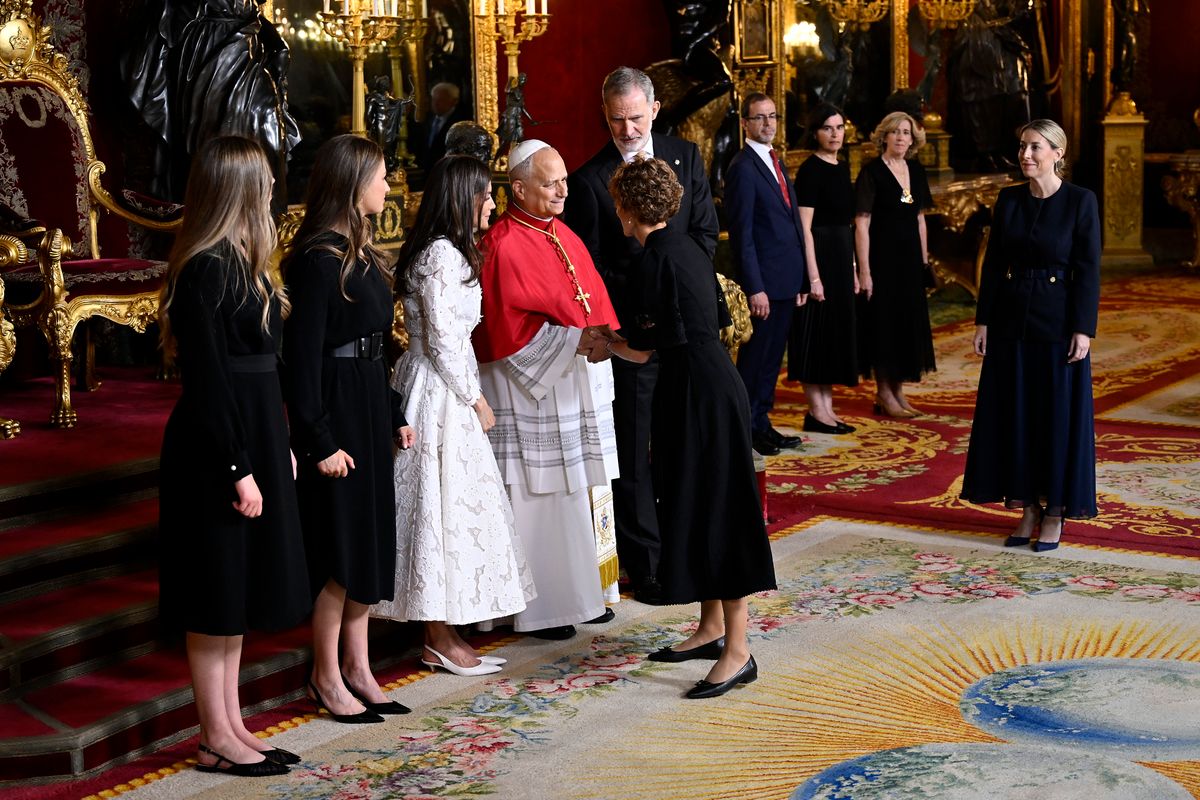
Princess Leonor approached her first official meeting with Pope Leo XIV in flawless, protocol-perfect style. The heir to the Spanish throne appeared alongside Infanta Sofía dressed in formal black, the color traditionally worn for papal audiences by women who do not hold the Privilege of White, a distinction reserved for certain Catholic queens.
 © Getty Images
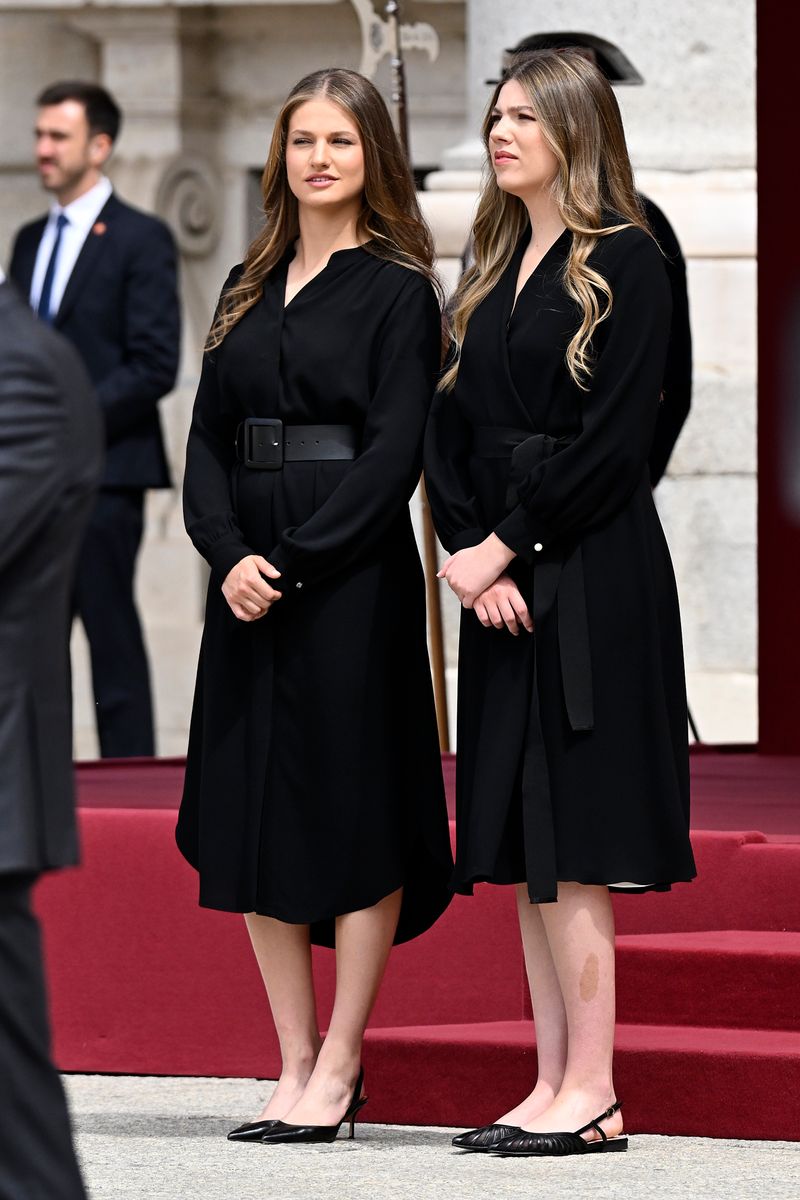
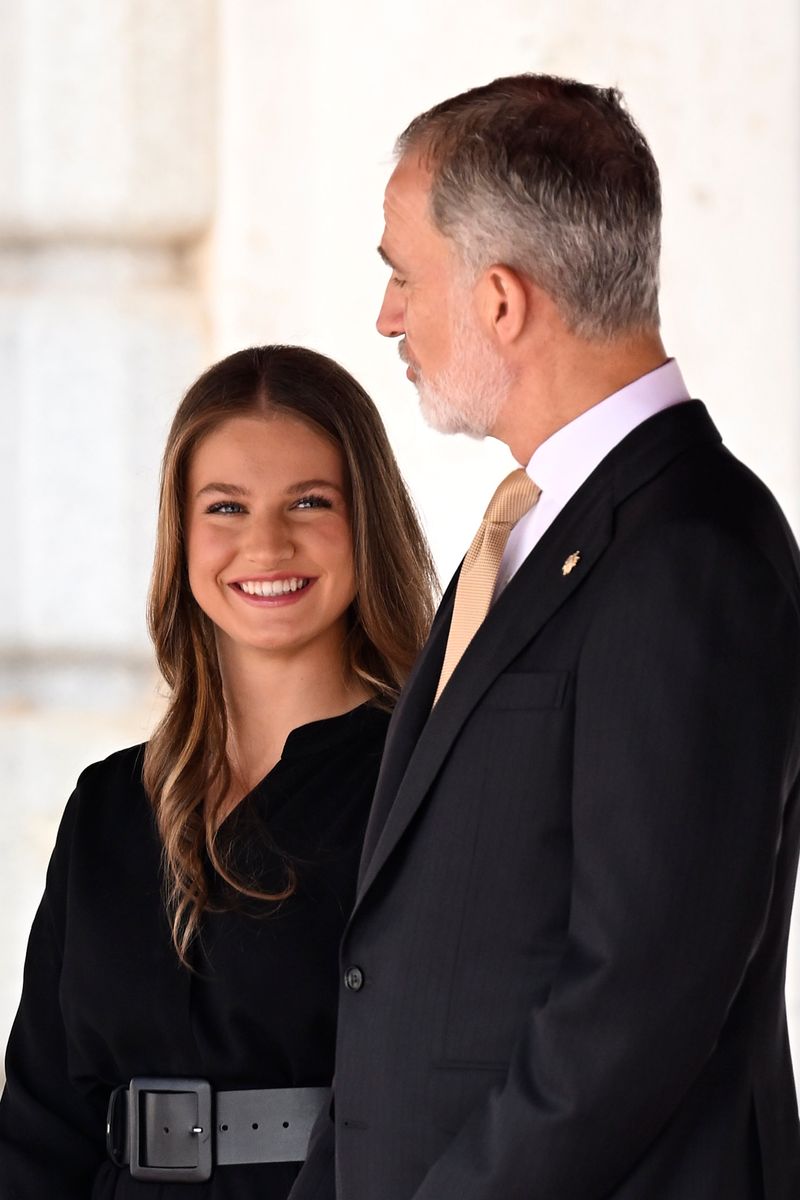
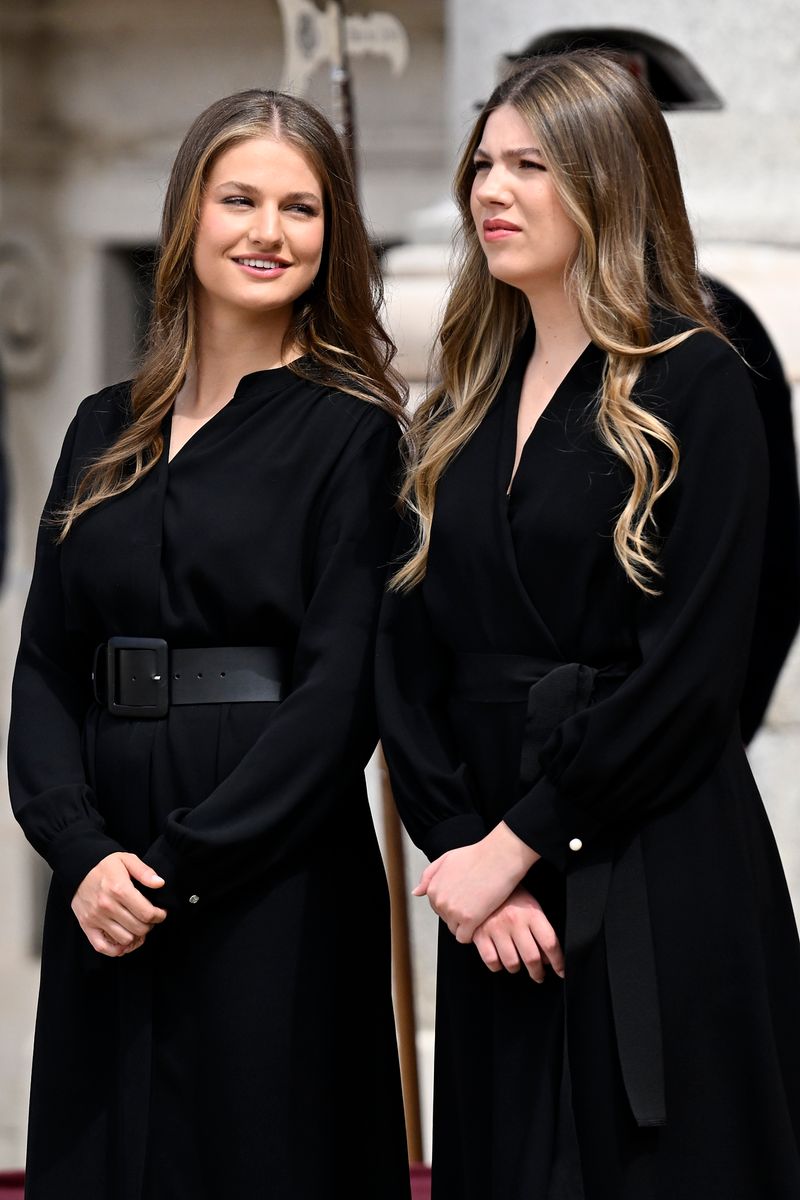
For this historic occasion, Leonor chose an elegant black midi dress featuring clean, sophisticated lines, long sleeves, and a modest V-neckline. The design struck a balance between refinement and modernity while maintaining the discretion expected at an event of this significance. The choice was particularly meaningful, reflecting a contemporary interpretation of royal protocol that combines institutional respect with modern style.
 © Getty Images
The look was further defined by a wide black leather belt that accentuated the waist and added structure to the silhouette. Unlike the more rigid ceremonial fashions of the past, the accessory introduced a contemporary touch that refreshed the overall appearance without departing from tradition. It is through details like these that a new generation of European royals is reinterpreting historic dress codes for the modern era.
Leonor completed the ensemble with classic black stiletto pumps, an understated and elegant choice that perfectly suited the formal nature of the occasion. Her jewelry was kept to a minimum, ensuring that the focus remained on the significance of the meeting and her role as the future Queen of Spain.
 © Getty Images
She also chose earrings with a deeper meaning: original glass creations by the Spanish brand Boira, which was affected by the devastating DANA floods that struck the Valencia region. The brand’s founder, Covadonga Ferrer, is already familiar with royal support; Queen Letizia was the first member of the Spanish royal family to wear one of her designs back in December 2024.
Her blonde hair, worn loose in soft waves, also drew attention, adding a sense of natural ease to an image of enormous institutional significance.
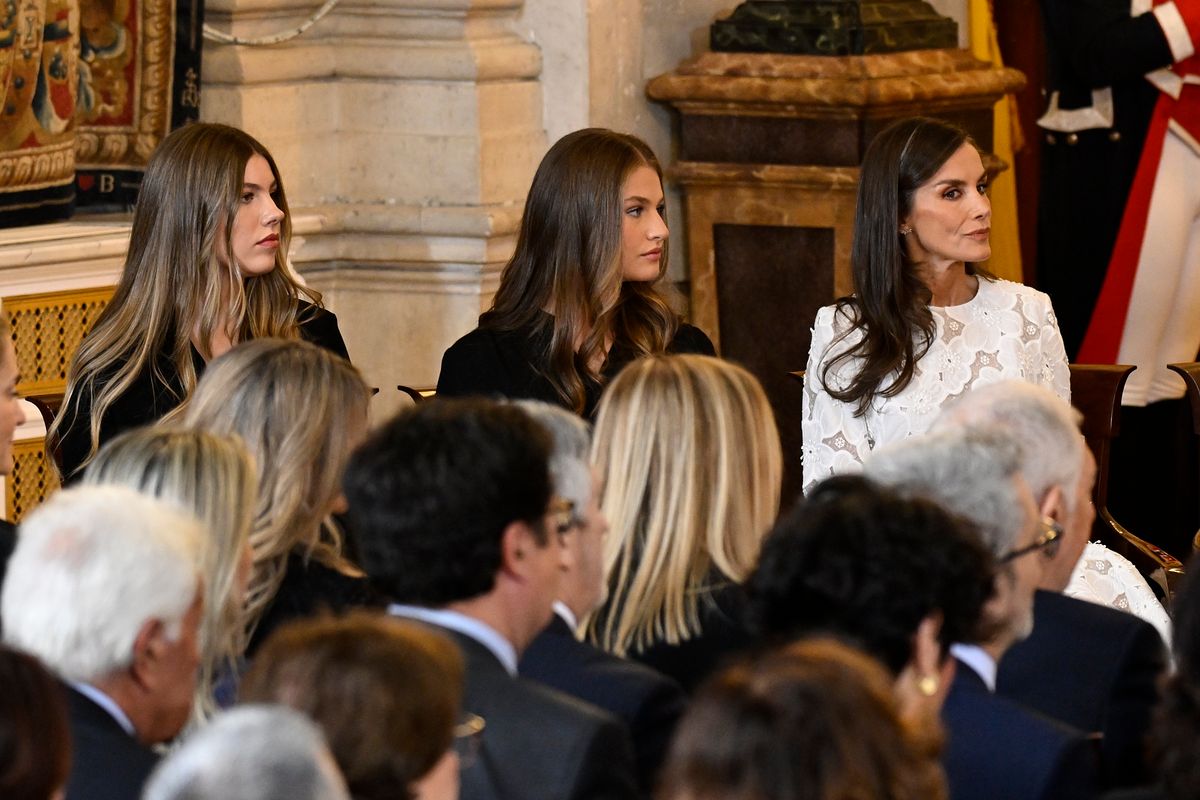
One detail, however, did not go unnoticed: the absence of a mantilla. Both Princess Leonor and Infanta Sofía chose not to wear one during the first day of the papal visit, a decision that is fully consistent with current Vatican protocol but also reflects a more contemporary interpretation of royal tradition.
 © Getty Images
The question now is whether the sisters will maintain that approach at tomorrow’s Corpus Christi Mass, one of the most significant events of the Pope’s visit, or opt for attire that more closely reflects Spain’s longstanding religious and cultural traditions.
More Than a Photo: A Major Institutional Debut Before a Pontiff
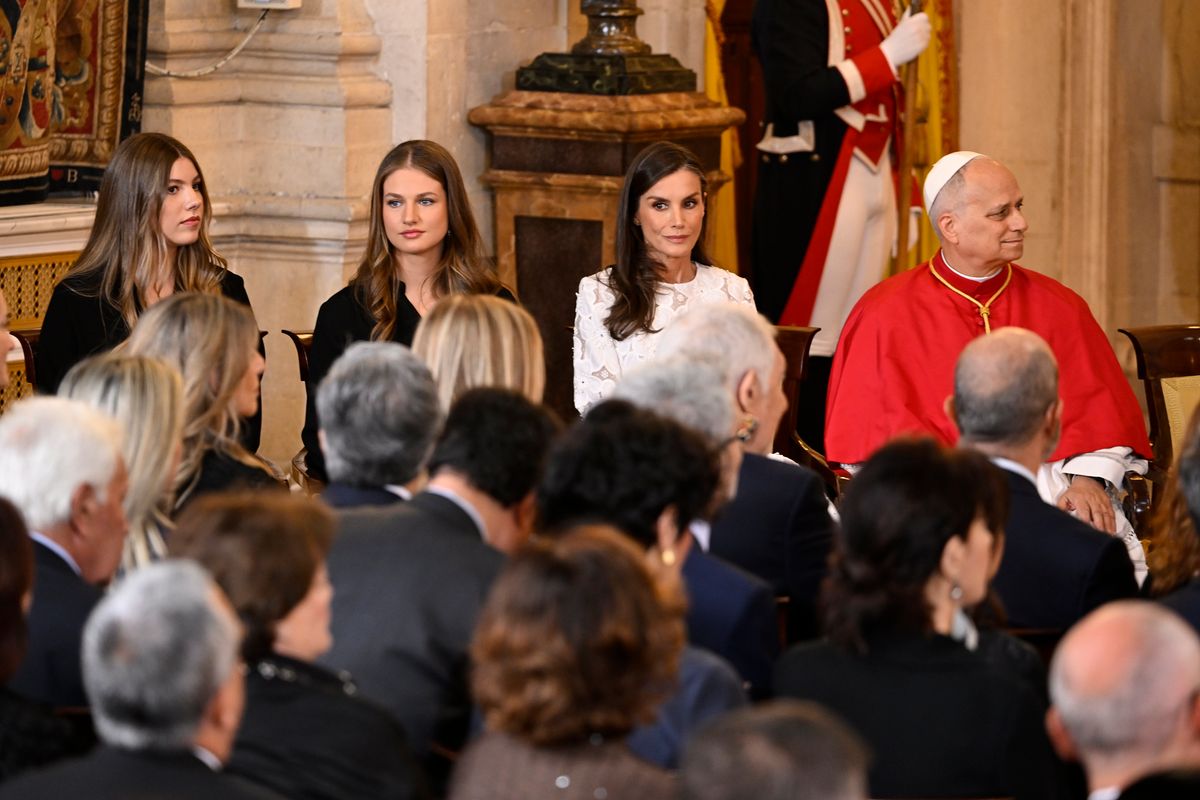
Pope Leo XIV’s visit has produced an image that goes far beyond a simple official reception. According to Gloria Campos García de Quevedo, Ph.D. in Advertising and Public Relations, protocol expert, and professor at Camilo José Cela University, the moment is particularly significant for the Crown.
 © Getty Images
“This moment has a dimension that goes beyond symbolism. It is not simply a family photo with the Pope; it is an image of continuity for the Crown. Leonor appears as an adult heir and Sofía as a supporting member of the Royal Family in an event of tremendous institutional, religious, diplomatic, and media significance.”
Campos believes the image of the heir alongside the Pontiff is especially meaningful because, in her words, “it will travel around the world,” placing Leonor in a level of international visibility that few occasions can provide.
A Protocol Where Nothing Is Left to Chance
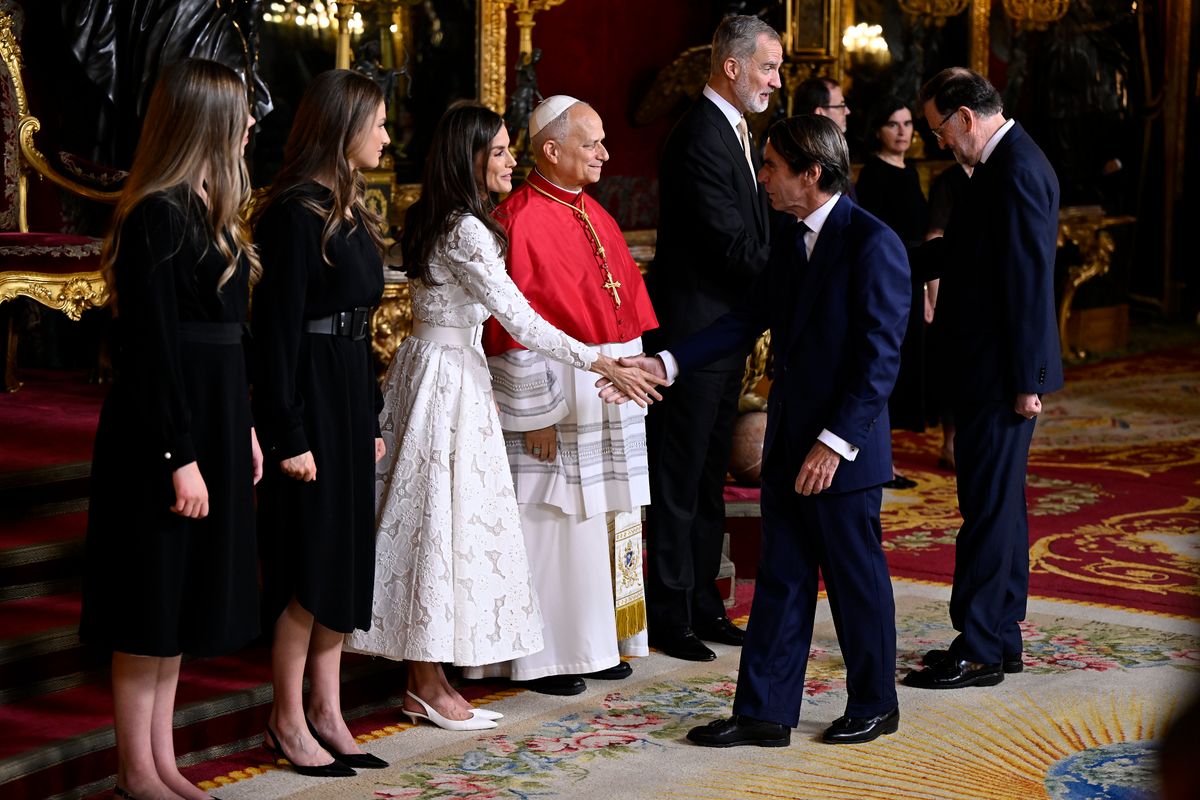
While the encounter may appear spontaneous from the outside, the reality is very different. Behind every greeting lies a complex coordination effort between the Royal Household and the Vatican.
“Improvisation either doesn’t exist or exists very little.”
 © Getty Images
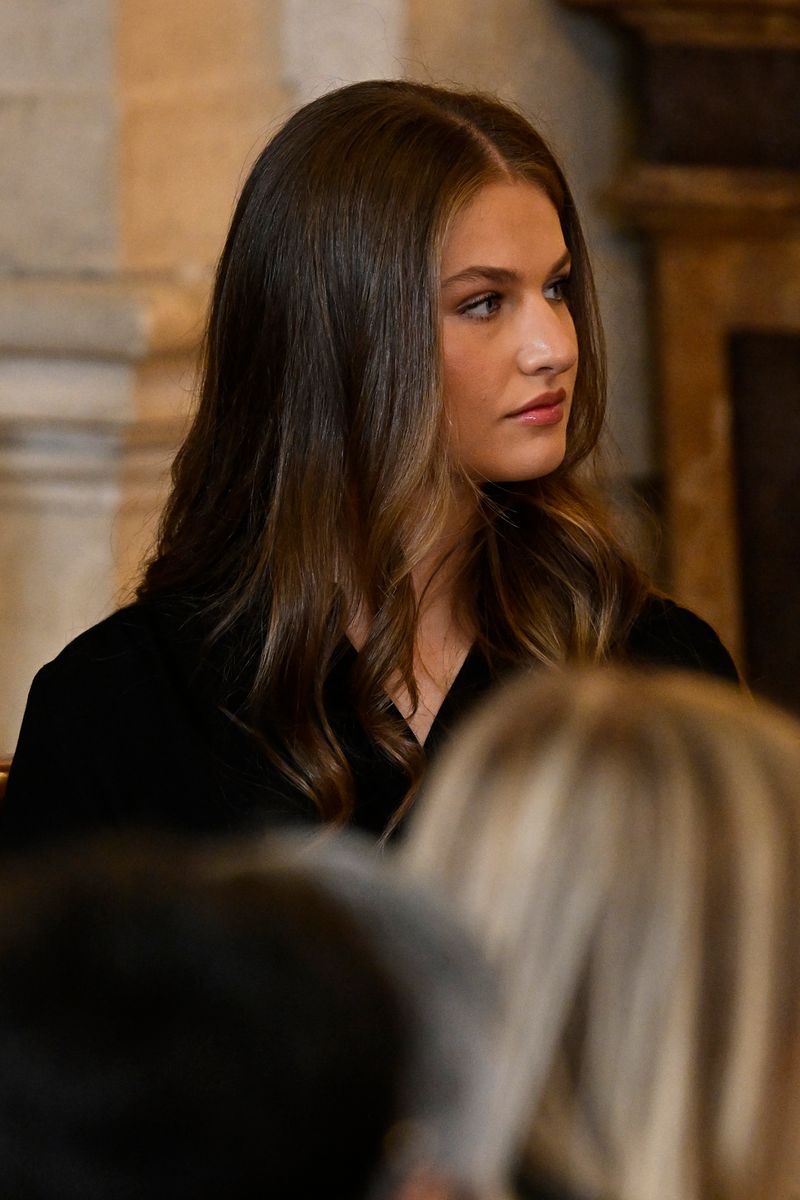
According to Campos, the Household of His Majesty the King works for weeks with the Prefecture of the Papal Household to coordinate every detail.
The sequence of arrival, order of introductions, distance of approach, length of the greeting, and even body positioning are all carefully planned. “What the public perceives as natural is actually the result of hours of preparation. The smile isn’t rehearsed, but the attitude is: serenity, respect, and presence.”
There is also a clearly defined hierarchy. King Felipe VI occupies the position of highest precedence, followed by Queen Letizia. Leonor is introduced before Sofía and stands closer to the Pontiff because of her status as heir.
 © Getty Images
The Big Question: Why Leonor and Sofía Cannot Wear White
Whenever a royal woman meets the Pope, one topic inevitably sparks interest: the privilège du blanc, or privilege of the white.
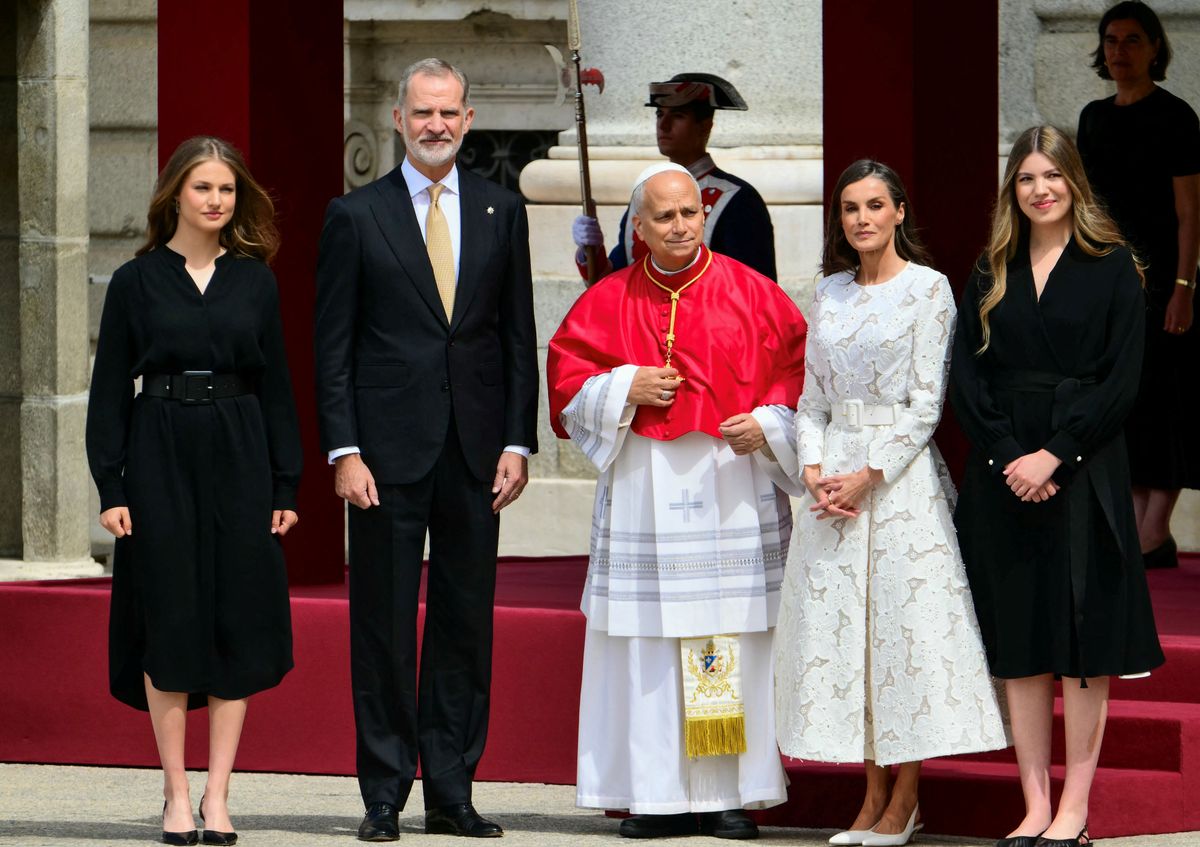
Queen Letizia may exercise it. Leonor and Sofía may not. “The privilege of the white is a historic concession granted by the Holy See to Catholic sovereigns of certain monarchies.”
In Spain’s case, the exception applies to the queen consort or a reigning queen. Therefore, Letizia may wear white at certain papal audiences, while the Princess of Asturias and the Infanta must follow the general rules of Vatican protocol.
 © AFP via Getty Images
Campos explains that the most appropriate alternatives are black, deep navy, or charcoal gray, always in fine fabrics and conservative cuts. “The clothing should convey respect, sobriety, and a sense of institutional responsibility.”
And the Mantilla? The Question Remains Open
The other major point of speculation concerns the mantilla, one of the most recognizable symbols of papal visits. For decades, it was almost inseparable from these encounters, especially among European royal women. However, younger generations have adopted a more flexible interpretation.
“A mantilla is entirely appropriate for a papal visit, including in Spain and even outside a strictly liturgical setting.” However, Campos notes that it is not mandatory. “What Vatican protocol requires is that the head be covered—not necessarily with a mantilla.”
 © Getty Images
That means Leonor and Sofía could choose a traditional mantilla for tomorrow’s Corpus Christi Mass celebrated by Pope Leo XIV in Madrid’s Plaza de Cibeles, or they could opt for a discreet formal hat without violating any protocol rules.
The Greeting Every Expert Watches
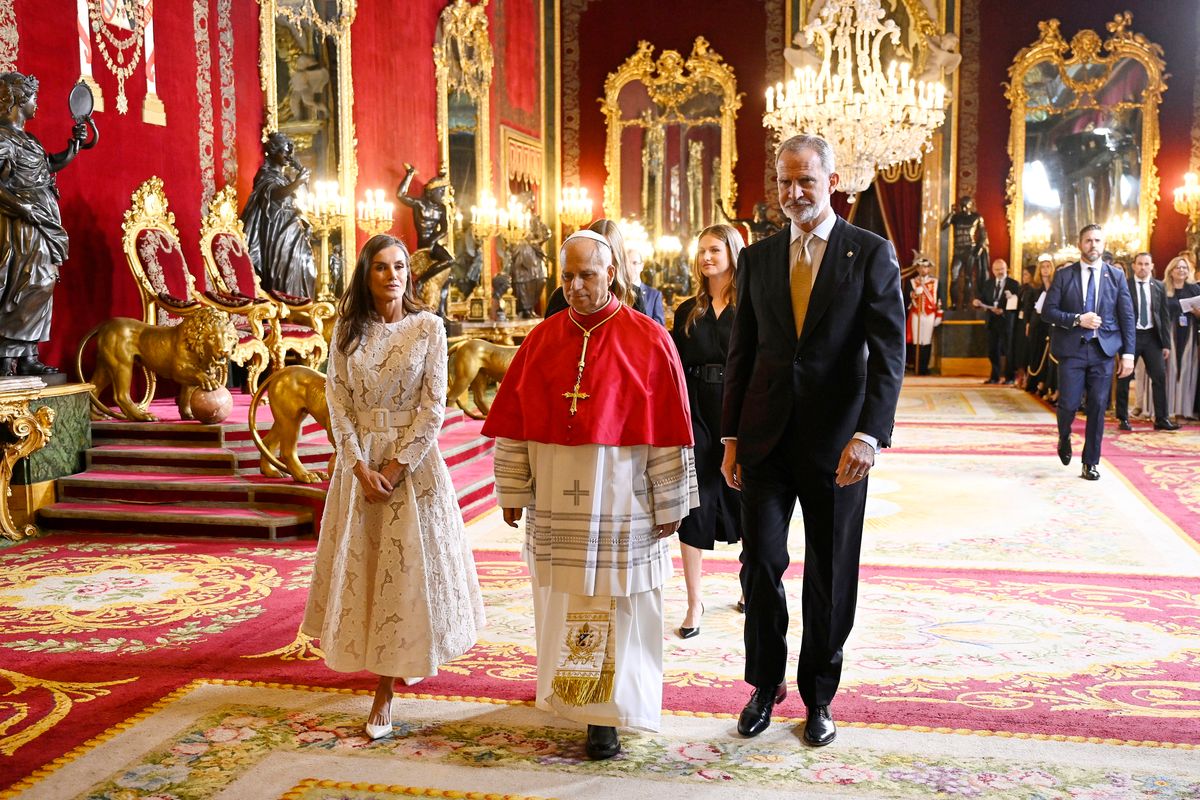
Beyond the fashion, specialists focus on one very specific moment: the greeting itself. “The first thing they look at is who extends a hand first, whether there is a nod of the head, and how much warmth the Pope shows.”
 © Getty Images
Current protocol is clear: the Pontiff sets the tone of the encounter.
And there is one detail that Gloria Campos finds especially revealing: “What I find most significant is Leonor’s expression at the exact moment of the greeting. That instant, which lasts only two or three seconds, reveals better than anything whether a person has truly internalized the protocol—or is simply following it.”