Hairstroke brows are not a rebrand. They’re a technical shift. In 2026, more clients are choosing machine-made hairstrokes, often called nano brows, over traditional microblading. The reason is not hype. It is skin science, healing behavior, and long-term realism.
Microblading uses a manual hand tool with a blade made of stacked needles to create small incisions in the skin. Pigment is placed into the upper dermis. A dermatology review in the journal PubMed-indexed literature describes it as “superficial micropigmentation with typical longevity around 12 to 18 months,” depending on skin type and technique.
 © Getty Images
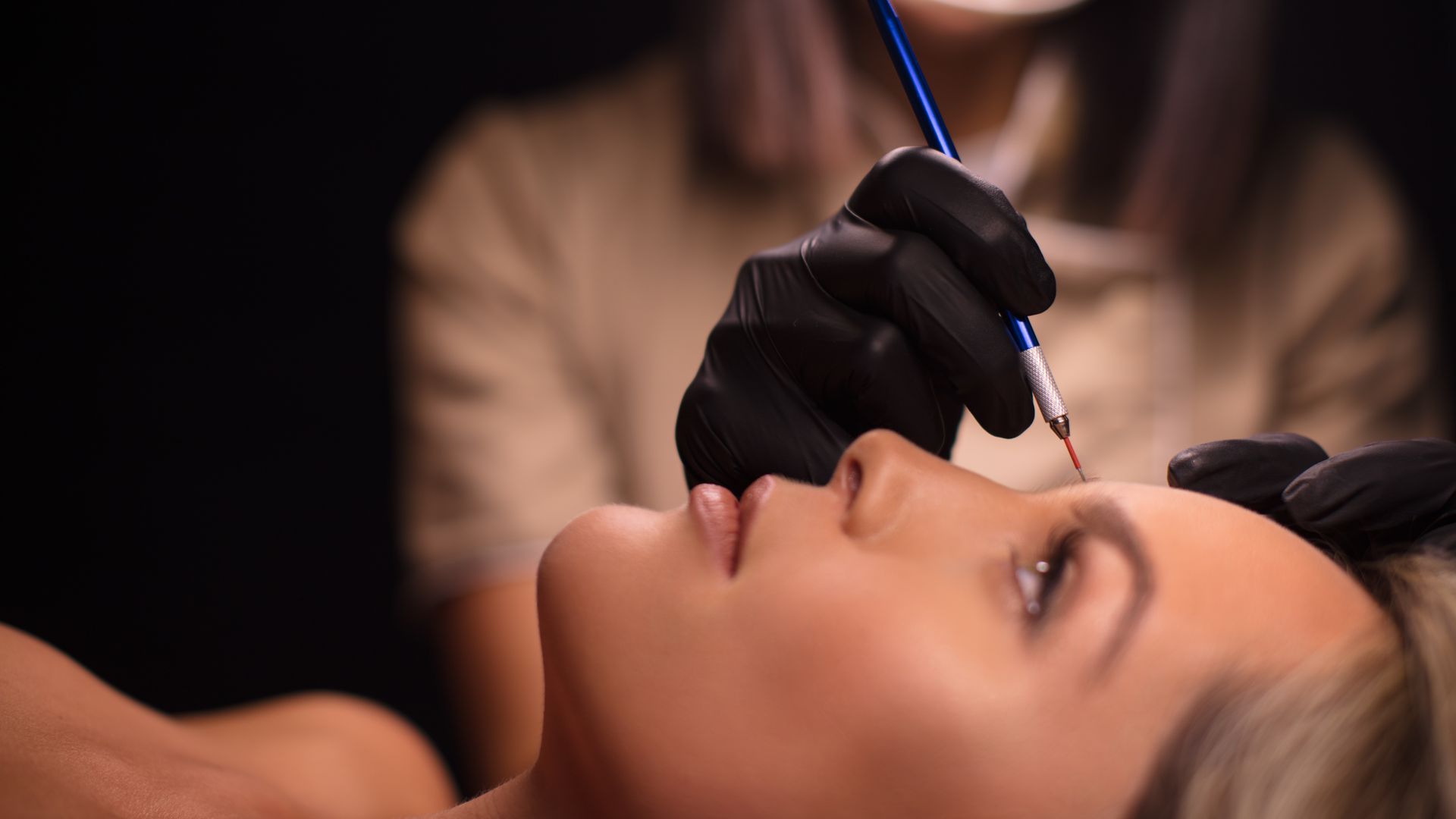
Machine hairstrokes use a rotary PMU device with a single ultra-fine needle. Instead of slicing tiny lines, the machine implants pigment through controlled micro-punctures. The strokes are built gradually. That difference in delivery is the pivot point, and clients are noticing.
Cleaner Hair-Stroke Realism That Ages Better
In 2026, people want brows that look invisible. Not dramatic. Not stamped. Just structured. Machine hairstrokes allow artists to create finer, more consistent lines because the depth and speed are mechanically stabilized. On many skin types, especially oily or textured skin, manual microblading strokes can blur as oil disperses pigment or as skin elasticity shifts over time.
 © Getty Images
Machine strokes tend to heal more softly and can maintain separation between hairs longer. When done correctly, they fade more evenly instead of breaking into fuzzy fragments.
The visual difference is subtle at week one. It becomes obvious at month twelve.
Gentler Healing, Less Trauma
Microblading involves controlled incisions. That means more surface trauma. More bleeding potential. More variability depending on hand pressure. Machine hairstrokes deposit pigment with a single needle in a more repetitive, uniform motion. Many practitioners report less inflammation and shorter visible downtime. Some clients describe reduced tenderness during healing.
 © Getty Images/Tetra images RF
That does not mean zero risk. It is still a tattoo. But the trauma profile is often lower when performed properly. The body responds to injury predictably. Less trauma can mean more predictable pigment retention.
Better Results for Oily, Sensitive, and Mature Skin
Oily skin has been microblading’s weak spot for years. Sebum can push pigment outward. Fine incisions can blur. Strokes that looked crisp at day one can look diffused months later.
Machine hairstrokes tend to perform better on oilier skin because the pigment placement is often more controlled and less reliant on clean incision lines staying intact. Mature skin, which may be thinner or less elastic, also tends to tolerate machine work more consistently than blade work.
 © Getty Images
Sensitive or previously tattooed skin is another factor. When layering pigment over old work, control matters more than trend names. In 2026, artists are choosing techniques based on skin behavior, not marketing labels.
Steadier Fading and More Predictable Maintenance
Microblading is often described as lasting 12 to 18 months. That range is real but highly variable. Some clients see fading within a year. Others experience stubborn residual pigment that does not fully disappear.
Regulatory agencies, including guidance cited by the U.S. Food and Drug Administration, emphasize that tattoo pigments are not guaranteed to be fully eliminated from the skin. “Semi-permanent” is a consumer term, not a biological guarantee.
 © Getty Images
Machine hairstrokes are frequently marketed as lasting longer. The more accurate statement is that they often fade more evenly. Instead of patchy disappearance, the color can soften gradually, making touch-ups more about refreshing than repairing.
Maintenance still matters. Most clients require an initial refinement session and periodic color boosts. The difference is in how gracefully the pigment ages.
Safety Awareness Is Driving the Shift
Clients in 2026 are informed. They know that pigment can blur if placed too deeply. They know removal is complicated. They ask about sterilization protocols. Machine systems typically use disposable cartridge needles designed to reduce backflow into the device.
Public health departments in multiple states regulate permanent cosmetics under the same standards as tattooing, as infection control is not optional. European regulators under REACH have also tightened restrictions on certain tattoo ink ingredients, influencing global pigment supply chains.
 © Getty Images
Board certifications from groups like the American Academy of Micropigmentation require documented training hours and bloodborne pathogen education. That matters more than whether a service is labeled nano or micro.
Softer Brows, Smarter Consumers
Microblading exploded in the social media era. It delivered instant structure in a world that loved bold arches. Now the aesthetic has softened. Clients want airy density. Flexible shape. Brows that look like their own, just enhanced.
Hairstroke brows align with that demand. They allow gradual layering, blending with shading when needed, and more adaptability for future trends. The deeper reason for the transition is risk management.
 © Getty Images
Machine hairstrokes offer greater control across diverse skin types. They often heal with less visible trauma. They tend to fade more evenly. And they reflect a broader industry move toward stricter hygiene standards and better training.
Microblading is not obsolete. On ideal skin, in expert hands, it can still produce beautiful results. But in 2026, versatility, predictability, and skin science win.