We all know that if someone is pregnant, that person should not be drinking, smoking, consuming alcohol, or being exposed to cleaning solvents, pesticides, lead, and mercury. However, the list doesn’t stop there!
Did you know that there are certain skincare products that a pregnant person should stay away from? Specific chemicals can affect the baby’s development; therefore, it is crucial to always keep an eye on the formulas and what they contain.
 © Content Pixie on Unsplash
To learn more about this topic, Dr. Deborah Lee, through RY, Australia’s largest online beauty retailer, shared with HOLA! USA, her insight and the list of products that expectant mothers should avoid. “We all use personal skin products as part of our daily routine. It may seem innocuous to rub shampoo and conditioner into your scalp or rehydrate your skin with moisturizing lotion. However, all the products we use on our skin contain large numbers of chemical ingredients, many of which can pass through the skin and into the bloodstream,” Dr. Lee said. “From there, they then find their way around the body, where they have the potential to cause harm.”
According to the expert, while pregnant, a person should think twice before applying anything that might seem harmless. “In pregnancy, this is especially difficult, as these chemicals could, quite unknowingly, affect a developing fetus. Pregnant women need to think carefully about what they are applying to their skin to ensure the safest outcome for their unborn baby,” she suggests.
Skincare products any pregnant person should avoid using
- Retinoids
- Salicylic acid
- Hydroquinone
- Phthalates
- Formaldehyde
- Glycolic Acid
- Chemical sunscreens
The experts of RY, Dr. Deborah Lee, and Dr. Eldimarys Curry Machado also shared with HOLA! USA, some of the most popular skincare products and how we should be using them.
The products and ingredients we shouldn’t be overusing
 © Jess @ Harper Sunday on Unsplash
- Retinol: Overuse of retinol can cause irritation and toxicity resulting in itching, plus it also makes your skin more prone to sunburn!
- Makeup remover wipes: Makeup wipes can cause the skin to tear, causing tiny microabrasion. Also, for the wipes to stay constantly damp in their container, they contain large quantities of alcohol and preservatives, which can dry the skin.
- Blackhead remover strips: The sticky nature of blackhead removing strips means they have the potential to traumatize the skin when you pull off the strips. This can cause severe irritation to your skin!
- Charcoal face masks: Charcoal face masks can be dangerous as when you remove them, you rip off such a deep layer of skin. When you strip off the mask, you also remove many of the natural oils in the skin, and with repeated use, this can be very damaging.
- Untried food substances: Many natural substances such as lemon juice, and cinnamon, are used for a do-it-yourself facial. However, these are not without risk and can cause your skin to burn.
- Apple cider vinegar: If you are tempted to use apple cider vinegar (ACV) on your skin, you must only ever use a very dilute solution. Although there may be some benefits for oily skin, using it too often or in too high a concentration can burn your skin.
Which ingredients shouldn’t we use together?
 © Charisse Kenion on Unsplash
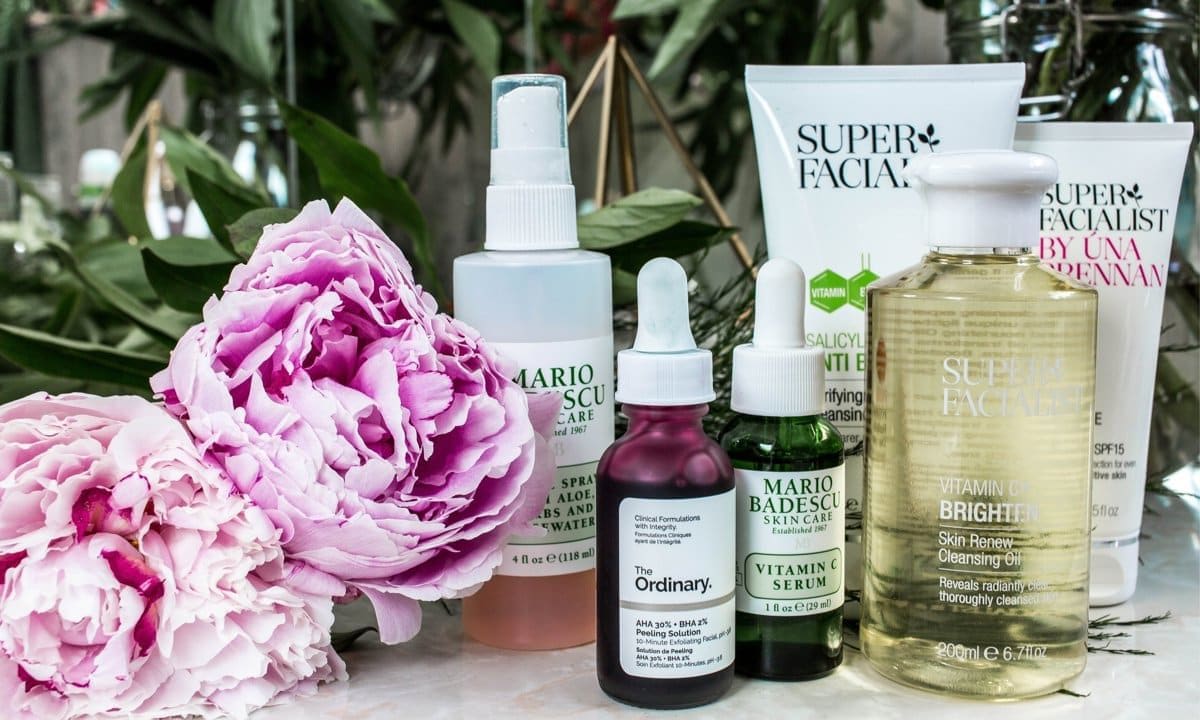
Mixing up skin products can be bad news because some product ingredients will counteract the beneficial effects of other products. As a result, your skin products will be less effective, it will take longer to see results, and you could end up wasting a lot of money.
Dr. Deborah Lee advises:
- Never use retinol with benzoic acid - they counteract and cancel each other out, so each one has a reduced effect.
- A person should never mix vitamin C with retinol. Vitamin C has its best effects if used in the mornings. It is known to lighten the skin and help cause age spots to fade. However, retinol works on collagen and elastin and is best used overnight.
- The use of Retinol with Alpha Hydroxy Acid (AHA) and Beta Hydroxy Acid (BHA), for example, salicylic acid, glycolic, or lactic acid, should be avoided. These are exfoliating, which can dry out the skin, cause further dryness and irritation, and damage the skin’s moisture barrier. Together they will also increase the skin’s sensitivity to the sun, meaning you are at a much higher risk of burning and UV damage. Use these ingredients on alternate days or weeks if you are looking for the benefits of both.
- Niacinamide and vitamin C should not be used together. Although both products are potent antioxidants, the potency of each is significantly reduced if used together.
- Don’t mix sunscreen with makeup. Your UV skin protection is vitally important. You should apply a suitable SPF factor sunscreen over the top of your makeup.
The ingredients we should be avoiding
The ingredients that we should avoid can be divided into three main categories; these are preservatives, which are found in around 75% of rinse-off products (which includes shower gel, shampoo, and shaving gel). Fragrances, which are found in 62% of rinse of products and other chemical products found in 58% of makeup (including lipstick, foundation, and nail polish) and rinse-off products.
“There is no such thing as chemical-free cosmetics, and ‘natural’ cosmetics are not free of chemicals,” reveals Dr. Eldimarys Curry Machado. “What you want to avoid is harmful chemicals in cosmetics, that is, chemicals that have known harmful effects. Just because cosmetic ingredients are natural does not make them safe. And just because an ingredient is synthetic does not mean it is unsafe.”
 © Mathilde Langevin on Unsplash
Around 60% of skincare products contain preservatives added to skin products to reduce the growth of bacteria and fungi. An example is chlorphenesin which is often found in moisturizers, skin cleansers, and mascaras and is now known to be a skin irritant.
According to Dr. Lee, not everything that shines is gold, and just because a product is labeled as “natural,” it doesn’t necessarily mean that it is true. “Fragrances are frequently added to skincare products. Although often labeled as ‘natural products,’ they still have the propensity to cause the same range of medical problems - headaches, asthma, other respiratory symptoms, and allergic dermatitis,” she explains. “Common fragrance allergens which may cause these reactions include: farnesol, citral, limonene, and linalool. Consumers are often confused by thinking ‘natural’- means safe – and in fact, this is not necessarily the case. Many natural substances are just as likely to cause symptoms as those that are manufactured.”