In 2025, Kate Middleton scaled back her gala appearances, but each one was meticulously measured. Just four major engagements, state banquets at Windsor Castle, and one of the UK’s most important cultural nights were enough to paint a precise portrait of her role as Princess of Wales.
On every occasion, context set the tone, the dress defined the scene, and the jewels spoke a parallel language. Pieces with strict rules of wear, stories linking generations, and choices that were never accidental.
This review of the four gala looks she debuted this year reveals how Kate uses fashion not only as image-making but as a tool of institutional representation, historical continuity, and diplomacy.
 © Princeandprincessofwales
Windsor and the United States:
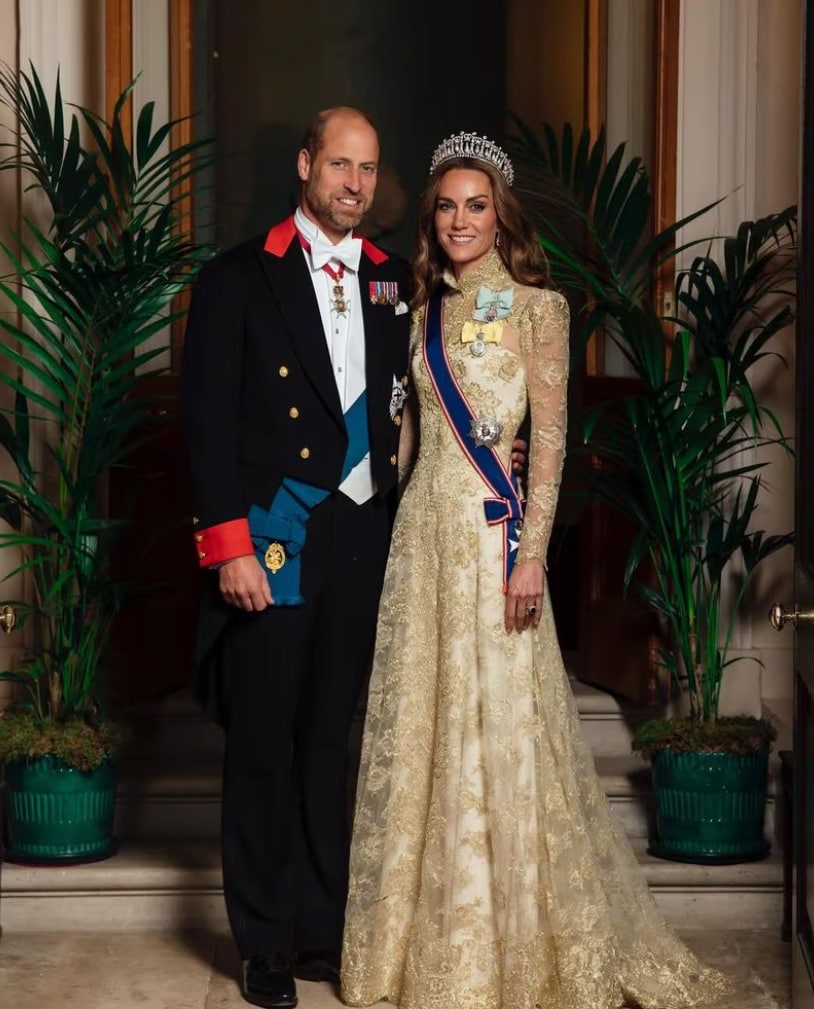
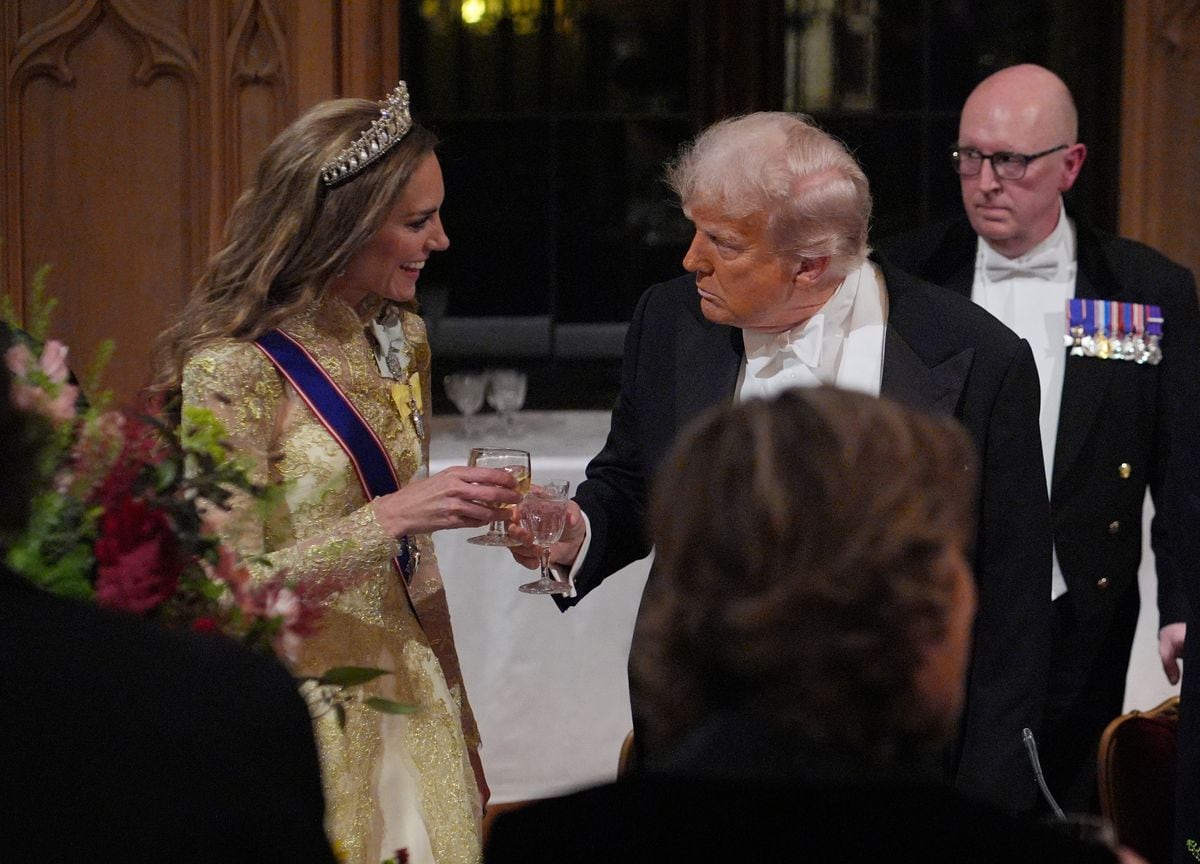
Windsor Castle hosted the state banquet in honor of US President Donald Trump and First Lady Melania Trump during their second official visit to the UK, a night of supreme diplomatic solemnity requiring flawless presentation.
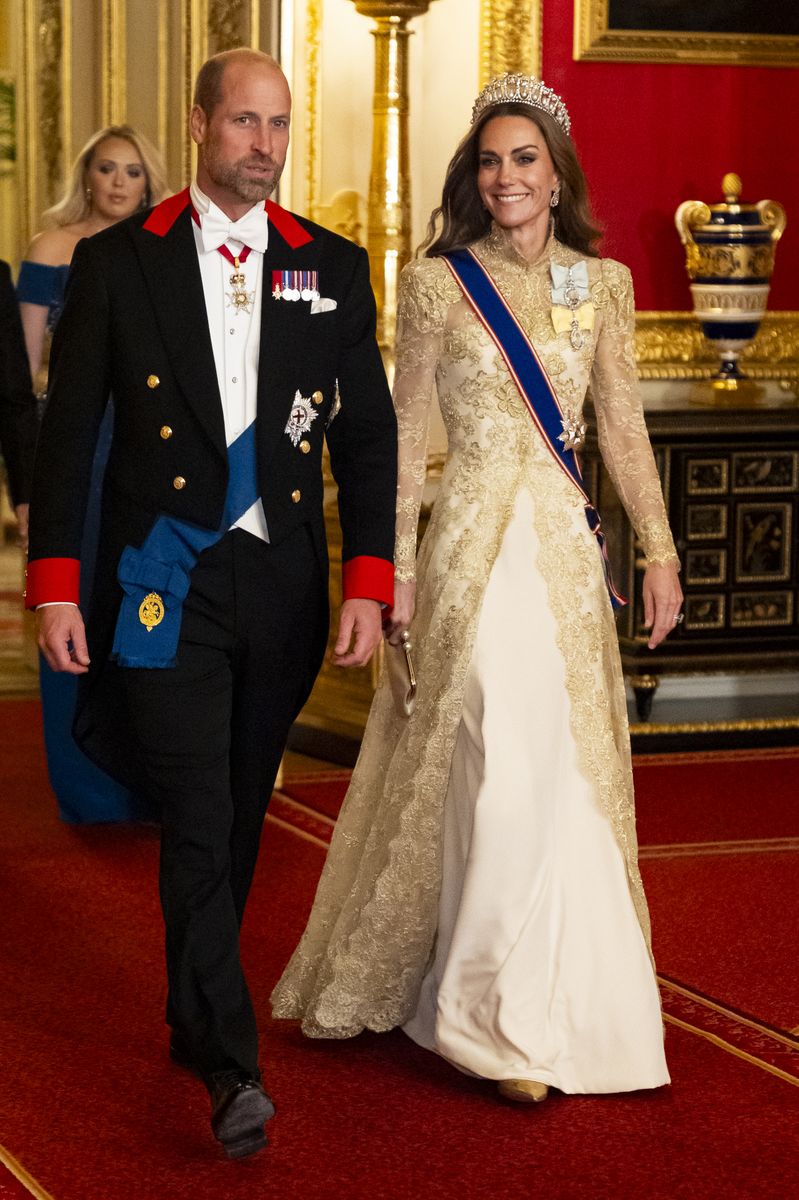
Kate Middleton chose a haute couture gown by British designer Phillipa Lepley, a floor-length floral lace dress in cream and gold tones, with a high neckline and long sleeves, layered over an ivory strapless base.
 © WPA Pool
The silhouette, simple in appearance but rich in texture, revealed only the arms and décolletage. She completed the ensemble with a sash and royal insignia, emphasizing the institutional nature of the evening.
 © WPA Pool
The centerpiece was the Cambridge Lover’s Knot Tiara, created in 1913 by Garrard, the Crown’s first official jeweler, commissioned by Queen Mary and inspired by a 19th-century diadem belonging to her grandmother, the Duchess of Cambridge.
Its design features 19 diamond arches topped with bows, the signature “lover’s knots" from which 19 baroque pearls hang, famed for moving with the wearer and bringing life to the jewel. After passing through Queen Elizabeth II, the tiara became one of Diana, Princess of Wales’ most intimate symbols, though it reportedly caused her severe headaches due to its weight.
 © WPA Pool
After Diana’s death in 1997, it remained in Buckingham Palace’s vaults until 2015, when Kate revived it for a diplomatic reception. Since then, it has become her signature tiara for state banquets, reinforcing continuity among the three great Princesses of Wales of the past century.
Germany at Windsor:
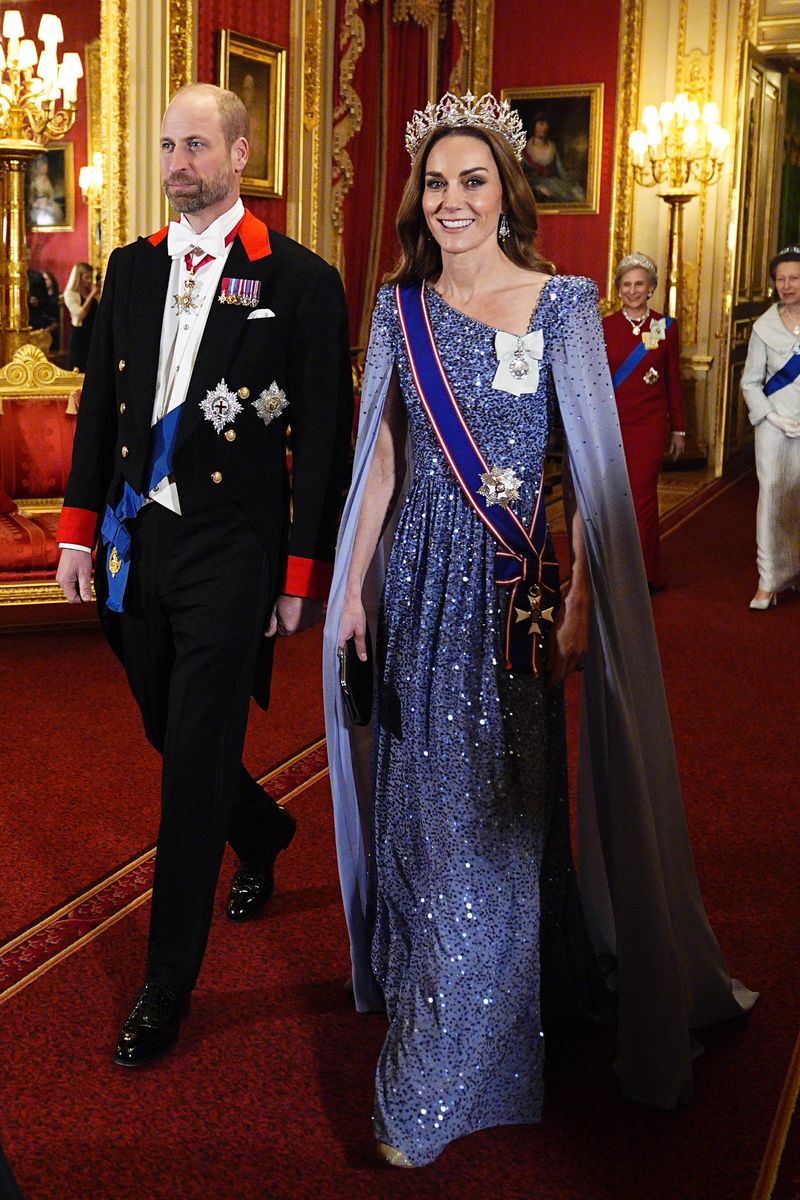
The state banquet in honor of German President Frank-Walter Steinmeier once again turned Windsor into a stage for ceremonial diplomacy. Kate surprised with a historically loaded choice.
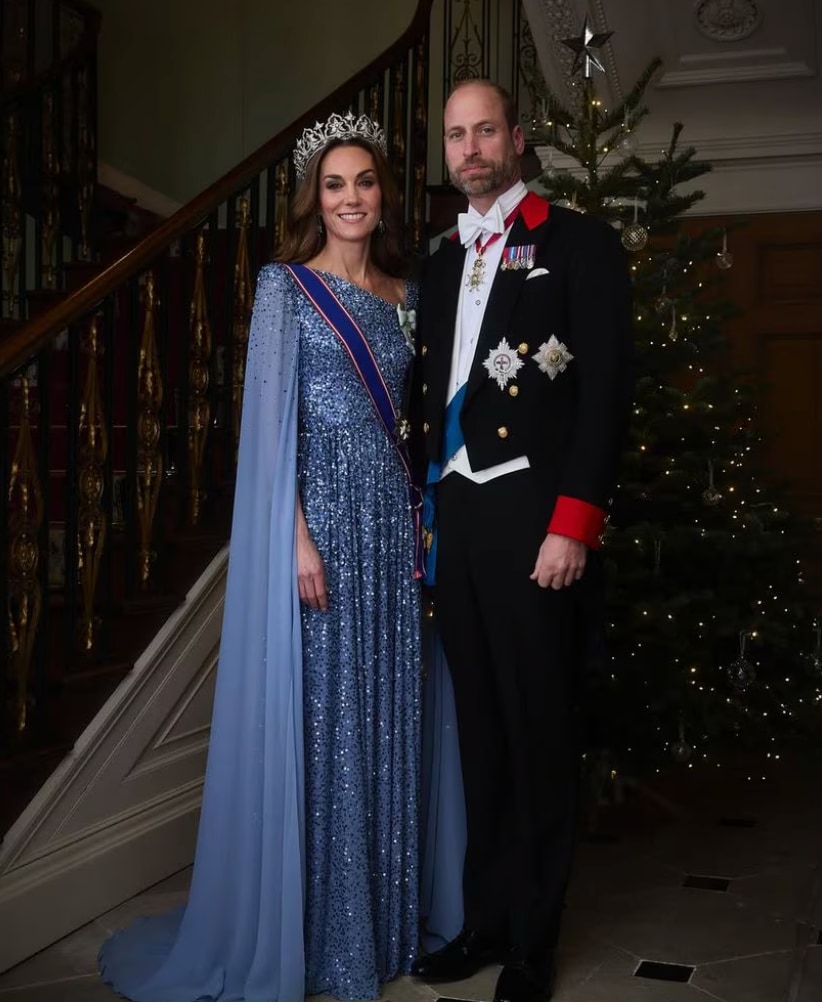
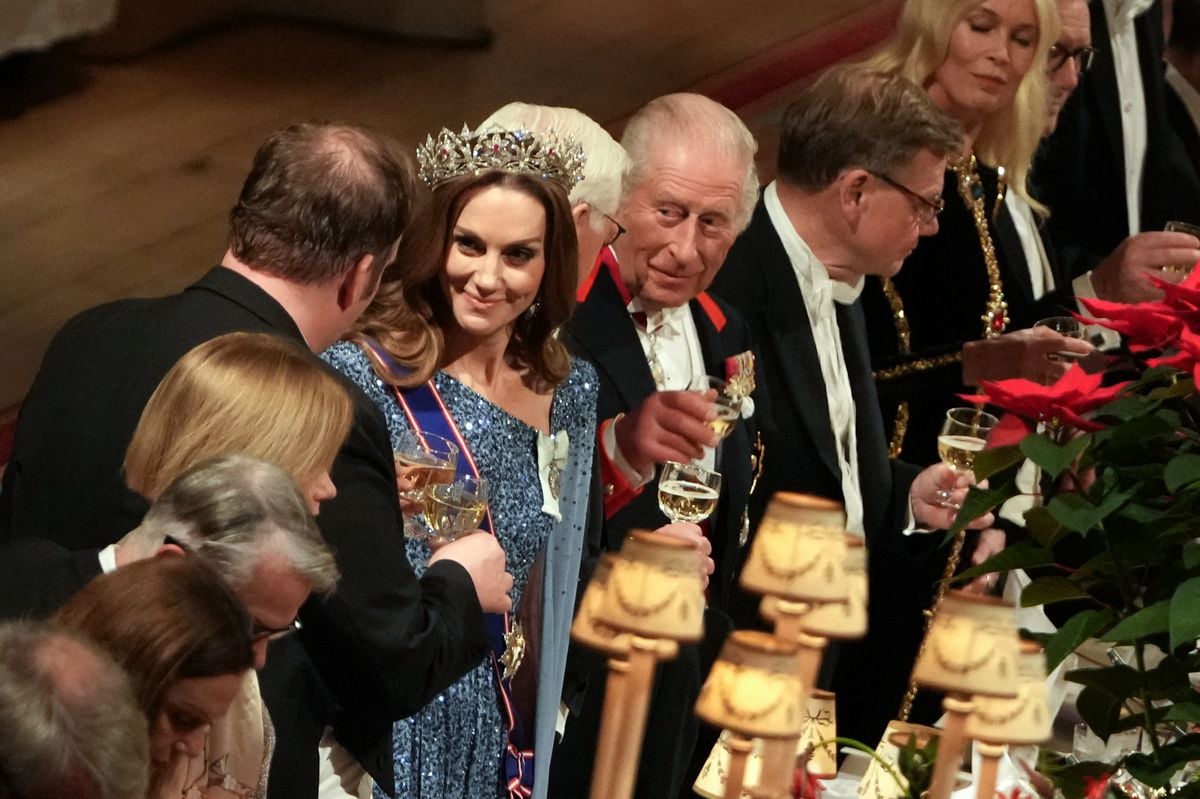
The Princess of Wales opted for Jenny Packham, one of her go-to designers, wearing a blue asymmetrical gown adorned with beadwork and a subtle draped waist that softened the silhouette. From the shoulders flowed a light chiffon cape, functioning as faux sleeves, adding theatricality without excess.
 © Princeandprincessofwales
She debuted the Oriental Circlet Tiara, one of the royal collection’s most imposing and rarely seen pieces. Designed in 1853 by Garrard under Prince Albert’s supervision, it features a silhouette inspired by Indian architecture, with lotus flowers, Mughal-style arches, and a structure closer to a ceremonial crown than a conventional diadem.
 © Pool
Originally set with opals, one of Albert’s favorite gemstones, and over 2,600 diamonds, it was replaced with Burmese rubies in 1902 by Queen Alexandra, considered protective stones, many gifted from Nepal’s ruler to Queen Victoria.
Victoria stipulated that only future queens and queen consorts could wear it. However, she hardly wore it herself, following Albert’s sudden death in 1861, she began forty years of mourning and abandoned colored jewels.
 © CARLOS JASSO
The tiara reappeared with Queen Elizabeth, the Queen Mother, who made it one of her favourites and was immortalized wearing it by Cecil Beaton. Elizabeth II wore it only once, in Malta in 2005. Its return in 2025 reinforces its status as a piece reserved for moments of high institutional symbolism.
Royal Variety:
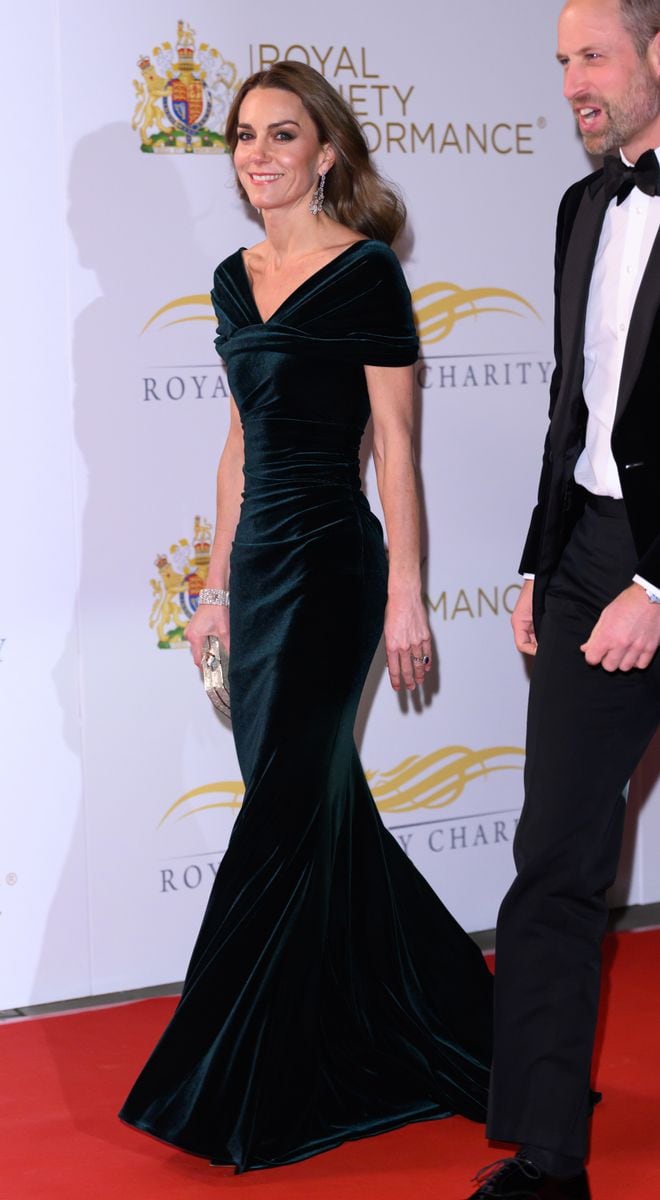
The Royal Albert Hall hosted another edition of the Royal Variety Performance, one of the UK’s most important cultural events, supporting the Royal Variety Charity, which aids entertainment professionals, particularly regarding mental health.
 © Karwai Tang
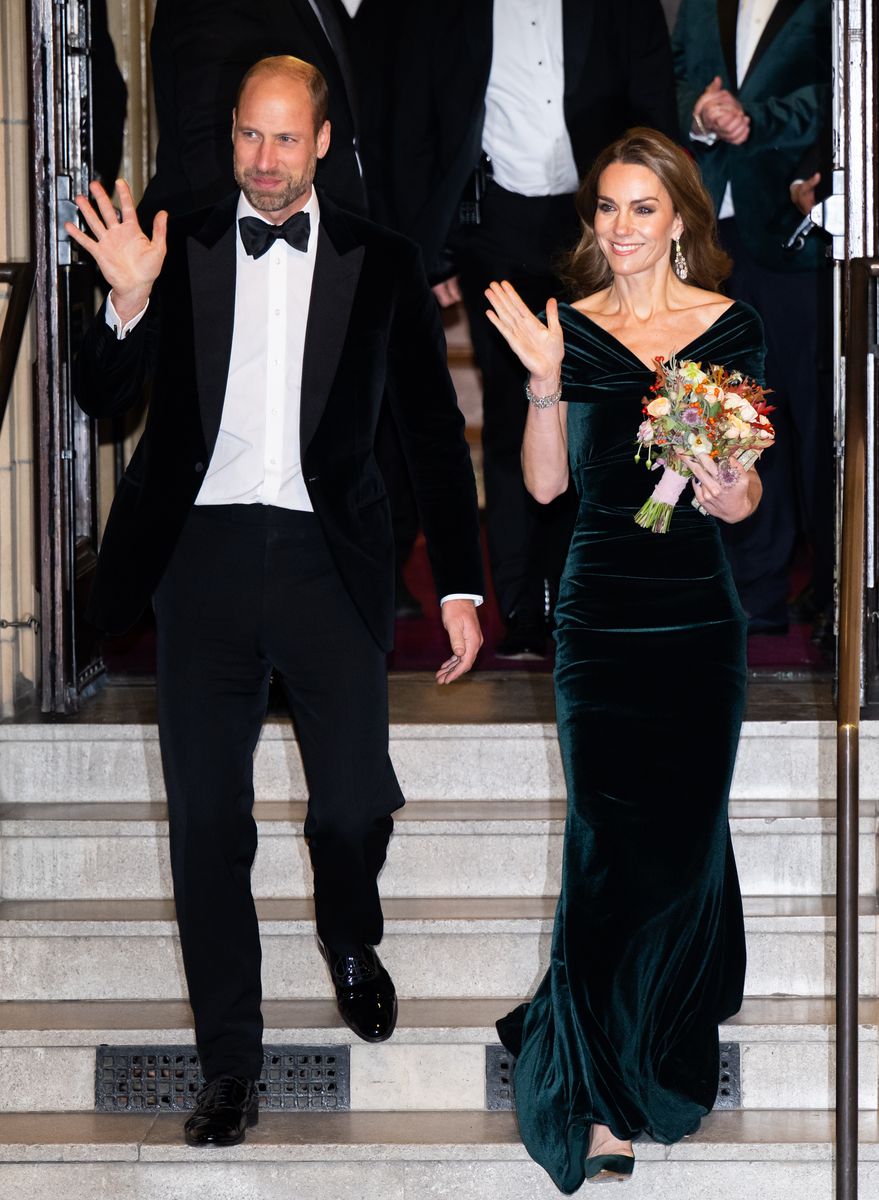
Kate debuted a dark green velvet gown attributed to German designer Talbot Runhof. The fitted silhouette, slightly flared skirt, and plunging neckline incorporated a clever bodice detail mimicking an integrated bolero. It was an elegant, evening-appropriate, festive choice, distinct from her usual official-event outfits.
 © Samir Hussein
She completed the look with Greville Chandelier earrings, a Queen Mary-style choker bracelet, coordinated accessories, Manolo Blahnik heels, and a Jenny Packham jewel bag.
France at Windsor:
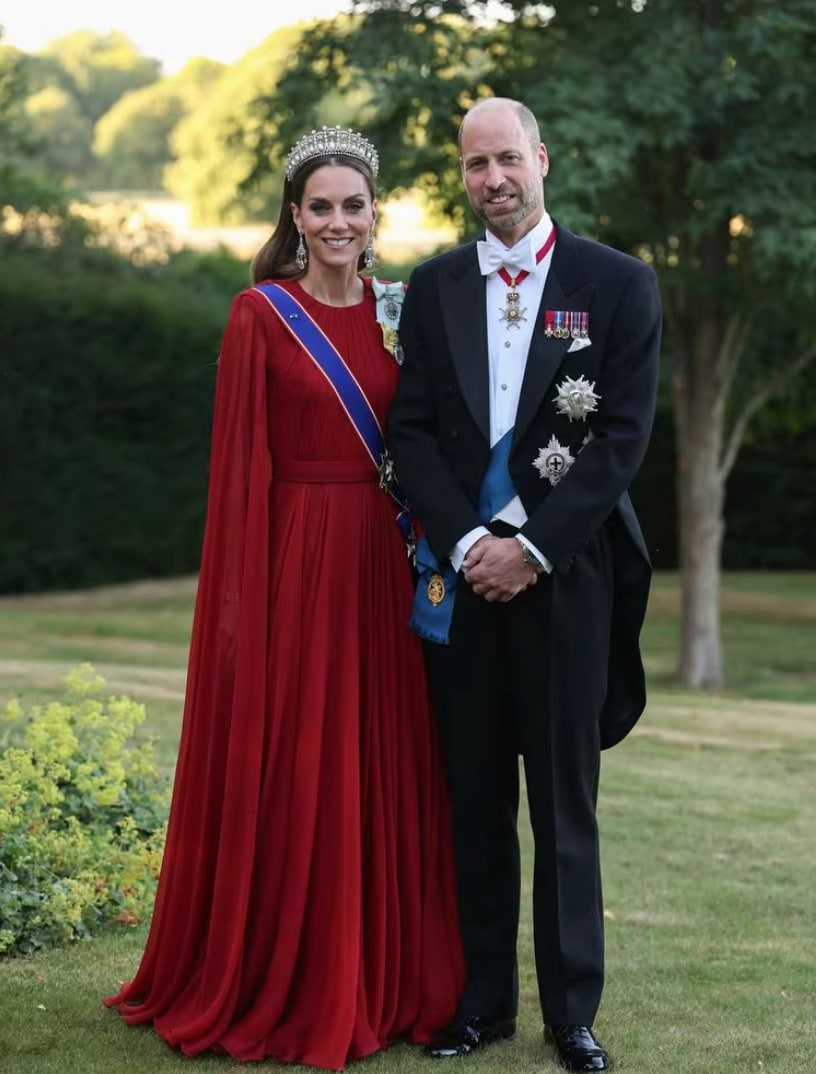
The state banquet in honor of French President Emmanuel Macron once again placed Windsor at the center of the international stage. For the first time since 2023, Kate returned to wearing a tiara.
 © Princeandprincessofwales
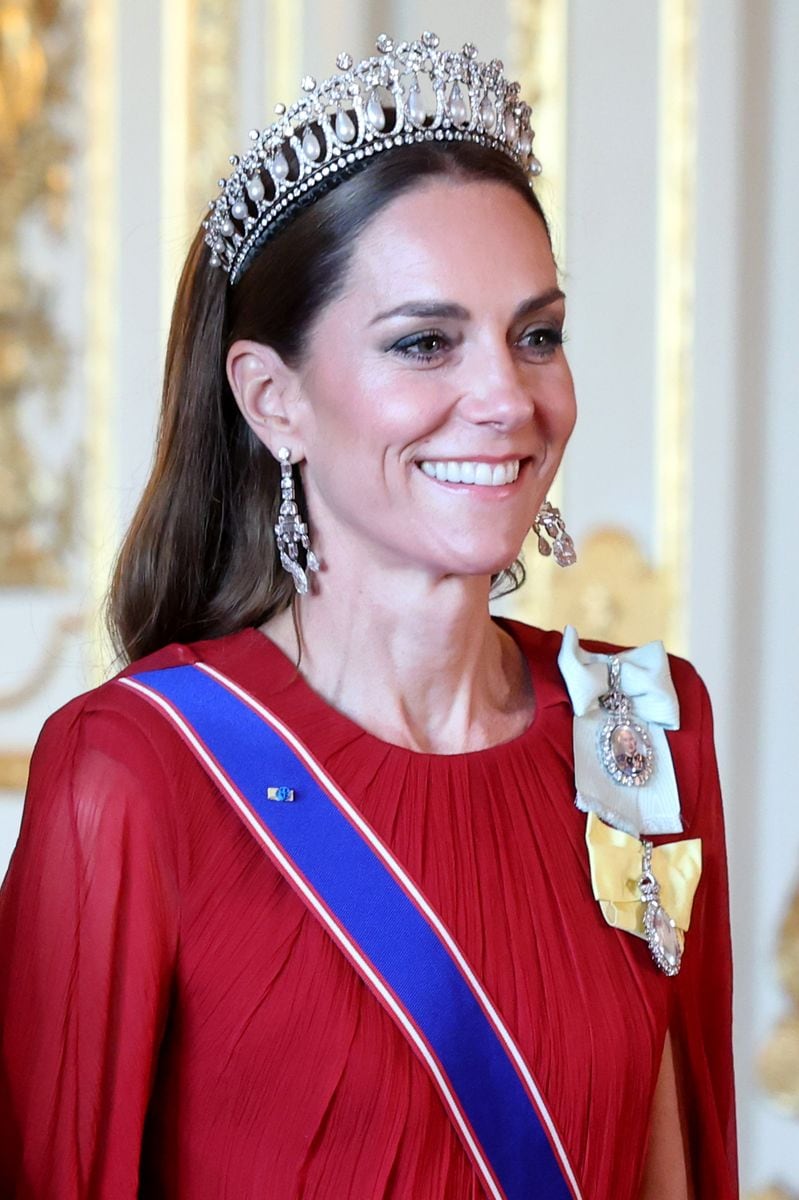
She appeared in a red Givenchy gown by Sarah Burton, crafted in pleated silk crepe with an integrated shoulder cape, adding movement and solemnity. The choice was a lesson in aesthetic diplomacy, a British designer leading a French house, symbolizing the relationship between the two countries.
 © Chris Jackson
The Princess once again wore the Lover’s Knot Tiara, paired with a lily-of-the-valley embroidered clutch. The ensemble reinforced the sense of continuity, paying tribute to Diana, Princess of Wales, and the tradition of great state banquets.