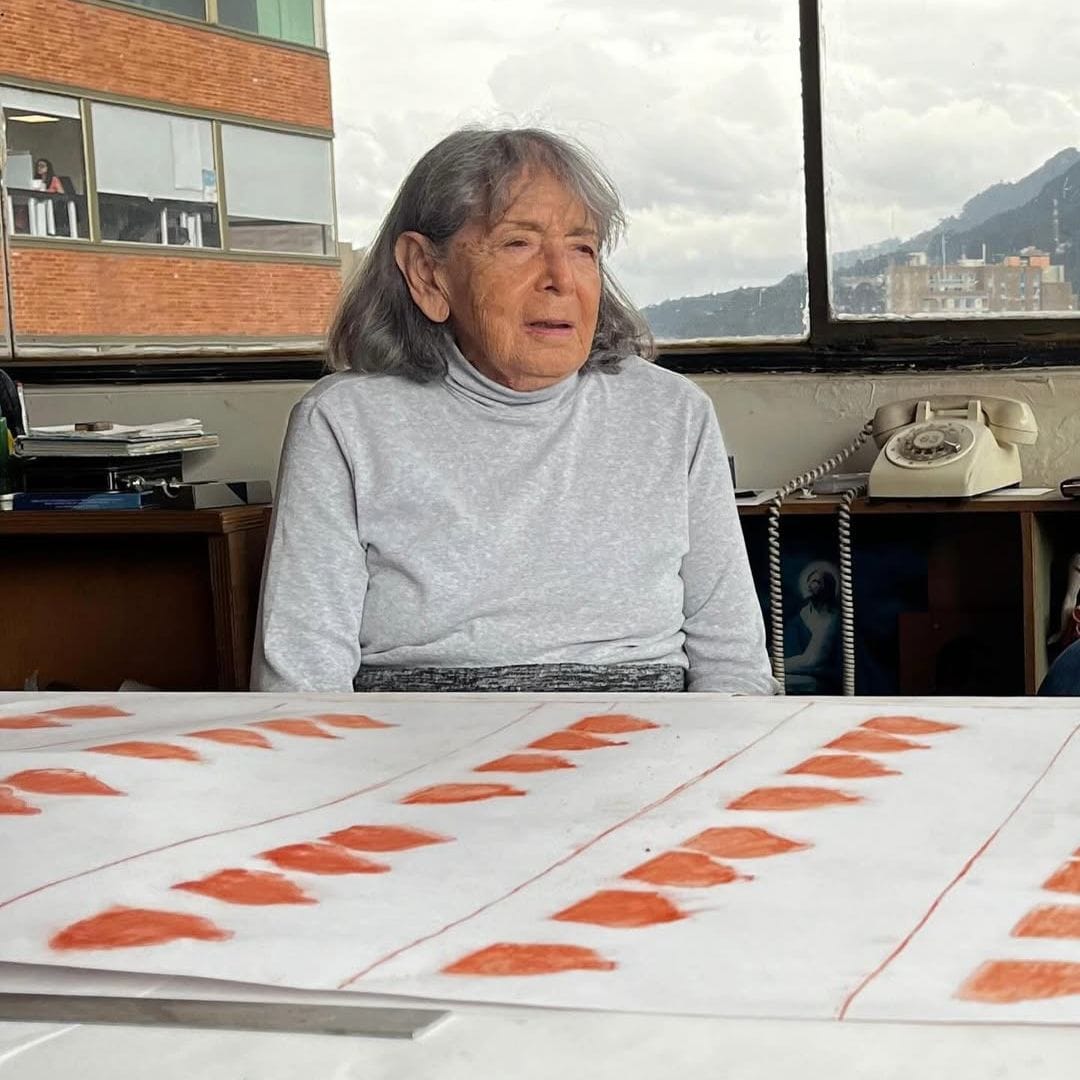
Renowned Colombian painter Beatriz Gonzalez died at her home in Bogota on January 9. In the days since, the art world has shared an outpouring of tributes honoring a singular vision that left a lasting mark.
The artist became widely known for repainting press photographs of Colombia’s presidents, massacres, and public mourning in a visual style borrowed from commercial prints. She has said that by reproducing familiar images in a deliberately flattened, often garish style, she revealed how society learns to live with the spectacle of its own violence.
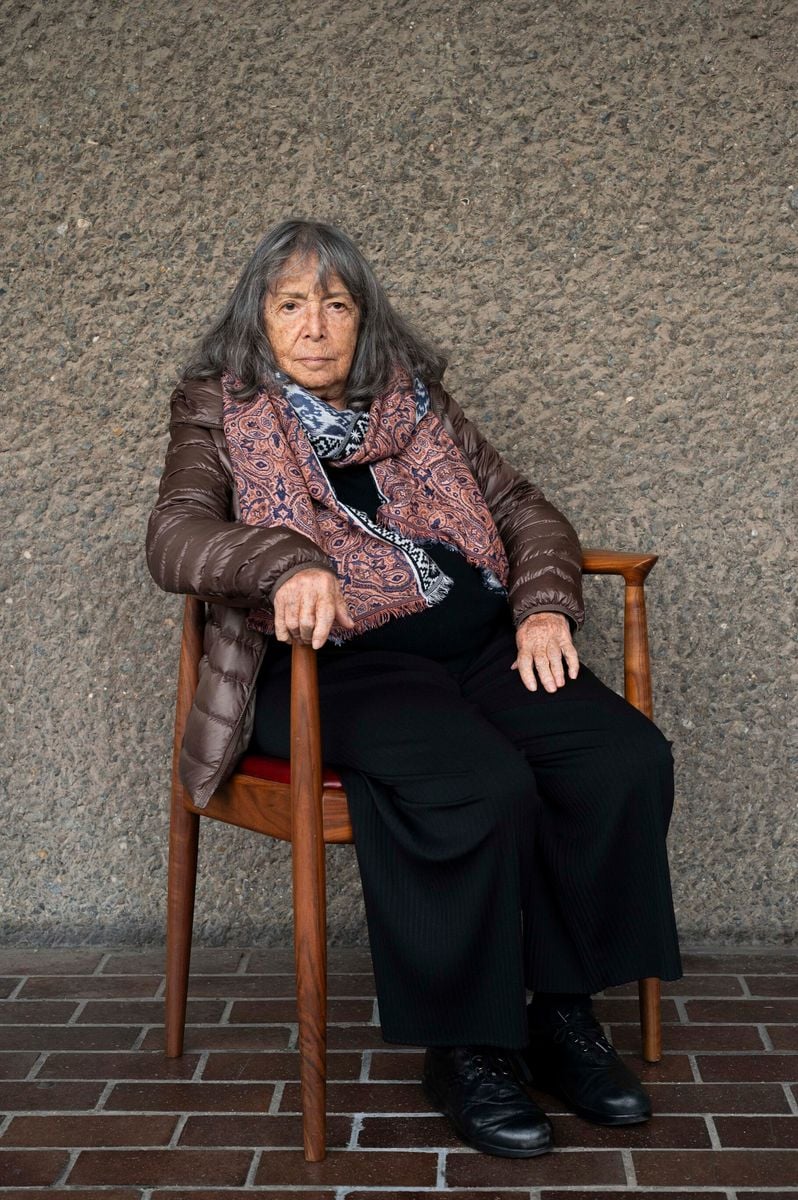 © Barbican Centre
In a tribute shared on Instagram, Galerie Peter Klichmann wrote that Gonzalez, through her vividly colored paintings, preserved the memory of events and victims often absent from official histories. He wrote, “For more than six decades, her engaged artistic practice offered sharp and poignant commentary on Colombia’s violent realities. Through her powerful and often vividly colored paintings, she preserved the memory of events and victims that were frequently absent from official histories.”
"González was a key cultural figure in Latin America and an inspiration to generations of artists.”
The Museo de Arte Moderno de Medellín (MAMM) also honored Gonzalez, describing her as an artist, historian, curator, and critic whose work and thinking left “a profound legacy of commitment to the social, political, and cultural realities of our country.”
The museum highlighted her lifelong exploration of color, technique, and visual references, noting that her work opened new paths for the appropriation and re-signification of everyday images. It pointed to key works including Los suicidas del Sisga (1965), Lesa majestad (1974), and Decoración de interiores (1981), as well as later projects central to collective memory, such as Auras anónimas (2009) and her Piedad series, which addressed mourning and violence.
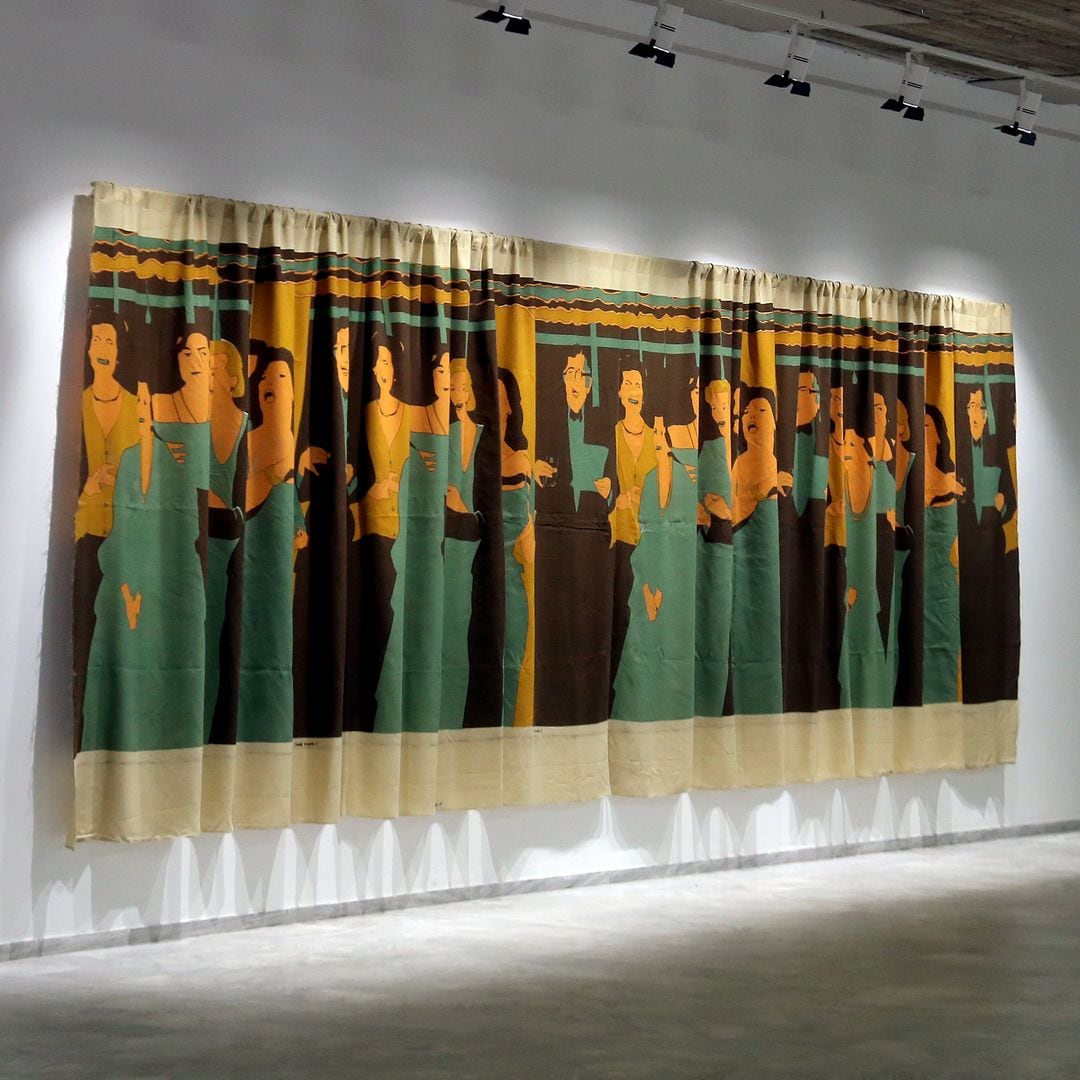 © NurPhoto
Casas Riegner, the Bogota gallery that represented her, described Gonzalez as “one of the most important artists in Colombia and a fundamental figure in contemporary Colombian and global art.” The gallery noted that in 2025, it presented her final exhibition, featuring the curtains Guerra y Paz, as part of the celebration of her 93rd birthday.
In a longer farewell message, the gallery emphasized the enduring nature of her vision, writing, “To say goodbye is to acknowledge the loss of her physical presence, but also the eternal permanence of her way of seeing, feeling, and reading this country as only she knew how.”
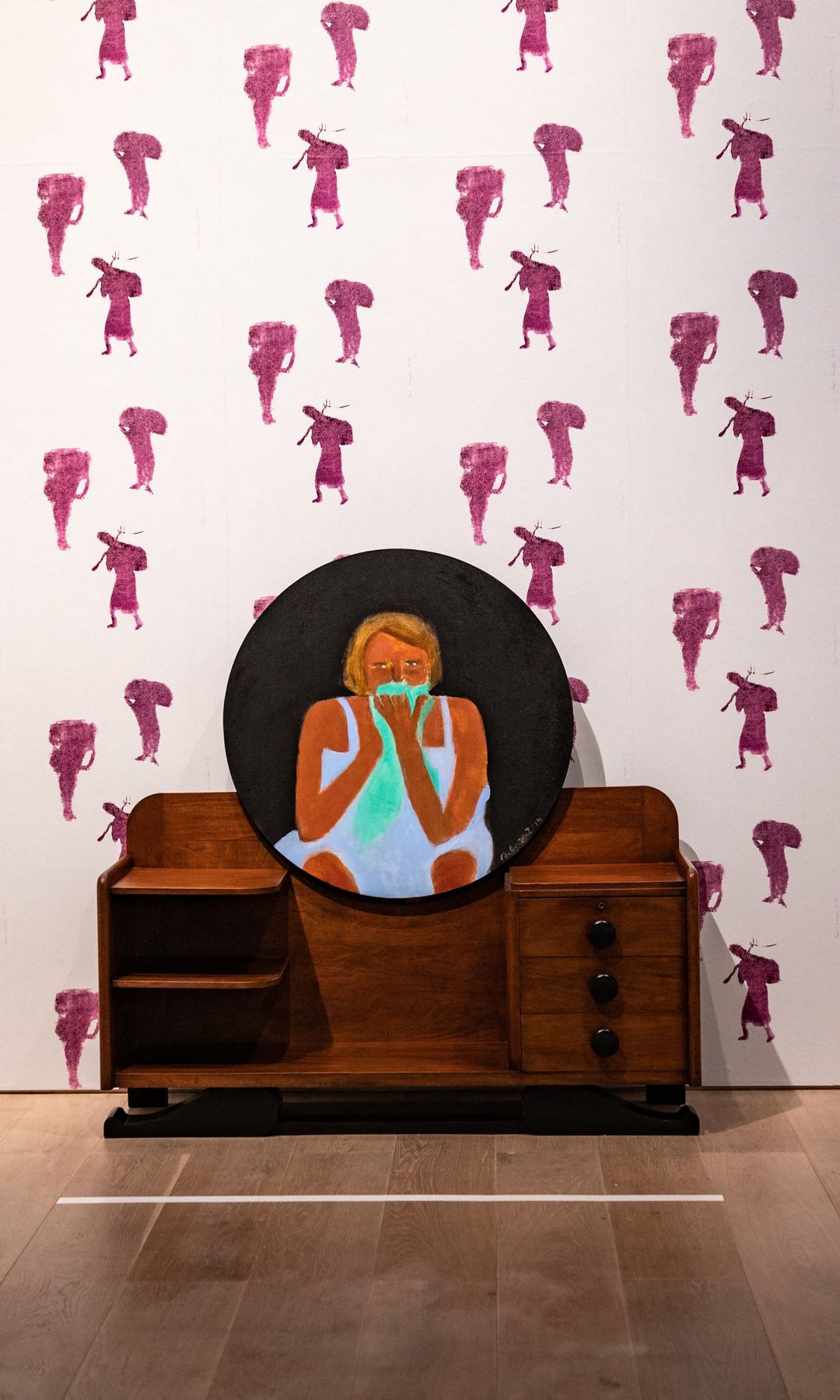 © PHILIP FONG
“Thank you for teaching us that art is radical empathy with those who have no name, with the absent ones whom you never stopped remembering. For showing us that one can look tragedy in the face and transform it into art that transcends time. That humor is resistance.”
Gonzalez was born in the Colombian city of Bucaramanga in 1932 and grew up during La Violencia, a period of intense political conflict that shook the country throughout the 1940s and 1950s. She graduated in 1962 with a bachelor’s degree in fine arts. She gained recognition in the 1960s and 1970s for reinterpretations of Renaissance masterpieces by artists such as Raphael and Leonardo da Vinci, rendered in an intentionally off key and unique flattened style. Critics often grouped her with Pop Art, a label she always rejected.
Reflecting on her reputation, Gonzalez told ArtNexus, “I was always the transgressor, Beatriz Gonzalez, the controversial artist. I was repeatedly saddled with that adjective. “I didn’t like the word controversial all that much.”