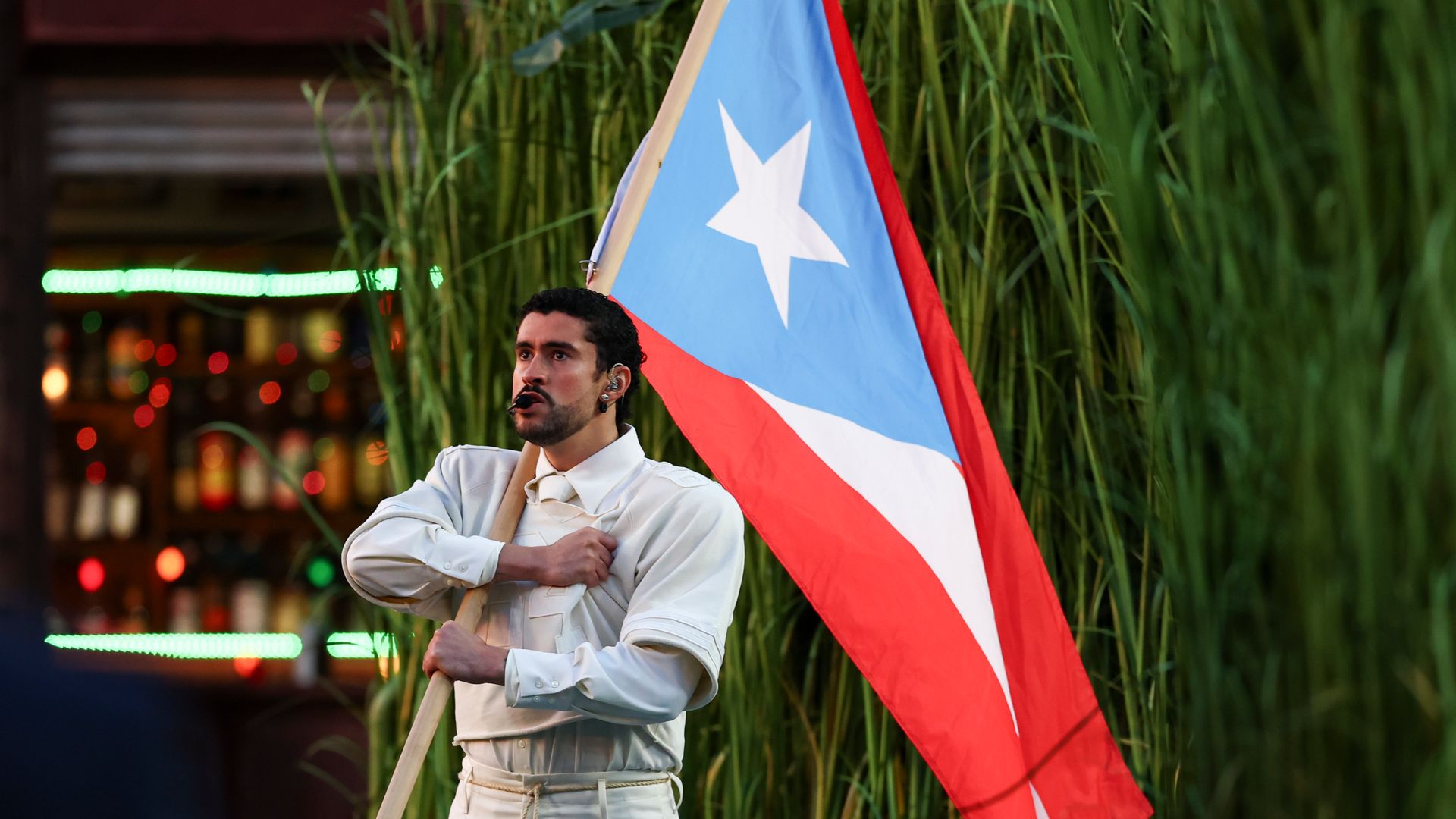
Bad Bunny transformed the 2026 Super Bowl halftime show into a sweeping, culturally layered production that fused reggaeton, salsa, and hip hop with pointed symbolism rooted in Puerto Rican history. The Grammy-winning artist, born in Bayamón, used the NFL’s biggest stage on Sunday, Feb. 8, to spotlight Latino identity, diaspora pride, and the island’s complex political reality.
Rather than deliver a standard medley of chart-topping hits, the global superstar constructed a narrative-driven performance packed with visual metaphors and community references. From recreated sugar cane fields and traditional pava hats to nods to endangered native species and generational storytelling, every scene carried intention. The result was not just a halftime show, but a cultural statement woven through music, fashion, food, and memory.
 © Kevin Mazur/Getty Images for Roc
A Historic First for the Super Bowl
This year’s halftime show marked the first primarily Spanish-language performance in Super Bowl history. Bad Bunny also became the first Spanish-language Latin solo artist to headline the event.
That alone reshaped the cultural conversation around the NFL’s biggest night. Spanish-language dominated the setlist, which included “Tití Me Preguntó,” “Yo Perreo Sola,” “EoO,” “Voy a Llevarte Pa PR,” “Monaco,” “BAILE INOLVIDABLE,” “NUEVAYoL,” “LO QUE LE PASÓ A HAWAii,” “El Apagón,” “CAFé CON RON,” “DtMF” and a salsa version of “Die With a Smile.”
 © AFP via Getty Images
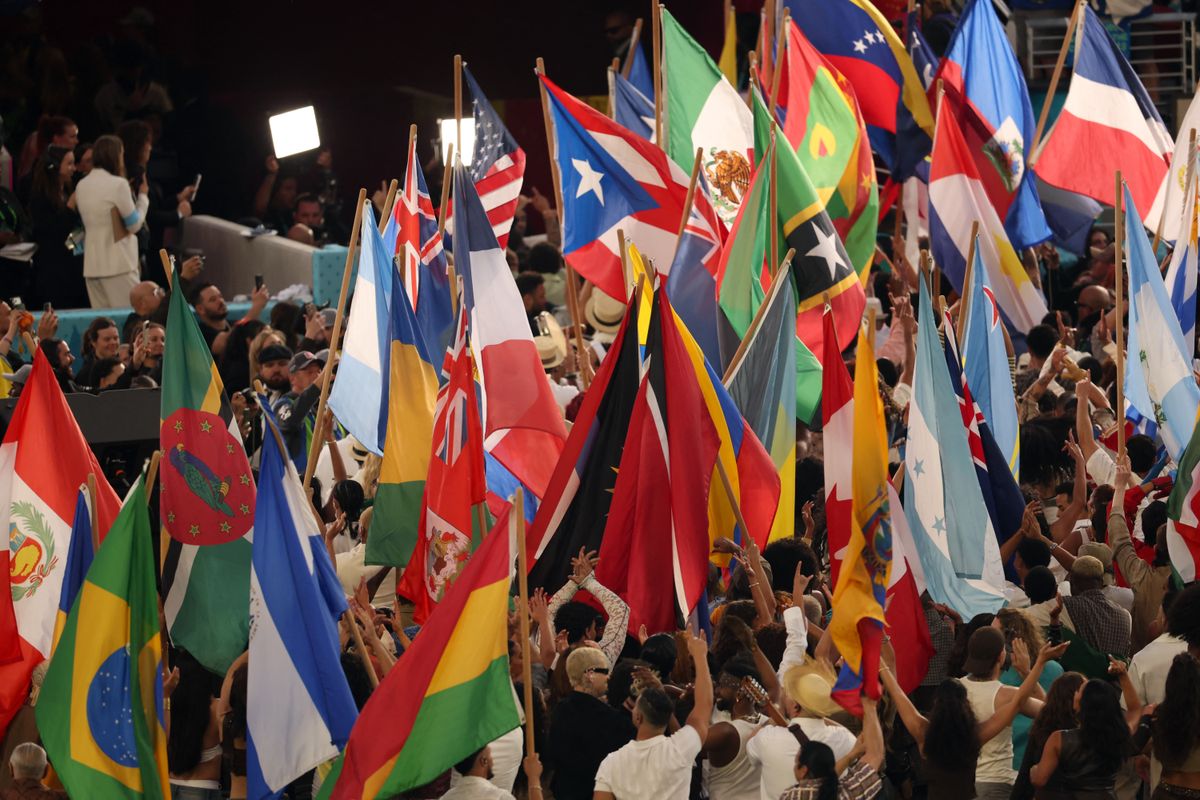
Closing the performance, Bad Bunny said “God Bless America” and then named every country in North, Central, South, and Latin America, emphasizing that America does not just mean the United States. Behind him, a billboard read: “The only thing more powerful than hate is love.”
Puerto Rico on the 50-Yard Line
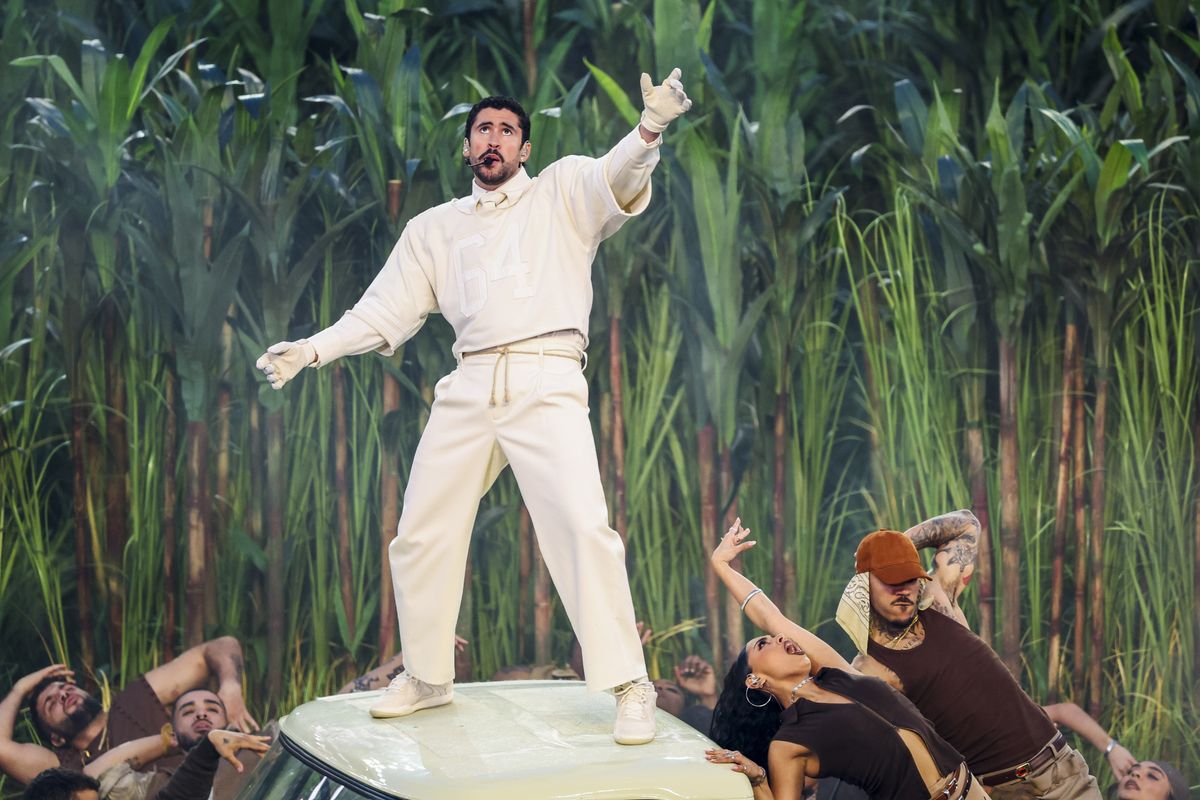
From the moment he stepped onstage, the visual language was clear. The backdrop resembled Puerto Rico’s green sugar cane fields. Dancers dressed as field workers wore pavas, traditional straw hats made from Puerto Rican hat palm leaves.
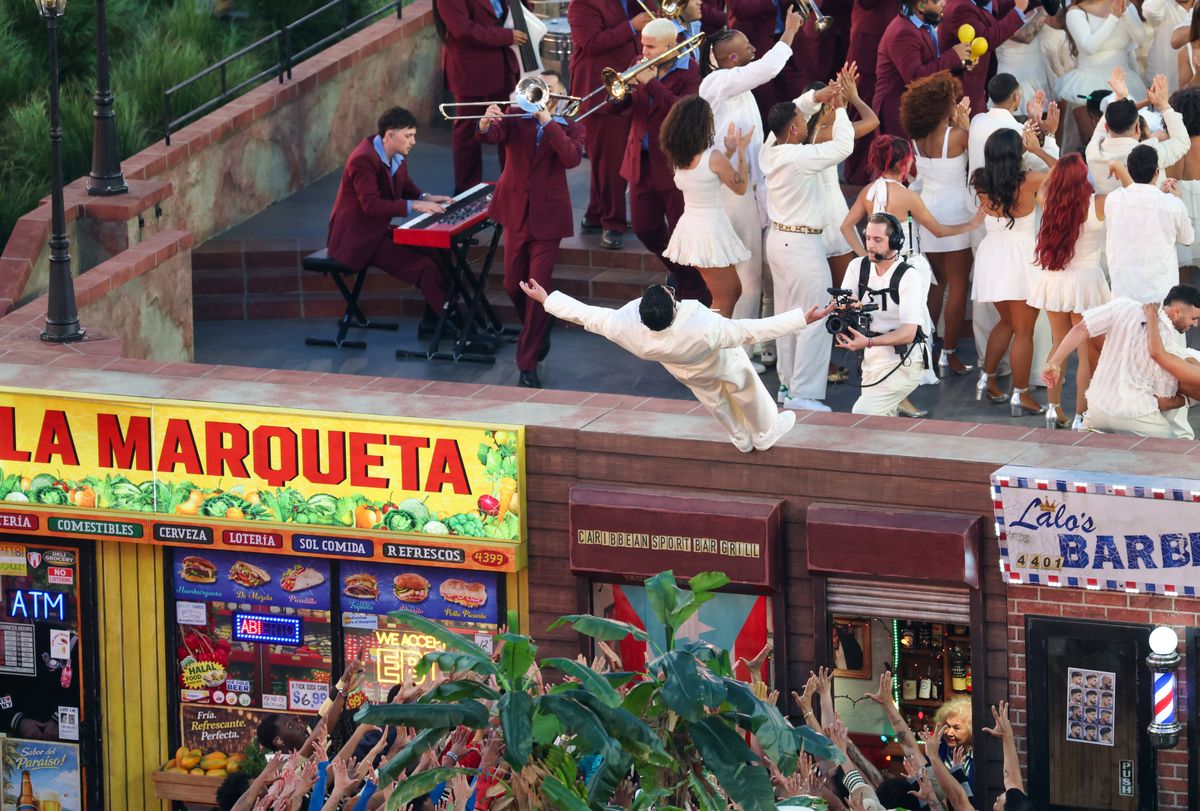
As he performed “Tití Me Preguntó,” he moved through recreated slices of island life. There was a coco frío cart, referencing the fresh coconut water commonly sold by street vendors. He grabbed a piragua from a colorful stand, spotlighting the beloved cone-shaped shaved ice dessert. Taco stands, bodegas, and a storefront reading “La Marqueta” evoked Puerto Rican communities in New York and the broader diaspora experience.
 © Getty Images
A Living Room, A Wedding, and Latino Nostalgia
At one point, the broadcast panned to a living room where a mother, father, and son watched footage of Bad Bunny’s recent Grammys acceptance speech. In that moment, he handed the Grammy to the young boy, who could be interpreted as a younger version of himself or a symbol of future generations.
There was also a child “sleeping” across two chairs in the middle of a wedding party. For many Latino viewers, that image hit home. It referenced the shared experience of growing up at family parties and falling asleep on makeshift beds while adults danced late into the night.
The show even featured a real wedding during the performance. The inclusion of a wedding, perhaps the most literal celebration of love, felt intentional amid intense divisiveness. It echoed a line from his Grammys speech: “the only thing more powerful than hate is love, and if we fight, we have to do it with love.”
 © Kevin Mazur/Getty Images for Roc
Honoring Puerto Rican Icons and Reggaeton History
Bad Bunny also paused to honor the genre that shaped him. After a mashup of “Yo Perreo Sola” and “Voy a Llevarte Pa PR,” he performed a snippet of Daddy Yankee’s 2004 hit “Gasolina.” He sampled Tego Calderón’s “Pa’ Que Retozen” and Don Omar’s “Dale Don Dale,” nodding to reggaeton’s foundational figures.
Before launching into “Monaco,” the camera showed a projection of Sapo Concho, the amphibious character featured in the short film and music videos tied to “Debí Tirar Más Fotos.”
Concho represents the Puerto Rican crested toad, an endangered species on the island. It was a subtle but pointed environmental symbol woven into a mainstream spectacle.
 © Sipa Usa/The Grosby Group
Surprise Guests and Fashion Statements
Toñita, the owner of the Caribbean Social Club in Williamsburg, made a special appearance. Bad Bunny has referenced her in “NUEVAYoL” and previously celebrated the release of “Un Verano Sin Ti” at her club. He even fundraised to help her business stay afloat. Her cameo grounded the show in real community ties.
Latino stars Pedro Pascal, Cardi B, Jessica Alba, Karol G, Young Miko, and more were dancing from the casita.
 © Billboard via Getty Images
Lady Gaga joined him for a salsa rendition of “Die With a Smile,” ending in a salsa dance break with Bad Bunny. She wore a baby-blue dress by Dominican designer LUAR and accessorized with a red floral brooch resembling Puerto Rico’s maga flower.
 © AFP via Getty Images
Ricky Martin also made a surprise appearance, performing in front of a replicated backdrop of the “Debí Tirar Más Fotos” album cover.
 © Sipa Usa/The Grosby Group
The Undercurrent
Songs like “El Apagón” and “LO QUE LE PASÓ A HAWAii” carry sharp commentary about colonialism, gentrification, and power outages in Puerto Rico. Placing them in a Super Bowl setlist was not accidental.
By naming countries across the Americas and reframing what America means, Bad Bunny challenged narrow definitions of identity on one of the most-watched broadcasts of the year.
 © Kevin Mazur/Getty Images for Roc
The performance was joyful, colorful, and dance-heavy. It was also deliberate. Beneath the confetti and choreography sat a layered narrative about heritage, migration, resiliency,e and love as resistance.
Bad Bunny did not just headline the Super Bowl. He turned it into a cultural statement, one piragua and pava at a time.