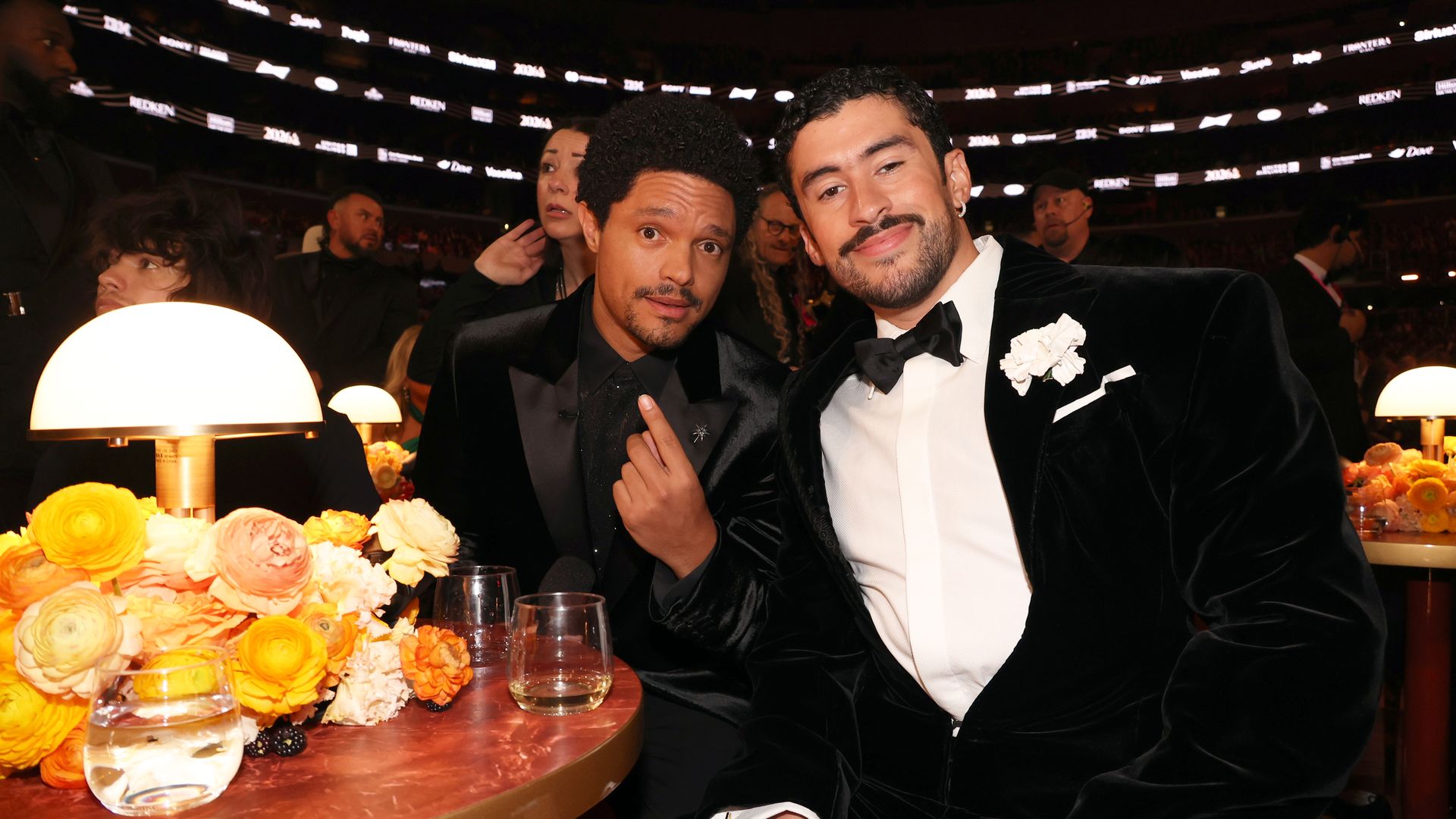
The 68th annual Grammy Awards delivered no shortage of standout moments, but one of the most talked-about scenes unfolded quietly from the audience rather than the main stage. Bad Bunny, the Puerto Rican global star who has reshaped modern pop and Latin music, was unexpectedly drawn into a live performance moment by host Trevor Noah. The twist was simple and effective. Bad Bunny was not supposed to perform at all.
Just one week ahead of his scheduled Super Bowl appearance, Bad Bunny is contractually banned from performing publicly. The Grammys segment leaned into that limitation rather than ignoring it, turning restraint into comedy and cultural commentary.
 © Kevin Mazur/Getty Images for The
Trevor Noah Pushes the Moment Without Crossing the Line
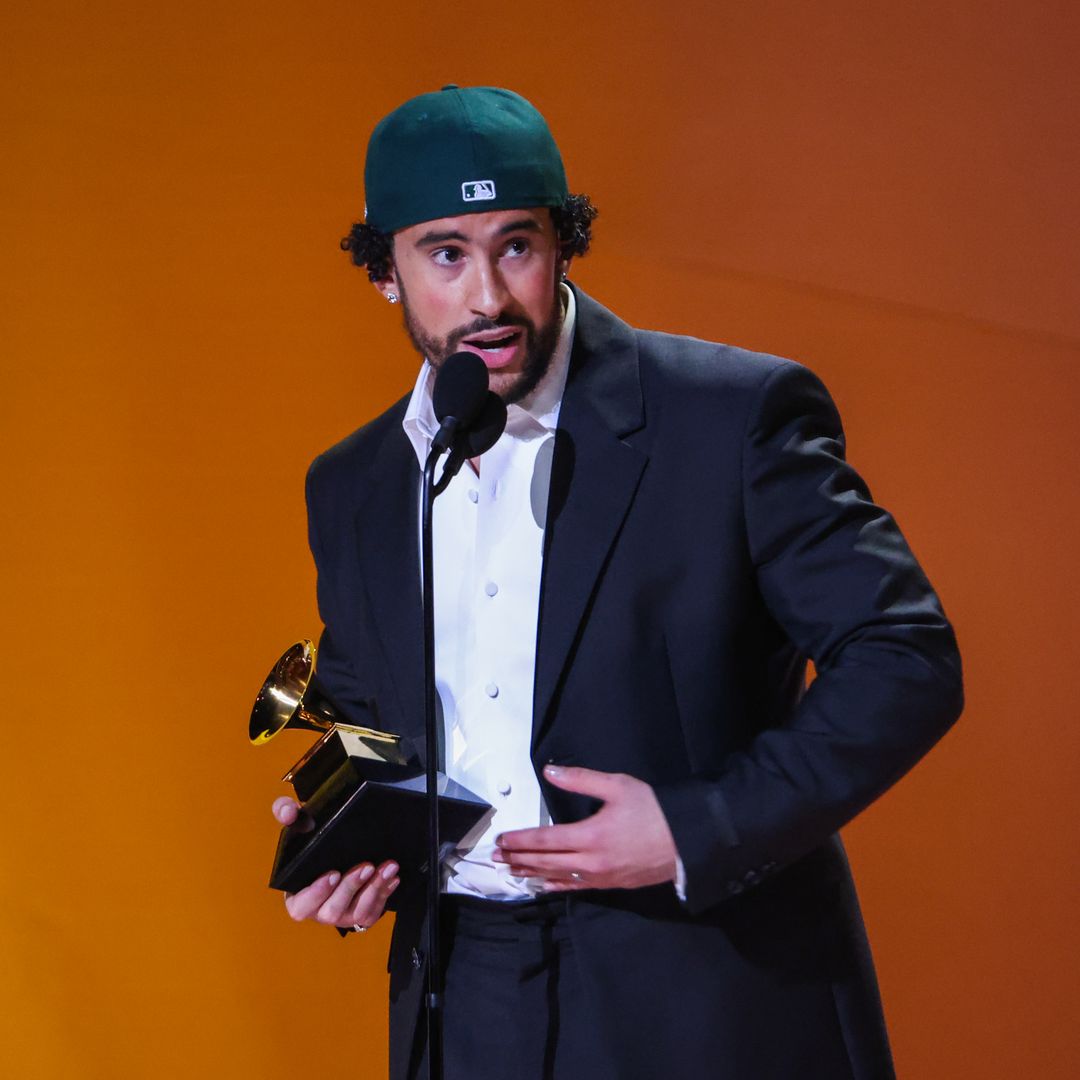
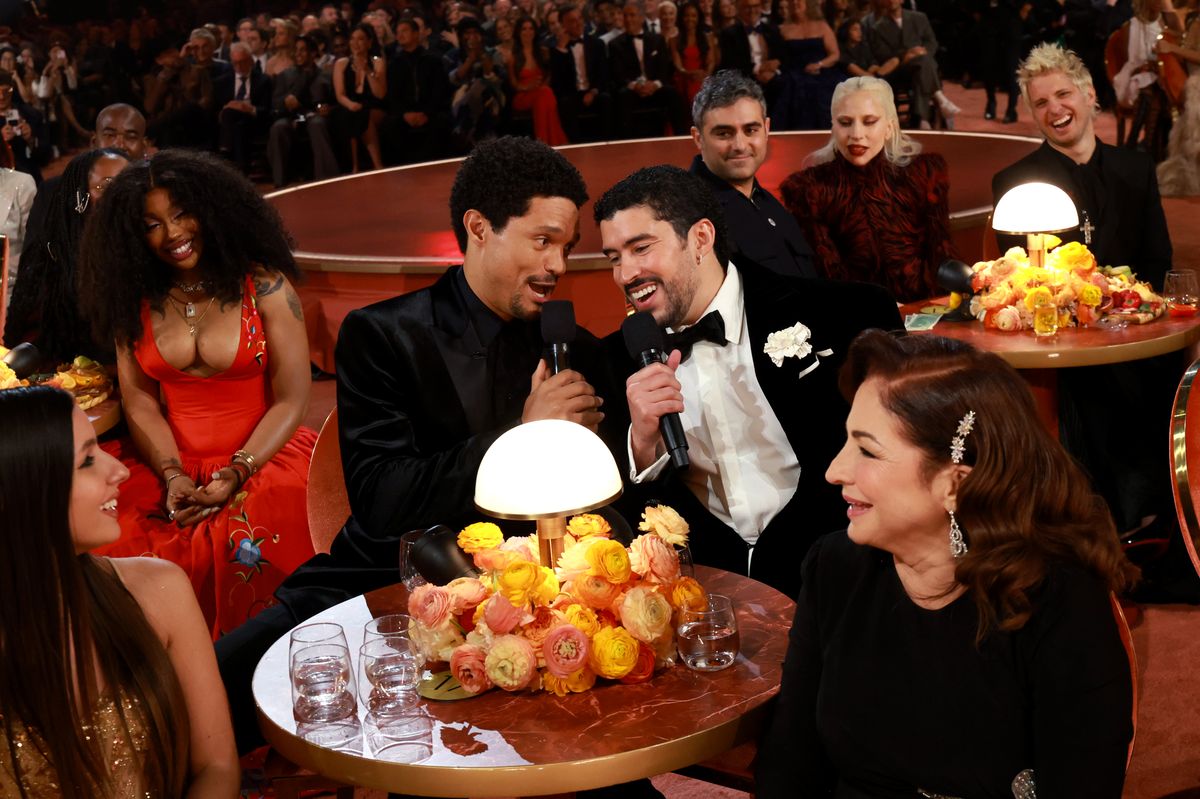
Seated beside Bad Bunny in the audience, Trevor Noah opened the exchange by acknowledging the artist’s earlier acceptance speech, which directly criticized ICE and resonated across social media and the room itself. Noah praised the speech for its impact and clarity before nudging toward a performance, while also openly acknowledging that Bad Bunny could not legally do so. “It was really impactful. The only thing I felt that was missing was man, if this guy could perform some of that. I know you can’t contractually, I know you can’t,” he said.
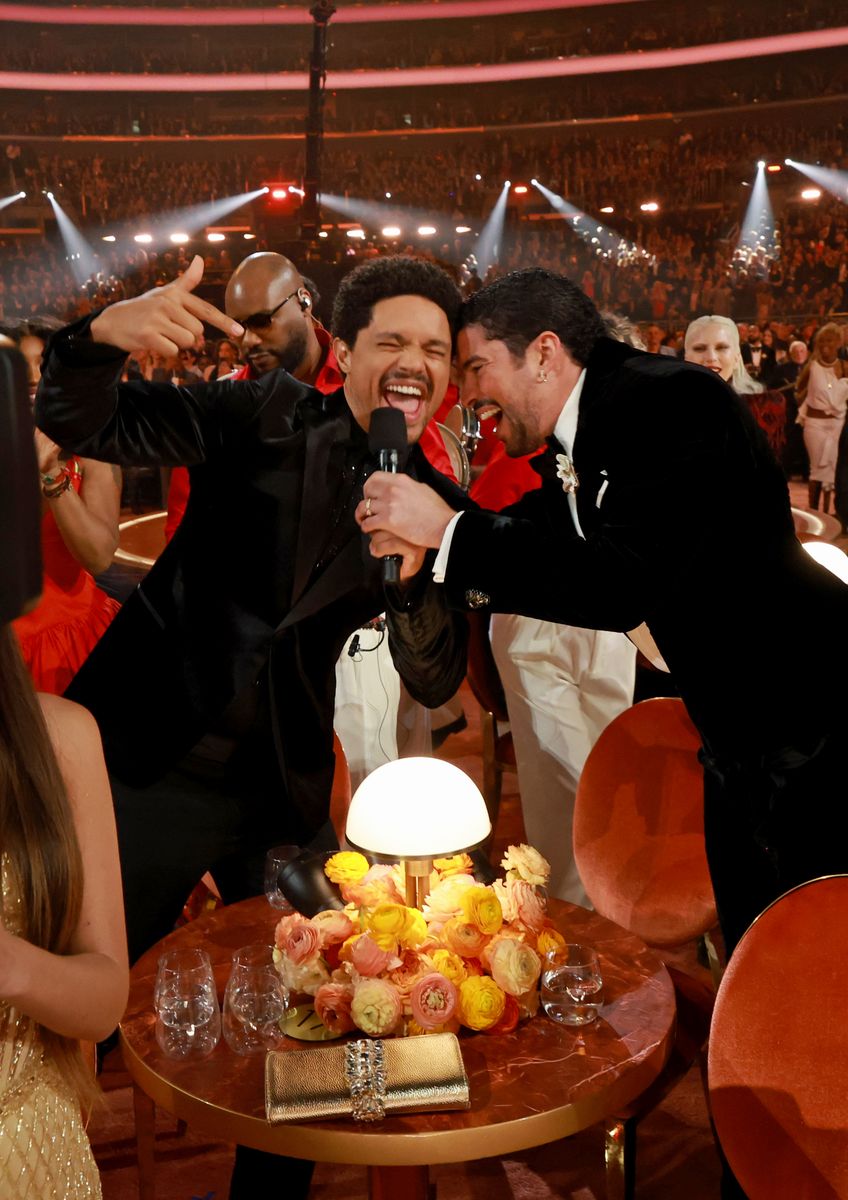
Instead of forcing a spectacle, the moment became a playful negotiation between artist and host, with the audience fully aware of the boundaries in place. Bad Bunny responded calmly, reiterating that he was enjoying the night and had no intention of performing. “I’m okay, I’m having fun, I’m having a great night,” Bad Bunny assured.
Turning the Spotlight Back on the Host
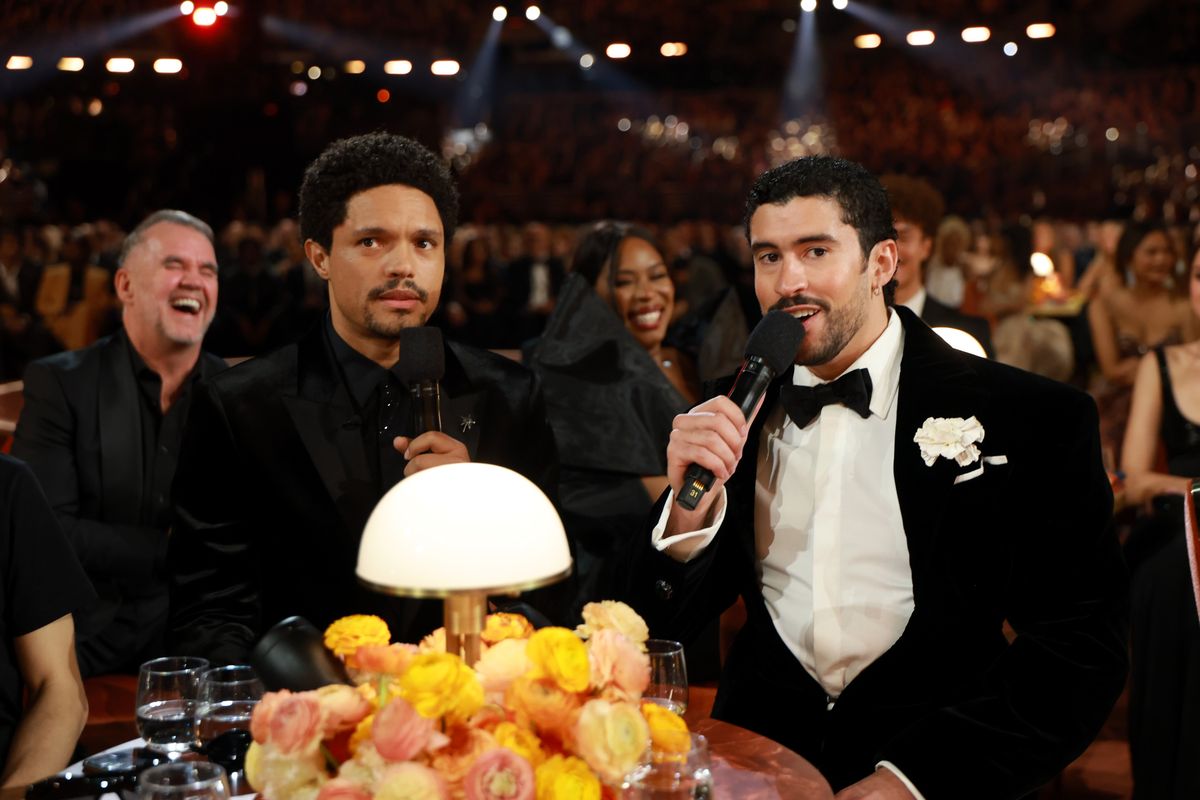
Rather than letting the exchange revolve solely around him, Bad Bunny redirected the conversation by asking Trevor Noah how it felt to be hosting his final Grammys after six consecutive years. Noah described the moment as bittersweet and reflective, touching on gratitude and the desire to have documented more memories along the way.
 © Kevin Mazur/Getty Images for The
That reflection opened the door to a clever cultural crossover. Noah referenced Bad Bunny’s new album “Debí Tirar Más Fotos,” translating the title into English and connecting its theme of memory and presence to his own experience hosting the show. “Man, I should have taken more photos…I should have given more hugs and more kisses,” Trevor said, referencing Bad Bunny’s new album, Debí Tirar Más Fotos, which means in Spanish, I should have taken more photos.”
Bad Bunny caught the reference with a smile. “Wait, is that my song in English?” Bad Bunny pointed out.
 © Los Angeles Times via Getty Imag
A Live Band, A Technicality, and a Shared Smile
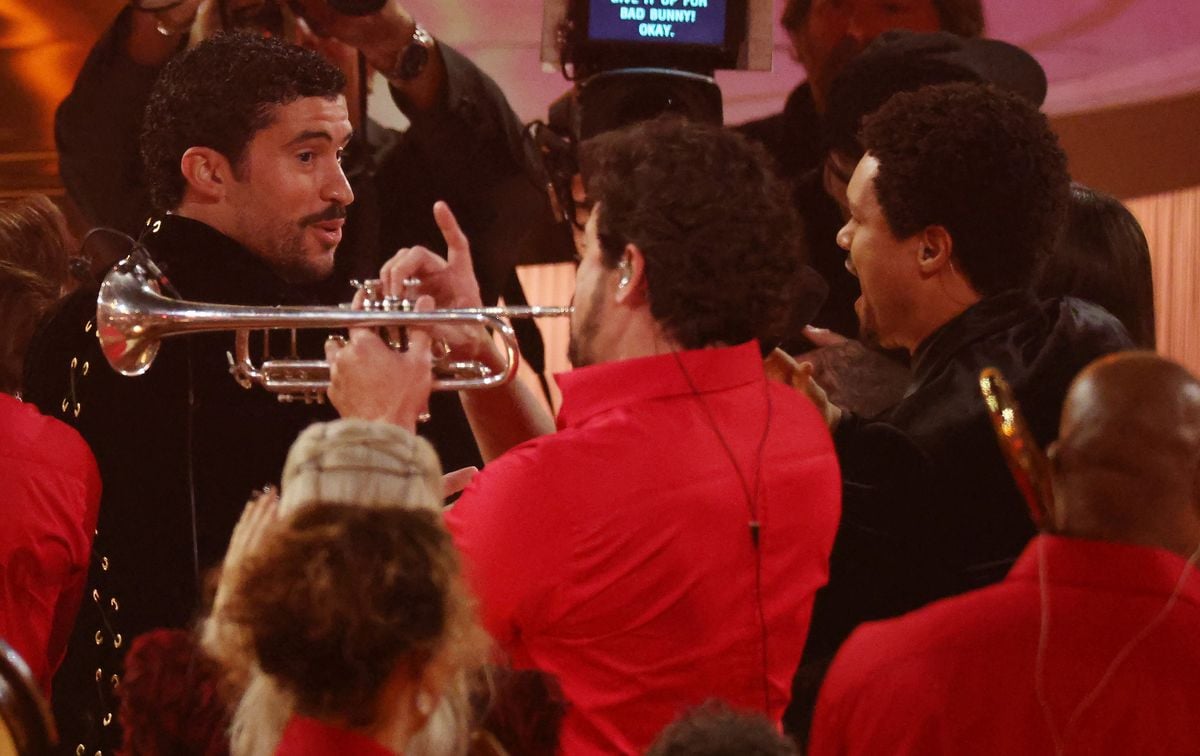
Trevor Noah then began singing the translated lyrics himself, pushing the bit forward without technically breaking the rules. Eventually, Bad Bunny joined in lightly, not as a formal performance but as a shared musical moment. To escalate the humor, Noah brought out a live band, still respecting the contractual line.
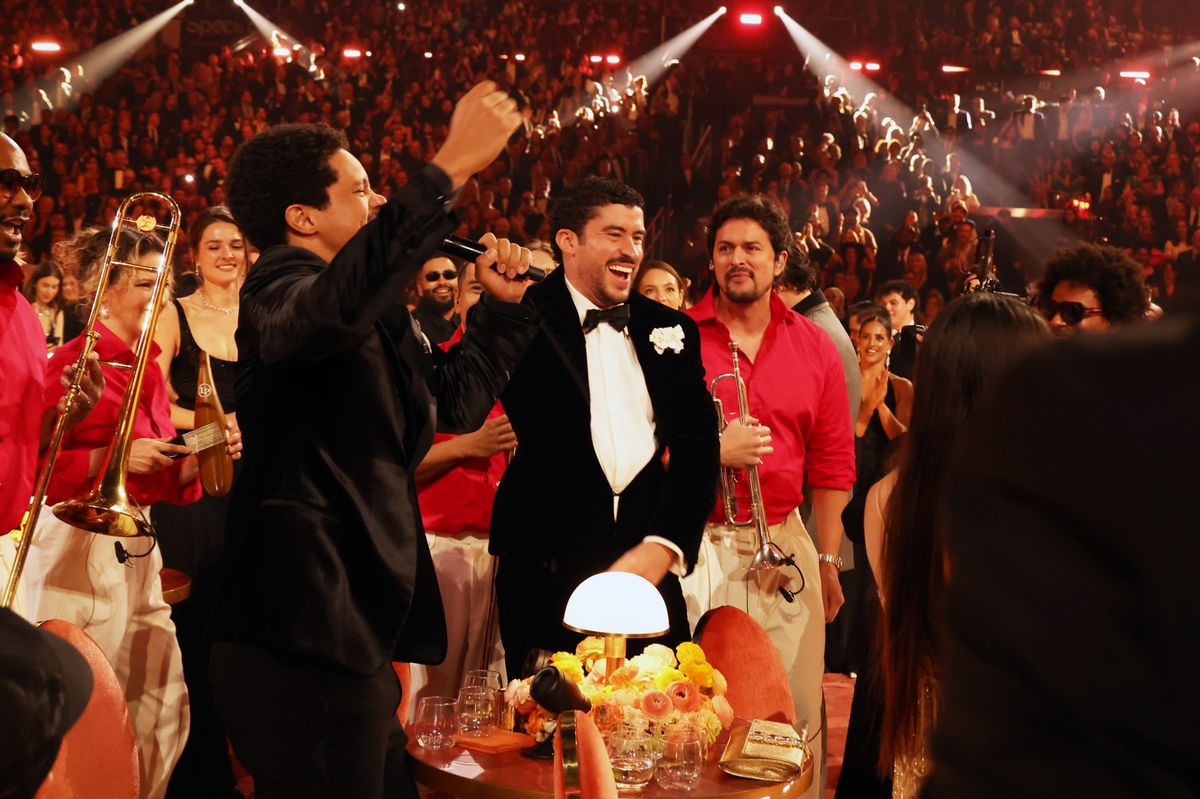 © Getty Images for The Recording A
The brilliance of the segment was that it never pretended Bad Bunny was performing. Everyone involved knew the limits. The audience did too.
Awards, Recognition, and What Comes Next
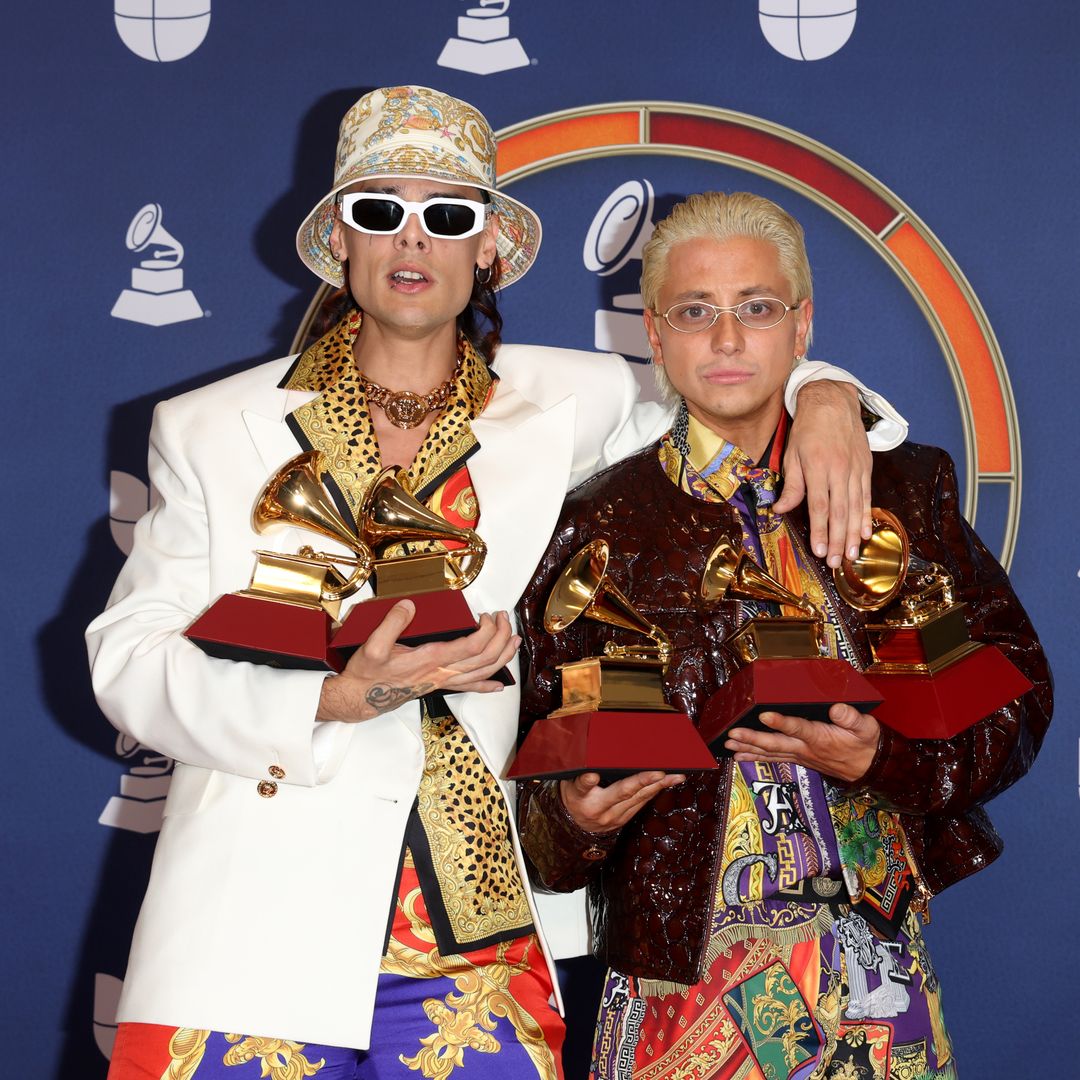
Beyond the viral moment, the night was a major professional milestone. Bad Bunny won two Grammy Awards, including Best Música Urbana Album and Album of the Year. The wins reinforced his position not just as a chart leader, but as a cultural force whose work carries political, emotional, and global weight.
 © Kevin Mazur/Getty Images for The
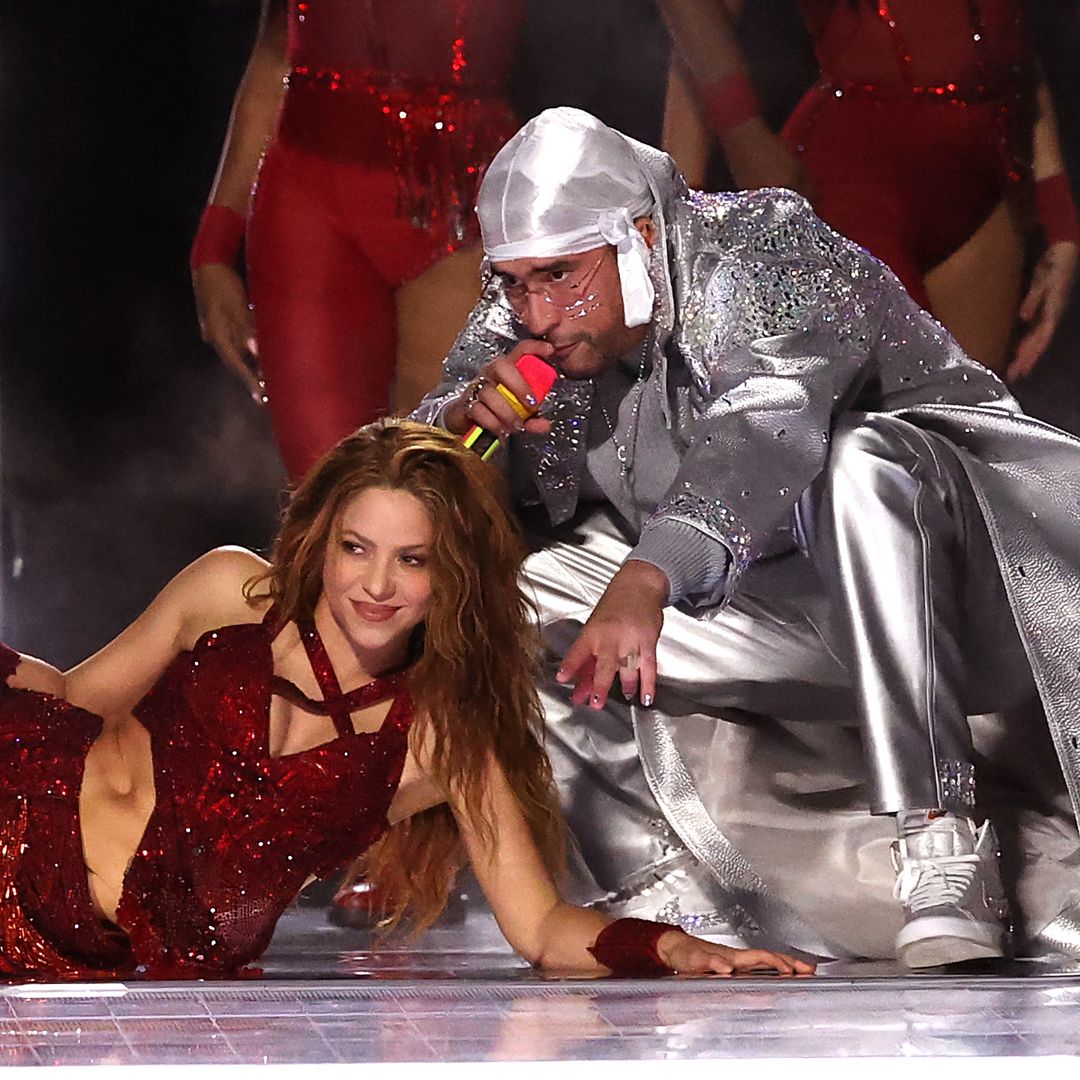
The timing adds to the significance. In one week, Bad Bunny is set to take the Super Bowl stage at Levi’s Stadium. By choosing not to perform at the Grammys, even when playfully tempted, he upheld the discipline required at the highest level of entertainment.
Bad Bunny remained fully himself without needing to dominate the stage. Trevor Noah demonstrated how a host can elevate an artist without overshadowing them. Now the whole world patiently waits for the Halftime show, which undoubtedly will be a win for the culture.