Selena Gomez has built an entire second act on honesty, and this week she added another chapter. When faced with a blunt, awkward, and very internet question about her appearance, the 33-year-old newlywed pop star did not dodge or clap back. She explained calmly and publicly.
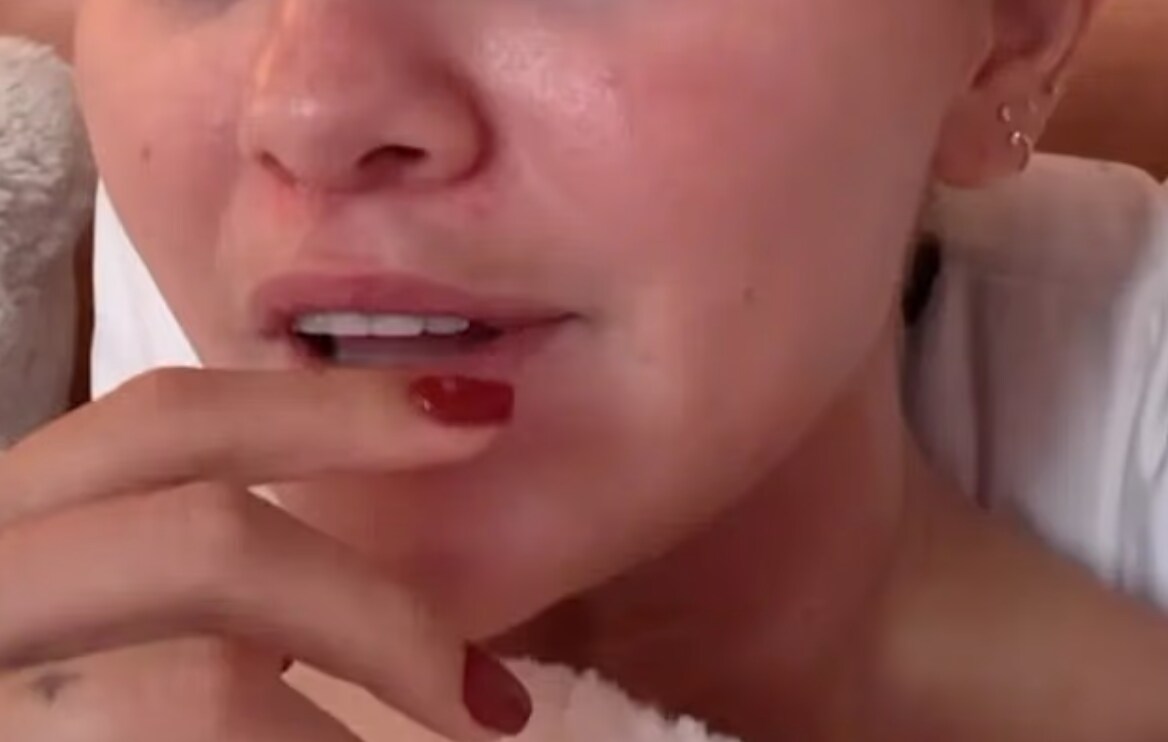
In a now-deleted Instagram Stories video, Gomez revealed that “someone made me laugh” by asking her a question that many women have heard in one form or another: “How do you shave your mustache?” Instead of brushing it off, Gomez chose transparency. She told fans that the shadow sometimes visible above her upper lip is not hair at all. It is melasma, a common and harmless skin condition that causes patches of discoloration.
 © Selena Gomez
Melasma can be triggered by sun exposure, hormonal changes, birth control, or pregnancy. In Gomez’s case, she said plainly that hers is “from the sun.” She also made a point that landed with empathy rather than defensiveness. She said, “I totally get why the question was asked.
What Melasma Really Is and Why It Is Misunderstood
Melasma is incredibly common, especially among women. Yet it is still frequently mistaken for dirt, shadow, or facial hair. That misunderstanding is not harmless. It reinforces unrealistic expectations that women’s skin should be perfectly even, poreless, and somehow immune to biology and sunlight.
By naming melasma out loud, Gomez normalized it. She also reminded viewers that skin is skin. It reacts, changes, and carries stories. And then she did what any responsible beauty founder would do.
 © Selena Gomez
The Sunscreen PSA That Was Very On Brand
After explaining the cause of her melasma, Gomez offered a simple piece of advice: wear sunscreen. Gomez has been consistent for years about sun protection, especially given her health history. In a 2020 interview with Vogue’s Beauty Secrets, she shared that she uses sunscreen, calling it “important to keep your skin looking fresh.”
 © Getty Images
She also explained why sun exposure is not just a cosmetic issue for her. Gomez lives with lupus, an autoimmune disease that can make time in the sun especially difficult. That context reframes her sunscreen advice as care, not vanity. In a beauty world obsessed with glow, Gomez keeps reminding people that protection is the real flex.
Dr. Marisa Garshick, board-certified dermatologist of MDCS Dermatology, told HOLA! that dark spots and hyperpigmentation are common concerns. “In many cases, dark spots and hyperpigmentation can be hard to cover up and for many people who deal with acne, they are often most bothered by the pigmentation that occurs after the acne rather than the acne itself,” Garshick said. “Because dark spots and hyperpigmentation can also be challenging to treat, it often takes patience, and time to see improvement, which can make it even more difficult for patients.”
A Founder Who Never Pretended Makeup Was Mandatory
Gomez launched Rare Beauty in 2019 with a mission that felt different from the start. It was not about fixing faces, but about softening standards. In a 2020 essay published by CNN, she wrote candidly about her evolving relationship with her own complexion. She admitted that she once believed she needed makeup to feel pretty.
 © Stefanie Keenan
Over time, that belief changed. “I don’t need makeup to feel beautiful,” she wrote, explaining that she now sees makeup as an accessory rather than armor. That philosophy runs through Rare Beauty’s branding and product design. Gomez has been open for years about her health challenges, including lupus, bipolar disorder, and weight fluctuations linked to SIBO, or small intestinal bacterial overgrowth.
Each time she speaks, she chips away at the idea that celebrities owe the public a flawless body or a polished explanation. Gomez turned it into a lesson in skin health, self-acceptance, and not taking every comment as a personal attack.