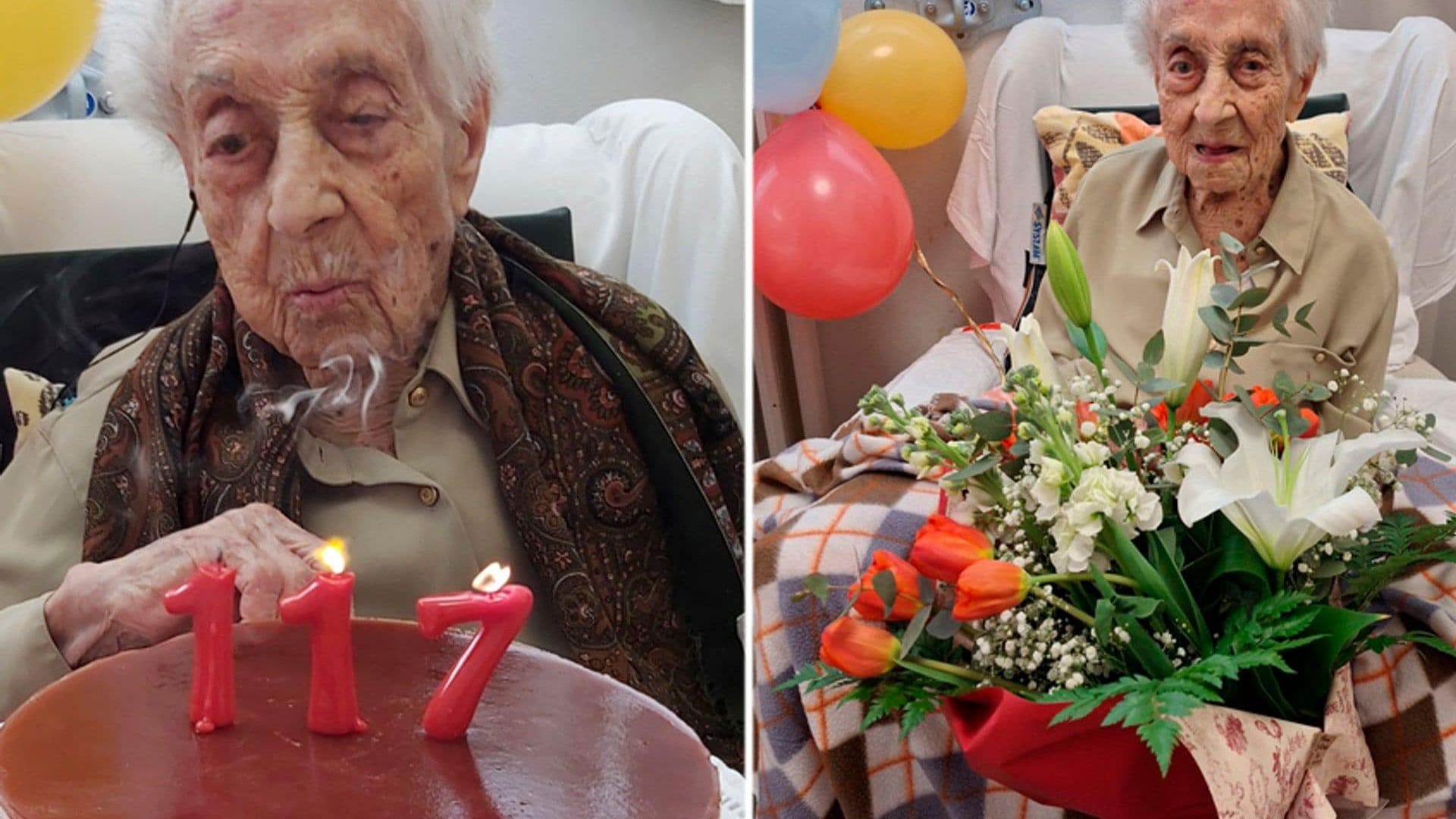
How was she able to live for so many years without suffering from cancer, dementia, or other major illnesses? The answer comes after a complete scientific study of her body. Branyas, a Spanish woman who passed away in 2024, held the world record as the oldest living person. Her case has now been published in the prestigious journal Cell Reports Medicine.
The study, led by Dr. Esteller, head of the Epigenetics and Cancer group at the Josep Carreras Institute for Leukemia Research, was based on samples of saliva, blood, urine, and even intestinal microbiota collected during her final years. “For the first time, we were able to separate aging from disease,” Esteller highlighted.
The paradox of María’s health: Young inside, yet with signs of extreme aging
Scientists describe her case as a fascinating duality. On one hand, María showed signs of healthy aging:
- An intestinal microbiome similar to that of much younger people, dominated by bifidobacteria, microorganisms that boost digestion, strengthen immunity, and promote overall well-being.
- A biological age of 15 to 23 years younger than her chronological age, measured by epigenetic clocks that analyze chemical markers on DNA.
- Protective genes linked to neuroprotection and heart health, explaining her resistance to dementia and cardiovascular disease.
- Efficient mitochondrial function and impeccable cholesterol metabolism.
At the same time, her body reflected signs of extreme old age:
- Very short telomeres, the tips of chromosomes that shorten over time, marking cellular aging.
- A pro-inflammatory immune system is often associated with age-related diseases.
- Aged B lymphocytes, immune cells that gradually lose efficiency in producing antibodies.
More than genetics: Lifestyle and simple daily habits
María’s profile also underscores the importance of lifestyle. Researchers highlighted daily habits that likely contributed to her extraordinary longevity:
- Eating probiotic yogurt every day.
- Avoiding alcohol and tobacco.
- Maintaining a strong social life and family bonds.
- Keeping a healthy weight and balanced diet.
“She contracted COVID-19 at 113, but it was mild for her, and now we understand why. She had a strong and balanced immune system,” Esteller explained.
What science learns from aging
The study provides an unprecedented map of how time affects the human body and opens the door to new therapies to fight illness and delay aging. “We could develop medicines that replicate these beneficial genetic effects,” Esteller suggested.
Other experts support the findings. Professor João Pedro de Magalhães of Birmingham University emphasized the potential: “These atypical longevity markers could show us how to age with dignity and set new pharmacological targets for longer, healthier lives.”
From Spain’s Science Media Centre, researcher Iñaki Martín-Subero (IDIBAPS, Barcelona) praised the work, while urging caution: “Overall, the study is well designed and uses a wide range of advanced technologies to evaluate the cellular and molecular state of a 117-year-old individual. The novelty lies in the highly detailed multi-omic approach in an exceptionally long-lived person. The analysis of a single individual means we must be cautious, but even so, it is very interesting and revealing.”
A life marked by history
Beyond biology, María Branyas witnessed more than a century of history: the Spanish flu of 1918, the Spanish Civil War (where she worked as a nurse), two World Wars, the moon landing, the fall of the Berlin Wall, the turn of the millennium, and even survived COVID-19 at 113 years old. In 2023, she was officially recognized as the oldest living woman in the world.
“Study and learn from me,” she once told her doctors. That wish has now come true in a pioneering study that may help science unlock the mystery of how to live not just longer, but healthier.