The news of Brigitte Bardot's latest hospitalization on the French Riviera a few months ago, although she herself dismissed it shortly afterwards with a blunt “I'm fine and I have no intention of leaving,” is a reminder that eternal youth only exists on celluloid. Bardot, the woman who defined the erotic myth of France's yé-yé era, lived out her old age in seclusion and controversy, an ending that stood in stark contrast to the sexual freedom she herself had helped to usher in. She was always the antithesis of her contemporary Sophia Loren, born on the same day, September 28, 1934.
If the Italian was the Mediterranean explosion and the classic woman, BB was the sunny, blonde, and mischievous beauty who signified a change in femininity, in dress, in being, in youth, and in rebellion against the still nineteenth-century system of thought that seemed unwilling to fade away in the middle of the last century. She represented a revolution and became so famous that she didn't need a first or last name; her initials were enough to identify her: BB.
When the bomb exploded, the world was unprepared. And the bomb was called: And God... Created Woman (1956). The film that launched her to fame caused a bigger stir than the Bikini Atoll, the very archipelago that gave its name to the two pieces that became the hallmark of this French woman: the bikini, which she popularized globally. The reviews were scathing: “You'd be better off going to a strip club in Pigalle,” or “Fortunately for the reputation of French charm, this film has no chance of being screened outside our country.” The film, directed by her husband, Roger Vadim (they married in 1952, when she was 18), shattered moralistic values. In the United States, protests erupted with fierce virulence, with arrests of theater owners and distributors who rebelled against the Hays Code because they wanted to screen that sensual earthquake and that independence. The New York Times wrote: “Immoral from head to toe,” and from Cleveland to Memphis, there was a struggle to curb that spontaneity. In Spain, it was absurd: the film was not released until 1971, 15 years after its worldwide boom.
It was normal to a certain extent. When Bardot let her stomach and hips move to the rhythm of the music, while her blonde hair, more disheveled than ever, clung to the lipstick on her prominent lips, the planet literally went crazy. No hairspray, no corsets, no fitted dresses, no high heels: Brigitte Bardot, with her ballet flats, her badly cut loose hair, her Capri pants, and her Navy T-shirts, was five years ahead of Nabokov's Lolita. At 22, she was a sex symbol, and that meant a change of cycle: teenage girls would have the power.
The intellectuals of the time, far from censuring her, celebrated her. Simone de Beauvoir, Camus' wife, responded to bourgeois censors by defining her as “the driving force behind women's history.” Why such devotion? Because, like her husband's character in The Stranger, BB experienced the world through her senses. For Beauvoir, “Her understanding of freedom is existential.” Bardot always despised makeup, jewelry, and red carpets. She despised success and the so-called tolls of success. And she loved her freedom so much that she never tied herself to a man.
She became the archetype of the woman who decided on her sexuality. But her relationship with men was capricious and authoritarian. She threatened her parents that she would stick her head in an oven if they prevented her from being with Vadim. Her marriage to Charrier ended shortly after she began a torrid affair with her co-star, Jean-Louis Trintignant, on the set of And God Created Woman. The situation was untenable, and the director, Vadim, simply allowed it to happen, more interested in finishing the film than in defining what they were or whether their love was worth more than applause. She loved and loved. And they say she had up to a hundred lovers, and she desired them all with unparalleled intensity. She enjoyed her sexual freedom like few others of her time, sharing her bed with Jacques Charrier (with whom she had her only son, Nicolas Jacques, a child she barely cared for), Sacha Distel, Warren Beatty, and Serge Gainsbourg, who composed the legendary Je t'aime moi non plus for her (although he later sang it with his second love). Her marriage to millionaire playboy Günther Sachs (1966-1969) is another legend, with Sachs giving her a diamond worth over a million euros for her love, and separating after he himself declared that “A year with Brigitte Bardot is worth ten with any other woman.”
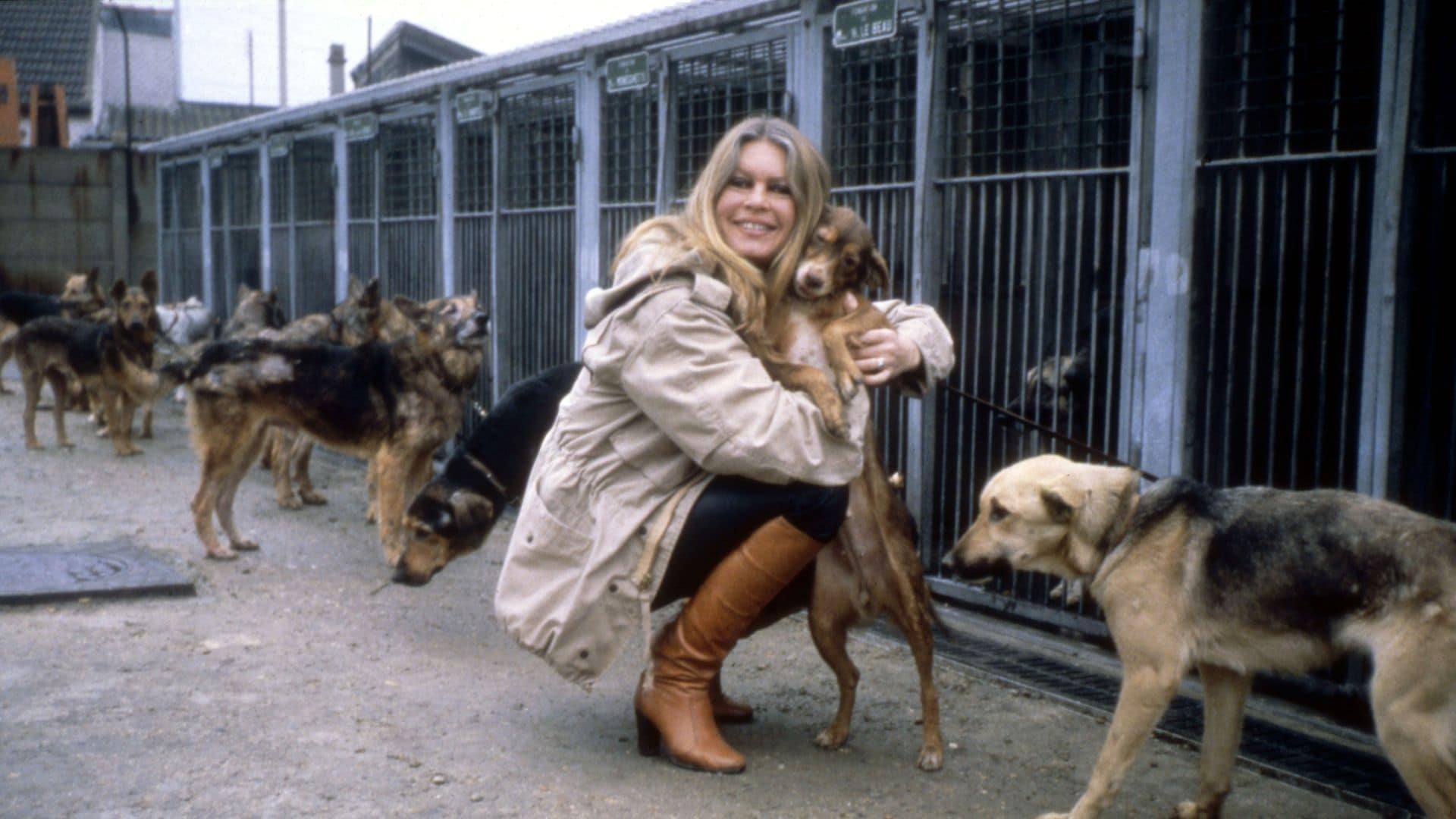
Despite her success, Bardot's career was short-lived. In 1973, at the age of 38, she announced her retirement from cinema, fed up with the superficial life, as if the myth were too big for a woman of 5'5". Since retiring at the age of 38, the European sex symbol has lived a relatively secluded life in her mansion in La Madrague, Saint-Tropez. Her life took a 180-degree turn: she devoted herself to fighting for animal rights, a cause she embraced to give meaning to her existence, going so far as to declare her hatred for a large part of the human race, feeling “much closer to nature and animals than to man.” She is known in the neighboring country as “The Stalin of the Birds,” which is where Bardot's great paradox begins. The woman who was once the symbol of unlimited liberation is now a controversial figure due to her ultra-conservative views and political positions. Hating men has ultimately led her to hate certain types of men, defined by a physical build, a color, or a sexual orientation that differs from the norm.
She, who hated rules so much that she invented a new woman, ended up condemning what she herself helped to create. “I look at my old photos and think that cute girl isn't me. My life today is different.” And yes, unfortunately, without being in her shoes, many of us think so too. Perhaps her legacy is proof that true nonconformity can lead to both aesthetic liberation and ideological exile. Or that, as she herself said, she could have been “very happy, very rich, very beautiful, very adored, very famous, and very unhappy.” And unhappiness produces monsters more than madness.