Artificial intelligence is no longer a futuristic buzzword reserved for Silicon Valley. It’s already here, and according to some of the most powerful voices in entertainment, it’s unsettling in ways we’re only beginning to understand.
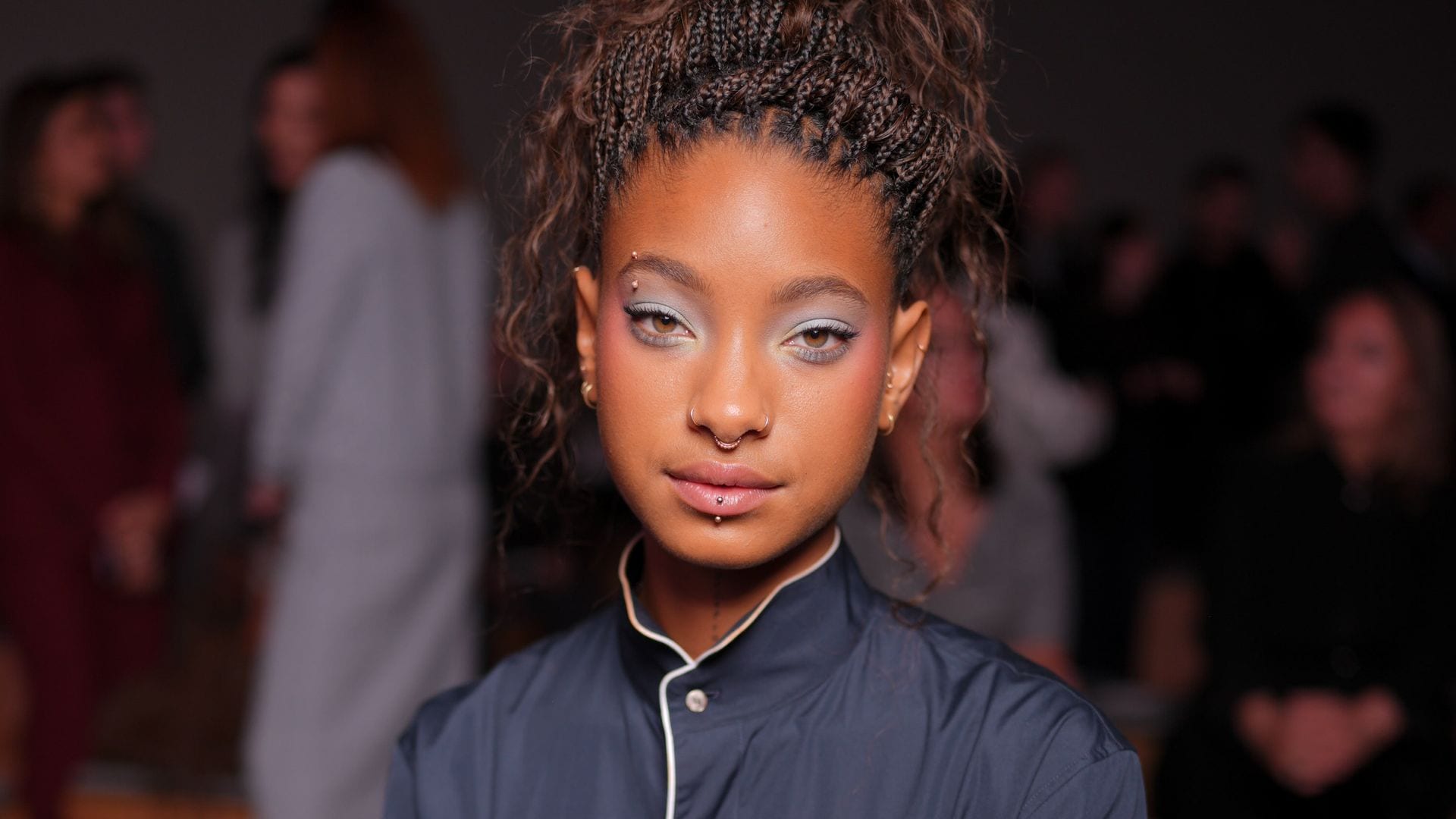
Few captured that unease as elegantly as Willow Smith, who recently shared a philosophical meditation on AI via her Substack. Rather than framing AI as a villain, Willow imagined it as something far stranger and far more intimate.
“Imagine a future where humans have used Chat GPT so much that each individuals LLM (large language model) becomes like a digital fossil-map of it’s users mind, showing the landscape of their thoughts, preferences and, ideas while they were alive," she wrote.
In Willow’s vision, artificial intelligence becomes a living archive, a permanent map of the human psyche. She imagines future scholars, or “digital paleoanthropologists,” studying these records to understand how humans once thought, created, and connected.
It’s a poetic idea. But elsewhere in Hollywood, the mood around AI is far less dreamy. As AI tools like ChatGPT and deepfake technology surge forward, the entertainment industry is grappling with a fundamental question about the line between innovation and exploitation.
Some celebrities have embraced experimentation. Music producer Timbaland launched an AI-generated music project this year, while Ryan Reynolds famously leaned into the tech’s novelty by reading a ChatGPT-written script in a 2023 Mint Mobile ad.
But many others are drawing firm boundaries, especially in the absence of clear laws governing how AI can use a person’s voice, face, likeness, or past work.
Not everyone in Hollywood is opposed. Matthew McConaughey has begun licensing his voice through ElevenLabs, exploring how AI can be used ethically and profitably when creators remain in control.
That nuance aligns with Willow Smith’s original reflection. AI, in her telling, isn’t just a threat, but it’s also a mirror. One that can preserve human thought, memory, and creativity long after we’re gone.
Other celebrities and stars speaking openly about AI include Jenna Ortega. In an interview with The New York Times, Ortega revealed that as a teenager she received explicit AI-generated images of herself, a deeply distressing experience that shaped her outspoken dislike of the technology.
Scarlett Johansson was also targeted by a deepfake video falsely depicting her and other Jewish celebrities. She responded publicly, stating. I am a Jewish woman who has no tolerance for antisemitism or hate speech of any kind.”
She continued, "But I also firmly believe that the potential for hate speech multiplied by AI is a far greater threat than any one person who takes accountability for it.”
After fake “Swifties for Trump” images circulated online, Taylor Swift addressed the dangers head-on. "I was made aware that AI of ‘me’ falsely endorsing Donald Trump’s presidential run was posted to his site.”
She later added. "It really conjured up my fears around AI, and the dangers of spreading misinformation.”
While accepting a Best Actor award in 2025, Nicolas Cage delivered a speech that resonated far beyond the room. “I am a big believer in not letting robots dream for us. Robots cannot reflect the human condition for us.”
He continued, "That is a dead end if an actor lets one AI robot manipulate his or her performance even a little bit… all integrity, purity and truth of art will be replaced by financial interests only.”
Actors including Ben Stiller, Mark Ruffalo, Aubrey Plaza, and Kate McKinnon have signed open letters warning against the use of copyrighted works to train generative AI without consent.
Meanwhile, Joseph Gordon-Levitt, alongside Daniel Kwan and Natasha Lyonne, launched the Creators Coalition on AI, advocating for transparency, consent, and fair compensation.
Gordon-Levitt has also penned essays in The Washington Post and The Hollywood Reporter, urging lawmakers to protect artists from having their work absorbed into AI systems without pay.