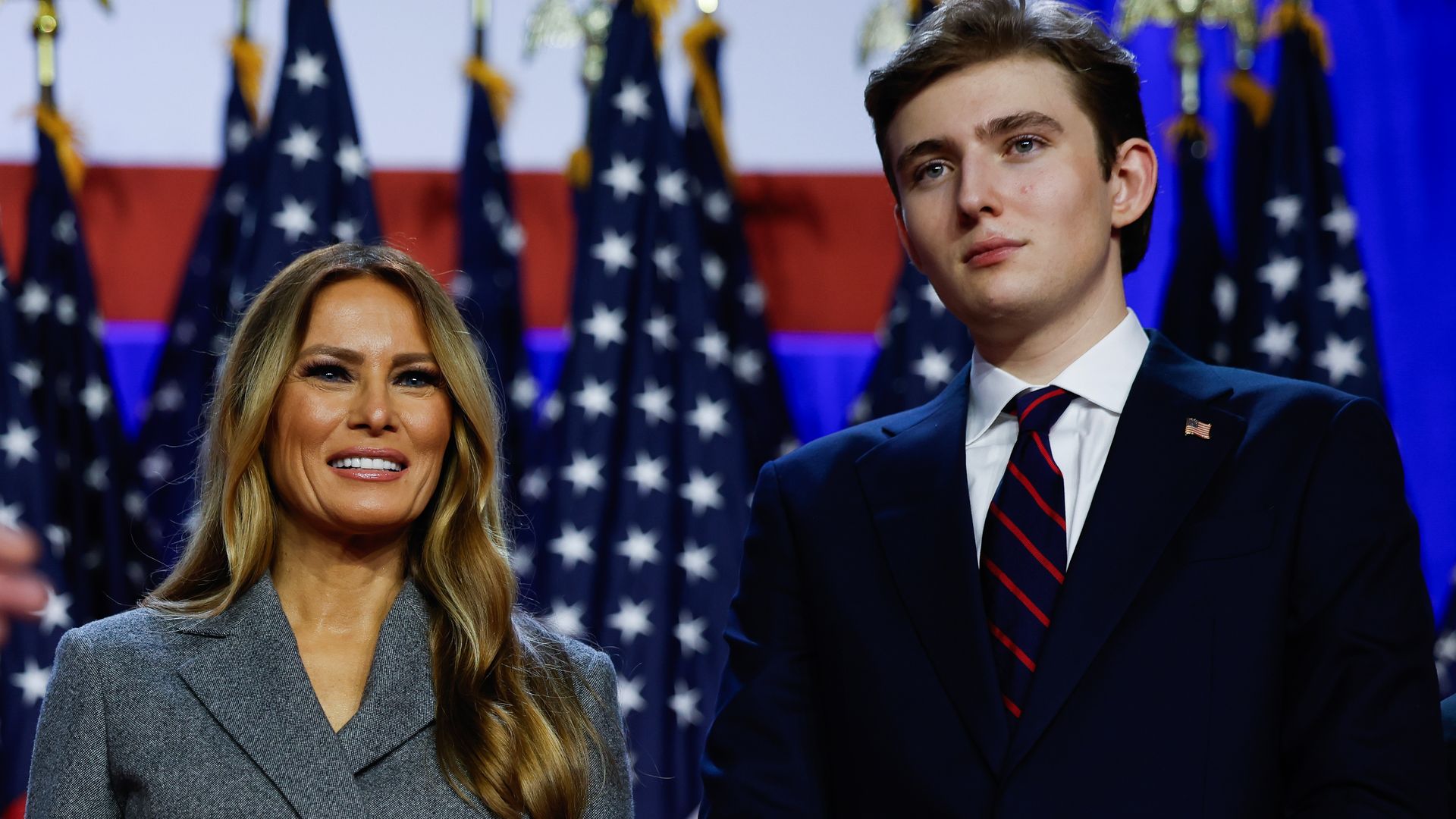
When Republican Senator Bernie Moreno introduced the 'Exclusive Citizenship Act of 2025,' the proposal made waves not just for its bold stance but also for the personal implications it could carry for the First Family.
The bill, which would eliminate dual citizenship in the United States, declares that “to preserve the integrity of national citizenship, allegiance to the United States must be undivided.” For Melania Trump and her son Barron, who both hold dual citizenship, the legislation raises real-life stakes.
Melania, originally from Slovenia, became a naturalized U.S. citizen in 2006 after years of navigating the American immigration system. She first arrived on a tourist visa and later held multiple work visas for her modeling career, including an EB-1 visa in 2001.
Despite her husband Donald Trump’s reportedly complicated feelings about her Slovenian roots, Melania retained her citizenship in Slovenia and ensured Barron did the same. According to The Washington Post this would give Barron more professional options and opportunities.
The Slovenian connection is not just a legal formality. Citizens of her hometown, Sevnica, continue to take pride in Melania’s trajectory from a small town to the pinnacle of American life.
“From an average Slovenian town, she reached the top of the U.S., that should show the young that if they try, they can become whatever they want,” said Sevnica’s mayor, Srecko Ocvirk, in an interview with AFP.
But the Exclusive Citizenship Act threatens to force Melania into an impossible choice, maintain her Slovenian roots or fully embrace U.S. citizenship under the new law. The bill, if passed, would take effect 180 days after signing.
The legal landscape is equally complex. Current U.S. law allows dual citizenship, and there is no federal registry of citizens holding foreign nationality.
The 14th Amendment protects Americans from losing their citizenship without consent, a principle reinforced in landmark cases like Afroyim v. Rusk (1967).
Michael Wildes, the immigration attorney who represented Melania in her naturalization process, told Newsweek, “A bill without the force of law is simply a piece of paper… The United States is one of many countries that permits its citizens to hold dual nationality, whether acquired by the wonderful choice to naturalize or by virtue of birth.”
He also noted that dual citizenship is not a modern anomaly. “America’s military presence abroad results in American citizens born overseas who are eligible for both U.S. and foreign citizenships…our founding parents and many of our first presidents were dual nationals of both the United States and other countries – including our then-enemy, Great Britain.”
Senator Moreno, who introduced the bill, is an immigrant himself. Originally from Colombia, Moreno moved to the U.S. at age five and became an official citizen at 18, later renouncing his Colombian citizenship.
“Being an American citizen is an honor and a privilege, and if you want to be an American, it's all or nothing. It's time to end dual citizenship for good,” Moreno said.
Melania Trump, the only naturalized First Lady in U.S. history, has long been vocal about the immigration journey she endured. She has reflected on the difficulties with empathy, saying, “my personal experience of traversing the challenges of the immigration process opened my eyes to the harsh realities people face…who try to become U.S. citizens.”
For her and Barron, the stakes extend beyond politics, as they are personal. Dual citizenship is not just a passport, but it also represents flexibility, opportunity, and a link to her homeland.
With Barron holding a Slovenian passport and being fluent in the language, the practical benefits are clear. His mother’s foresight may enable him to explore professional and personal opportunities across Europe in ways that other Americans could not.