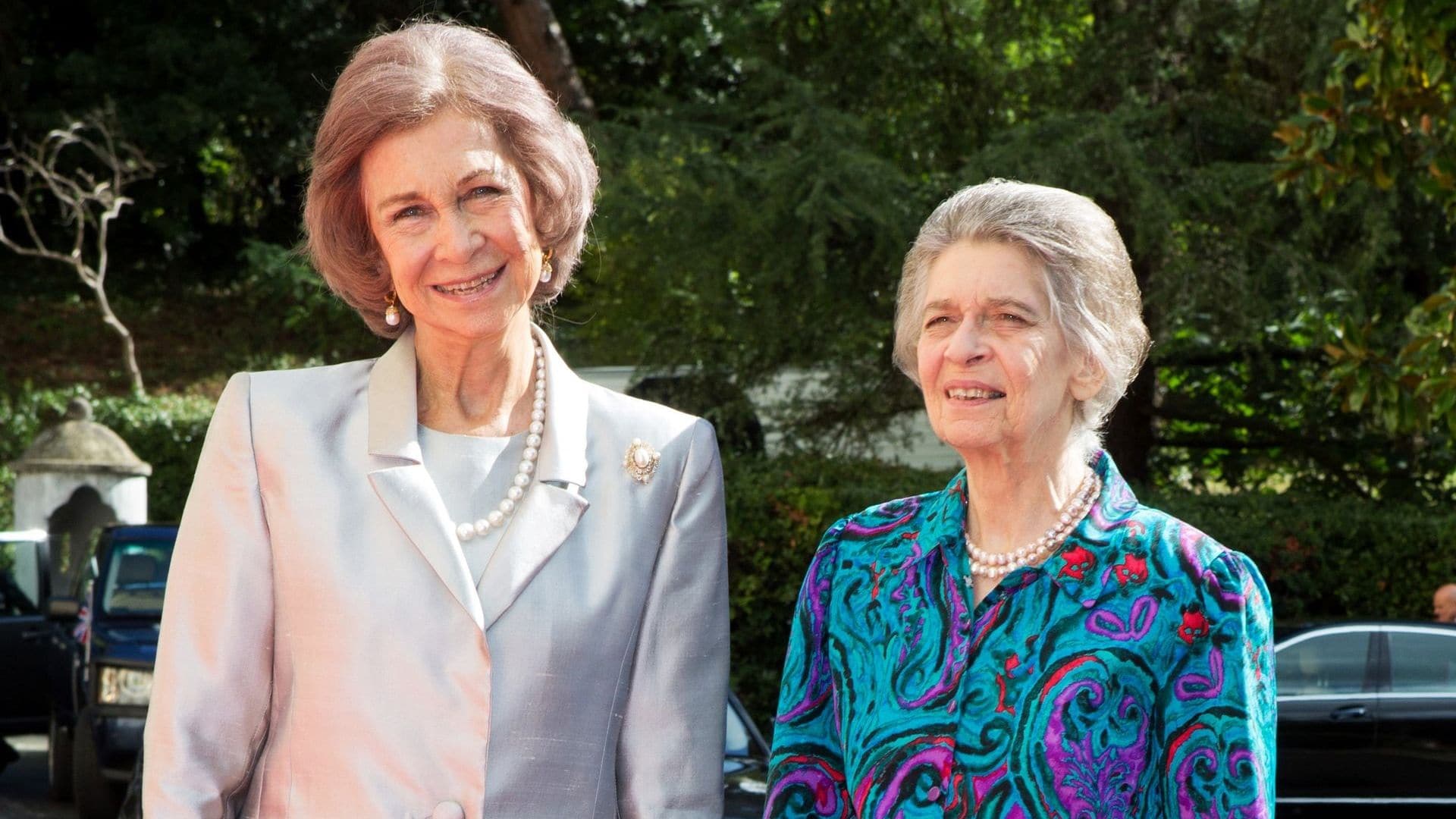
Irene of Greece, the younger sister of Queen Sofia and aunt of King Felipe, died this Thursday, January 15, in Madrid at the age of 83. The Royal Household released the following statement announcing the sad news: “Their Majesties the King and Queen, and Her Majesty Queen Doña Sofia, regret to announce the passing of Her Royal Highness Princess Irene of Greece at 11:40 today at the Zarzuela Palace in Madrid.”
This week, given the seriousness of Princess Irene’s condition, Doña Sofia postponed all her engagements to remain by her side. The daughter of King Paul and Queen Frederica had seen her health decline in recent years and had been living with cognitive deterioration for years.
Discreet, spiritual, and deeply devoted to her loved ones, she was far more than a princess. She was a quiet light, always close to her family. She was not a conventional royal. She never married or had children, but she was so close to her siblings, Doña Sofia and the late King Constantine, that she became a second mother to her Spanish nieces and nephews, who called her Aunt Pecu because of her distinctive personality.
After traveling the world with her mother, Queen Frederica, Princess Irene found, against all expectations, her home in Madrid, beside her beloved and inseparable sister, her loyal support and trusted confidante, with whom she shared everything. She lived a life far from luxury, very discreet, and devoted to charitable causes. She was passionate about Hindu culture, spirituality, ufology, archaeology, and music, and even became a concert pianist.
From Cape Town to Greece, a Life Shaped by Exile
Born in exile in Cape Town, South Africa, on May 11, 1942, Irene was the youngest daughter of King Paul and Queen Frederica of Greece. Her childhood unfolded across several countries, from South Africa to Egypt, before returning to Greece in 1946. That period, marked by displacement, was difficult for her but rich in experiences, as she recalled in the book Irene of Greece: The Rebel Princess by Eva Celada. Her personality was who she was, a princess with a remarkable ability to adapt to any circumstance and always see the positive side of everything.
When Irene was four years old, on April 1, 1947, her father became King of the Hellenes. King Paul was a defining figure for her, and his death marked a turning point in her life. Music was another passion she enjoyed all her life. She studied piano with the renowned pianist Gina Bachauer and became a standout student. She even performed professionally, giving charity concerts in Europe and the United States.
She loved archaeology, like Queen Sofia
Like Queen Sofia, archaeology became part of her life from an early age, and together they took part in excavations in Decelea, near the Royal Palace of Tatoi, where they both spent a happy childhood and youth. This beloved place is also home to the royal cemetery where her parents and Constantine, the last King of the Hellenes, are buried. As a result of their teamwork, they co-wrote two books about their findings and research. They were always side by side, sharing everything.
The first real blow of her life, aside from exile, was the death of her father, King Paul, when Princess Irene was about to turn 22. That loss made her brother the head of state. With him on the throne, the turmoil in Greece in 1967 forced the royal family to leave the country again after clashing with the military junta that had taken power. Rome was their home for a while, until Irene settled with her mother in Madras, India. By then, Doña Sofia was already married to Don Juan Carlos and living in Madrid. Irene’s more than a decade in Asia led her to embrace Hindu culture and a deep spirituality that guided her from then on.
India would not be her final destination. After her mother died in 1981, Irene moved to Spain. “I came to Madrid for five days and stayed five years. And as time went by, I understood that my place was by Sofia’s side,” she told Pilar Urbano. She moved into a simple room at Zarzuela Palace, and, despite being the daughter, sister, and aunt of kings, she did not care for luxury. In later life she gave up wearing any jewelry and had no personal fortune, because she donated her inheritance to Mundo en Armonía, the NGO she founded in 1986. She served as its president, and its work ended in 2024 because she was no longer able to oversee it. Through the organization, she ran a wide range of philanthropic projects aimed at the moral, spiritual, and material well-being of all living beings. She led charitable efforts around the world. Europe's order to curb milk overproduction a year earlier sparked the initiative. She launched a plan to transport healthy, productive cows to India, where they would provide milk to malnourished children. “The goal is not to save the world, but to offer it a bit of relief, a bit of hope, a bit of harmony where there is suffering,” she said.
Her life in Spain
Living in Madrid brought her even closer to Doña Sofia. They shared all kinds of plans, holidays in Mallorca, trips, public engagements, and family gatherings as well. Aunt Pecu, as they affectionately called her, adored her siblings’ children, though she spent more time with Doña Sofia’s family. She was especially close to Infanta Cristina, who stayed very attentive to her during King Constantine’s funeral. Cristina cared for her so much that she decided her only daughter would carry her name, although it is Infanta Sofia, the younger daughter of King Felipe and Queen Letizia, who bears a strong physical resemblance to her great aunt.
So many years in Spain led to her receiving Spanish citizenship in March 2018 through the special process known as carta de naturaleza, which is granted as a matter of discretion and is not subject to the usual administrative rules. It is awarded by the government through a Royal Decree. In her case, it cited “exceptional circumstances, as she maintains close personal ties with all members of the Spanish Royal Family and has a special bond with our country.”
The health scare that shook the whole royal family
She generally enjoyed good health, in part because she followed an Eastern lifestyle, practiced yoga, and avoided meat. Even so, despite taking care of herself, she was diagnosed with cancer in 2002, and the illness was a severe blow for the family. True to her nature, her recovery and treatment were handled with outstanding discretion. In recent years she suffered cognitive decline, which made her inseparable sister even more attentive to her care and medical appointments. That did not stop her from attending major family occasions, such as Infanta Elena’s 60th birthday in Madrid or the weddings of her grandnieces and grandnephews, Princess Theodora in September 2024 and Prince Nikolaos in February 2025 in Athens, a place she always found moving to return to, and the last time we saw her in public.
As usual, her fragile health prevented her from appearing in Mallorca this summer. The princess has passed away quietly, the way she lived, but she has left a deep mark on the entire royal family, who cared for her deeply. The blow is especially severe for Queen Sofia, who has lost the person who knew her best. Her death comes shortly after the passing of her “other” sister, Princess Tatiana Radziwill, on December 19, 2025, whom she went to bid farewell to in Paris, accompanied by King Felipe VI and the infantas Elena and Cristina.