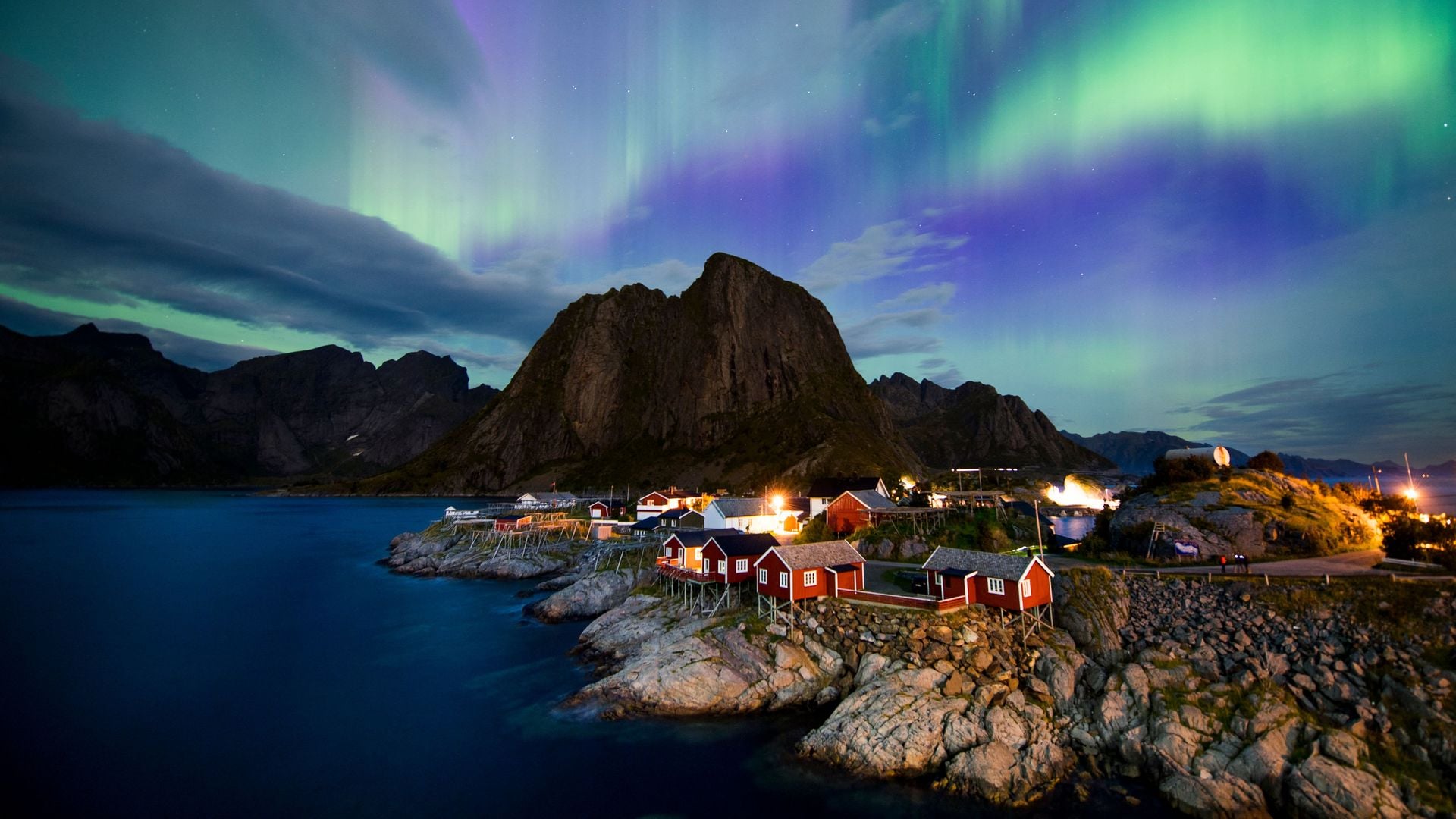
The universe has a flair for dramatic timing. Just when we’re easing into the cozy chaos of early December, the sun decides to send a little sparkle our way. A burst of solar excitement, including a punchy X2-class flare on Dec. 1 and a cloud of charged particles blasting off the solar surface, has set the stage for a potential holiday-season spectacle.
Skywatchers rejoice as the northern lights will be gracing parts of the northern U.S. and upper Midwest. That glowing ripple across the sky isn’t magic, though it certainly feels like it. It’s science flexing its muscles.
When charged particles from the sun slam into gases in Earth’s atmosphere, those atoms get excited and release energy as visible light. The result looks like the sky is performing interpretive dance in neon.
When to Look Up
Forecasters at NOAA are expecting a G2 geomagnetic storm after dark on Wednesday, Dec. 3. That’s the level where the aurora starts showing off in a modest but very real way. Solar activity could linger into the early hours of Thursday, Dec. 4, giving night owls and early risers an equal shot at the show.
There’s a twist. If the coronal mass ejection (CME) and the stream of fast-moving solar wind arrive at the same time, conditions could briefly flirt with G3 storm levels. That’s strong enough to push the auroras farther south and bump the drama up a notch before everything settles back into G2 territory.
SpaceWeather.com says the storm cloud may only graze our planet, but it could drag a solar wind stream behind it and give the atmosphere a little extra nudge.
Where You Might See the Lights
If you live in Alaska, Washington, Idaho, Montana, Wyoming, the Dakotas, Minnesota, Wisconsin, Michigan, New York, or Maine, the sky is basically tapping you on the shoulder so you can step outside. But if the storm cranks itself up, residents in Oregon, Nebraska, Iowa, Illinois, Indiana, Ohio, Pennsylvania, Massachusetts, Vermont, and New Hampshire might also catch a brush of color.
Sure, you might not get the Iceland-level bucket-list display. Still, the idea of the northern lights shimmering above cornfields, suburbs, or lakefront towns feels like the kind of plot twist nature loves.
How to See the Aurora Like a Pro
The key ingredients are simple: darkness, patience, and a reasonably functional neck for looking up.
Find the darkest spot you can. A patch of rural road or an open field beats the glow of city lights every time. If you can see the northern horizon clearly, you’re already ahead of the game. Tools like the Dark Sky Place Finder or light-pollution maps can help you scout your viewing location.
Plan to step outside for more than a quick peek. Auroras are late. Real-time resources help, too. NOAA’s 30-minute aurora forecast is your best friend, and apps such as Aurora Now, My Aurora Forecast, or Glendale Aurora can give you alerts before anything hits your sky.
How to Capture the Moment
It’s surprisingly easy to photograph the northern lights without hauling around a suitcase of gear.
A smartphone works wonderfully, especially with Night Mode on the iPhone or Pro Mode on Android. Turn off the flash and hold your phone steady. A tripod is great, but a fence post or your friend’s very still shoulder works in a pinch.
For DSLR users, switching to a wide-angle lens and playing with long exposures will reveal colors and movement invisible to the naked eye. The camera sees more than we do, and in this case, that’s a perk.