Talking to Bianca Gates feels like sitting down with someone who is both your wisest friend and the woman you want beside you when you decide to bet on yourself. She is warm, expressive, and full of animated storytelling. She speaks with the kind of enthusiasm that makes everything she describes feel vivid and alive.
Bianca grew up the daughter of Bolivian and Argentine immigrants who rebuilt their lives in the United States from the ground up. Her parents brought their deep values and fearlessness in building a new life. That spirit became her guiding light even when she felt like an outsider at her Southern California school, prompting her to carve out her own place in the world.
She grew up being told ‘whoever makes the money chooses where they sit’, so Bianca Gates chose her own seat.
She also carries a childhood moment that shaped everything that came after. She remembers being a little girl in Santa Ana, sitting at the kitchen table as her father claimed his usual spot at the head of the table with his back to the sun, while the morning light poured directly into her eyes. One day, she finally asked him why he always got that seat. Why not her mother? Why not her? His answer, “Whoever makes the money gets to choose where they sit,” became a family truth that rooted itself in her spirit.
“Growing up, I always knew I wanted to do something and I wanted to be somebody. I wanted a different dynamic for my life.”
Bianca Gates
From that moment, she understood that independence meant choice, she wanted to build a future where she could claim her own seat at the table. Over time, she channeled those early experiences into a powerful desire to build her own path to independence and entrepreneurship. That drive carried her into corporate life, toward creating something of her own, and eventually into launching Birdies with nothing more than curiosity, determination, and an initial Google search.
What follows is Bianca in her own tone. Her humor. Her honesty. Her spark. A Latina founder who built a future she chose for herself.
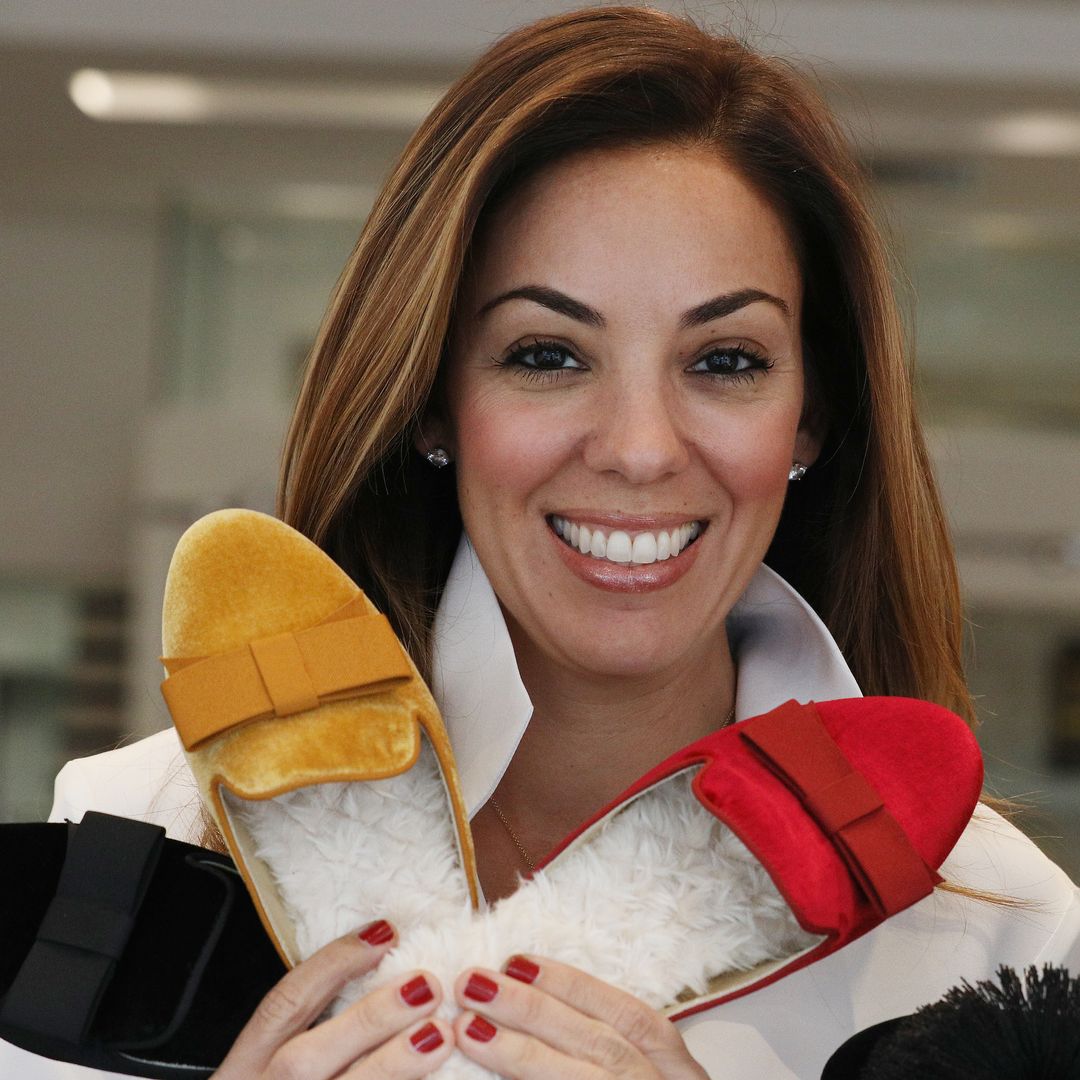
Bianca Gates, co-founder of Birdies, pose for a portrait with some of their slippers at their Union Street store in San Francisco
You are a first-generation Latina who grew up in Southern California. How has your culture shaped you and the way you see opportunities and challenges?
Well, just to give you some perspective, my mom was born and raised in Santa Cruz, Bolivia, by a single mother raising three kids. My dad was born and raised in Buenos Aires, Argentina. They met, fell in love, and decided they wanted to plant roots in the United States. They came here in the seventies and started over from scratch.
My mom did not speak English and had not finished college, so, in many ways, she was an entrepreneur herself, figuring everything out in her twenties in a new country. Watching my parents taught me that you do not need to know everything before you begin. You get to where you need to get to, and then you figure it out.
Growing up Latina in Southern California in the 80s was rough. I stood out. I was bullied for being different. My mom did not speak English well, and we were immigrants. There were times I felt little and excluded. But it did not kill me. I had a loving home to go back to. Being an outcast made me realize I could survive anything, and it made me want to create community and make space for others who did not feel included.
By the time I got to high school, I was finding my voice. I realized I wanted something different for my life, and that planted the seeds for everything I have done since.
"Watching my parents start over in a new country taught me you don’t need to know everything before you begin. You just get to where you need to get to, and then you figure it out.”
Bianca Gates
Was there a moment from your childhood that shaped the way you thought about independence?
Absolutely. I remember being eight years old, sitting at our kitchen table before school. My dad always sat at the head of the table, and every morning the sun would rise behind him, blinding the rest of us. One day, I finally asked him, Why do you get to sit there. Why not my mom? Why not me?
He said, “Whoever makes the money gets to choose where they sit.”
That was a defining moment for me. I thought, okay, I need to figure out a way to make money. I want to choose where I sit. I want independence. My parents had a very traditional relationship. My dad was the breadwinner, and my mom was the homemaker. It worked for them, but I knew I wanted something a little different for myself.
That moment, that single sentence shaped how I approached school, career, and eventually entrepreneurship.
When did you first feel the spark of entrepreneurship?
When I was in college, I would spend summers in Argentina, and at the time, I had terrible acne. Nothing worked. One summer, I found this facial cleanser that completely cleared my skin. It felt unbelievable. You look in the mirror so many times a day, and suddenly, I saw someone I liked.
I asked my dad for a small loan and started importing it. I had boxes of cleanser in my parents’ garage. This was before social media, so at night when I was waiting tables at Macaroni Grill, I would talk to customers about it, get their business cards, and drop off the cleanser at their home or office the next day.
Looking back, I had no idea what I was doing, but I figured it out. That was my first real taste of starting something.
Bianca Gates is proof that you don’t need to know everything, you just need to start.
Was there anyone you looked up to early in your career?
Actually, when I was younger, a lot of the women I saw in business at the time felt a bit masculine, with boxy suits and very serious energy, and I did not fully connect with that. The turning point was in 2011 when I had just had my first child, and I read Sheryl Sandberg’s commencement speech at Barnard.
She talked about leaning in and not stepping back from your career. And then I saw a picture of her. She was wearing a fitted dress and heels. She was feminine and stylish, and she was so smart and powerful. I thought, okay, this is the kind of woman I want to work for.
I decided I had to work for her. It took me six months of interviews, but I got the job at Facebook. A couple of weeks later, I found her on campus, introduced myself, and she eventually became a mentor and now a close friend. Fifteen years later, we are still very close.
How did you go from Meta to shoes? Where did Birdies begin?
The overarching theme of my life is extreme curiosity. When I was at Facebook, I worked with big retailers to explain how Facebook worked and how they could reach their customers through the mobile app. They were very slow to move. I kept thinking, if I had a business, I could move product really fast with this platform.
At the same time, at home, I love entertaining. I am always hosting friends and family, and I was always annoyed that I did not have the perfect entertaining slipper. Bedroom slippers are for the bathroom. Shoes are too heavy for the living room or kitchen, where all the magic happens.
My husband said, "why don’t you just solve this." I told him, I do not know how to make shoes, I have never worked in retail, I cannot draw. But curiosity won. I Googled how to make shoes. It was not helpful, but it opened the door.
From there, I started telling people. I found my co-founder. We each agreed to invest $50,000 in this business, which, in hindsight, is not a lot of money to start a footwear line. All the manufacturing happens overseas, and you have to work with the factory’s minimum-sized order. For us that was 1,800 units, which alone would cost almost one hundred thousand dollars once you add incorporation, samples, photography, the website, and shipping inventory across the world.
We asked a lot of dumb questions. We had never worked in this industry, which ended up being an advantage because we questioned everything. Nine months later, in November 2015, we launched Birdies.
The shoes were terrible at first. We could not afford half sizes. But I learned at Facebook that done is better than perfect. Get it to eighty percent, launch it, and let your customer tell you what is missing.
Before Birdies was a brand worn by millions, it was Bianca Gates and Marisa Sharkey asking the questions no one else in footwear was asking.
Did you sell all 1,800 units? How did that first launch go?
Oh my gosh, we hadn’t even thought about selling the shoes. We were so focused on naming the company, designing packaging, building the website. I honestly thought there was a 50/50 chance the shoes wouldn’t even arrive.
They arrived right before Thanksgiving 2015, and between us we had around 1,800 Facebook friends. I said, “Okay, we’ll launch to our friends. If every friend buys one pair, we’re done.”
But something magical happened. Friends told friends. Someone knew someone in media. Someone else knew someone in entertainment. Editors reached out. Celebrity stylists reached out. People were curious.
The shoes were not perfect… (she laughs) but the story was resonating and we sold out by January 2016.
How did Meghan Markle become such a big part of your story?
Once we improved the product, we asked ourselves, if we were to gift one celebrity a pair of Birdies, who would it be. We literally did an exercise of, who is the Birdies woman. Warm, classic, stylish, kind, someone who loves hosting.
We landed on Meghan Markle. At the time she was on Suits. Not dating Prince Harry yet. She just felt like our girl. Through someone at Facebook, we got her a pair in Canada.
She wore them. She tagged us. Then paparazzi started picking it up. She genuinely loved the shoes.
The big moment was Cyber Monday 2017. I woke up, checked sales at six in the morning, and everything was sold out. There was a thirty thousand person waitlist. I thought something broke. Then I looked at the news.
Meghan Markle and Prince Harry had just announced their engagement and every headline said her favorite flats were Birdies.
My life changed that day. And because of that moment, we were able to raise a lot of money right after, which helped us scale the business.
When you were about to leave Facebook, what did Sheryl tell you?
I went to her and told her everything. I was torn. I had a ninety minute commute each way, two young kids, and a brand that was growing faster than I could manage. I thought she would tell me to stay at Facebook.
She said the opposite. She said, you absolutely have to do this. You are an entrepreneur. And she said, if you ever need it, you will always have a job here.
That was the safety net I needed. I left in 2017.
What were some of the challenges as Birdies started growing fast?
We had many. One in particular, after Meghan wore us, a lot of customers started wearing Birdies outside the home. But we had engineered them as a house slipper. So, we had to decide whether to stay true to our original idea or meet our customer where she already was.
We pivoted. We created a thicker outsole, redesigned the construction, and expanded into new categories. We listened to the customer. If we had perfected the product too early, we would not have had the flexibility to evolve.
Bianca has called Sheryl Sandberg a supportive friend and inspiring leader.
How did you think about money and banking as the business grew?
The financial side of entrepreneurship is so important, and honestly, really scary. Once you bring a bank in, you’re committing. You’re guaranteeing your dreams to someone lending you money, and that can feel heavy.
For the first two and a half years, we self-funded, $50,000 each. We couldn’t spend more. We had to be incredibly scrappy. But once we had real demand, a 30,000 person waitlist, it became easier to talk to investors and banking partners. We raised $2 million in 2017, and eventually over $10 million.
Banks matter because product businesses run on working capital cycles. You need money for inventory before you can make revenue.
And as a daughter of immigrants, access to credit is something I don’t take for granted. My parents did not have credit in Latin America. Moving to the U.S. changed the trajectory of their lives because they could finally access loans.
As for business credit cards, oh, we used them. We racked up miles like crazy because we needed to fly to Asia to meet our factory. Every dollar had to stretch.
Financial independence has always mattered to me. It’s freedom.
Your journey includes some massive, unpredictable challenges, including a global pandemic. What did scaling through COVID look like?
It was a nightmare. By 2020, we had hundreds of thousands of customers. Then COVID hit. I closed our San Francisco store with a sign on the door saying “Two weeks.” None of us had any idea.
Our factories overseas shut down. One of our biggest business partners filed for bankruptcy. We couldn’t get to our factories. When production finally resumed, all our shoes got stuck on boats in the Long Beach port for months.
We had summer sandals arriving in fall, boots arriving in spring. At one point we had to air-freight inventory because we were so low, and that is incredibly expensive.
Meanwhile, I had investors, bankers, employees, and customers looking to me for answers. I had two kids at home, learning over Zoom. And I remember thinking: If I can get through this, I can get through anything.
Even though sales were at their peak during COVID, the challenges were nonstop. It was the most humbling period of my life.
“When you're a founder, you can't just walk away when things are hard. This brand became my baby, even when the challenges seemed overwhelming, I knew I couldn't quit. I just had to be relentless about getting through to the other side.”
Bianca Gates at the FN Women in Power event in Los Angeles, inspiring the audience with her story and insight
What helped you push through the hardest moments?
Curiosity. I’ve always been curious about what success looks like, but also what hard things look like. I wanted to understand leadership at its most challenging.
And commitment. We had raised $10 million. We had customers who loved the brand. You can’t walk away from your baby, even when your baby is stressing you out.
That's the difference between founder CEO's and hired CEOs. I couldn't just resign when things got hard. I was committed to seeing things through to the other side.
What would you tell an aspiring business owner who is afraid to launch or ready to quit?
If you’re afraid to launch, ask yourself: What exactly am I afraid of?
Don’t leap to the idea that you need money or a perfect product. Start with something small, literally something you can do from your kitchen table. We did trunk shows. We sold at friends’ homes. Do one tiny step. If you wait until you know everything, you will never start.
If you’re ready to quit, that’s more complicated. Entrepreneurship means getting punched in the gut daily. You have to be okay with that. But if you’re sacrificing your health, your family, your sanity, and there’s no momentum, that may be a sign to pivot or rethink.
Know when to hold ’em; know when to fold ’em.
The Footwear problem no one solved, until Birdies did
What is happening with Birdies now? What’s next?
We just celebrated our ten-year anniversary, almost to the day. Looking back, I can’t believe we launched a footwear company knowing nothing. I would never start one now; it’s hard. But now we know so much about footwear manufacturing, and it’s made designing really fun.
We spent the last two years developing the most beautiful sneaker, the J Sneaker, which we just launched. We have an amazing new sneaker silhouette launching in January. We added booties, boots, and kitten heels this fall, all soft and flexible, all meant to move with you.
Our guardrails remain the same: we only make things that are soft, flexible, and comfortable.
No stilettos. But soft, flexible heels and boots and more of that is coming.
“Financial independence has always mattered to me. It’s not about wealth, it’s about freedom. Freedom to choose where you sit, where you work, and who you become.”
What do you hope women take away from your journey?
Don’t overthink it. Just start. You have no idea where the journey will take you.
I started with a Google search. If I had waited until I knew everything, Birdies wouldn’t exist. Start with what you have, trust your instincts, and the rest, I promise, you will figure out.
And remember: choose your own seat at the table. You deserve it.