Since 1966, every edition of the FIFA World Cup has brought more than elite football. It has brought a face. Sometimes friendly, sometimes strange, sometimes wildly experimental, World Cup mascots have become cultural touchstones that capture how each host nation sees itself and how football wants to be seen in that era.
What began as a single cartoon lion has grown into a global tradition that blends design, identity, marketing, and storytelling. Here's a colorful timeline from 1966 to 2026.
1966 England: World Cup Willie Starts It All
World Cup Willie was the first official mascot and, frankly, a brave experiment. A lion wearing a Union Jack shirt and sporting a 1960s pop haircut, Willie reflected Britain’s national animal and the playful confidence of Swinging London. Mascots were not yet a sports standard, so Willie felt fresh, charming, and surprisingly effective. His success proved that football could embrace humor and character without losing credibility.
1970 Mexico: Juanito Brings Human Warmth
Mexico 1970 introduced Juanito, a smiling boy in a sombrero and national kit. The shift from animal to human reflected a desire to connect emotionally with younger fans. Juanito leaned heavily into cultural symbolism, from his name to his outfit, reinforcing a trend where mascots doubled as cultural ambassadors rather than abstract cartoons.
1974 West Germany: Tip and Tap Emphasize Unity
Tip and Tap marked the first time a World Cup used two mascots. The twin boys symbolized friendship and teamwork, values that Germany wanted to highlight on a divided continent.
Their clean, simple design mirrored 1970s illustration styles and showed that mascots could quietly communicate political and social ideals without overt messaging.
1978 Argentina: Gauchito and National Folklore
Gauchito blended football with folklore. Dressed like a traditional gaucho but wearing Argentina’s famous stripes, he tied rural heritage to sporting pride. While visually similar to earlier boy mascots, Gauchito resonated deeply with local fans, especially after Argentina lifted the trophy, cementing his nostalgic status.
1982 Spain: Naranjito Changes the Game
Naranjito, an anthropomorphic orange, was a turning point. Bright, cheerful, and instantly marketable, he moved mascots away from realism and into pure character design. He became a merchandising powerhouse and even starred in an animated series. From this point on, mascots were no longer side decorations. They were central to the tournament’s identity.
1986 Mexico: Pique Turns Up the Heat
Pique, the jalapeño pepper with a sombrero and mustache, leaned fully into playful exaggeration. Food mascots were now acceptable, even expected.
Pique embodied celebration, humor, and national flavor, reinforcing the idea that World Cups were global festivals, not just competitions.
1990 Italy: Ciao Goes Abstract
Italy broke every rule with Ciao. A faceless, geometric figure in national colors, Ciao reflected late-20th-century modern design and Italy’s reputation for style and innovation. Reception was mixed at first, but over time, Ciao became iconic, proof that mascots could be bold design statements rather than cuddly characters.
1994 USA: Striker the World Cup Pup Appeals to Families
The United States leaned into familiarity with Striker, a cartoon dog designed by Warner Bros. Animation. Friendly, energetic, and unmistakably American, Striker helped introduce football to a broader US audience. His success showed how mascots could localize the World Cup experience without alienating global fans.
1998 France: Footix and National Pride
Footix, the rooster, tapped directly into French symbolism. Confident and colorful, he embodied national pride during a tournament France went on to win. His popularity confirmed a growing pattern: mascots tied to winning tournaments often gain legendary status.
2002 Korea and Japan: Ato, Kaz, and Nik Enter the Digital Age
The first World Cup of the 21st century delivered the most futuristic mascots yet. Ato, Kaz, and Nik were digital creatures from a fictional sport, reflecting early-2000s optimism about technology. While not universally loved, they marked a decisive shift toward multimedia storytelling and online fan engagement.
2006 Germany: Goleo VI Goes Big
Goleo VI, a lion brought to life by the Jim Henson Creature Shop, aimed to turn mascots into live performers. The ambition was enormous, the reaction divided, but the result unforgettable. Goleo proved that innovation carries risk, and that even controversial mascots can become lasting cultural memories.
2010 South Africa: Zakumi Wins Hearts
Zakumi, the green-haired leopard, is often cited as one of the most successful mascots ever. He blended national symbolism, youth culture, and joy, becoming a genuine ambassador for the first African World Cup. His popularity demonstrated how well-executed cultural representation can resonate globally.
2014 Brazil: Fuleco Adds Environmental Awareness
Fuleco, the armadillo, introduced sustainability into the mascot conversation. Cute, colorful, and purpose-driven, he reflected Brazil’s biodiversity and environmental challenges. Mascots were no longer just fun. They were starting to carry messages.
2018 Russia: Zabivaka Scores Big
Zabivaka, the wolf, combined modern character design with fan participation, having been chosen through a public vote. Sporty, confident, and approachable, he fit perfectly into an era shaped by social media and digital animation.
2022 Qatar: La’eeb Redefines Imagination
La’eeb, a floating ghutra with expressive features, was unlike anything before him. Rooted in local culture yet deliberately open to interpretation, he reflected a time when mascots live as much online as they do in stadiums. La’eeb showed that abstraction, when done thoughtfully, can still connect emotionally.
2026 North America: Maple, Zayu, and Clutch Look Ahead
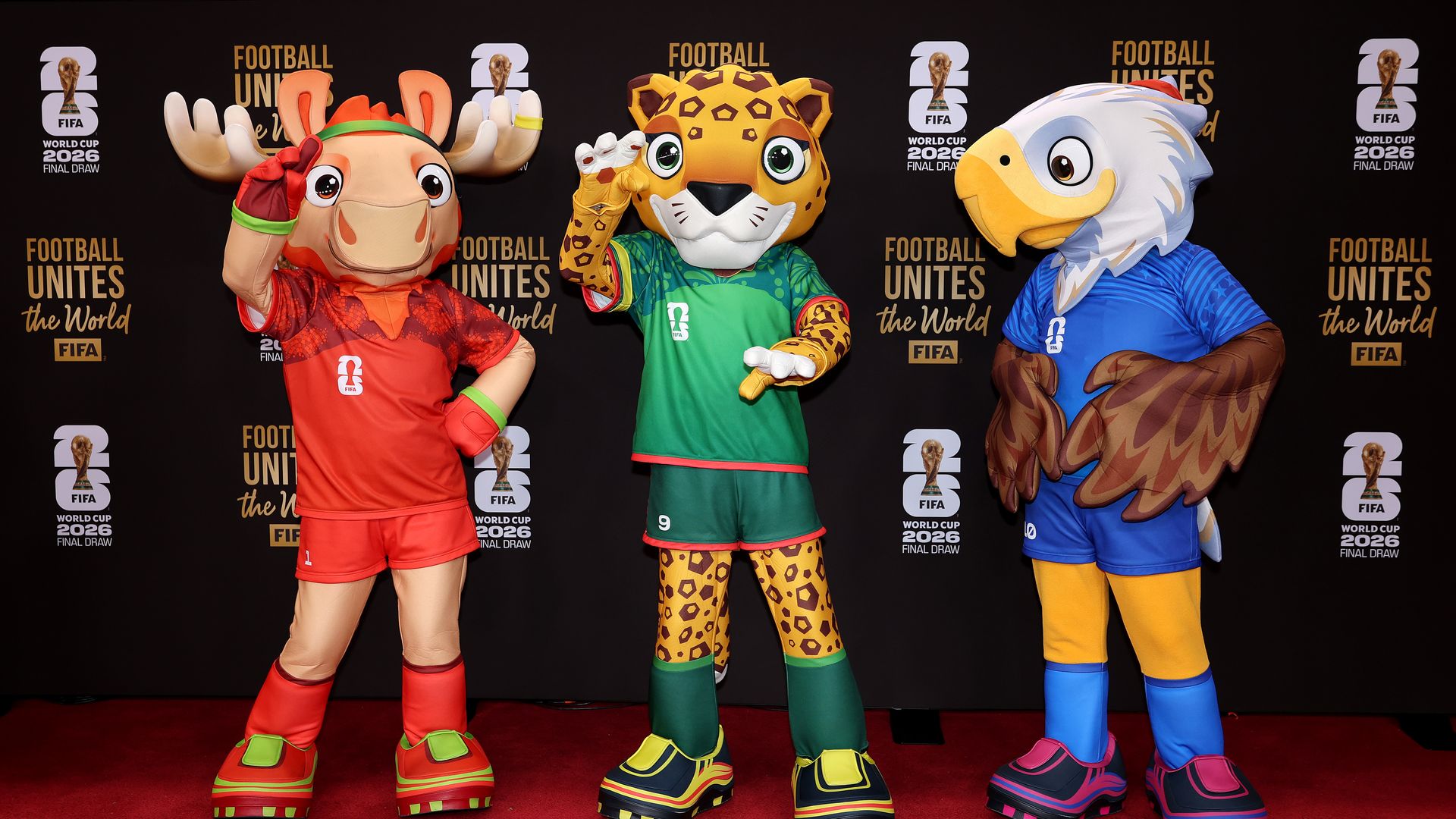
For the first tri-nation tournament, three mascots represent three identities. Maple the moose, Zayu the jaguar, and Clutch the eagle reflect modern storytelling, inclusivity, and shared celebration. Together, they signal where World Cup mascots are headed: collaborative, character-driven, and deeply connected to both culture and digital life.
From a single lion in 1966 to a trio of heroes in 2026, World Cup mascots chart how football, design, and global culture evolve together. They may be playful, but they tell a serious story about how the world comes together around the game.