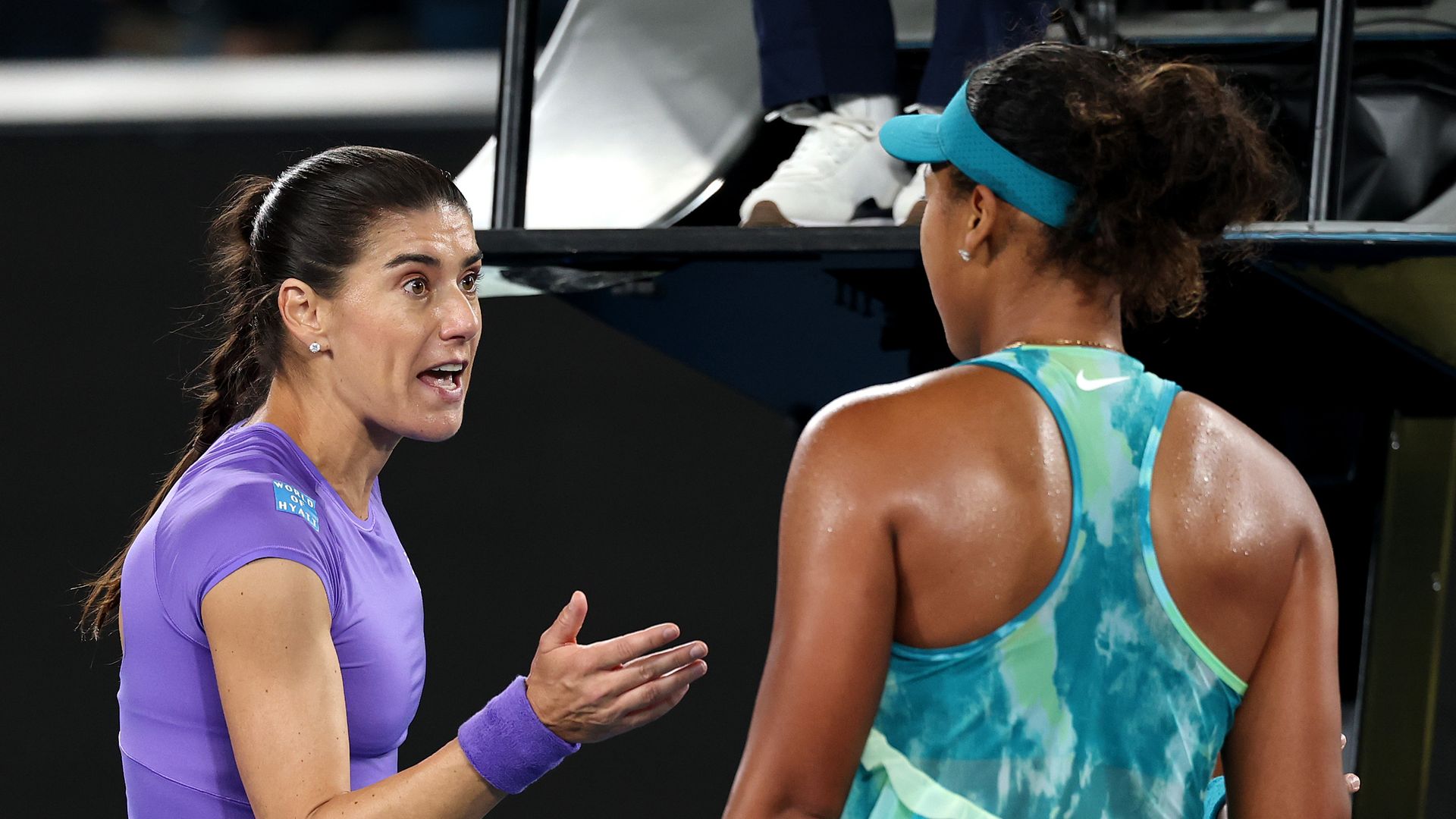
The Australian Open has a long tradition of dramatic finishes, but Naomi Osaka and Sorana Cirstea added an unexpected layer of tension on Thursday when their second-round match ended with visible friction at the net. What should have been a routine post-match handshake instead turned into a brief but viral moment that reignited conversations about sportsmanship, competitive intensity, and how modern tennis players express emotion on court.
Osaka ultimately prevailed 6-3, 4-6, 6-2, closing the door on what is expected to be Cirstea’s final Australian Open appearance. The scoreline reflected a competitive, physical match, yet it was the final seconds that drew the most attention.
What Happened During the Post-Match Handshake
As the players approached the net, Cirstea appeared visibly upset. She slapped Osaka’s hand rather than offering a traditional handshake and then walked directly toward the chair umpire. The moment caught Osaka off guard. As cameras lingered, Osaka could be heard asking, “What was that for?”
The exchange was brief, but it resonated loudly across the tennis world. Handshake etiquette has long been considered sacred in the sport, serving as a public signal of respect regardless of what unfolds during competition. When that ritual cracks, fans notice.
The “C’mon” Controversy Explained
Following the match, Osaka addressed the situation with striking calm. She suggested that Cirstea was frustrated by Osaka’s vocal self-encouragement during points, particularly her repeated use of “C’mon,” a phrase commonly used by players to stay energized and focused.
“Apparently a lot of ‘C’mons’ that she was angry about but whatever,” Osaka said after the match. She emphasized that her intent was not to disrespect her opponent but to maintain her own competitive rhythm. Osaka added that Cirstea could have asked her directly to stop if it was an issue.
The incident highlights a recurring debate in modern tennis. While crowd interaction and emotional expression have become more accepted, not all players are comfortable with it. What one athlete views as motivation, another may perceive as gamesmanship.
Naomi Osaka’s Perspective and Competitive Mindset
Osaka’s response reflected maturity and restraint. She acknowledged Cirstea’s career and the emotional weight of what could be her final Australian Open. “She’s a great player,” Osaka said, adding that she was sorry Cirstea was upset.
From a broader perspective, Osaka’s comments reinforce her ongoing effort to balance competitiveness with empathy. Since returning to full-time competition, she has spoken openly about rediscovering joy on court while still pushing herself to win. Vocal self-motivation has become part of that process.
Entering the tournament as the No. 16 seed, Osaka is navigating a comeback narrative that remains closely watched. Although she is a two-time Australian Open champion, she has not advanced past the third round in Melbourne since 2021. That context makes every win and every reaction more scrutinized.
Sorana Cirstea and the Weight of a Farewell Season
For Cirstea, emotions are running high. In December, the Romanian player announced that the 2026 season will be her final run in professional tennis. The Australian Open has never been her strongest major, with a fourth-round appearance marking her best result.
This year’s early exit may have carried extra sting. Players nearing retirement often approach matches with a heightened sense of urgency, aware that opportunities are dwindling. Frustration can surface more easily under those conditions, especially in a tightly contested three-set match against a former world No. 1.
While Cirstea did not publicly comment on the handshake incident, her reaction suggested that the moment was driven more by emotion than malice.
What Comes Next for Osaka
After the riff, Osaka decided to take a break. She addressed her withdrawal from the Australian Open, stating that she is still processing it. “It was a really sad decision for me,” Naomi told TNT Sports after she withdrew from the competition. “I really wanted to play, and I had every intention to go play, so honestly, I am still kind of processing it as it’s happening.”
Osaka said she started noticing abdominal pain. “I first noticed an issue in my last match,” she explained before her third-round match against Maddison Inglis. “So that’s why I had to take medical. And then I thought it would get better. Like, if I had a break day, but it kind of got worse after I warmed up today.”
“I definitely have to do more tests, and coming back from pregnancy, my body changed quite a lot,” she said. “This is something I have to be really cautious of.
“I thought I could push through it,” she continued. “I played my last match with some pain, and I thought maybe if I gave myself a break before my match today, I would be able to handle it. But I warmed up, and it got a lot worse.”
She also released a statement on social media. “I’ve had to make the difficult decision to withdraw to address something my body needs attention for after my last match,” she announced. “I was so excited to keep going, and this run meant the most to me, so having to stop here breaks my heart, but I can’t risk doing any further damage.” Adding: “Thanks for all the love and support,” she added. “I’m so grateful everyone embraced me so much.
Osaka has won the Australian Open twice before, in 2019 and 2021.